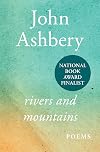
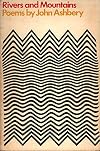
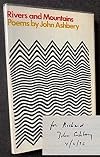
Rivers and Mountains
by John Ashbery
On This Page
Description
From one of our most important modern poets comes an essential early collection, including the famous long poems "The Skaters" and "Clepsydra" When Rivers and Mountains was published in 1966, American poetry was in a state of radical redefinition, with John Ashbery recognized as one of the leading voices in the New York School of poets. Ashbery himself had just returned to America from ten years abroad working as an art critic in France, and Rivers and Mountains, his third published show more collection of poems, is now considered by many critics to represent a pivotal transition point in his artistic career. The poet who would gain widespread acclaim with his multiple-award-winning Self-Portrait in a Convex Mirror (1975) is, in this collection, still very much engaged in the intimate, personal project of taking his poetry apart and putting it back together again, interrogating not just the act of writing but poetry itself--its purpose, its composition, its fundamental parts. Nominated for a National Book Award by a panel of judges that included W. H. Auden and James Dickey, Rivers and Mountains includes two of Ashbery's most studied and admired works. "Clepsydra," which takes its name from an ancient device for measuring the passage of time, echoes both the physical form and the philosophical weight of a water clock in its contemplation of the experience of time as it passes. "The Skaters," the long poem that closes the collection, was immediately praised as a masterpiece of modern American poetry, and is the work that perhaps most clearly introduces the voice for which Ashbery is now well known and loved: generous, restless, wide-ranging, and human. show lessTags
Recommendations













Member Reviews
This early collection is my first exposure to John Ashbery, and after researching the mixed critical acceptance of his work throughout his career, I feel a little less overwhelmed by my initial reaction to some of the poems within. Ashbery is well known for his surrealist style, and this definitely comes across in poems such as The Recent Past, and A Blessing in Disguise. Most reviews of this collection heap a lot of praise on the long-form poem that takes up nearly half of this volume, The Skaters, but I personally found a resonance within the shorter pieces, two in particular. Into the Dusk-Charged Air, a playful list poem, barrels through a variety of different descriptions of rivers in what feels almost like a tongue-in-cheek show more celebration of the language. Then there is The Ecclesiast, a poem about embracing the impermanence and inconsequentiality of life, and which read as a direct response (or rebuttal) to Kind David from Ecclesiastes 1, who proclaimed “Utterly meaningless!/Everything is meaningless.” A great collection from the early part of a long and celebrated career, Rivers and Mountains has me looking forward to delving into more of Ashbery's work. show less
It is not a question, then,
Of having not lived in vain. What is meant is that this distant
Image of you, the way you really are, is the test
Of how you see yourself, and regardless of whether or not
You hesitate, it may be assumed that you have won, that this
Wooden and external representation
Returns the full echo of what you meant
With nothing left over, from that circumference now alight
With ex-possibilities become present fact, and you
Must wear them like clothing, moving in the shadow of
Your single and twin existence, waking in intact
Appreciation of it; while morning is still and before the body
Is changed by the faces of evening.
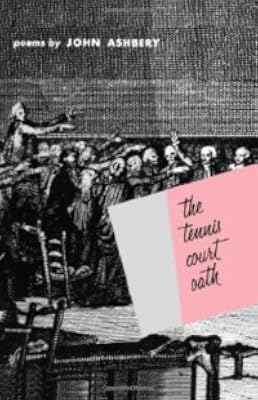
A major step forward from The Tennis Court Oath, Ashbery comes fully into his own with Rivers and Mountains. show more Two of his early masterpieces are here: the long poems "Clepsydra" and "The Skaters." show less
Of having not lived in vain. What is meant is that this distant
Image of you, the way you really are, is the test
Of how you see yourself, and regardless of whether or not
You hesitate, it may be assumed that you have won, that this
Wooden and external representation
Returns the full echo of what you meant
With nothing left over, from that circumference now alight
With ex-possibilities become present fact, and you
Must wear them like clothing, moving in the shadow of
Your single and twin existence, waking in intact
Appreciation of it; while morning is still and before the body
Is changed by the faces of evening.
A major step forward from The Tennis Court Oath, Ashbery comes fully into his own with Rivers and Mountains. show more Two of his early masterpieces are here: the long poems "Clepsydra" and "The Skaters." show less
Ratings
Members
- Recently Added By
Author Information

178+ Works 6,541 Members
John Ashbery was born on July 28, 1927 in Rochester, New York. He received a bachelor's degree from Harvard University and a master's degree in English from Columbia University. After graduating, he wrote advertising copy for Oxford University Press and McGraw-Hill. In 1955, he won the Yale Younger Poets prize for his first collection, Some Trees. show more While on a Fulbright scholarship to Paris, he began writing art criticism and editing small journals. After about a decade in France, he returned to New York, where he became executive editor of ARTnews and continued to work as an arts journalist. After ARTnews was sold in 1972, he taught and wrote art criticism. He wrote several collections of poetry including Houseboat Days, Flow Chart, And the Stars Were Shining, and Turandot and Other Poems. He received a Pulitzer Prize, a National Book Award, and a National Book Critics Circle Award in 1976 for Self-Portrait in a Convex Mirror. He also received the Antonio Feltrinelli International Prize for Poetry in 1992, the Ambassador Book Lifetime Achievement Award in 2008, and the National Book Foundation Medal for Distinguished Contribution to American Letters in 2011. In 1993, the French government made him a Chevalier de L'Ordre des Arts et des Lettres. He also translated the poems of Pierre Martory. He died on September 3, 2017 at the age of 90. (Bowker Author Biography) show less
Awards and Honors
Awards
Common Knowledge
- First words
- These lacustrine cities grew out of loathing/Into something forgetful, although angry with history.
- Last words
- (Click to show. Warning: May contain spoilers.)The constellations are rising/In perfect order: Taurus, Leo, Gemini.
Classifications
Statistics
- Members
- 123
- Popularity
- 264,983
- Reviews
- 2
- Rating
- (3.67)
- Languages
- English
- Media
- Paper, Ebook
- ISBNs
- 5
- ASINs
- 7