On This Page
Description
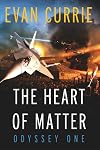
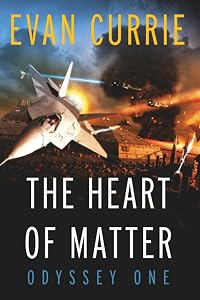
After an epic maiden voyage that introduced Earth to a larger universe--and a cosmos full of terrifying new enemies--Captain Eric Weston and the crew of the NAC spacecraft Odyssey have spent months cooling their heels under their admiral's watchful eye. But when Earth's newest ally, the Priminae, strike a defense deal with the North American Confederacy, the Odyssey finally receives her orders: return to Ranquil, the Priminae's war-ravaged homeworld, and lend badly needed support against the show more invading Drasin. Weston and his crew are hungry for action, yet once back on Ranquil, they realize not all is as it seems. Yes, the Drasin are a formidable foe, but Weston suspects a powerful unseen force is waging the war that could alter forever the face of the universe. Determined to unmask the mysterious puppet masters, Weston and his motley crew defy NAC protocol and venture into deep space...where they will discover an enemy unlike any they have ever faced. The long-awaited follow-up to the spectacular Into the Black: Odyssey One combines old-school space opera with modern storytelling to create an exhilarating new sci-fi adventure. show lessTags
Recommendations












Member Reviews
Same quality as the first book in the series, though there are some differences in his style.
So let's see. Fast paced, action packed, non-stop action really, no slow parts.
The story is again amazingly well planned. There is no single part in this book to seem out of place or forced like you so often find in books or TV series. Every detail is in line with the story, both this story and the previous one, as if the author had designed it from the start.
Which is probably not true, but Currie has a keen ability to find interesting twists that actually make sense and help the story grow, and never has to resort to the tricks the TV series writers for example use to fill countless hours of episodes with basically nothing at all.
The other show more thing that works equally well as it did in the first book, is the way he puts the Terran ship into situations were the odds are disproportionately against them while they still manage to survive. And the reason why that is is again making sense at lest for my engineer brain.
What is different compared to the first book is that he tells the story from different angles this time, mixing 3-4 threads that go on at the same time in different places. A thing I usually hate, especially in Peter Hamilton's books. Hamilton had this obnoxious habit of cutting to another story thread right when the action was at a peak but usually in his books the other thread is far from a peak, it is at a low, and the other thread is unrelated or even straight boring. In his Pandora's Star book there were 4 stories vaguely touching each other of which I simply hated two and loved the other two.
Not the case here. All threads are different viewing angles of the same story, all are contributing to the story and all help keep the pace up. It may be that some of the cut-overs are too quick sometime but that was not a problem.
There's a reason I brought up Pandora's Star. I think Currie got some of his inspiration in that book or at least there's an influence. The alien species share some common traits. The technology has some similarities. The space war too in Odissey On reminds e of the war in Pandora's. Not a bad thing at all.
Another welcome difference is that this time there are some successful attempts of humor. And less, much less irrelevant details. I would have hoped for even more humor and even less detail but why should I complain. I actually liked the book very very much.
I think Currie used to be an engineer too, in IT or something similar. I have a feeling this is why the story seems so well planned and all angles seem to work together so well and all the twists make sense. That's probably why facts introduced in the middle of the second book sit so well with the entire plot laid out in the first book. And this may also be the reason I am so looking forward to the third one.
Well done mister Currie. show less
So let's see. Fast paced, action packed, non-stop action really, no slow parts.
The story is again amazingly well planned. There is no single part in this book to seem out of place or forced like you so often find in books or TV series. Every detail is in line with the story, both this story and the previous one, as if the author had designed it from the start.
Which is probably not true, but Currie has a keen ability to find interesting twists that actually make sense and help the story grow, and never has to resort to the tricks the TV series writers for example use to fill countless hours of episodes with basically nothing at all.
The other show more thing that works equally well as it did in the first book, is the way he puts the Terran ship into situations were the odds are disproportionately against them while they still manage to survive. And the reason why that is is again making sense at lest for my engineer brain.
What is different compared to the first book is that he tells the story from different angles this time, mixing 3-4 threads that go on at the same time in different places. A thing I usually hate, especially in Peter Hamilton's books. Hamilton had this obnoxious habit of cutting to another story thread right when the action was at a peak but usually in his books the other thread is far from a peak, it is at a low, and the other thread is unrelated or even straight boring. In his Pandora's Star book there were 4 stories vaguely touching each other of which I simply hated two and loved the other two.
Not the case here. All threads are different viewing angles of the same story, all are contributing to the story and all help keep the pace up. It may be that some of the cut-overs are too quick sometime but that was not a problem.
There's a reason I brought up Pandora's Star. I think Currie got some of his inspiration in that book or at least there's an influence. The alien species share some common traits. The technology has some similarities. The space war too in Odissey On reminds e of the war in Pandora's. Not a bad thing at all.
Another welcome difference is that this time there are some successful attempts of humor. And less, much less irrelevant details. I would have hoped for even more humor and even less detail but why should I complain. I actually liked the book very very much.
I think Currie used to be an engineer too, in IT or something similar. I have a feeling this is why the story seems so well planned and all angles seem to work together so well and all the twists make sense. That's probably why facts introduced in the middle of the second book sit so well with the entire plot laid out in the first book. And this may also be the reason I am so looking forward to the third one.
Well done mister Currie. show less
I had to really focus on enjoying a lot of war, both strategic and tactical, which is fine, but alas, there was a lot less characterization than I actually prefer.
But I let it slide because I had just read the first book and all the characters were still rather fresh for me. I'm not sure I would have enjoyed it quite as much, otherwise.
BUT, the actual war story was rather awesome, with very interesting and difficult aliens to work against. Sure, any race that could turn other races into suicide bombers or create Dyson clouds (a poor man's version of a Sphere), has got a lot of scariness built right in. :)
And then there's also the "good" aliens with such strange weaknesses and awesome strengths. It makes this novel more into a chess show more game than I might have otherwise expected. This is pretty damn good Space-Opera, even now. :) On to the next book! show less
But I let it slide because I had just read the first book and all the characters were still rather fresh for me. I'm not sure I would have enjoyed it quite as much, otherwise.
BUT, the actual war story was rather awesome, with very interesting and difficult aliens to work against. Sure, any race that could turn other races into suicide bombers or create Dyson clouds (a poor man's version of a Sphere), has got a lot of scariness built right in. :)
And then there's also the "good" aliens with such strange weaknesses and awesome strengths. It makes this novel more into a chess show more game than I might have otherwise expected. This is pretty damn good Space-Opera, even now. :) On to the next book! show less
In the second installment of the Odyssey One series, Captain Weston is back helping the Primmies battle the Drasin again. Loads of action but not much in the way of character development. I guess what we got in the first book is it for now. I can't complain too much because this is an action Sci-Fi series and it totally delivered on that.
Normally I am not into books that are not have character driven; however, the plot and the prose are so good I found I didn't care. I sat on the edge of my seat the whole time. I can't wait to start the 3rd book.
Normally I am not into books that are not have character driven; however, the plot and the prose are so good I found I didn't care. I sat on the edge of my seat the whole time. I can't wait to start the 3rd book.
I never dreamed that you could fill a complete novel with one continuous battle. One - yep, just one, well ok - maybe two that occurred simultaneously - one in space and one on the planet. But, this book has eschewed character development and just gave us the cool stuff, lasers and torpedoes, and armor, and all the fun stuff.
And it keeps your interest. It was fun to read - it was the equivalent of a summer blockbuster movie - without the popcorn.
So, if like space opera, if you like space battles and hearing how much better at war humans are than other species, this is the book for you.
And it keeps your interest. It was fun to read - it was the equivalent of a summer blockbuster movie - without the popcorn.
So, if like space opera, if you like space battles and hearing how much better at war humans are than other species, this is the book for you.
This review is written with a GPL 3.0 license and the rights contained therein shall supersede all TOS by any and all websites in regards to copying and sharing without proper authorization and permissions. Crossposted at Bookstooge.booklikes.blogspot.wordpress.leafmarks.com & Bookstooge's Reviews on the Road Facebook Group by Bookstooge's Exalted Permission. Title: The Heart of Matter Series: Odyssey One Author: Evan Currie Rating: 3.5 of 5 Stars Genre: SFF Pages: 539 Synopsis: The crew of the Odyssey One are back at a homeworld of the Priminae, deepening political ties. However, said world is attacked by the Drasin and the Odyssey chases off the spaceship portion of the attack and the Marines and other ground support crew deal show more with the ground invasion. Lots of things are learned, such as how immense the super computer on the planet is, that the drasin are biological weapons tailored to wipe out the Priminae and that whoever the guiding hand behind the drasin are, they are apparently technologically exponentially beyond us. My Thoughts: Kickass action! I went in with a groan, because 500 pages seemed like an awful lot and I was sure there was going to be whine and angst and other such stuff-n-nonsense to pad things out. Thankfully, I was wrong. The buildup was good, the action intense, the reveal predictable yet satisfying and in general I was satisfied. Overall, I am liking this series much more than the Hayden War Cycle/Warriors Wings series, as there is just a lot of action and that is what I expect from my SFF. " show less
The Heart of the matter, Odyssey One by Evan Currie. This should have been called the 2nd battle of Ranquil because that is about all that happens during the majority of the book. There are some interesting plot twists. The question of what or who is Central is explored. A little more insight is given into what is motivating the Drasin to attack Primmies. But beyond those insights Evan Currie gives you no character development. On the plus side Currie has written one hell of a battle sequence. He was able to keep me enthralled for over 300 pages. As a reader of military scifi often a writer leaves the reader confused as to what is going in the separate parts of a battle. Currie manages to avoid this problem by use of short focused show more chapters. The book delivers a great ride while moving the overall story forward. show less
I'm a fan of this series. Currie's storytelling fits all my criteria - good character development, intrigue, long story arcs, and unobtrusive writing.
It's a little sad to me that I have been recently classifying books by which pet peeves they skirt. These books appear to have been edited (thankfully), I don't feel like I'm being preached to, and the story telling shows me a story rather than giving away all the cool details.
I don't know why, but it does seem like there is quite a bit of overlap in the science thinking of Currie and John Ringo's Legacy of the Aldenata series. Both involve insatiable alien hordes, both involve kinetic weapons traveling near the speed of light, and both talk about light speed in roughly the same show more way.
[Another similarity between these two series is the idea that there is some kind of race behind the scenes that are controlling these alien hordes. Can the human race really survive against such odds?] show less
It's a little sad to me that I have been recently classifying books by which pet peeves they skirt. These books appear to have been edited (thankfully), I don't feel like I'm being preached to, and the story telling shows me a story rather than giving away all the cool details.
I don't know why, but it does seem like there is quite a bit of overlap in the science thinking of Currie and John Ringo's Legacy of the Aldenata series. Both involve insatiable alien hordes, both involve kinetic weapons traveling near the speed of light, and both talk about light speed in roughly the same show more way.
[Another similarity between these two series is the idea that there is some kind of race behind the scenes that are controlling these alien hordes. Can the human race really survive against such odds?] show less
Members
- Recently Added By
Lists

Jean's Sci Fi/Fantasy Reading list
189 works; 12 members
Author Information

46+ Works 2,451 Members
Series

Common Knowledge
- Canonical title
- The Heart of Matter
- Original title
- The Heart of Matter
- Original publication date
- 2012-09-25
- People/Characters
- Captain Eric Weston; Commander Stephen "Stephanos" Michaels; Lieutenant Jackson Crowley; Ithan Milla Chans; Commander Jason Roberts; Admiral Amanda Gracen (show all 7); Admiral Rael Tanner
- Important places
- Ranquil (fictional); Uncharted Dyson Construct (fictional); Liberty Station, Lagrange Four, Earth Orbit (fictional)
- First words
- Capt. Eric Stanton Weston walked along the gently curving corridor that circled the exterior of the immensity of Space Station Liberty. He had to admit that the sensation of generated artificial gravity felt quite different t... (show all)o him after the time he'd spent on the Odyssey, both within the Sol System and without.
- Last words
- (Click to show. Warning: May contain spoilers.)Central, you and I need to have another long chat.
Classifications
Statistics
- Members
- 228
- Popularity
- 143,473
- Reviews
- 11
- Rating
- (3.79)
- Languages
- English, German, Polish
- Media
- Paper, Audiobook, Ebook
- ISBNs
- 13
- ASINs
- 4