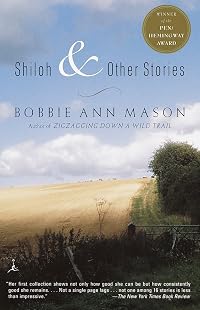
Shiloh and Other Stories
by Bobbie Ann Mason
On This Page
Description
"These stories will last," said Raymond Carver of Shiloh and Other Stories when it was first published, and almost two decades later this stunning fiction debut and winner of the PEN/Hemingway Award has become a modern American classic. In Shiloh, Bobbie Ann Mason introduces us to her western Kentucky people and the lives they forge for themselves amid the ups and downs of contemporary American life, and she poignantly captures the growing pains of the New South in the lives of her show more characters as they come to terms with feminism, R-rated movies, and video games. "Bobbie Ann Mason is one of those rare writers who, by concentrating their attention on a few square miles of native turf, are able to open up new and surprisingly wide worlds for the delighted reader," said Robert Towers in "The New York Review of Books." show lessTags
Recommendations

















Member Reviews
On our trip to Europe a few summers ago this book meant more to me than any other. So much so, I would almost say that Mason became my favorite contemporary writer, although if it came down to recommending a work, I don't really think any of the 3 I've read so far is truly "great" on its own. It's the final reflection or cumulative appeal that makes her work important to me...that and the enjoyment of reading it in the present tense!
Mason does use present tense segments quite a bit in the SHILOH stories. Normally that style doesn't appeal to me, but here it works as an appropriate mark of her down-home characters' time orientation: the past is quickly ignored (though its deep effects lurk everywhere unsuspected), while the future is show more only something the here & now grades into unnoticeably. I shared "Residents and Transients" and "The Retreat" with my husband, in hopes of giving him an impression of my homesick outsider's status while we visited Estonia.
Mason's evocation of the small-town American attitude is masterful. show less
Mason does use present tense segments quite a bit in the SHILOH stories. Normally that style doesn't appeal to me, but here it works as an appropriate mark of her down-home characters' time orientation: the past is quickly ignored (though its deep effects lurk everywhere unsuspected), while the future is show more only something the here & now grades into unnoticeably. I shared "Residents and Transients" and "The Retreat" with my husband, in hopes of giving him an impression of my homesick outsider's status while we visited Estonia.
Mason's evocation of the small-town American attitude is masterful. show less
I found it refreshing to be transported back to the 70s and 80s, the period just before the dawn of personal electronic devices. I was in my teens and 20s during these decades and i really miss those days. I am not a rural person, although I did work on a farm for one summer job in 1983. the distance now in time makes it seem like another world. But the experience of attending to an elderly relative in declining health (Nancy Culpepper) is timeless. I started out by reading Bobbie Ann Mason's book about Nancy Drew, but having read these stories, I believe I will now seek out some of her novels.
There is no doubt that Bobbie Ann Mason is a top notch writer. Her collection of short stories in this book confirms that multiple times. Her style is somewhat unique, identifiable to Bobbie Ann, and repeated in each story. By about midway through the book, I had figured out her formula for her framework – a formula she followed for almost every short story in the book.
I call her formula the Six ‘Fs’. Each story was or had:
> Feminine based; told from the persona of a woman (one exception was Edwin in A New-Wave Format). There is often a second strong feminine persona as a mother or close friend in each story.
> Faulted relationships; a separation, a divorce, an affair, a question if the other was faithful, always a central part of show more the story.
>Fears; the main character either faces fears of the future, or fears of opinions of others, or both.
>Former time; the stories were set in the 1960s, 70s, 80s with one in the 40s, mostly pre-digital settings.
>Fine details; the stories were well painted (described) with realistic brands, actual places, common practices (for that era), and believable character traits
>unFinished Finale; each story ends somewhat unfinished, mid-thought sometimes. show less
I call her formula the Six ‘Fs’. Each story was or had:
> Feminine based; told from the persona of a woman (one exception was Edwin in A New-Wave Format). There is often a second strong feminine persona as a mother or close friend in each story.
> Faulted relationships; a separation, a divorce, an affair, a question if the other was faithful, always a central part of show more the story.
>Fears; the main character either faces fears of the future, or fears of opinions of others, or both.
>Former time; the stories were set in the 1960s, 70s, 80s with one in the 40s, mostly pre-digital settings.
>Fine details; the stories were well painted (described) with realistic brands, actual places, common practices (for that era), and believable character traits
>unFinished Finale; each story ends somewhat unfinished, mid-thought sometimes. show less
I found this sadly, simply realist in some ways, but the cultural backdrop was too unfamiliar to gauge the relevance of some aspects. It isn't a bad story, but I didn't like it or engage with it, hence my low rating.
I presume it's set roughly when it was published in 1982. Leroy and his wife Norma Jean married at 18, endured a tragedy, and now, aged 34, an injury means he can't drive his truck, and unemployed.
“Now he is home alone much of the time… He sees things about Norma Jean that he never realized before.”
Spending more time together, they're struggling to readjust or talk about anything meaningful.
“Leroy used to tell hitchhikers his whole life story… Now Leroy has the impulse to tell Norma Jean about himself, as if he show more had just met her. They have known each other so long they have forgotten a lot about each other.”
She turns to self-improvement; he turns to pipe dreams.
Image: Panorama of Shiloh Military Park, Tennessee (Source)
Good points
I like the conflict of Shiloh being an almost heavenly place to Leroy's mother (as well as its being the name of an Old Testament person and sanctuary) but a battleground both historically (the US civil war) and in the present of the story.
It ends on a cliffhanger.
Short story club
I reread this as one of the stories in The Art of the Short Story, by Dana Gioia, from which I'm aiming to read one story a week with The Short Story Club, starting 2 May 2022.
You can read this story here.
You can join the group here. show less
I presume it's set roughly when it was published in 1982. Leroy and his wife Norma Jean married at 18, endured a tragedy, and now, aged 34, an injury means he can't drive his truck, and unemployed.
“Now he is home alone much of the time… He sees things about Norma Jean that he never realized before.”
Spending more time together, they're struggling to readjust or talk about anything meaningful.
“Leroy used to tell hitchhikers his whole life story… Now Leroy has the impulse to tell Norma Jean about himself, as if he show more had just met her. They have known each other so long they have forgotten a lot about each other.”
She turns to self-improvement; he turns to pipe dreams.
Image: Panorama of Shiloh Military Park, Tennessee (Source)
Good points
I like the conflict of Shiloh being an almost heavenly place to Leroy's mother (as well as its being the name of an Old Testament person and sanctuary) but a battleground both historically (the US civil war) and in the present of the story.
It ends on a cliffhanger.
Short story club
I reread this as one of the stories in The Art of the Short Story, by Dana Gioia, from which I'm aiming to read one story a week with The Short Story Club, starting 2 May 2022.
You can read this story here.
You can join the group here. show less
Normally I don’t pick up a volume of stories to read, but the fact that this is a well known Kentucky author, and I had read some of her other novels, I was compelled to see what was inside. I’m glad I read this book. The stories all have similar themes, and if you read it all at once like I did, the characters and plots can get a little confusing and start to run together. The author writes perfectly using the dialect and slang of country people in Kentucky. All the stories take place in western Kentucky, and familiar places like Paducah, Kentucky Lake, and Murray State University are often mentioned. I loved the characters in these stories because, if you are from Kentucky, most likely you have known people who are just like them show more in the way that they talk and act. All of the stories have a theme of relationships, and the characters all seemed to be yearning for something
more out of life, although what was not always clear. There is not a clean ending for most of these stories, but it is just like sampling a slice of their everyday lives. This is a nice book to pick up and read when you are on the go and don’t want to be tied down with a long novel. show less
more out of life, although what was not always clear. There is not a clean ending for most of these stories, but it is just like sampling a slice of their everyday lives. This is a nice book to pick up and read when you are on the go and don’t want to be tied down with a long novel. show less
Like Leroy, I’m a little hazy on events, but it’s goes not quite a little something like this: bad, bad Leroy is thrown in the slammer for throwing his wife off of some cliffs, after she calls his bluff; while there he forms a short story book club as library custodian, and builds bird houses out of popsicle sticks, which makes him many friends with the inmates, in spite of his demeanor being meaner than a junkyard dog, as he’s always handing out these cool treats in order to collect back the sticks, even though he makes them read the week’s story first, his wife recovers and decides her next project is big rig driving, since it’s the 60’s or thereabouts and there’s one parked in the safari grass. One long and lonely night show more out on the road for far to long and perhaps aided by some stimulants, she time warps back to the biblical times, where Ulysses, leader of the Philistines, destroys Shiloh. Although it was his calling to do so, Ulysses is condemned to roam the desert for forty long and desolate years, with the only respite being some time being serenaded by some sirens with anachronistic electric organs, well eventually he gets back in time to break Leroy out the big house, and reinstate him as le Roy, but their wives find out about the musical score and plot to kill them with poisoned pastries, but they won’t be their patsies, nor boldenly fleeced. Well, the Misfit broke out of jail with them and since Mabel keeps wanting to go travelling in Tennessee, they have him drive her there, which they never comes back, man they are hard to find, not such a bad thing, now Leroy and Norma Jean can reconcile in peace, and move to a home in the sticks, not one made of the same. Ulysses changes his name to Odysseus, hiding out in the witless protection program, but I’m not supposed to be talking about that. The rest is history. show less
Ratings
Members
- Recently Added By
Lists

Top Five Books of 2017
757 works; 231 members

Pen/Faulkner Winners and Finalists
178 works; 9 members

National Book Award Finalists - Fiction
377 works; 12 members
Author Information

28+ Works 3,657 Members
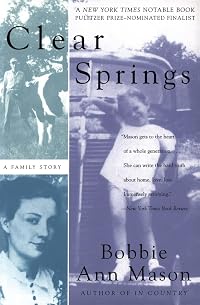
Bobbie Ann Mason is the author of the novels "In Country" "Spence+Lila', & "Feather Crowns", which was nominated for the National Book Critics Circle Award & won the Southern Book Award. Her short-story collection "Shiloh & Other Stories" won the PEN/Hemingway Award for First Fiction & was nominated for other major prizes. Her memoir, "Clear show more Springs", was one of three finalists for the Pulitzer Prize. Her fiction has appeared in "The New Yorker", "The Atlantic Monthly", & elsewhere. She lives in Kentucky. (Bowker Author Biography) show less
Awards and Honors
Awards
Distinctions
Notable Lists
Series
Belongs to Publisher Series
Perennial Library (PL1330)
Fischer Taschenbuch (5460)
Work Relationships
Contains
Common Knowledge
- Original title
- Shiloh and Other Stories
- Original publication date
- 1982
- Important places
- Kentucky, USA
Classifications
Statistics
- Members
- 479
- Popularity
- 63,209
- Reviews
- 6
- Rating
- (3.86)
- Languages
- Dutch, English, German, Spanish
- Media
- Paper, Ebook
- ISBNs
- 14
- ASINs
- 8