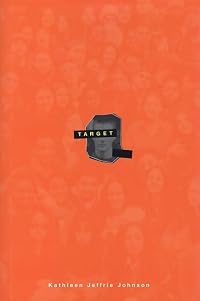
Target
by Kathleen Jeffrie Johnson
On This Page
Description
After being brutally raped, Grady finally goes to a new high school where he meets an outgoing African American and several other students who try to help him deal with the horrible secret that is robbing him of his life.Tags
Recommendations




























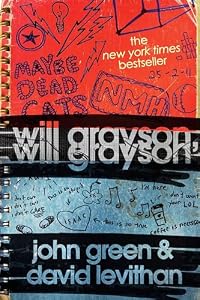
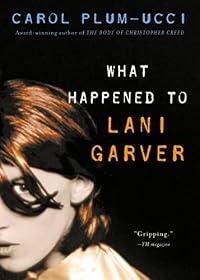




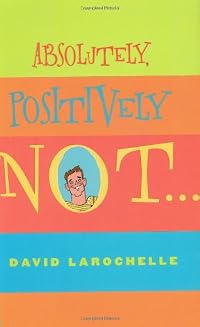
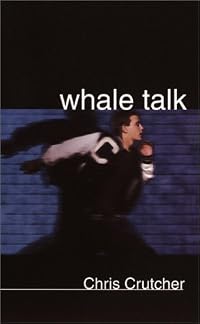
Member Recommendations

Bait by Alex Sanchez
by meggyweg
Member Reviews
A slim but excellent portrait of the impact of sexual assault on an adolescent boy. People tend to forget that men can be raped too, and not just in prison. When it happens, the shame and the sense of isolation are usually much worse than it would be for a woman. I thought Grady's misery and silence was very well-handled, and the supporting characters were also fully fleshed out and not just flat indistinguishable paper dolls like they are in a lot of YA books about high school students.
This book broke my heart. I was shocked and horrified, as well as saddened, how the police treated him. Just because he was male and had muscles, they were skeptical. Unfortunately, I know from personal experience that victims of violence are often treated as though they are in the wrong.
The author kept tugging at the heart strings as the book went on and I read how this teen tried to cope with what had happened. I feel like the author really knew what might be going on in someone's head after such an instance. It was a tough emotional read, but one that was worth it and I believe is in need so that an unspoken topic is not hidden so much.
The author kept tugging at the heart strings as the book went on and I read how this teen tried to cope with what had happened. I feel like the author really knew what might be going on in someone's head after such an instance. It was a tough emotional read, but one that was worth it and I believe is in need so that an unspoken topic is not hidden so much.
16-year-old Grady was violently attacked, abducted, raped and dumped on the side of the road by two men in van. He distances himself from his old friends, never telling them what happened, and his parents enable his self-imposed isolation by enrolling him in a different school. Grady, who thinks of himself as a "target," wants only to retreat from the world around him, but some of his new classmates - particularly a talkative and assertive boy named Jess - are determined to get past his shell.
Well, I read this book in a day so I guess that means I enjoyed it. On the other hand, Target is a far from perfect book. Michael Cart's review for Booklist nails many of the same issues that bothered me:
- It is hard to believe that Grady would be show more functioning in school at all, given his near-catatonic state.
- Why is Jess so invested in Grady? Based on Jess's depiction in the novel, it would be just as believable and probably more in character if he distanced himself from or even turned on Grady after finding out about the rape. (Jess isn't the most tolerant of individuals, viz. his contemptuous ongoing monologues about whites, women and gay people. Yes, he has his likable qualities but he has his own fears and insecurities about those who are different.) It's *nice* that he becomes Grady's champion, but one has to ask oneself, as Cart does, if Jess is really a "plausible [agent] of his recovery." Might be more credible if we got more of the why and wherefore behind Jess himself, perhaps if Grady or someone else were to put that same question to him...
- What's the deal with Gwendolyn, the snotty pretty girl who wants to turn Grady, or "the raped guy" as she calls him, into a headline for the school paper? I can see why Jess pisses her off - hell, he'd piss off anybody - but why this malicious undercurrent toward Grady?
- The bird metaphor/conceit is egregious and has to be read to be believed:
"Birds flew screaming at him out of the sky, Grady had to duck, dodge, they would tear his eyes out, rip his skin open - why couldn't anyone else see them? They were starving, looking for flesh, looking for meat, looking for blood - "
"'They' - he forced the words - 'hurt me.' A bird cried, it was hungry, searching for food."
"But for some reason, he didn't care. In the distance, a bird cried again, tired and hungry. Grady was tired, too. He wanted to live."
Some things Cart didn't remark on: I found the book painfully slow, drawing out and detailing scenes in the same laborious way that Grady's fingers constantly wander over various surfaces - imitative fallacy? - and the final chapter was irritating in a "three weeks later," "everything resolved or on its way to being resolved" kind of way.
This books also demands inevitable comparison with "When Jeff Comes Home" by Catherine Atkins. show less
Well, I read this book in a day so I guess that means I enjoyed it. On the other hand, Target is a far from perfect book. Michael Cart's review for Booklist nails many of the same issues that bothered me:
- It is hard to believe that Grady would be show more functioning in school at all, given his near-catatonic state.
- Why is Jess so invested in Grady? Based on Jess's depiction in the novel, it would be just as believable and probably more in character if he distanced himself from or even turned on Grady after finding out about the rape. (Jess isn't the most tolerant of individuals, viz. his contemptuous ongoing monologues about whites, women and gay people. Yes, he has his likable qualities but he has his own fears and insecurities about those who are different.) It's *nice* that he becomes Grady's champion, but one has to ask oneself, as Cart does, if Jess is really a "plausible [agent] of his recovery." Might be more credible if we got more of the why and wherefore behind Jess himself, perhaps if Grady or someone else were to put that same question to him...
- What's the deal with Gwendolyn, the snotty pretty girl who wants to turn Grady, or "the raped guy" as she calls him, into a headline for the school paper? I can see why Jess pisses her off - hell, he'd piss off anybody - but why this malicious undercurrent toward Grady?
- The bird metaphor/conceit is egregious and has to be read to be believed:
"Birds flew screaming at him out of the sky, Grady had to duck, dodge, they would tear his eyes out, rip his skin open - why couldn't anyone else see them? They were starving, looking for flesh, looking for meat, looking for blood - "
"'They' - he forced the words - 'hurt me.' A bird cried, it was hungry, searching for food."
"But for some reason, he didn't care. In the distance, a bird cried again, tired and hungry. Grady was tired, too. He wanted to live."
Some things Cart didn't remark on: I found the book painfully slow, drawing out and detailing scenes in the same laborious way that Grady's fingers constantly wander over various surfaces - imitative fallacy? - and the final chapter was irritating in a "three weeks later," "everything resolved or on its way to being resolved" kind of way.
This books also demands inevitable comparison with "When Jeff Comes Home" by Catherine Atkins. show less
While other teen novels have explored rape, in this one the victim is a male. As in Speak, the main character (Grady) doesn't talk much, but there's a lot going on inside of his head. The incident has made him question everything about himself, and he's not sure of the answers. While the story is not told first person, readers get this character and these issues, and will understand why Grady hangs on the outside of his own life. There are some fun secondary characters, but this is the story about a kid going through life on the light side who gets attacked and his life turns into a dark ride. Review originally appeared in Novelist.
Grady slowly comes to terms with having been raped as he starts attending a new school.
Wow! An intense novel.
Ratings
Members
- Recently Added By
Talk Discussions
Past Discussions
Teen boy raped. in Name that Book (July 2010)
Author Information
8+ Works 357 Members
Awards and Honors
Distinctions
Common Knowledge
- Canonical title
- Target
- Disambiguation notice
- There are numerous books with this title by different authors.
Classifications
- Genres
- Fiction and Literature, Teen, Young Adult
- DDC/MDS
- 813.54 — Literature & rhetoric American literature in English American fiction in English 1900-1999 1945-1999
- LCC
- PZ7 .J6324 .T — Language and Literature Fiction and juvenile belles lettres Fiction and juvenile belles lettres Juvenile belles lettres
- BISAC
Statistics
- Members
- 130
- Popularity
- 250,492
- Reviews
- 6
- Rating
- (3.98)
- Languages
- English
- Media
- Paper
- ISBNs
- 3