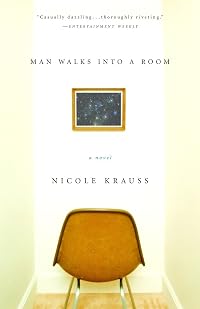
Man Walks Into a Room
by Nicole Krauss
On This Page
Description
A luminous and unforgettable first novel by an astonishing new voice in fiction, hailed by Esquire magazine as “one of America’s best young writers.” Samson Greene, a young and popular professor at Columbia, is found wandering in the Nevada desert. When his wife, Anna, comes to bring him home, she finds a man who remembers nothing, not even his own name. The removal of a small brain tumor saves his life, but his memories beyond the age of twelve are permanently lost. Here is the story show more of a keenly intelligent, sensitive man returned to a life in which everything is strange and new. An emigrant from his own life, set free from all that once defined him, Samson Greene believes he has nothing left to lose. So, when a charismatic scientist asks him to participate in a bold experiment, he agrees. Launched into a turbulent journey that takes him to the furthest extremes of solitude and intimacy, what he gains is nothing short of the revelation of what it means to be human. show lessTags
Recommendations





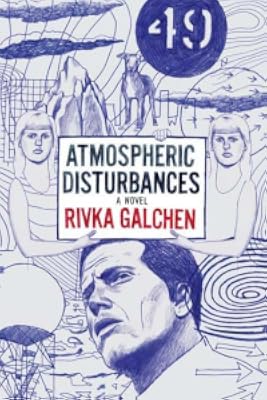
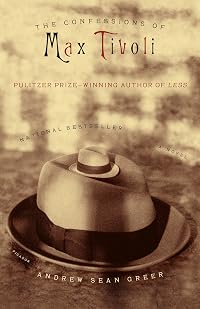
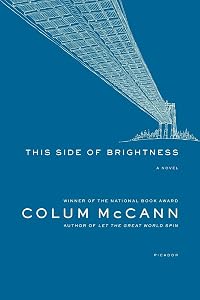
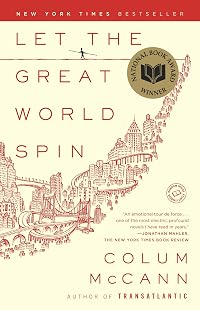
Member Recommendations
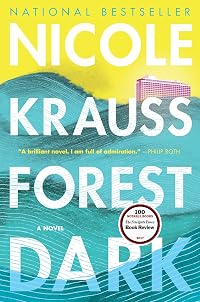
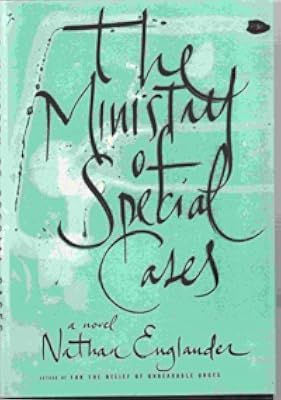
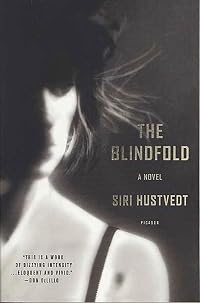
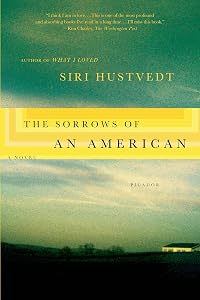
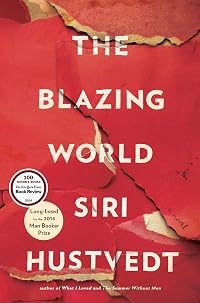
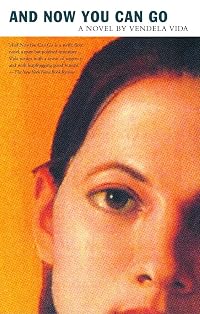
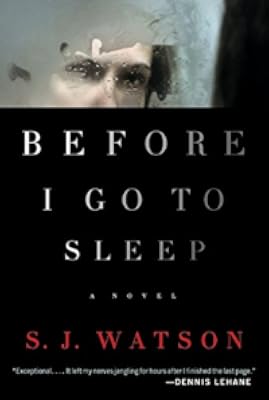
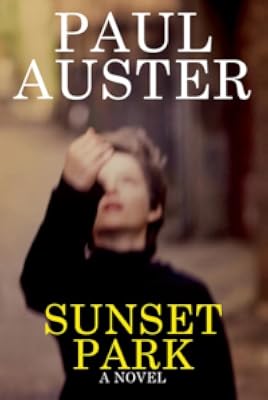
SqueakyChu Another problem within a relationship together with odd experimentation.
Member Reviews
Wow. Read this book. I’m not going to be able to explain it properly, but it was compelling and deep. The protagonist loses 24 years of memory, which drives a wedge between him and his wife (no – more like a chasm, because there’s nothing there) who he no longer knows. His memories end at age 12, but he is able to make new ones. He volunteers for a charismatic doctor’s project to copy and paste memories from one brain to another which has, as they would put it on a dust jacket, “disastrous consequences.” This is a phrase that normally turns me off cold and makes me put a book back on the shelf, but I’m glad I checked this one out anyway because the consequences and their fallout (all of which are emotional) are written so show more deftly I hated the author a little bit. (Always a sure sign of good writing when I curse the author.) A quote, if I may: “And what is a life, Samson wondered now, without a witness?” Ugh – so many implications for writing, for reading, for memory, for relationships. show less
I loved this book. Nicole Krauss's first novel, MAN WALKS INTO A ROOM (2002), is an amazing read. The kind of story that will take hold of your imagination and keep you thinking about it long after you've put the book down. It's a story about so many things: about memory, about atomic testing, about brain surgery, about mind-altering experiments and memory transfers. But perhaps more than anything else it's about the devastating effects of loneliness. Because Samson Greene is a man who has lost two-thirds of his life's memories. Thirty-six, following surgery to remove a tumor, he can only remember the first twelve years of his life. His marriage is one of the most notable casualties. The thing is, he seems to choose the blankness of show more losing the past two dozen years. He doesn't even try to recover his lost memories. He walks away from his wife and from his life and career as an English professor at Columbia in New York. He becomes part of an ill-defined bizarre experiment in memory transfers being conducted in a remote lab in the Nevada desert by a charismatic and amoral neuroscientist. And having "used" Samson, this guy simply cuts him loose, leaving him feeling "betrayed ... His mind had been violated in a way that no one else's ever had. The loneliness was savage."
"But he hadn't lost his mind. To the contrary, he'd lost everything BUT. His memory, his wife, his job, his friends, twenty-four years of his life - but not his mind."
Indeed the book's title summons up the first line of numerous bad jokes, and what has happened to Samson Greene is certainly the worst possible kind of joke.
Got your attention? Well, it sure got mine, and "toot sweet." Because this is one hell of a yarn, full of twists, turns and tidbits of wisdom one would not normally expect from an author so young, not yet thirty when she wrote it. Now I've gotta find out what else this Nicole Krauss has written. This one though, it's just damn good. I highly recommend it. show less
"But he hadn't lost his mind. To the contrary, he'd lost everything BUT. His memory, his wife, his job, his friends, twenty-four years of his life - but not his mind."
Indeed the book's title summons up the first line of numerous bad jokes, and what has happened to Samson Greene is certainly the worst possible kind of joke.
Got your attention? Well, it sure got mine, and "toot sweet." Because this is one hell of a yarn, full of twists, turns and tidbits of wisdom one would not normally expect from an author so young, not yet thirty when she wrote it. Now I've gotta find out what else this Nicole Krauss has written. This one though, it's just damn good. I highly recommend it. show less
Can you imagine losing your memory and not really wanting it back? This book could be alternatively titled How I Learned to Stop Worrying and Love the Void.
While Man Walks Into a Room was Nicole Krauss's debut novel, I was first brought to experience her genius in The History of Love. Her first work feels like less of a novel and more like a lengthy short story -- though, to its credit, it certainly doesn't feel any longer than a short story. Instead, it's more of a lingering discussion on an idea that begs to be explored. As a result, it feels hard to summarize the plot in a tantalizing way beyond the initial scenario, as a large part of the novel is really a reaction to just that.
Samson Greene is found wandering the desert outside of Las Vegas eight days after going missing in Manhattan. Almost immediately, he undergoes surgery to remove a newly discovered brain tumor and when he wakes show more up, he has no memory of his life after the age of twelve. No memory of his loving wife, his career as an English professor at Columbia University, his friends, his dog, his mother's death... nothing. Remarkably, he appears able to make new memories and is still an intelligent and functioning adult, but the slate appears to have been wiped clean of over twenty years of experiences. Without any connection to this life, he doesn't particularly feel a desperate need for these memories to return so much as he just wants everyone to stop looking at him with expectation. This is an unusual response to memory loss and is incredibly painful for Anna, his wife, who just wants her husband back, intact, with memories of their ten years spent together. As he adjusts to this new world (though thankfully we are spared the movie "Big" ideas and he seems to have the mentality of an adult if not the personal memories), he struggles to establish a relationship with Anna and find some purpose to his own self. Unsurprisingly, things do not go well. Samson retreats further into himself as he realizes he cannot really make Anna happy, developing a strange friendship with a former student and relying on the companionship of his dog, Frank, who does not expect Samson to remember their time together. This is all moving along when Krauss throws in a bit of a twist: a neuro-scientist offers Samson the opportunity to take part in a hushed-up memory experiment and Samson quickly signs up. The experiment does not claim that it could return his memories, for those are lost for good, but instead the experiment is attempting something much more revolutionary and potentially much more traumatizing. Of course, if one picks up the novel and reads the very first few pages, one might wonder how the depiction of a young soldier witnessing an atomic bomb testing plays into the rest of the story. It is this memory that will hit Samson with all its atomic force, finally breaking him open to understand everything that has befallen him. It takes the story a while to get there, but impact is astounding.
As I mentioned, this novel is not one that should be read for plotlines; it's the exploration of a "what if...?" idea. From the beginning, you should be pretty aware that everything cannot end well. It might end not terribly, but that's about all you can hope for after a tragedy that takes someone from those he loves without actually killing him. Indeed, as characters wonder in the story, would Samson's death have been preferable to wiping his memories but leaving him standing? For a large part, I enjoyed the awkward and painful examination of what to do with this man who has been cut from the ties of his life, yes remains floating around. It's believable and heartbreaking, which is a hard emotion to muster when it comes towards the beginning of a novel and you have not really had time to get to know your characters. Your sympathy focuses mainly on Anna, the "widow" who is told to act against her hopes, to smother her desire that the Samson she knows will return to love her, and to simply help him adjust to his new life as a helpmate rather than a loving wife. Even though Samson is the one to experience the memory loss, he has no real remorse for something he has no attachment to in his present condition, so it's Anna who has experienced the real tragedy.... though Samson does come to understand his loss, in a way. Once we arrive at the memory experiment, things change a bit. Krauss is not interested in creating a science-fiction epic, though its aim to graft the memories from one person to another is rather fearsome in its implications. She uses this experiment as an opportunity to give Samson new ties and to allow him to explore his loss and the burden of what he gains.
Krauss is simply exploring the trajectory of a lost soul... what one might do in today's day and age if completely unanchored from the life they knew and yet somehow still inhabiting the shell of it. Strangely, if there were kids involved, Samson might have felt obliged to make more of an effort at rekindling a relationship with Anna. He trusts her because she's there but perhaps he does love her after all, if he would only open himself up to the idea. Instead, he struggles to find his own way, feeling untethered and yet concerned for Anna's welfare and future. Whether this springs from the knowledge that she tried to reorient him to the world, the fact that she seems so terribly hurt by what has happened to Samson, or a growing/returning love for this woman... well, without memories to understand one's motivations, perhaps everything is wrapped up together. By removing us from the story arch that might define more conventional novels, Krauss achieves a dreamlike state of wandering exploration... perhaps a more pleasant version of what Samson might feel as he suddenly finds himself as a thirty-something year old man with no knowledge of the twenty-odd years that led to his current state. It's haunting and painful, causing readers to question how they might react in similar circumstances, and ultimately having to accept that there is no way to know, as the person one now is would no longer exist without the last two thirds of one's life to shape him/her.
Nicole Krauss writes with such beauty that I now know I'll read anything she publishes. I might not push Man Walks Into a Room on anyone with the same passion as I did The History of Love, but I still think it's a lovely work of incredible quality. Reviews that I've read online have lamented that the ending doesn't seem to bring any real closure or epiphany, but then, the situation hardly suggests that there will ever really be closure. As for an epiphany, well, quite honestly the understanding that life continues on seems to be a rather painful and yet hard-won moral. It may not be the ending that one wants, but such is life. show less
Samson Greene is found wandering the desert outside of Las Vegas eight days after going missing in Manhattan. Almost immediately, he undergoes surgery to remove a newly discovered brain tumor and when he wakes show more up, he has no memory of his life after the age of twelve. No memory of his loving wife, his career as an English professor at Columbia University, his friends, his dog, his mother's death... nothing. Remarkably, he appears able to make new memories and is still an intelligent and functioning adult, but the slate appears to have been wiped clean of over twenty years of experiences. Without any connection to this life, he doesn't particularly feel a desperate need for these memories to return so much as he just wants everyone to stop looking at him with expectation. This is an unusual response to memory loss and is incredibly painful for Anna, his wife, who just wants her husband back, intact, with memories of their ten years spent together. As he adjusts to this new world (though thankfully we are spared the movie "Big" ideas and he seems to have the mentality of an adult if not the personal memories), he struggles to establish a relationship with Anna and find some purpose to his own self. Unsurprisingly, things do not go well. Samson retreats further into himself as he realizes he cannot really make Anna happy, developing a strange friendship with a former student and relying on the companionship of his dog, Frank, who does not expect Samson to remember their time together. This is all moving along when Krauss throws in a bit of a twist: a neuro-scientist offers Samson the opportunity to take part in a hushed-up memory experiment and Samson quickly signs up. The experiment does not claim that it could return his memories, for those are lost for good, but instead the experiment is attempting something much more revolutionary and potentially much more traumatizing. Of course, if one picks up the novel and reads the very first few pages, one might wonder how the depiction of a young soldier witnessing an atomic bomb testing plays into the rest of the story. It is this memory that will hit Samson with all its atomic force, finally breaking him open to understand everything that has befallen him. It takes the story a while to get there, but impact is astounding.
As I mentioned, this novel is not one that should be read for plotlines; it's the exploration of a "what if...?" idea. From the beginning, you should be pretty aware that everything cannot end well. It might end not terribly, but that's about all you can hope for after a tragedy that takes someone from those he loves without actually killing him. Indeed, as characters wonder in the story, would Samson's death have been preferable to wiping his memories but leaving him standing? For a large part, I enjoyed the awkward and painful examination of what to do with this man who has been cut from the ties of his life, yes remains floating around. It's believable and heartbreaking, which is a hard emotion to muster when it comes towards the beginning of a novel and you have not really had time to get to know your characters. Your sympathy focuses mainly on Anna, the "widow" who is told to act against her hopes, to smother her desire that the Samson she knows will return to love her, and to simply help him adjust to his new life as a helpmate rather than a loving wife. Even though Samson is the one to experience the memory loss, he has no real remorse for something he has no attachment to in his present condition, so it's Anna who has experienced the real tragedy.... though Samson does come to understand his loss, in a way. Once we arrive at the memory experiment, things change a bit. Krauss is not interested in creating a science-fiction epic, though its aim to graft the memories from one person to another is rather fearsome in its implications. She uses this experiment as an opportunity to give Samson new ties and to allow him to explore his loss and the burden of what he gains.
Krauss is simply exploring the trajectory of a lost soul... what one might do in today's day and age if completely unanchored from the life they knew and yet somehow still inhabiting the shell of it. Strangely, if there were kids involved, Samson might have felt obliged to make more of an effort at rekindling a relationship with Anna. He trusts her because she's there but perhaps he does love her after all, if he would only open himself up to the idea. Instead, he struggles to find his own way, feeling untethered and yet concerned for Anna's welfare and future. Whether this springs from the knowledge that she tried to reorient him to the world, the fact that she seems so terribly hurt by what has happened to Samson, or a growing/returning love for this woman... well, without memories to understand one's motivations, perhaps everything is wrapped up together. By removing us from the story arch that might define more conventional novels, Krauss achieves a dreamlike state of wandering exploration... perhaps a more pleasant version of what Samson might feel as he suddenly finds himself as a thirty-something year old man with no knowledge of the twenty-odd years that led to his current state. It's haunting and painful, causing readers to question how they might react in similar circumstances, and ultimately having to accept that there is no way to know, as the person one now is would no longer exist without the last two thirds of one's life to shape him/her.
Nicole Krauss writes with such beauty that I now know I'll read anything she publishes. I might not push Man Walks Into a Room on anyone with the same passion as I did The History of Love, but I still think it's a lovely work of incredible quality. Reviews that I've read online have lamented that the ending doesn't seem to bring any real closure or epiphany, but then, the situation hardly suggests that there will ever really be closure. As for an epiphany, well, quite honestly the understanding that life continues on seems to be a rather painful and yet hard-won moral. It may not be the ending that one wants, but such is life. show less
I so adored History of Love, and I was looking forward to this novel, but it did not live up to expectations. I really enjoyed the first part; what would it be like to forget your entire adolescent/adult life, but the rest was a bit of a let-down. This book is worth reading, but it will not thrill you like her second novel will!
E' incredibile. Non è la prima volta che qualcuno si mette a descrivere la condizione di un uomo con perdita di memoria selettiva, anzi (penso a un vecchio film con Harrison Ford, A proposito di Henry). Eppure è emozionante, nuovo, delicato e forte allo stesso tempo. Mi ha posto davanti interrogativi che non pensavo neppure potessero esistere.
Forse si intravede, almeno in alcuni punti, una cura eccessiva nella ricerca stilistica - ma glielo si perdona volentieri.
Forse si intravede, almeno in alcuni punti, una cura eccessiva nella ricerca stilistica - ma glielo si perdona volentieri.
I'm not entirely sure how I feel about this book, now that I am through with it. I am convinced that Nicole Krauss is a marvelous writer. Of that, there is no doubt. But I never fully engaged in the story here. Part of that is Samson's fault, though. I don't think he fully engaged in his story either. The ending came abruptly -- a rapid change of pace, with the epilogue in a different character voice which left me disorientated. (Ha! Just a note to add that I, too, find the use of this word distracting. It appeared in two books I was reading on the same day, and startled me both times. It led to a flurry of emails to my grammar goddess, Antof9, with the query "Two separate books within 12 hours. Is it a real word? What happened to show more disoriented? And how do they differ?" She told me "File it under 'those crazy Brits'. Here's a very entertaining bulletin board on the topic:
We don't use it. We say disoriented. Or "confused", as one poster on that bulletin board noted :)") And on p 144, when Donald says "Palmolive, take me away", I also was distracted. Was it Palmolive rather than Calgon, because of his character, or because of poor editing? Sometimes, I think too much.
Anyhow, the premise of the story both captured and scared me. One of my biggest fears is the loss of my beloved. (I have told him that if he dies before me, I'll kill him.) To think about totally losing your loved one, but to have him physically still on the earth, lost to you by loss of memory, is shattering. I almost think that divorce would be easier, because your past together still exists in more than your own mind. There is a shared history.
One passage made me very sad, mostly because I am a parent and hope this hasn't happened for my son. Pip is talking about her experiences in India, watching the scattering of ashes in the Ganges, while downstream people collect drinking water, and she thought "...is that safe? Aren't they going to catch some awful disease? And then you go back to the room you share with like ten other people and you get into your dirty bed and cry, because you realize your probably never going to be that spiritually enlightened that you stop caring about germs and disease and just trust the power of Brahman. Because you grew up in America in a nice clean house with parents that tried to shelter you but ended up fucking you up, and you'll always be branded with that."
Is it so bad to want to provide protection for a child? To know about disease prevention and staying healthy? Surely if we are temples to God, and if God, however you chose to define the concept, lives within us, then keeping that home clean and safe isn't a bad thing, is it?
I will ponder this book a bit more. Again, I thought the writing quite fine, and overall the book was good. It just left me with more questions than answers. Sometimes that's a good thing, though. One should read to expand the mind, not just for entertainment. show less
We don't use it. We say disoriented. Or "confused", as one poster on that bulletin board noted :)") And on p 144, when Donald says "Palmolive, take me away", I also was distracted. Was it Palmolive rather than Calgon, because of his character, or because of poor editing? Sometimes, I think too much.
Anyhow, the premise of the story both captured and scared me. One of my biggest fears is the loss of my beloved. (I have told him that if he dies before me, I'll kill him.) To think about totally losing your loved one, but to have him physically still on the earth, lost to you by loss of memory, is shattering. I almost think that divorce would be easier, because your past together still exists in more than your own mind. There is a shared history.
One passage made me very sad, mostly because I am a parent and hope this hasn't happened for my son. Pip is talking about her experiences in India, watching the scattering of ashes in the Ganges, while downstream people collect drinking water, and she thought "...is that safe? Aren't they going to catch some awful disease? And then you go back to the room you share with like ten other people and you get into your dirty bed and cry, because you realize your probably never going to be that spiritually enlightened that you stop caring about germs and disease and just trust the power of Brahman. Because you grew up in America in a nice clean house with parents that tried to shelter you but ended up fucking you up, and you'll always be branded with that."
Is it so bad to want to provide protection for a child? To know about disease prevention and staying healthy? Surely if we are temples to God, and if God, however you chose to define the concept, lives within us, then keeping that home clean and safe isn't a bad thing, is it?
I will ponder this book a bit more. Again, I thought the writing quite fine, and overall the book was good. It just left me with more questions than answers. Sometimes that's a good thing, though. One should read to expand the mind, not just for entertainment. show less
Members
- Recently Added By
Published Reviews
ThingScore 50
Having introduced this straight-out-of-Philip-K.-Dick plot twist, Krauss leaves it unresolved, and fails to unite the myriad thematic strands involving memory and solitude, including many heavy-handed biblical allusions (not least the protagonist's name), into a coherent whole. Worse, Krauss seems to want to make each paragraph a poem: nearly every page contains a strained simile on the order show more of ''the dog crouched between them like a small country'' or ''Samson took out the Jack Daniel's that he'd been clutching to his chest like a wounded baby rabbit.'' show less
added by SimoneA
Lists

BingoDOG - Scientists in Fiction
111 works; 17 members

to get
244 works; 2 members
Author Information

16+ Works 14,393 Members
Nicole Krauss is an international best selling author. The History of Love (W.W. Norton 2005) won the William Saroyan International Prize for Writing, France's Prix du Meilleur Livre ?tranger, was named #1 book of the year by Amazon.com, and was short-listed for the Orange, Médicis, and Femina prizes. Nicole's first novel, Man Walks Into a Room, show more was a finalist for the Los Angeles Times Book Award for First Fiction. In 2007, she was selected as one of Granta's Best Young American Novelists, and in 2010 The New Yorker named her one of the 20 best writers under 40. Her most recent novel is GREAT HOUSE (W.W. Norton October 2010). Nicole's books have been translated into more than thirty-five languages. Krauss recently completed a Cullman Fellowship at the New York Public Library. She lives in Brooklyn, New York. (Bowker Author Biography) show less
Awards and Honors
Distinctions
Common Knowledge
- Original publication date
- 2002
- First words
- GIRLS GIRLS GIRLS reads the sign on a chain-link fence and we whistle and cheer as the bus slams past, churning up a cloud of dust in the basin.
- Quotations
- And yet what else does it mean to be loved, Samson wondered, than to be understood? What else but to be profoundly touched by another?
Classifications
Statistics
- Members
- 1,099
- Popularity
- 23,152
- Reviews
- 36
- Rating
- (3.27)
- Languages
- 10 — Czech, Dutch, English, German, Hebrew, Italian, Norwegian (Bokmål), Polish, Spanish, Swedish
- Media
- Paper, Audiobook, Ebook
- ISBNs
- 26
- ASINs
- 6