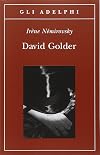
David Golder
by Irène Némirovsky
On This Page
Description
Translated by Sandra Smith, with an introduction by Patrick Marnham. In 1929, 26-year-old Irène Némirovsky shot to fame in France with the publication of her second novel David Golder. At the time, only the most prescient would have predicted the events that led to her extraordinary final novel Suite Française and her death at Auschwitz. Yet the clues are there in this astonishingly mature story of an elderly Jewish businessman who has sold his soul. Golder is a superb creation. Born into show more poverty on the Black Sea, he has clawed his way to fabulous wealth by speculating on gold and oil. When the novel opens, he is at work in his magnificent Parisian apartment while his wife and beloved daughter, Joy, spend his money at their villa in Biarritz. But Golder's security is fragile. For years he has defended his business interests from cut-throat competitors. Now his health is beginning to show the strain. As his body betrays him, so too do his wife and child, leaving him to decide which to pursue: revenge or altruism? Available for the first time since 1930, David Golder is a page-turningly chilling and brilliant portrait of the frenzied capitalism of the 1920s and a universal parable about the mirage of wealth. show lessTags
Recommendations






































Member Reviews
At first I thought I'd end up thoroughly hating it, but somewhere after the second third, when the betrayed old man faces his impossibly spoiled daughter (who probably isn't his), I gave in to the passion of the story and the pathos of the character, writ so large where others are merely sketches. For such a short book it's odd how difficult it felt--for one thing, Golder is a dead man walking, in agony for almost the entire time; for another, he's surrounded by a swarm of odious characters, none worse than his monstrously greedy wife and daughter.
But all of them, including Golder, who self-made himself out of the desperate Russian-Jewish mud, have substituted appetite for money for every other zeal in life. At least the young daughter show more still has the capacity to enjoy the intoxication of love--except that even to her it comes in the character of a degraded young aristocrat who lives off rich old women. Money could literally free and buy him for her, if only she could persuade Dad to open his wallet. (Mother hates her as a competitor, no help from that side.)
This seems to be based on Némirovsky's own experiences with her parents, and knowledge of moneyed circles.
It is easy to see the character of David Golder as antisemitic, but somehow it transcends the negative stereotype. One doesn't only feel sorry for Golder; once we see where he came from, his existential struggle becomes not only understandable but admirable--epic. Like all tragic heroes he loses tremendously; left in the end with no tangible achievements, only the fight he put up all his life gives a measure of his size. show less
But all of them, including Golder, who self-made himself out of the desperate Russian-Jewish mud, have substituted appetite for money for every other zeal in life. At least the young daughter show more still has the capacity to enjoy the intoxication of love--except that even to her it comes in the character of a degraded young aristocrat who lives off rich old women. Money could literally free and buy him for her, if only she could persuade Dad to open his wallet. (Mother hates her as a competitor, no help from that side.)
This seems to be based on Némirovsky's own experiences with her parents, and knowledge of moneyed circles.
It is easy to see the character of David Golder as antisemitic, but somehow it transcends the negative stereotype. One doesn't only feel sorry for Golder; once we see where he came from, his existential struggle becomes not only understandable but admirable--epic. Like all tragic heroes he loses tremendously; left in the end with no tangible achievements, only the fight he put up all his life gives a measure of his size. show less
There are two camps on Nemirovsky. Those who see her literary worth as negligible due to her anti-Semitism. Those who see her as a victim of Auschwitz and of the highest literary merit. I must say, as the capitalist marketing machinery goes, it showed exceptional chutzpah in promoting a person who was clearly first and foremost an anti-Semite as a victim of the anti-Semitic Nazis. But what the hell. It worked. Westerners greedily lapped up the invented idea of Nemirovsky, one of the gas chamber fallen, without the least concern as to the fact that what she wrote about Jewish people could have been cut and pasted into Nazi propaganda, no copy editor needed.
I am shocked at the disingenuity of the introduction of this book, the audacity of show more its spin.
‘By underminding the assumptions of the anti-Semitic right, Nemirovsky was playing a skilful double game.’
Just to be plain about what we are talking about, here is a description of ‘an old German Jew’, Soifer.
Of course, I could have just pulled out a piece out of context, but this IS the context. The entire book is written like this. She sold her stories to anti-Semitic publications, it was how she made her living. Let’s say, enough said.
But may we not put her anti-Semitism in a broader context? We have a special word for being negative about Jewish people in a way we don’t in general – a word like ‘racist’ doesn’t cover what we mean by it. And yet it is such a common thing when we think about the nature of her attitude rather than the label we put on it. Black people down on black people is an obvious example. My shrinking away in embarrassment in a pub here as I see Queenslanders being, well Queenslanders. Being in an émigré community and living with the sort of thing she deals with, the sponging, the people who are poor thinking their wealthier compatriots owe them something, even if just charity, the ones who are rich and sponge from you too. This is not a Jewish thing specifically, but she is writing about her community.
Stereotypes? Absolutely. But stereotypes exist because they are based on the real world. I know a lot of extremely wealthy Jewish people, Nemirovsky made me picture friends and acquaintances of mine more than once. She IS writing about what she knows. That’s what most writers do, it is so much easier than having the imagination to move past that.
Ruth Franklin wrote in the Guardian:
I’m sorry, I beg to differ. This stuff all rang so true for me. The husbands, the wives, the daughters. For the men it is no different to have the compulsion to make money than it is for a tennis player to have a compulsion to play tennis. One-dimensional? Absolutely. The women live to spend it. One-dimensional? Yep.
Extremely wealthy people are frequently like this, fullstop. Stereotypes are true.
Franklin continues later on:
I completely agree with her, Marnham’s introduction is an embarrassment, but I take issue with her last sentences there. Why shouldn’t Golder’s Jewishness be a defining trait? Is it any great surprise that it would be? As a kid I spent a bit of time in Haifa and a local asked me what I was religiously and I said ‘nothing.’ Our conversation didn’t pick up after that because he had no conception of nothing. Jewishness isn’t just about religion in the way that we Anglo-Saxons pigeonhole our religion, if we have any. It isn’t something one does on Sundays, like religion is at best for us.
But then, I also take issue with the idea that Golder is portrayed as a corrupt villain. He isn’t anything of the sort, he isn’t portrayed that way, he shouldn’t be seen that way either. Being a brutal businessman for whom the meaning of life is collecting money does not make you either a villain or corrupt. The characters are Jewish because she is writing about that community. They are despicable because it is a book about despicableness.
So, Nemirovsky is anti-Semitic. The amazing thing is that in a book where she talks about Jewish pigs and Jews and dirt and Jews and greed and Jews and miserliness and – she still manages to strike a chord. The book is completely engrossing, the main character has you on his side, which is quite an incredible achievement given what we have so far observed here. I guess I’m trying to explain the impact of this book by suggesting that we have to view anti-Semitic attitudes as having colour and broadness to them, ‘anti-Semitic is not anti-Semitic is not anti-Semitic.’ I wish I had a more elegant way of putting that. In the end this is a book about a businessman we could so easily hate, but we don’t. That is a triumph for the author.
Nonetheless, I remain extremely uneasy about liking this book for all the obvious reasons. show less
I am shocked at the disingenuity of the introduction of this book, the audacity of show more its spin.
‘By underminding the assumptions of the anti-Semitic right, Nemirovsky was playing a skilful double game.’
Just to be plain about what we are talking about, here is a description of ‘an old German Jew’, Soifer.
Bankrupted by inflation, Soifer had played the money markets and won everything back again. In spite of that, he had retained a mistrust of money, and the way revolutions and wars could transform it overnight into nothing but worthless bits of paper. It was a mistrust that seemed to grow as the years passed, and little by little, Soifer had invested his fortune in jewellery. He kept everything in a safe in London: diamonds, pearls, emeralds – all so beautiful that even Gloria had never owned any that could compare. Despite all this, his meanness bordered on madness. He lived in a sordid little furnished room, in a dingy street near Passy, and would never take taxis, even when a friend offered to pay. ‘I do not wish,’ he would say, ‘to indult in luxuries that I can’t afford myself.’ Instead, he would wait for the bus in the rain, in winter, for hours at a time, letting them go by one after the other if there was no room left in second class. All his life, he had walked on tiptoe so his shoes would last longer. For several years now, since he had lost all his teeth, he ate cereal and pureeed vegetables to avoid having to buy dentures….It was only his gaping, spluttering mouth…that inspired a feeling of revulsion and fear.’
Of course, I could have just pulled out a piece out of context, but this IS the context. The entire book is written like this. She sold her stories to anti-Semitic publications, it was how she made her living. Let’s say, enough said.
But may we not put her anti-Semitism in a broader context? We have a special word for being negative about Jewish people in a way we don’t in general – a word like ‘racist’ doesn’t cover what we mean by it. And yet it is such a common thing when we think about the nature of her attitude rather than the label we put on it. Black people down on black people is an obvious example. My shrinking away in embarrassment in a pub here as I see Queenslanders being, well Queenslanders. Being in an émigré community and living with the sort of thing she deals with, the sponging, the people who are poor thinking their wealthier compatriots owe them something, even if just charity, the ones who are rich and sponge from you too. This is not a Jewish thing specifically, but she is writing about her community.
Stereotypes? Absolutely. But stereotypes exist because they are based on the real world. I know a lot of extremely wealthy Jewish people, Nemirovsky made me picture friends and acquaintances of mine more than once. She IS writing about what she knows. That’s what most writers do, it is so much easier than having the imagination to move past that.
Ruth Franklin wrote in the Guardian:
In David Golder, an appalling book by any standard, Némirovsky spins an entire novel from that stereotype. The title character is an oil magnate who has sacrificed his life to his business and has nothing to show for it but money—money that his wife and daughter are constantly bleeding from him. His wife, Gloria, openly cuckolds him while expecting him to support her extravagant lifestyle. (When he enters the room, she hides her checkbook "as if it were a packet of love letters.") Their eighteen-year-old daughter, Joyce, forces him to gamble until he collapses to win her money for a new car. "It's just that I have to have everything on earth, otherwise I'd rather die!" she tells him. Golder, for his part, is alternately cruel and pathetic. In the novel's first scene, he mercilessly refuses to cut his own partner a break on the sale of some oil shares, showing no pity and offering no explanation: "'Business,' was all he murmured, as if he were naming some terrifying god."
In the hands of Edith Wharton or Ford Madox Ford, these characters might have acquired some complexity—perhaps a redeeming quality, or just a kind word at some point to someone. But Némirovsky's portrayals are relentlessly one-sided. The women come off particularly poorly. After the partner's suicide, Golder overhears his wife, wearing an enormous pearl necklace, negotiating with the undertaker to downgrade the quality of his coffin. Gloria, too, will pursue a bargain at any cost: she haggles with a woman trying to sell a fur coat to help her boyfriend pay off his debts, but while she is waiting for the woman to agree to a better price, the boyfriend kills himself. (Gloria sees herself as the loser here, because now "of course she'll keep the coat.")
I’m sorry, I beg to differ. This stuff all rang so true for me. The husbands, the wives, the daughters. For the men it is no different to have the compulsion to make money than it is for a tennis player to have a compulsion to play tennis. One-dimensional? Absolutely. The women live to spend it. One-dimensional? Yep.
Extremely wealthy people are frequently like this, fullstop. Stereotypes are true.
Franklin continues later on:
David Golder appeared in 1929. Would it be too much to say that such a book published in such a year was complicit, as many similar books were complicit, in the moral degradation of culture that became one of the causes of the imminent genocide? It has been painful to watch Némirovsky's contemporary defenders tying themselves into knots to explain this racist travesty of a novel. In his introduction to the British edition of David Golder, Patrick Marnham sets the context with his first sentence—"Irene Némirovsky died in Auschwitz in 1942"—and argues that "Men like Golder existed, and no doubt still exist. They had come a very long way, just how long we discover in the novel's devastating climax." He makes the book sound like merely a Continental version of William Dean Howells. And what does it mean to say that David Golder is true to life? To which part of life, exactly—the harshness of the arriviste's lot, or the Jew's love of money? "Golder is Jewish because Némirovsky was Jewish," Marnham writes, persisting in his argument that the book's ugliness is nothing but realism, "but her choice of an unsympathetic Jewish character did not make Némirovsky an anti-Semite any more than Robert Louis Stevenson was anti-Scottish because he created the diabolical figure of Ebenezer in Kidnapped." This lets Némirovsky off too easy. For Golder's Jewishness is not simply one of his many traits; it is his defining trait, the very essence of his being, the root from which his character and his corruption grows. And he is hardly an isolated case: all the novel's primary characters are Jewish, and all are despicable.
I completely agree with her, Marnham’s introduction is an embarrassment, but I take issue with her last sentences there. Why shouldn’t Golder’s Jewishness be a defining trait? Is it any great surprise that it would be? As a kid I spent a bit of time in Haifa and a local asked me what I was religiously and I said ‘nothing.’ Our conversation didn’t pick up after that because he had no conception of nothing. Jewishness isn’t just about religion in the way that we Anglo-Saxons pigeonhole our religion, if we have any. It isn’t something one does on Sundays, like religion is at best for us.
But then, I also take issue with the idea that Golder is portrayed as a corrupt villain. He isn’t anything of the sort, he isn’t portrayed that way, he shouldn’t be seen that way either. Being a brutal businessman for whom the meaning of life is collecting money does not make you either a villain or corrupt. The characters are Jewish because she is writing about that community. They are despicable because it is a book about despicableness.
So, Nemirovsky is anti-Semitic. The amazing thing is that in a book where she talks about Jewish pigs and Jews and dirt and Jews and greed and Jews and miserliness and – she still manages to strike a chord. The book is completely engrossing, the main character has you on his side, which is quite an incredible achievement given what we have so far observed here. I guess I’m trying to explain the impact of this book by suggesting that we have to view anti-Semitic attitudes as having colour and broadness to them, ‘anti-Semitic is not anti-Semitic is not anti-Semitic.’ I wish I had a more elegant way of putting that. In the end this is a book about a businessman we could so easily hate, but we don’t. That is a triumph for the author.
Nonetheless, I remain extremely uneasy about liking this book for all the obvious reasons. show less
Rich, greedy, unplesant....the eponymous Jewish businessman wheels and deals and shows no mercy.
And yet his wife and child are so vastly much worse that we feel for him, as - on his last legs with heart disease- they only bother with him if they want a hand-out.
Short, punchy and sad...the futility of worshipping wealth.
And yet his wife and child are so vastly much worse that we feel for him, as - on his last legs with heart disease- they only bother with him if they want a hand-out.
Short, punchy and sad...the futility of worshipping wealth.
I didn't enjoy this, not just because Golder is such an unsympathetic character, and not just because I'd heard good things about Nerimovsky's writing that seemed unjustified, but because I constantly felt uncomfortable with the ways Jewish people are portrayed - even though I'm not Jewish, but Nemirovsky was. Also, the sections about finance and commodity trading, though not extensive, were somewhat tedious.
Anyway, this short novel concerns the very wealthy, self-made (more than once) David Golder, in the 1930s, and his selfish, shallow, and avaricious wife and twenty-something daughter. They're all as bad as each other!
The pressure of providing for their lavish lifestyle, though enjoying few of the benefits himself, takes its toll on show more Godler's health, and there is a painfully vivid section describing his physical collapse.
There is heartbreak at the core of the book, but it's hard not to feel it is deserved. I don't mind a book with unsympathetic characters, but I like some light and shade.
The descriptions of Jews are invariably harsh (and red hair is mentioned oddly often, though I don't know if that is significant), even when quoting the speech or paraphrasing the thoughts of Jewish characters. And if that weren't bad enough, the whole thing is based on longstanding negative stereotypes, particularly about the Jewish affinity for money and meanness. It doesn't pretend that all Jews are like that - and yet there aren't any in this book who are appealing characters.
Overall, a strange, unpleasant and slightly boring book. show less
Anyway, this short novel concerns the very wealthy, self-made (more than once) David Golder, in the 1930s, and his selfish, shallow, and avaricious wife and twenty-something daughter. They're all as bad as each other!
The pressure of providing for their lavish lifestyle, though enjoying few of the benefits himself, takes its toll on show more Godler's health, and there is a painfully vivid section describing his physical collapse.
There is heartbreak at the core of the book, but it's hard not to feel it is deserved. I don't mind a book with unsympathetic characters, but I like some light and shade.
The descriptions of Jews are invariably harsh (and red hair is mentioned oddly often, though I don't know if that is significant), even when quoting the speech or paraphrasing the thoughts of Jewish characters. And if that weren't bad enough, the whole thing is based on longstanding negative stereotypes, particularly about the Jewish affinity for money and meanness. It doesn't pretend that all Jews are like that - and yet there aren't any in this book who are appealing characters.
Overall, a strange, unpleasant and slightly boring book. show less
One thing that struck me right from the beginning of this book was how nasty all of its characters were! The story begins with David Golder, a wealthy Jewish businessman living in Paris, telling his former colleague that he no longer wants to do business with him nor help him financially in any way. David Golder loves money and the power that money brings. David’s wife Gloria loves the jewels that David’s money can buy but pretty much doesn’t like anything else about her husband. David’s daughter likes …you guessed it…David’s money!
Now what in the world would make anyone want to read this book? First of all, it’s by Irene Nemirovsky, the author of the highly acclaimed Suite Francaise. She has a way of describing show more characters that make you want to keep reading. This is the issue, though. The main characters in this book are pretty much annoying if not outright despicable. They’re all Jewish. Interestingly enough, Irene Nemirovsky was a born Jew who later converted to Catholicism. While reading this book I kept wondering why the author made all of the Jewish characters so hateful.
The story read like a fairy tale. Each of its characters was so predictable that, as a reader, I was urged along to see what would happen in the end. Would they all perish from greed? Would they meet a horrible fate to befit the way they treated each other? That was the grab. It simply pulled me along because I wanted to know. show less
Now what in the world would make anyone want to read this book? First of all, it’s by Irene Nemirovsky, the author of the highly acclaimed Suite Francaise. She has a way of describing show more characters that make you want to keep reading. This is the issue, though. The main characters in this book are pretty much annoying if not outright despicable. They’re all Jewish. Interestingly enough, Irene Nemirovsky was a born Jew who later converted to Catholicism. While reading this book I kept wondering why the author made all of the Jewish characters so hateful.
The story read like a fairy tale. Each of its characters was so predictable that, as a reader, I was urged along to see what would happen in the end. Would they all perish from greed? Would they meet a horrible fate to befit the way they treated each other? That was the grab. It simply pulled me along because I wanted to know. show less
You'd only really read this if you'd read 'Suite Francaise'. It's not nearly as good, focusing as it does on one character, dislikeable businessman, David Golder, rather than on a cast of many. That said, it's still worth a read, especially as it sheds light on how Nemirovsky chose to portray Jewish identity, something she totally shies away from in her recently unearthed classic. She gives a warts and all portrayal, but I don't think she gives a caricature. In a way what happens to Golder is what happens to her. He tries to distance himself from his humble past once he attains great wealth, but in the end approaching death returns him to his roots; Nemirovsky did everything to assimilate into French society, even converting to show more Catholicism, yet her ethnic roots made it impossible for her to escape death. show less
2
È il secondo libro che leggo di Némirovsky e anche questa volta è riuscita a sorprendermi. È vero, non avevo nessuna aspettativa per questo romanzo, pensavo solo che vista l’esperienza precedente probabilmente mi sarebbe piaciuto, e così è stato. Eppure leggendo mi sorprendevo, non so come altro descrivere questa esperienza di lettura. Forse mi sorprendeva di identificarmi con un personaggio che non ha nulla a che vedere con me. O mi sorprendeva sentirmi tanto coinvolta da una storia in cui in realtà non accade mai molto. Sicuramente mi sorprendeva lo stile incredibile di Némirovsky. Fatto sta che più la leggo più apprezzo questa autrice, così come più leggevo più mi piaceva questo romanzo.
show more target="_top">http://www.naufragio.it/iltempodileggere/21750 show less
show more target="_top">http://www.naufragio.it/iltempodileggere/21750 show less
Members
- Recently Added By
Published Reviews
Irène Némirovsky, forfatteren av romansuksessen Storm i juni som ble gjenfunnet og utgitt 60 år etter hennes død, debuterte med den skarpe og stilsikre romanen David Golder som 26-åring i 1929. Romanen om finansmannen Golder er kanskje den mest kjente blant de av hennes bøker som ble utgitt i hennes egen levetid. Romanen ble filmatisert allerede i 1930, og sikret skuespilleren Harry show more Baurs gjennombrudd og sendere stjernestatus i Frankrike.
Finansmannen Golder driver sin kompanjong til selvmord. Det finnes åpenbart ingen grenser for hans trang til pengemakt. Selv om hjertet begynner å svikte og kona forlater ham når imperiet rakner, er David Golder ustoppelig. Bare penger, mer og mer av dem, og spekulasjoner om nye rikdommer gir ham følelsen av egenverdi og vitalitet. Golder er ensporet, men ruvende og fengslende. Og kanskje ser han sitt snitt til, på et vis, å kunne leve videre ...
"Et stykke litteratur på linje med Balsac og Dostojevskij." – New York Times, 1930
"Némirovsky mestret en spesiell form for komprimering av detaljer, som denne lille romanen er et bevis på, med gjenklang langt utover sideantall." – Observer
"Némirovskys litterære talent kommer til syne allerede i hennes debutroman, David Golder. Hun er en sjelden skarp og nådeløs iakttaker, men med et varmt og sjenerøst hjerte ... Storm i juni ble den verdensomspennende suksessen, men hennes øvrige arbeider bekrefter at dette er en forfatter med store lerreter – som fortjerner sin plass i litteraturhistorien." – Lire show less
Finansmannen Golder driver sin kompanjong til selvmord. Det finnes åpenbart ingen grenser for hans trang til pengemakt. Selv om hjertet begynner å svikte og kona forlater ham når imperiet rakner, er David Golder ustoppelig. Bare penger, mer og mer av dem, og spekulasjoner om nye rikdommer gir ham følelsen av egenverdi og vitalitet. Golder er ensporet, men ruvende og fengslende. Og kanskje ser han sitt snitt til, på et vis, å kunne leve videre ...
"Et stykke litteratur på linje med Balsac og Dostojevskij." – New York Times, 1930
"Némirovsky mestret en spesiell form for komprimering av detaljer, som denne lille romanen er et bevis på, med gjenklang langt utover sideantall." – Observer
"Némirovskys litterære talent kommer til syne allerede i hennes debutroman, David Golder. Hun er en sjelden skarp og nådeløs iakttaker, men med et varmt og sjenerøst hjerte ... Storm i juni ble den verdensomspennende suksessen, men hennes øvrige arbeider bekrefter at dette er en forfatter med store lerreter – som fortjerner sin plass i litteraturhistorien." – Lire show less
added by kirstenlund
Author Information

74+ Works 16,974 Members
Some Editions
Series
Belongs to Publisher Series
Work Relationships
Is contained in
Has the adaptation
Has as a commentary on the text
Has as a student's study guide
Common Knowledge
- Canonical title
- David Golder
- Original title
- David Golder
- Original publication date
- 1929
- People/Characters
- David Golder; Joyce Golder; Gloria Golder; Alec; Hoyos
- Important places
- Paris, Île-de-France, France; Biarritz, Pyrénées-Atlantiques, Nouvelle-Aquitaine, France
- Related movies*
- David Golder (1931 | IMDb)
- First words
- 'No', said Golder, tilting his desklamp so that the light shone directly into the face of Simon Marcus who was sitting opposite him on the other side of the table.
- Last words
- (Click to show. Warning: May contain spoilers.)It was the last sound he was to hear on this earth.
- Original language
- French
*Some information comes from Common Knowledge in other languages. Click "Edit" for more information.
Classifications
Statistics
- Members
- 551
- Popularity
- 53,883
- Reviews
- 20
- Rating
- (3.51)
- Languages
- 12 — Catalan, Chinese, Dutch, English, Finnish, French, German, Italian, Norwegian, Portuguese, Russian, Spanish
- Media
- Paper, Audiobook, Ebook
- ISBNs
- 38
- ASINs
- 11