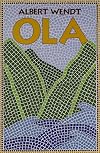
Ola
by Albert Wendt
On This Page
Description
When Olamaiileoti Monroe takes her seventy-five-year-old father, Finau, on a pilgrimage to the Holy Land, both are caught up in a search for understanding of each other and the ties that bind them. Their story unfolds on an international stage--in Samoa, New Zealand, New York, and Israel--and opposes the modern selfishness of Ola to the moral complexity of Finau.Tags
Member Reviews
Not the greatest story ever told. At times, it's boring, tedious, and Ola (through Wendt) has an incredibly nasty habit of Romanticizing EVERYTHING. If you're looking for nuance or detail regarding the issues between Samoans and white New Zealand , look elsewhere. And Ola herself is for all intents and purposes, a grossly unlikable character. Oddly enough she admits this every now and again but usually in an "aw shucks they all love me anyway" kind of way. Also, the descriptions of Israel and Israelis, not to mentioned Jews and Judaism, are insultingly reductive. But, there are some decent aspects to this novel. The narrative, if trimmed down significantly and given more of a detailed heft in terms of clarity and nuance, may have been show more gripping. But instead we get overly sentimentalized one sided idealism that refuses to think outside of a very burned in set of parameters. Read only if you have the acute interest or time. show less
Ratings
Members
- Recently Added By
Author Information

23+ Works 430 Members
The best-known writer from the South Pacific, Albert Wendt was born into a Samoan family. He left Samoa in 1952 to attend a high school in New Zealand as a scholarship student. He later received an M.A. in history from Victoria University in Wellington. After teaching at universities in Fiji and Samoa, Wendt now holds a professorship of Pacific show more studies at Auckland University. Wendt is the product of two cultures---the Samoan of his childhood and the European of his education. This inevitable clash of values figures in Wendt's first novel, Sons for the Return Home (1973), which recounts a doomed love affair between a Samoan man and a woman of European descent. The narrative also reveals how the young man feels torn between two cultural poles. Wendt's next novel, Pouliuli (1976), takes Samoan life as its subject. Sometimes called a South Pacific version of King Lear, the story follows the trials of an aged chief who tests those around him. Wendt's novel receiving the most attention is Leaves of the Banyan Tree (1979), a saga of Samoan family life that moves through several decades until the post-independence period. Flying-Fox in a Freedom Tree and The Birth and Death of the Miracle Man, Wendt's two collections of short stories, take up aspects of Samoan life---its traditions, its clashes with European culture, and its disintegration. In these stories Wendt rewrites old myths to show how tradition can instruct the present. Wendt has also published poetry, Inside Us the Dead (1976) and Shaman of Visions (1984), which incorporates the tropical beauty of Samoa and its oral traditions. He also has compiled several anthologies, including collections of poetry from Fiji, Western Samoa, the New Hebrides, and the Solomons. (Bowker Author Biography) show less
Awards and Honors
Classifications
Statistics
- Members
- 11
- Popularity
- 1,994,798
- Reviews
- 1
- Rating
- (3.67)
- Languages
- English
- Media
- Paper
- ISBNs
- 2