On Directing Film
by David Mamet
On This Page
Description
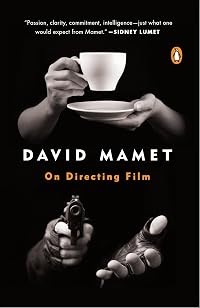
According to David Mamet, a film director must, above all things, think visually. Most of this instructive and funny book is written in dialogue form and based on film classes Mamet taught at Columbia University. He encourages his students to tell their stories not with words, but through the juxtaposition of uninflected images. The best films, Mamet argues, are composed of simple shots. The great filmmaker understands that the burden of cinematic storytelling lies less in the individual show more shot than in the collective meaning that shots convey when they are edited together. Mamet borrows many of his ideas about directing, writing, and acting from Russian masters such as Konstantin Stanislavsky, Sergei M. Eisenstein, and Vsevelod Pudovkin, but he presents his material in so delightful and lively a fashion that he revitalizes it for the contemporary reader. show lessTags
Recommendations
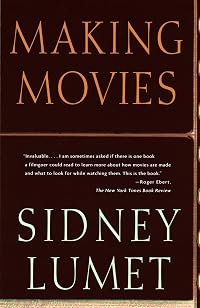
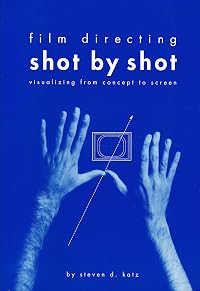
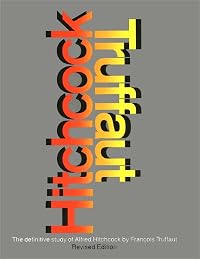
Member Reviews
This is a fast read, if a rather dry one. I picked it up on a recommendation from a friend who's much more in tune with film than I am, as one of a number of books recommended to help me start thinking about screenwriting. I do think that, in that specific aim, this book is useful for someone in the beginning stages of thinking about how to translate story onto film, and even from a more generic writing perspective, there are pearls of wisdom here worth real consideration. Is it something I'd recommend to any writer? No, probably not. But I am glad I read it and took the time to digest it in preparation for a first foray into screenwriting.
Mamet makes full use of Socratic Dialog in this short work. The to-the-point title might scare off those who are not deeply into film, but Mamet's easy to read yet highly interesting style is accessible to all.
With his lectures on how to direct a scene, Mamet speaks as much to the writers in his audience as he does to his film students.
I'd love to use this in an intro to creative writing workshop the next time I teach.
I'd love to use this in an intro to creative writing workshop the next time I teach.
Pretty basic, written after directing his first movie.
Amazon: According to David Mamet, a film director must, above all things, think visually. Most of this instructive and funny book is written in dialogue form and based on film classes Mamet taught at Columbia University. He encourages his students to tell their stories not with words, but through the juxtaposition of uninflected images. The best films, Mamet argues, are composed of simple shots. The great filmmaker understands that the burden of cinematic storytelling lies less in the individual shot than in the collective meaning that shots convey when they are edited together..
This book is really short. Secondly, Mamet says more in these hundred or so pages than most textbooks on the same subject. All that matters is that every scene show more serves a purpose and drives the story forward. True, there are exceptions to this rule but hearing Mamet tell it like it is with very little fat around his words is a refreshing alternative to long winded suggestions. show less
This book is really short. Secondly, Mamet says more in these hundred or so pages than most textbooks on the same subject. All that matters is that every scene show more serves a purpose and drives the story forward. True, there are exceptions to this rule but hearing Mamet tell it like it is with very little fat around his words is a refreshing alternative to long winded suggestions. show less
Ratings
Members
- Recently Added By
Author Information

209+ Works 11,672 Members
David Mamet, November 30, 1947 - David Mamet was born on November 30, 1947 in Flossmoor, Illinois. He attended Goddard College in Vermont and the Neighborhood Playhouse School of Theater in New York. He began his career as an actor and a director, but soon turned to playwriting. He won acclaim in 1976 with three Off-Broadway plays, "The Duck show more Variations," "Sexual Perversity in Chicago" and "American Buffalo." His work became known for it's strong male characters and the description of the decline of morality in the world. In 1984, Mamet received the Pulitzer Prize in Literature for his play, "Glengarry Glen Ross." In 1981, before he received the Pulitzer, Mamet tried his hand at screenwriting. he started by adapting "The Postman Always Rings Twice," and then adapting his own "Glengarry Glen Ross" as well as writing "The Untouchables" and Wag the Dog." He also taught at Goddard College, Yale Drama School and New York University. Mamet won the Jefferson Award in 1974, the Obie Award in 1976 and 1983, the New York Drama Critics Circle Award in 1977 and 1984, the Outer Circle Award in 1978, the Society of West End Theater Award in 1983, The Pulitzer Prize in 1984, The Dramatists Guild Hall-Warriner Award in 1984, and American Academy Award in 1986 and a Tony Award in 1987. He is considered to be one of the greatest artists in his field. (Bowker Author Biography) show less
Some Editions
Awards and Honors
Notable Lists
Work Relationships
Is contained in
Classifications
- Genres
- Nonfiction, General Nonfiction
- DDC/MDS
- 791.430233 — Arts & recreation Recreation, sports, and performing arts Public performances Motion pictures, radio, television, podcasting Motion pictures Standard subdivisions Supervision Film direction
- LCC
- PN1995.9 .P7 .M28 — Language and Literature Literature (General) Literature (General) Drama Motion pictures
- BISAC
Statistics
- Members
- 525
- Popularity
- 57,103
- Reviews
- 6
- Rating
- (3.76)
- Languages
- 5 — Chinese, English, German, Polish, Portuguese
- Media
- Paper
- ISBNs
- 8
- ASINs
- 3