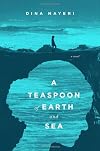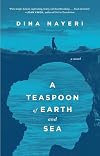
A Teaspoon of Earth and Sea
by Dina Nayeri
On This Page
Description
Fascinated with America, young Saba Hafezi of 1980s Iran becomes convinced that her suddenly missing mother and twin sister have departed for America without her, a situation that compels her to envision her twin's Western life throughout subsequent years.Tags
Recommendations







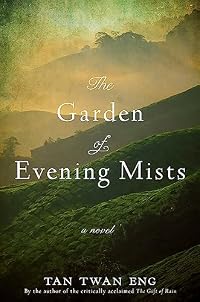
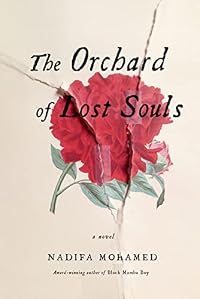
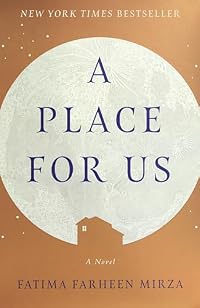






Member Recommendations


susanbooks Nayeri's novel takes place in an Iran that is remarkably like Gilead.
Member Reviews
Childhood memories are cherished things, brought forward in our lives as we grow up, and which slowly become dreamlike with distortions, filters, and embellishments. So it is with Saba Hafezi's memories of her twin sister, Mahtab. Inseparable, the girls grow up in the warmth of a village in Iran, where they are the cherished and pampered children of a well-educated Christian couple. Surrounded by secrets, of their faith, their education, and their mother's activities, they nonetheless feel grounded and secure.
And then Mahtab and their mother are gone.
Saba remembers the day they left to go to America. The ride to the airport, the mystery of where they were going and why, the color of her mother's scarf as she and Mahtab disappear in the show more crowd. Saba had been sick and not allowed to see Mahtab, a painful first that left Saba hollow. But they would be together soon, and on their way to America, the dream land the twins idolized as though it were a movie star or rock singer. But in a confusing twist of fate, Saba sees her mother and Mahtab leave without her. Crushed, Saba returns home with her father. From that day on Saba lives two lives: one, constricted by tradition and religion, in her rural hometown and the other in a fantasy America where her twin lives an extravagant and unfettered dream.
Saba grows up motherless and yet surrounded by mothers. Khanom Basir, the Evil One, wants the best for Saba, as long as that doesn't include marriage to her beloved son, Reza. Khanom Mansoori, the Ancient One, is nearly ninety and treats Saba as though she were the daughter she never had. Khanom Omidi, the Sweet One, squirrels away money made from her yogurt sales and always has a treat for the lonely girl. These three old woman, try to fill the void, but never really understand the well-educated and headstrong Saba. Their voices and memories add additional layers to the story of her life.
As Saba navigates the shoals of adolescence, first love, arranged marriage, and adulthood, snippets of meaning float to the surface which suggest that Saba's memories might hide a darker truth. The boundaries between memory, truth, and story are fluid and one's life is composed of bits of each. Just as Saba must choose how she tells her life story, so must the reader choose what to believe.
In an author's note, Dina Nayeri describes her own life story as the inverse of Saba's. Dina was raised in exile in America and dreams of what her life might have been like had her family remained in Iran after the revolution. She writes that this book is her own "Mahtab dream".
Although a first novel and in need of some tightening, A Teaspoon of Earth and Sea is intriguing and complex with some beautifully written passages. I look forward to seeing how the author's style evolves in future novels. show less
And then Mahtab and their mother are gone.
Saba remembers the day they left to go to America. The ride to the airport, the mystery of where they were going and why, the color of her mother's scarf as she and Mahtab disappear in the show more crowd. Saba had been sick and not allowed to see Mahtab, a painful first that left Saba hollow. But they would be together soon, and on their way to America, the dream land the twins idolized as though it were a movie star or rock singer. But in a confusing twist of fate, Saba sees her mother and Mahtab leave without her. Crushed, Saba returns home with her father. From that day on Saba lives two lives: one, constricted by tradition and religion, in her rural hometown and the other in a fantasy America where her twin lives an extravagant and unfettered dream.
Saba grows up motherless and yet surrounded by mothers. Khanom Basir, the Evil One, wants the best for Saba, as long as that doesn't include marriage to her beloved son, Reza. Khanom Mansoori, the Ancient One, is nearly ninety and treats Saba as though she were the daughter she never had. Khanom Omidi, the Sweet One, squirrels away money made from her yogurt sales and always has a treat for the lonely girl. These three old woman, try to fill the void, but never really understand the well-educated and headstrong Saba. Their voices and memories add additional layers to the story of her life.
As Saba navigates the shoals of adolescence, first love, arranged marriage, and adulthood, snippets of meaning float to the surface which suggest that Saba's memories might hide a darker truth. The boundaries between memory, truth, and story are fluid and one's life is composed of bits of each. Just as Saba must choose how she tells her life story, so must the reader choose what to believe.
In an author's note, Dina Nayeri describes her own life story as the inverse of Saba's. Dina was raised in exile in America and dreams of what her life might have been like had her family remained in Iran after the revolution. She writes that this book is her own "Mahtab dream".
Although a first novel and in need of some tightening, A Teaspoon of Earth and Sea is intriguing and complex with some beautifully written passages. I look forward to seeing how the author's style evolves in future novels. show less
 This review was written for LibraryThing Early Reviewers.
I was a bit wary of giving A Teaspoon of Earth and Sea a try because I've been in a bit of a slump lately with novels similar to this, namely, books with depressing settings that actually occur (or occurred) in the real world. It's easy to get tired of the type of book where you already know that bad, totally unfair things are going to happen to the characters just because of the world in which they live, and that such worlds and their situations are based on true examples of how people have lived.
But once I started reading, I was instantly gripped by Saba's story and the lyrical, poignant way in which it is presented. It becomes clear fairly early about what has really happened to Saba's twin and probably to her mother, yet the reader show more still feels like he or she must continue to cling on to hope that something about this is mistaken. At the same time, Saba's stories of her sister act as a fascinating allegory for Saba's own life, giving a deeper perspective her desires and frustrations. There's still the ever-present depressing element of the restrictive, unjust, and often violent and corrupt situation that oppresses Saba and others around her, but occasional happiness, healing, and triumph is balanced with the trauma, pain, and sadness, allowing the bleak aspects of the novel to become more manageable. show less
But once I started reading, I was instantly gripped by Saba's story and the lyrical, poignant way in which it is presented. It becomes clear fairly early about what has really happened to Saba's twin and probably to her mother, yet the reader show more still feels like he or she must continue to cling on to hope that something about this is mistaken. At the same time, Saba's stories of her sister act as a fascinating allegory for Saba's own life, giving a deeper perspective her desires and frustrations. There's still the ever-present depressing element of the restrictive, unjust, and often violent and corrupt situation that oppresses Saba and others around her, but occasional happiness, healing, and triumph is balanced with the trauma, pain, and sadness, allowing the bleak aspects of the novel to become more manageable. show less
This review was written for LibraryThing Early Reviewers.This beautifully-written book is a coming of age story set in post-revolutionary Iran. Saba Hafezi is obsessed with English language and American culture, a dangerous pursuit in revolutionary Iran. This interest is cemented by Saba's memories of her mother and twin sister migrating to the United States in the midst of the revolution. Saba has to deal with the emotional baggage of being the twin left behind, while trying to find her way in a confusing world with few opportunities for smart young women. Saba's own story is interwoven with the stories she tells about her mother and sister. Storytelling becomes the way that Saba works out her sadness and grief.
This book provides a fascinating look at growing up in the Iran of the 1980s. show more Saba lives in a rural area. Her remoteness from the capital provides her with some protection, but she longs for the cosmopolitan Tehran she remembers from pre-revolutionary days. In a broader sense, this is a book about a community coming to terms with a confusing new society. Over the course of the book the presence of the moral police becomes heavier, and the opportunities for a smart young woman like Saba diminish. The author pays significant attention to the development of Saba's relationship with her closest female friend, Ponneh. Each woman takes a very different path to dealing with the restrictions of the new Iran, and neither finds complete satisfaction.
In language and description this is a beautiful book. I was drawn in by Saba and her community. I was less interested in the stories she told about Mahtab, and occasionally found these a bit ponderous. Overall, though, a very moving book. show less
This book provides a fascinating look at growing up in the Iran of the 1980s. show more Saba lives in a rural area. Her remoteness from the capital provides her with some protection, but she longs for the cosmopolitan Tehran she remembers from pre-revolutionary days. In a broader sense, this is a book about a community coming to terms with a confusing new society. Over the course of the book the presence of the moral police becomes heavier, and the opportunities for a smart young woman like Saba diminish. The author pays significant attention to the development of Saba's relationship with her closest female friend, Ponneh. Each woman takes a very different path to dealing with the restrictions of the new Iran, and neither finds complete satisfaction.
In language and description this is a beautiful book. I was drawn in by Saba and her community. I was less interested in the stories she told about Mahtab, and occasionally found these a bit ponderous. Overall, though, a very moving book. show less
This review was written for LibraryThing Early Reviewers.A Teaspoon of Earth and Sea by Dina Nayeri Narrated by, Sneha Mathan
I received this book from the Librarything Early Reviewers Program but was having a hard time with the names so I bought it on audio and I’m very glad I did!
When Saba is 11 years old she remembers her twin sister Mahtab and her mother getting on a plane to America and leaving her and her father in Iran…This is what she remembers but is this what happened?
I felt Saba was an unreliable narrator she makes up this whole life for her twin sister Mahtab and her mother they go to America and she has this free American life and goes to Harvard and becomes a journalist which is Saba’s dream. As a reader you will have an inkling in the back of your head as to what really show more happened where they really are but until it is actually revealed you want to believe Saba. Also the reveal for me wasn’t what I expected but I don’t want to say too much more about that!
Saba is not always likable but yet you feel for her. Saba always felt like she was missing out so she made up these wondrous stories of what her sister was accomplishing in the US even though she had a pretty normal upbringing considering it is Iran in the 80’s it isn’t till she is older ,well marrying age, that this doesn’t quite hold true anymore. I kind of felt bad for her father at times, I felt like she treated him like a second class citizen when he was all she had and was trying his best, and I was glad to see that as she got older she realized this.
This is a really good story though at times a little hard to follow, it was nice to read a story about Iran that didn’t have so much violence , yes there is some but it comes from something/someone different than you will expect it to. This is the story of a family and a young girl’s life without her twin and mother and how that affects her entire life and who she becomes.
Sneha Mathan narration is well done her accent is not to strong; I think it's just the right amount to convey they are in Iran. She has a great voice and I thought she really helped convey the emotions of everyone she narrated. This was my first book narrated by Sneha Mathan but I don’t think it will be my last as I really enjoyed her voice.
4 Stars show less
I received this book from the Librarything Early Reviewers Program but was having a hard time with the names so I bought it on audio and I’m very glad I did!
When Saba is 11 years old she remembers her twin sister Mahtab and her mother getting on a plane to America and leaving her and her father in Iran…This is what she remembers but is this what happened?
I felt Saba was an unreliable narrator she makes up this whole life for her twin sister Mahtab and her mother they go to America and she has this free American life and goes to Harvard and becomes a journalist which is Saba’s dream. As a reader you will have an inkling in the back of your head as to what really show more happened where they really are but until it is actually revealed you want to believe Saba. Also the reveal for me wasn’t what I expected but I don’t want to say too much more about that!
Saba is not always likable but yet you feel for her. Saba always felt like she was missing out so she made up these wondrous stories of what her sister was accomplishing in the US even though she had a pretty normal upbringing considering it is Iran in the 80’s it isn’t till she is older ,well marrying age, that this doesn’t quite hold true anymore. I kind of felt bad for her father at times, I felt like she treated him like a second class citizen when he was all she had and was trying his best, and I was glad to see that as she got older she realized this.
This is a really good story though at times a little hard to follow, it was nice to read a story about Iran that didn’t have so much violence , yes there is some but it comes from something/someone different than you will expect it to. This is the story of a family and a young girl’s life without her twin and mother and how that affects her entire life and who she becomes.
Sneha Mathan narration is well done her accent is not to strong; I think it's just the right amount to convey they are in Iran. She has a great voice and I thought she really helped convey the emotions of everyone she narrated. This was my first book narrated by Sneha Mathan but I don’t think it will be my last as I really enjoyed her voice.
4 Stars show less
This review was written for LibraryThing Early Reviewers.There is a lot going on in this novel, set in Iran after the cultural revolution. It begins with the fracturing of a family: Saba and her father remain in Iran, while Saba’s mother and her twin sister Mahtab disappear from their lives. Saba is told that her sister drowned, but swears that she vividly recalls seeing her sister and mother get on a plane to America, leaving her and her father behind.
Saba attempts to fill the void of the loss of her twin, by forging a friendship with Mahtab’s best friend Ponneh. The two girls along with their neighbor Reza, form a tight-knit trio, but Saba often feels separate due to their differences in status; Reza and Ponneh are villagers, and Saba’s father is the owner of his own farm, for whom show more many of the villagers work. As the trio gets older, an inevitable love triangle forms.
Meanwhile, Saba creates an imagined life for her sister in America, and is mothered by several of the village women, whose perspectives we also get in some of the chapters. The story unfolds against the backdrop of an increasingly restrictive Iran. As Saba continues to revel in Western TV shows and literature , the love of which she shared with her sister, she finds herself torn between her imaginings of western life and the familiar, but restrictive, life she knows in Iran.
There were times when the novel seemed to drag (it weighs in at 420 pages), and Mahtab’s story became somewhat less compelling once the reader figures out what has actually happened. But the author does such a beautiful job of calling up the complexities of Iranian life and culture, that the reader gets to live for a time in that country. It is a fascinating journey across the world, and Iran, with all its contrasts and complexities, comes to life in the pages of this novel. show less
Saba attempts to fill the void of the loss of her twin, by forging a friendship with Mahtab’s best friend Ponneh. The two girls along with their neighbor Reza, form a tight-knit trio, but Saba often feels separate due to their differences in status; Reza and Ponneh are villagers, and Saba’s father is the owner of his own farm, for whom show more many of the villagers work. As the trio gets older, an inevitable love triangle forms.
Meanwhile, Saba creates an imagined life for her sister in America, and is mothered by several of the village women, whose perspectives we also get in some of the chapters. The story unfolds against the backdrop of an increasingly restrictive Iran. As Saba continues to revel in Western TV shows and literature , the love of which she shared with her sister, she finds herself torn between her imaginings of western life and the familiar, but restrictive, life she knows in Iran.
There were times when the novel seemed to drag (it weighs in at 420 pages), and Mahtab’s story became somewhat less compelling once the reader figures out what has actually happened. But the author does such a beautiful job of calling up the complexities of Iranian life and culture, that the reader gets to live for a time in that country. It is a fascinating journey across the world, and Iran, with all its contrasts and complexities, comes to life in the pages of this novel. show less
This review was written for LibraryThing Early Reviewers.From the very beginning I didn't want to put this book down, but it's somehow still hard for me to describe how I felt about it. I'm finding it particularly hard to do so without giving away too much of what happens.
Dina Nayeri's writing is beautiful, and the people and places she describes become visible and vibrant on the page, no matter their foreignness. Foreignness, culture shock, and convention are running themes throughout the book and they're used to great effect in the hands of Nayeri's multiple narrators.
The action is driven primarily by two pressing questions: What has happened to the main character's twin sister, and what has happened to the girls' mother? There's a risk in choosing to drive a book this way that the payoff show more won't be there in the end, that the answers will feel insufficient. In think in this case the writing is so wonderful that it outweighs the sort of flat feeling one is left with when one gets, third-hand, the answers the main character is after, but it is a bit of a let-down nonetheless. It's not, in my opinion, a reason not to bother with the book - the pleasure of reading the writing here is exquisite - but more and more lately I read these books with gorgeous stories and gorgeous writing that feel, in the end, as if they needed another fifteen minutes in the oven, so to speak. But I did really love this book, and I would definitely recommend it. show less
Dina Nayeri's writing is beautiful, and the people and places she describes become visible and vibrant on the page, no matter their foreignness. Foreignness, culture shock, and convention are running themes throughout the book and they're used to great effect in the hands of Nayeri's multiple narrators.
The action is driven primarily by two pressing questions: What has happened to the main character's twin sister, and what has happened to the girls' mother? There's a risk in choosing to drive a book this way that the payoff show more won't be there in the end, that the answers will feel insufficient. In think in this case the writing is so wonderful that it outweighs the sort of flat feeling one is left with when one gets, third-hand, the answers the main character is after, but it is a bit of a let-down nonetheless. It's not, in my opinion, a reason not to bother with the book - the pleasure of reading the writing here is exquisite - but more and more lately I read these books with gorgeous stories and gorgeous writing that feel, in the end, as if they needed another fifteen minutes in the oven, so to speak. But I did really love this book, and I would definitely recommend it. show less
This review was written for LibraryThing Early Reviewers.A Teaspoon of Earth and Sea is a poignant tale of twin sisters growing up in Iran. Saba and Mahtab were mirror images of each other until the day Saba’s mother left and Saba saw Mahtab being dragged away. Forced to be alone for the first time, Saba finds friendship with two local village children, Ponneh and Reza. As the children grow up in a changing 1980s Iran where American books, magazines and video tapes are prized, they are forced to confront harsh realities of the new regime. Some events will be life changing, but throughout Saba clings to the memory that Mahtab and her mother are safely in America.
I enjoy books set in a different culture to my own and this tale is no exception. Reading this book helped me to understand more show more about what some of my friends and colleagues went through when they left Iran in the early 1990s. A lot of the everyday rules and rituals were foreign to me – such as the banning of alcohol and not being able to wear the shoes you want outside. Saba’s frequent mistakes and flaunting of the rules had much more severe consequences that I could envisage.
The predominant question as Saba and her friends are growing up is, ‘where is Mahtab?’ People try to tell her that Mahtab’s gone, but Saba won’t listen and her father won’t reveal the truth. The constant questioning got a little annoying for me as I could tell that I wasn’t going to find out any time soon. As the children grew older, the questioning lessened and Saba, Ponneh and Reza began to become tangled up in a whole new set of problems. I did like Saba’s tellings of Mahtab’s life in America (heavily influenced by movies and television, such as Growing Pains and Love Story) and looked forward to reading new ‘episodes’.
Storytelling is a major part of the plot, as is working out what is truth and what is fiction. Saba struggles to work out the many uncertainties in her life and why they have happened. It’s only as she faces the truth that she starts to heal. Separate chapters by Reza’s mother gives some clue that Saba isn’t always telling the truth. These chapters also help to shape the setting, which is beautifully described by Nayeri. The setting of rural Iran where somebody is always watching and no-one is safe is beautiful but unsettling.
This is a quietly emotional book that packed a punch at its conclusion – I was hoping I was mistaken in the fate of some of the characters. The contrasts Saba makes between herself and Mahtab are quite sad, highlighted in the different opportunities available to women in Iran and America.
Thank you to The Reading Room and Allen and Unwin for the ARC of this book.
http://samstillreading.wordpress.com show less
I enjoy books set in a different culture to my own and this tale is no exception. Reading this book helped me to understand more show more about what some of my friends and colleagues went through when they left Iran in the early 1990s. A lot of the everyday rules and rituals were foreign to me – such as the banning of alcohol and not being able to wear the shoes you want outside. Saba’s frequent mistakes and flaunting of the rules had much more severe consequences that I could envisage.
The predominant question as Saba and her friends are growing up is, ‘where is Mahtab?’ People try to tell her that Mahtab’s gone, but Saba won’t listen and her father won’t reveal the truth. The constant questioning got a little annoying for me as I could tell that I wasn’t going to find out any time soon. As the children grew older, the questioning lessened and Saba, Ponneh and Reza began to become tangled up in a whole new set of problems. I did like Saba’s tellings of Mahtab’s life in America (heavily influenced by movies and television, such as Growing Pains and Love Story) and looked forward to reading new ‘episodes’.
Storytelling is a major part of the plot, as is working out what is truth and what is fiction. Saba struggles to work out the many uncertainties in her life and why they have happened. It’s only as she faces the truth that she starts to heal. Separate chapters by Reza’s mother gives some clue that Saba isn’t always telling the truth. These chapters also help to shape the setting, which is beautifully described by Nayeri. The setting of rural Iran where somebody is always watching and no-one is safe is beautiful but unsettling.
This is a quietly emotional book that packed a punch at its conclusion – I was hoping I was mistaken in the fate of some of the characters. The contrasts Saba makes between herself and Mahtab are quite sad, highlighted in the different opportunities available to women in Iran and America.
Thank you to The Reading Room and Allen and Unwin for the ARC of this book.
http://samstillreading.wordpress.com show less
Members
- Recently Added By
Lists

Books whose title names an object usually found in the kitchen
171 works; 14 members
Author Information

14+ Works 1,654 Members
Some Editions
Awards and Honors
Awards
Common Knowledge
- Canonical title
- A Teaspoon of Earth and Sea
- Original title
- A Teaspoon of Earth and Sea
- Original publication date
- 2013
- People/Characters
- Saba Hafezi; Mahtab Hafezi
- Important places
- Iran
- Important events
- Iranian Revolution
- Dedication
- For Philip and for Baba Hajji, whom I once longed to see together in the same room.
- First words
- This is the sum of all that Saba Hafezi remembers from the day her mother and twin sister flew away forever, maybe to America, maybe to somewhere even farther out of reach.
- Publisher's editor
- Swinkels, Pieter
- Blurbers
- Kwok, Jean; Huneven, Michelle
- Original language
- English
Classifications
Statistics
- Members
- 292
- Popularity
- 109,598
- Reviews
- 35
- Rating
- (3.67)
- Languages
- 5 — English, French, German, Italian, Swedish
- Media
- Paper, Audiobook, Ebook
- ISBNs
- 25
- ASINs
- 3