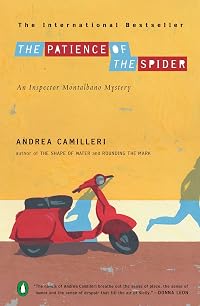
On This Page
Description
Still recovering from his gunshot wound, Inspector Montalbano is feeling the weight of his years, and of his solitude. He's getting softer, more introspective, and critical of his life choices. But if withdrawing from society has become natural of late, he'll soon be forced to interact with others, compelled to intervene as a web of hatred and secrets threatens to squeeze its victims to death. This is Montalbano's most unusual and challenging case yet - and the one that will either change show more him or break him. show lessTags
Recommendations



















Member Reviews
The Publisher Says: Winning fans in Europe and America for their dark sophistication and dry humor, Andrea Camilleri's crime novels are classics of the genre. Set once again in Sicily, The Patience of the Spider pits Inspector Montalbano against his greatest foe yet: the weight of his own years. Still recovering from the gunshot wound he suffered in Rounding the Mark, he must overcome self-imposed seclusion and waxing self-doubt to penetrate a web of hatred and secrets in pursuit of the strangest culprit he's ever hunted. A mystery unlike any other, this emotionally taut story brings the Montalbano saga to a captivating crossroads.
My Review: Montalbano's near-fatal wound in the previous book is the reason this story could work at all. show more This is Sicily, after all, and revenge tales must be told. This one, like all the best revenge stories (eg, [book:The Count of Monte Cristo|7126], [book:Gone Girl|19288043]), is a slow-burn simmering of malefactors and miscreants in the deep waters of their indifference's costs to innocent souls around them.
Since Montalbano is recuperating from an undeniable wound, he is the only one fit to pursue the consequences of wounding so very deep it saps the will to live. He is his crusty self, irking Livia (come from Genoa to nurse him back to health) and worrying Fazio and Mimì into making painful mistakes in their attempts to fill his inspector-shoes; baiting the oblivious Catarella (a musical-comedy Sicilian if there ever was one, and a character that could only be written by uber-Sicilian Camilleri with impunity) and insufferable, smug Latte-with-an-S-at-the-end (as Catarella calls Lattes, secretary to the regional boss over Montalbano). So far, so familiar.
But it's the down-time that Montalbano is forced to take that is his primary tool in unraveling this operatic plot. He thinks, as he always does, through the parameters of the puzzle a penniless bore's daughter's kidnapping presents. He has the leisure, enforced by dictates from Lattes, that allows his synesthetic imagination to record quite forcefully impressions that, in the end, form a pattern...a web...and there's just no doubt that Salvo has saved the day with his solution. He makes a judgment call. He is, in my never-remotely humble opinion, absolutely correct in his call. And after all, isn't that why we read series mysteries? The sleuth solves the crime...satisfying enough...the author provides us with the clues...Camilleri certainly does that...and then Right is Done.
Unlike in real life, sadly.
It's all too clear that Montalbano's appeal is catholic; many who read the novels do so for the gorgeous foods...rabbit simmered in caponata, swoon!...and still others do so for the intricacies of the puzzles. A broad tent, this Camilleri spreads.
I read these novels for those reasons, and more. I love the small details, a Simenon "hard novel" or a Sciascia historical fiction, a dead shopkeeper with a significant name, Livia's conflicted glance in the airport, the uncle and the others having no names; the ones in plain sight, the ones that tell a much subtler, infinitely more personal tale. Camilleri put himself in his books as Hitchcock did in his movies. He is there if you look away, he looms if your back turns just slowly enough, Camilleri newly dead haunts his fifteen-year-old fictions because he put his spirit in our entertainment and never once demanded that we look at him.
What a wily old dramaturg he really was. If anyone lived up to the traditional birthday wish, "Cent'anni!" I do so wish it had been he. show less
My Review: Montalbano's near-fatal wound in the previous book is the reason this story could work at all. show more This is Sicily, after all, and revenge tales must be told. This one, like all the best revenge stories (eg, [book:The Count of Monte Cristo|7126], [book:Gone Girl|19288043]), is a slow-burn simmering of malefactors and miscreants in the deep waters of their indifference's costs to innocent souls around them.
Since Montalbano is recuperating from an undeniable wound, he is the only one fit to pursue the consequences of wounding so very deep it saps the will to live. He is his crusty self, irking Livia (come from Genoa to nurse him back to health) and worrying Fazio and Mimì into making painful mistakes in their attempts to fill his inspector-shoes; baiting the oblivious Catarella (a musical-comedy Sicilian if there ever was one, and a character that could only be written by uber-Sicilian Camilleri with impunity) and insufferable, smug Latte-with-an-S-at-the-end (as Catarella calls Lattes, secretary to the regional boss over Montalbano). So far, so familiar.
But it's the down-time that Montalbano is forced to take that is his primary tool in unraveling this operatic plot. He thinks, as he always does, through the parameters of the puzzle a penniless bore's daughter's kidnapping presents. He has the leisure, enforced by dictates from Lattes, that allows his synesthetic imagination to record quite forcefully impressions that, in the end, form a pattern...a web...and there's just no doubt that Salvo has saved the day with his solution. He makes a judgment call. He is, in my never-remotely humble opinion, absolutely correct in his call. And after all, isn't that why we read series mysteries? The sleuth solves the crime...satisfying enough...the author provides us with the clues...Camilleri certainly does that...and then Right is Done.
Unlike in real life, sadly.
It's all too clear that Montalbano's appeal is catholic; many who read the novels do so for the gorgeous foods...rabbit simmered in caponata, swoon!...and still others do so for the intricacies of the puzzles. A broad tent, this Camilleri spreads.
I read these novels for those reasons, and more. I love the small details, a Simenon "hard novel" or a Sciascia historical fiction, a dead shopkeeper with a significant name, Livia's conflicted glance in the airport, the uncle and the others having no names; the ones in plain sight, the ones that tell a much subtler, infinitely more personal tale. Camilleri put himself in his books as Hitchcock did in his movies. He is there if you look away, he looms if your back turns just slowly enough, Camilleri newly dead haunts his fifteen-year-old fictions because he put his spirit in our entertainment and never once demanded that we look at him.
What a wily old dramaturg he really was. If anyone lived up to the traditional birthday wish, "Cent'anni!" I do so wish it had been he. show less
At last I figured out the plot to a Montalbano novel before the end. All I had to do was learn to think like a Sicilian and ponder family dynamics!
As always in the Montalbano series, Sicily itself is a character. The weather, the countryside, the sea, and the food. Oh, yes, the food. Salvo Montalbano stays in amazing shape although he never turns down a good meal and lives for excellent ones. In this novel he eats at some of his usual places and at some new ones during the course of an investigation into a kidnapping. Livia is on hand to hector the still convalescing Montalbano, and Salvo himself actually meets another inspector who is both competent and honest!
As for the mystery, Andrea Camilleri plays fair with the reader. An alert show more reader will pass by the key clue the first time, but when it comes up again, it will untie this knot of a mystery.
The Montalbano series is a delight and this is a solid entry into it. Recommended for mystery lovers and for people who'd like to escape lockdown and visit Sicily. show less
As always in the Montalbano series, Sicily itself is a character. The weather, the countryside, the sea, and the food. Oh, yes, the food. Salvo Montalbano stays in amazing shape although he never turns down a good meal and lives for excellent ones. In this novel he eats at some of his usual places and at some new ones during the course of an investigation into a kidnapping. Livia is on hand to hector the still convalescing Montalbano, and Salvo himself actually meets another inspector who is both competent and honest!
As for the mystery, Andrea Camilleri plays fair with the reader. An alert show more reader will pass by the key clue the first time, but when it comes up again, it will untie this knot of a mystery.
The Montalbano series is a delight and this is a solid entry into it. Recommended for mystery lovers and for people who'd like to escape lockdown and visit Sicily. show less
Montalbano is recovering from a gunshot wound, with the tender(?) ministrations of Livia, who has temporarily moved in, when he is called back to participate in the investigation of a kidnapping of a young woman. As much fun as usual, with a neat, if fairly obvious, plot twist, and justice served outside the bounds of the legal system for the most part. I just have to say it, though---Livia is so disagreeable, and she can't cook worth a damn. So why does Montalbano stick with her? I don't think Camilleri likes women much, but doesn't he like Montalbano? Couldn't he find someone better out there for the poor Inspector?
Review written August 2014
Review written August 2014
5 stars? Yes. It was funny, insightful, and surprising. What a great summer read. Among the details which I enjoy: the attention paid to details. I stopped today and watched a spider web carefully, inspired by the dear detective. He listens to his body, listens to his emotions and is self-reflective. My only regret is, as I've mentioned before in reviews of this series, that women are remarkable only for their cooking skills or their beauty. (I write that and immediately I know it's not true. Ingrid drives a car well. It would be difficult to characterize Livia.)
I am bothered by the idea that devoting oneself to being useful (finally?) can compensate for an act of deception, however worthy the recipient is. (The recipient here is either show more the deceived or the benefactor of the deception.) Worthy of discussion,then, the inspector's question: can great love grow out of great hatred? show less
I am bothered by the idea that devoting oneself to being useful (finally?) can compensate for an act of deception, however worthy the recipient is. (The recipient here is either show more the deceived or the benefactor of the deception.) Worthy of discussion,then, the inspector's question: can great love grow out of great hatred? show less
Confesso di avere dei Montalbano non letti e che uso nei momenti del bisogno. Perché sono consolatori, non tanto per la storia - dipingono il nostro presente con precisione chirurgica, anche se non vogliamo vedere - ma perché è come ritrovare ogni volta dei vecchi amici. Non solo Montalbano, ma tutto il suo mondo. Mi piace indagare con lui, avere gli stessi dubbi nello stesso momento, intuire la soluzione. Mi piace anche la scrittura, così misurata, così realistica senza bisogno di sbracare. Bello, come sempre.
First Line: He jolted awake, sweaty and short of breath.
Still recuperating from the events which occurred in Rounding the Mark, Salvo Montalbano is called back to work when a young woman is kidnapped. The investigation has the added bonus of giving him something to think about other than his own mortality. Unable to let his colleagues handle the case themselves, Montalbano finds himself focusing on very subtle clues, such as the direction in which the kidnapped woman's motorbike is pointed, and it doesn't take him long to believe that this case has more to do with extortion than it does kidnapping.
Although I love this series and enjoyed the book, it is a weaker entry in the series. The plot machinations leading up to the identity of the show more kidnapper were rather transparent, and there was a bit too much of Montalbano's solo ponderings and not enough of his excellent (and hilarious) team. There was also a bit too much of Livia in this one. I don't appreciate Livia as much as others might; it seems she flies into town just to argue with Montalbano, and I've never been a fan of prima donnas and fighting.
Be that as it may, this is still one of my favorite mystery series, and I can't wait to read Montalbano's next adventure! show less
Still recuperating from the events which occurred in Rounding the Mark, Salvo Montalbano is called back to work when a young woman is kidnapped. The investigation has the added bonus of giving him something to think about other than his own mortality. Unable to let his colleagues handle the case themselves, Montalbano finds himself focusing on very subtle clues, such as the direction in which the kidnapped woman's motorbike is pointed, and it doesn't take him long to believe that this case has more to do with extortion than it does kidnapping.
Although I love this series and enjoyed the book, it is a weaker entry in the series. The plot machinations leading up to the identity of the show more kidnapper were rather transparent, and there was a bit too much of Montalbano's solo ponderings and not enough of his excellent (and hilarious) team. There was also a bit too much of Livia in this one. I don't appreciate Livia as much as others might; it seems she flies into town just to argue with Montalbano, and I've never been a fan of prima donnas and fighting.
Be that as it may, this is still one of my favorite mystery series, and I can't wait to read Montalbano's next adventure! show less
Following Rounding the Mark as the eighth novel in this series, Inspector Salvo Montalbano is on leave, recuperating from events at the end of the previous story. Livia is there with him at the house in Marinella, but sadly that means that Adelina is not there to cook for him. Instead, he's been put on a low-calorie diet, and his life right at the moment is like his food -- rather bland and circumscribed. But when a young girl, Susanna Mistretta, is kidnapped, Montalbano is temporarily recalled to duty to solve the case. But as it turns out, it won't be Montalbano's case at all. His job is to investigate and report to Inspector Filippo (Fifi) Minutolo, a colleague who's an expert in this area, ostensibly because he's a Calabrian from show more Messina who, according to Bonetti-Alderighi, "should know a lot about kidnappings." He is to be the "Dora, the Riparia, or the Baltea" to Minutolo's Po.
Absolutely no one can understand exactly why anyone would choose to kidnap Susanna Mistretta -- her family is broke, her mother is gravely ill, and neither she nor her father is someone really important. The police will just have to wait, but Montalbano, of course, cannot just sit tight waiting for the kidnapper's demands to surface. Furthermore, the entire town, it seems, is getting involved. And this time Montalbano doesn't just have his annoying boss breathing down his neck -- surprisingly, Livia is constantly on him about the case. He didn't tell her soon enough. He's a hypocrite. He's not doing enough.
To be perfectly honest, I figured this out so early in the story that I really didn't feel like finishing the book. But I stuck with it, not just to prove myself right, but because the mysteries and their solutions are not the only reasons I read these novels. There are the delightful characters, of course, but also, not one sensory experience is left out of Camilleri's descriptions of Sicily, not even smell -- Montalbano is able to experience smells as colors in a condition known as synesthesia. I get this sense that Camilleri isn't always delighted with "progress" -- he successfully juxtaposes the beauty of the mountains, sand and sea with the ugliness of a man-made environment that impedes on the natural surroundings. Add to that Camilleri's commentary (via his characters and his plots) on the corrupt dealings of Italy's power brokers and you begin to understand why Camilleri writes what and how he does. Not unlike many other writers in the realm of translated crime fiction, he's got a set of truths (as he sees them) to get across to his readers. But in the end, it's Montalbano's sense of justice and his keen observations of human nature that round out this story, so that guessing the solution early on isn't so bad. It's also funny to watch Salvo sneaking away for decent food...these were some of the funnier moments of this book.
I'm not going to say that I loved this book, because I didn't, but it was okay. And although perhaps not the best in the bunch, The Patience of the Spider is still good reading, and my hat is tipped high in the air to Stephen Sartarelli, who brings the story to his English readers so perfectly! show less
Absolutely no one can understand exactly why anyone would choose to kidnap Susanna Mistretta -- her family is broke, her mother is gravely ill, and neither she nor her father is someone really important. The police will just have to wait, but Montalbano, of course, cannot just sit tight waiting for the kidnapper's demands to surface. Furthermore, the entire town, it seems, is getting involved. And this time Montalbano doesn't just have his annoying boss breathing down his neck -- surprisingly, Livia is constantly on him about the case. He didn't tell her soon enough. He's a hypocrite. He's not doing enough.
To be perfectly honest, I figured this out so early in the story that I really didn't feel like finishing the book. But I stuck with it, not just to prove myself right, but because the mysteries and their solutions are not the only reasons I read these novels. There are the delightful characters, of course, but also, not one sensory experience is left out of Camilleri's descriptions of Sicily, not even smell -- Montalbano is able to experience smells as colors in a condition known as synesthesia. I get this sense that Camilleri isn't always delighted with "progress" -- he successfully juxtaposes the beauty of the mountains, sand and sea with the ugliness of a man-made environment that impedes on the natural surroundings. Add to that Camilleri's commentary (via his characters and his plots) on the corrupt dealings of Italy's power brokers and you begin to understand why Camilleri writes what and how he does. Not unlike many other writers in the realm of translated crime fiction, he's got a set of truths (as he sees them) to get across to his readers. But in the end, it's Montalbano's sense of justice and his keen observations of human nature that round out this story, so that guessing the solution early on isn't so bad. It's also funny to watch Salvo sneaking away for decent food...these were some of the funnier moments of this book.
I'm not going to say that I loved this book, because I didn't, but it was okay. And although perhaps not the best in the bunch, The Patience of the Spider is still good reading, and my hat is tipped high in the air to Stephen Sartarelli, who brings the story to his English readers so perfectly! show less
Members
- Recently Added By
Lists

Mystery and Suspense Group : Books Read from August to December 2016
71 works; 8 members
Andrew-theQM's List for books read in August 2016
5 works; 1 member

Italian Literature
558 works; 42 members
Author Information

425+ Works 42,013 Members
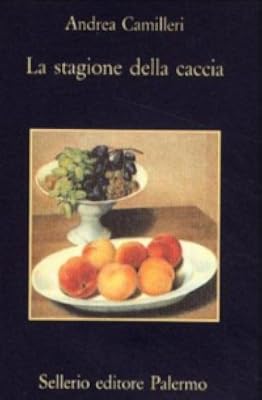
Andrea Camilleri lives in Italy. Andrea Camilleri was born in Porto Empedocle, Sicily on September 6, 1925. He began his studies at Faculty of Literature in 1944 but never finished. He started to publish poems and short stories. He studied stage and film direction at the Silvio D'Amico Academy of Dramatic Arts from 1948 to 1950 and soon began work show more as a director and screen writer. Andrea Camilleri worked on several TV productions such as Inspector Maigret wirh Gino Cervi. In 1971 he returned to the Academy of Dramatic Arts holding the chair of Movie Direction and keeping it for 20 years. In 1978 he wrote his first novel - The Way Things Go which was followed by A Thread of Smoke in 1980. In 1992 he published The Hunting Season which turned out to be a best seller. In 1994 Andrea Camilleri published the first in a long series of novels - The Shape of Water which features the character Inspector Montalbano - a ficticious Sicilian detective in the police force of Vigata, an imaginary Sicilian town. The TV adaption of this book took off in popularity and Andrea Camilleri's home town was renamed Porto Empedocle Vigata. In 1998 he won the Nino Mortoglio International Book Award. He received an honorary degree from the University of Pisa in 2005. Camilleri has worked as a television and theater director, as well as a screenwriter. In 1978 he wrote his first novel, Il Corso delle Cose. The Montalbano series, featuring the Sicilian detective Inspector Montalbano, is Camilleri's most famous work of fiction, and it has been adapted into a television series. Camilleri had written a few historical novels when, in 1994, he wrote The Shape of Water, the first book starring a Sicilian detective based in the fictional town of Vigata. Camilleri won the Nino Martoglio International Book Award in 1998. He is considered to be one of Italy's greatest contemporary writers. Andrea Camilleri passed away on July 17, 2019 at the age of 93. (Bowker Author Biography) show less
Some Editions
Awards and Honors
Series

Belongs to Publisher Series
Common Knowledge
- Canonical title
- The Patience of the Spider
- Original title
- La pazienza del ragno
- Original publication date
- 2004-09-30
- People/Characters
- Salvo Montalbano; Livia; Fazio; Catarella
- Important places
- Sicily, Italy
- Related movies
- Il commissario Montalbano (1999 | IMDb)
- First words
- He jolted awake, sweaty and short of breath.
S’arrisbigliò di colpo, sudatizzo, col sciato grosso. - Last words
- (Click to show. Warning: May contain spoilers.)The shrub's branches were sparkling clean and dripping wet.
(Click to show. Warning: May contain spoilers.)L’acquata violenta si era portata via la ragnatela, i rami erano puliti puliti, si stiddravano di gocce. - Original language
- Italian
Classifications
- Genres
- Fiction and Literature, Mystery
- DDC/MDS
- 853.914 — Literature & rhetoric Italian, Romanian & related literatures Italian fiction 1900- 20th Century 1945-1999
- LCC
- PQ4863 .A3894 .P39 — Language and Literature French, Italian, Spanish and Portuguese literatures Italian literature Individual authors, 1961-2000
- BISAC
Statistics
- Members
- 1,344
- Popularity
- 17,870
- Reviews
- 45
- Rating
- (3.69)
- Languages
- 11 — Catalan, Dutch, English, Finnish, French, German, Greek, Italian, Polish, Portuguese, Spanish
- Media
- Paper, Audiobook, Ebook
- ISBNs
- 57
- ASINs
- 20