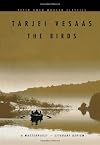
The Birds
by Tarjei Vesaas
On This Page
Description
“Tarjei Vesaas has written the best Norwegian novel ever, The Birds— it is absolutely wonderful, the prose is so simple and so subtle, and the story is so moving that it would have been counted amongst the great classics from the last century if it had been written in one of the major languages.” — Karl Ove KnausgaardThe Birds tells the story of Mattis, a deeply sensitive, intellectually disabled young man living in a small house in the Norwegian countryside with his sister show more Hege. Eking out a modest living knitting sweaters, Hege encourages her brother to find work to ease their financial burdens, but his attempts come to nothing.
When he finally sets himself up as a ferryman, the only passenger he manages to bring across the lake is a lumberjack, Jørgen. But when Jørgen and Hege become lovers, Mattis finds the safety of his familial life threatened and his jealousy quickly spirals.
In The Birds, Norway’s most celebrated writer of the twentieth century allows us to rediscover the world. By turns frightening, beautiful, confounding, and full of mystery, it is a world we come to see more vividly through Mattis’s eyes. show less
Tags
Recommendations
































Member Reviews
The Birds by Norwegian poet and novelist Tarjei Vesaas was originally published in 1957, but due to it’s timeless subject matter, could easily have been written much more recently. Mattis, a mentally disabled man lives with his lonely sister, Hege, in a cottage on a lake. Mattis is often mocked and called “Simple Simon” but with his sister to look after him and his ability to ponder and observe nature he is generally happy. His one fear is that Hege will get fed up and leave him.
He is encouraged to act as a ferryman on the lake although he only ever has one customer, Jorgen, a lumberjack, that he brings home and who stays with them. Hege and Jorgen become lovers which disturbs Mattis and scares him as he feels his sister’s show more attention lessening and he comes up with an unusual plan to help make sense of the situation.
I loved this beautifully written, sensitive story. It is a moving portrait that has a soft sadness running through every page. There were parts where the story seemed in a lull but being given Mattis’ point of view, seeing how he processes life events and catching a glimpse of his inner world was unique and compelling. There was a feeling of inevitability as Mattis travels his own path, a simple soul in a complicated world. show less
He is encouraged to act as a ferryman on the lake although he only ever has one customer, Jorgen, a lumberjack, that he brings home and who stays with them. Hege and Jorgen become lovers which disturbs Mattis and scares him as he feels his sister’s show more attention lessening and he comes up with an unusual plan to help make sense of the situation.
I loved this beautifully written, sensitive story. It is a moving portrait that has a soft sadness running through every page. There were parts where the story seemed in a lull but being given Mattis’ point of view, seeing how he processes life events and catching a glimpse of his inner world was unique and compelling. There was a feeling of inevitability as Mattis travels his own path, a simple soul in a complicated world. show less
Mattis lives in a remote cabin in Norway with his sister Hege. His developmental disabilities make it difficult for him to find work, and he spends most of his time in communion with nature. Hege supports them by knitting sweaters. While she cares deeply for Mattis and accepts the responsibility of looking after him, she can’t help resenting the impact on her lifestyle and personal freedom. Mattis picks up on some of this and fears Hege will leave him, but is unable to express this. Instead he obsesses on things he observes in the world around him, in the local village and in nature.
Eventually Mattis gets the idea that he could provide a service to his community by ferrying people across the lake. Despite there being no clear demand show more for this service Mattis is happy to spend the day rowing back and forth, and he takes pride in identifying as a ferryman. Hege is full of encouragement, welcoming this new-found time to herself. Mattis’ first customer is a lumberjack named Jorgen, whom he enthusiastically invites home for a meal. But Jorgen decides to stick around, and that was not in Mattis’ plan. Mattis is unable to make sense of this new order and, experiencing the story through his eyes, the reader must fill in the blanks. The direction of the story soon becomes apparent, and could have gone a few different ways. The ending was unexpected and left me pondering the lives of these characters beyond the final pages. show less
Eventually Mattis gets the idea that he could provide a service to his community by ferrying people across the lake. Despite there being no clear demand show more for this service Mattis is happy to spend the day rowing back and forth, and he takes pride in identifying as a ferryman. Hege is full of encouragement, welcoming this new-found time to herself. Mattis’ first customer is a lumberjack named Jorgen, whom he enthusiastically invites home for a meal. But Jorgen decides to stick around, and that was not in Mattis’ plan. Mattis is unable to make sense of this new order and, experiencing the story through his eyes, the reader must fill in the blanks. The direction of the story soon becomes apparent, and could have gone a few different ways. The ending was unexpected and left me pondering the lives of these characters beyond the final pages. show less
"Now it is Night.
"What can you do when everyone around you is strong and clever?
"Will never know."
Mentally deficient Mattis lives in a cottage by a lake with his sister Hege who supports them by knitting. She occasionally sends Mattis out in search of work as a farm hand, which he dreads because he knows he is different, and will not perform up to par, no matter how hard he tries. He frequently feels people are laughing at him.
One day Hege suggests, and Mattis agrees, that he work as a ferryman on the lake. He begins to spend his days at "work" in his rowboat on the lake, although there are never any passengers. Until one day there is. Mattis ferries Jorgen, a lumberjack, across the lake, and Jorgen becomes a boarder with Hege and show more Mattis. Soon Mattis begins to fear he will lose Hege to Jorgen.
This entire beautiful novel is narrated from the pov of Mattis, and Vesaas does a masterful job of channeling the mind of someone who sees the world in an entirely different way than most people. We see all Mattis's thoughts, experience nature through him, as well as sensing scorn from other people. I loved this book. Recommended for all.
4 1/2 stars show less
"What can you do when everyone around you is strong and clever?
"Will never know."
Mentally deficient Mattis lives in a cottage by a lake with his sister Hege who supports them by knitting. She occasionally sends Mattis out in search of work as a farm hand, which he dreads because he knows he is different, and will not perform up to par, no matter how hard he tries. He frequently feels people are laughing at him.
One day Hege suggests, and Mattis agrees, that he work as a ferryman on the lake. He begins to spend his days at "work" in his rowboat on the lake, although there are never any passengers. Until one day there is. Mattis ferries Jorgen, a lumberjack, across the lake, and Jorgen becomes a boarder with Hege and show more Mattis. Soon Mattis begins to fear he will lose Hege to Jorgen.
This entire beautiful novel is narrated from the pov of Mattis, and Vesaas does a masterful job of channeling the mind of someone who sees the world in an entirely different way than most people. We see all Mattis's thoughts, experience nature through him, as well as sensing scorn from other people. I loved this book. Recommended for all.
4 1/2 stars show less
I'm having a hard time putting my finger on just why I loved this novel so much, but it really worked for me. Vesaas is Norwegian, and I'm finding that I really enjoy the straightforward, spare, and unsentimental story telling that I generally find when reading these Scandinavian novels. They are emotional, but not sentimental and I like that.
This is the story of Hege and Mattis, adult siblings who have lived together since their parents died when they were young. Mattis has a learning disability. He is functional, but often confused, seeing meaning in things like the flights of birds and misreading the words and actions of other people. He isn't capable of sustaining work, so Hege supports them by knitting sweaters. Hege is patient show more with Mattis and seems to take the time to understand his mind, but she is obviously unhappy and lonely. In the third part of the book, Mattis ferries a man, Jorgen, across the lake in his leaky boat. The man is a lumberjack looking for work who ends up living with Hege and Mattis, throwing their simple, lonely life into upheaval for Mattis and happiness for Hege.
This book was written in 1957, and I found Mattis's voice (the story is told from his point of view) to be remarkably believable and written with great insight and sympathy. Mattis's disability makes his words sometimes insightful, sometimes funny, and sometimes highly annoying. Vesaas accomplishes this with straightforward, simple language that is terse but somehow still highly descriptive.
I have another of Vesaas's books on my shelf, [The Ice Palace], and I'm looking forward to it. show less
This is the story of Hege and Mattis, adult siblings who have lived together since their parents died when they were young. Mattis has a learning disability. He is functional, but often confused, seeing meaning in things like the flights of birds and misreading the words and actions of other people. He isn't capable of sustaining work, so Hege supports them by knitting sweaters. Hege is patient show more with Mattis and seems to take the time to understand his mind, but she is obviously unhappy and lonely. In the third part of the book, Mattis ferries a man, Jorgen, across the lake in his leaky boat. The man is a lumberjack looking for work who ends up living with Hege and Mattis, throwing their simple, lonely life into upheaval for Mattis and happiness for Hege.
This book was written in 1957, and I found Mattis's voice (the story is told from his point of view) to be remarkably believable and written with great insight and sympathy. Mattis's disability makes his words sometimes insightful, sometimes funny, and sometimes highly annoying. Vesaas accomplishes this with straightforward, simple language that is terse but somehow still highly descriptive.
I have another of Vesaas's books on my shelf, [The Ice Palace], and I'm looking forward to it. show less
In typically spare Nordic literary style, The Birds is a short novel by one of Norway's most revered classic authors. The main protagonist is Mattias, a man who suffers from learning difficulties and who lives with his spinster sister Hege in a small Nordic town. Although it may not be his only mental condition, Mattias certainly seems to display strong autistic traits.
This is a very beautifully written book, but one that I found hard to enjoy at times precisely for the very reason it's such an accomplishment. Although written in the third person, Tarjei Vesaas puts us smack inside Mattias' mind; we endure his daily social struggles and awkward interactions, and the impact of the huge emotional upheaval he faces when a major change show more threatens to upset the normalcy that is his life with Hege.
As a reader we feel somewhat for Hege whose life has been so limited by their situation, but the real honesty is in experiencing what it's like to be Mattias. I can honestly say this is probably the first time I feel like I've had a proper insight into how a person with such a condition might feel and how they experience the world at large. Mattias was incredibly frustrating to be around at times from the third person perspective, but we also acutely feel his anxiety, his alternative way of thinking which skews the relative importance of things, and his fear.
4 stars - perhaps not the most enjoyable book I've ever read given its subject matter, but a fantastic achievement nonetheless. show less
This is a very beautifully written book, but one that I found hard to enjoy at times precisely for the very reason it's such an accomplishment. Although written in the third person, Tarjei Vesaas puts us smack inside Mattias' mind; we endure his daily social struggles and awkward interactions, and the impact of the huge emotional upheaval he faces when a major change show more threatens to upset the normalcy that is his life with Hege.
As a reader we feel somewhat for Hege whose life has been so limited by their situation, but the real honesty is in experiencing what it's like to be Mattias. I can honestly say this is probably the first time I feel like I've had a proper insight into how a person with such a condition might feel and how they experience the world at large. Mattias was incredibly frustrating to be around at times from the third person perspective, but we also acutely feel his anxiety, his alternative way of thinking which skews the relative importance of things, and his fear.
4 stars - perhaps not the most enjoyable book I've ever read given its subject matter, but a fantastic achievement nonetheless. show less
I was so taken by the author's "The Ice Palace" that I immediately ordered this title, and I'm so glad I did. Vesaas's writing is exquisitely observant, and while his characters can be difficult to love, he obviously cares for them a great deal, and the reader comes to too.
Mattis, a "developmentally disabled" man in his late 30s, is cared for by his older sister, Hege. The two live in a ramshackle cabin in rural Norway and survive on the little that Hege can earn from knitting sweaters for a local shop. Mattis spends his time alternately pondering the wondrous things he sees about him and worrying about his inability to verbalize his thoughts, and he is constantly frustrated by his own confusion over what others find important. His show more inability to stop his mind from wandering makes even day-employment impossible until Hege tells him he can be a ferryman, a job for which there is no need but which he sees as an opportunity to do something he knows he can do: rowing in a straight line from place to place without his thoughts interfering. The one time he inadvertently does get a customer, it changes his life with Hege forever.
I'm not sure whether "developmentally disabled" is the correct description. Mattis seems to have no problem with vocabulary, but his short attention span, and the difference between what he notices and finds important and what everyone else does makes communication all but impossible. People who know him refer to him as "Simple Simon", a nickname he hates but cannot overcome. The story is told entirely from Mattis's point of view. As a reader I felt trapped along with him in his reality, with the horrifying realization that he had no way out. The decisions he makes are perfectly rational by his thinking processes, but to everyone else they are incomprehensible, and he is powerless to explain himself. All he can feel is anger. The other characters are pretty much one-dimensional background figures to the reader, just as they are to him.
I can't recommend this book highly enough. Mattis is an unforgettable character because we end up in his head, being able to see how cut off from our world he is. I was astonished at how powerful the writing was, and how successfully the author put us in Mattis's place. Read this book! show less
Mattis, a "developmentally disabled" man in his late 30s, is cared for by his older sister, Hege. The two live in a ramshackle cabin in rural Norway and survive on the little that Hege can earn from knitting sweaters for a local shop. Mattis spends his time alternately pondering the wondrous things he sees about him and worrying about his inability to verbalize his thoughts, and he is constantly frustrated by his own confusion over what others find important. His show more inability to stop his mind from wandering makes even day-employment impossible until Hege tells him he can be a ferryman, a job for which there is no need but which he sees as an opportunity to do something he knows he can do: rowing in a straight line from place to place without his thoughts interfering. The one time he inadvertently does get a customer, it changes his life with Hege forever.
I'm not sure whether "developmentally disabled" is the correct description. Mattis seems to have no problem with vocabulary, but his short attention span, and the difference between what he notices and finds important and what everyone else does makes communication all but impossible. People who know him refer to him as "Simple Simon", a nickname he hates but cannot overcome. The story is told entirely from Mattis's point of view. As a reader I felt trapped along with him in his reality, with the horrifying realization that he had no way out. The decisions he makes are perfectly rational by his thinking processes, but to everyone else they are incomprehensible, and he is powerless to explain himself. All he can feel is anger. The other characters are pretty much one-dimensional background figures to the reader, just as they are to him.
I can't recommend this book highly enough. Mattis is an unforgettable character because we end up in his head, being able to see how cut off from our world he is. I was astonished at how powerful the writing was, and how successfully the author put us in Mattis's place. Read this book! show less
"The Birds" is a strange little book where you follow the siblings Mattis and Hege who, for better or worse, are tied to each other, as Hege has to take care of her brother. The story is told with a limited third person narrator and from the point of view of Mattis. This shift required a tad of adjustment on my part. And that is because Mattis is not functioning properly in spite of being in his late thirties. He is autistic. You are effectively, at times, put into this mind. The proceedings start off pretty slow, and I would be lying if I told you they ever picked up.
Mattis infuses a large importance to things in nature and birds as if they have magical attributes, and for a time, I was not sure if I should be on the lookout for some show more kind of magic realism. Then I remembered that you read from the perspective of a child trapped in a man's body. He suffer great challenges in expressing his thoughts and feelings as if there's some wires missing. Something he is aware of himself. However, like a child, he tends to show selfish behaviour and has his own needs in focus above those of others. At times, he would tell Hege of something he thought important, or try to, she would tell him to calm down, and he would think she does not understand. This pattern repeats, and when I reached that point the book became too predictable. The tale is simply written, but it did have some occasional passages with poignant imagery and moments that stood out. Such as when Mattis was communicating with a bird, or at least thought he did. And when two strangers showed him kindness that picked up his spirits with great effect.
Both Mattis and Hege wish for different circumstances, and deserve it, too. But the way the story is laid out was just not appealing to me, and it certainly did not have a satisfying resolution.
"First he smiled at her. Hege smiled happily back. Then he nodded. She nodded back. Like an old game between them, forgotten and now suddenly rediscovered."
I was insufferably disappointed with this book in spite of genuinely wanting to love it. Friends of mine recommended it to me with tremendous enthusiasm, and when I raised a concern about 50 pages in, I was assured it would pick up become marvelous. This mysterious point in the book eluded me, and the further I got in, the more I started to feel the forty years of frustrations of Hege. And I desperately wanted to be released from the mind of Mattis. When I turned the final page I was drained and simply relieved it had concluded. It was not a compelling reading experience. It felt predictable, drawn out, and it undoubtedly outstayed its welcome. But what do I know? I seem to be the only individual on this planet who did not adore this book, so you may want to pick it up anyway. show less
Mattis infuses a large importance to things in nature and birds as if they have magical attributes, and for a time, I was not sure if I should be on the lookout for some show more kind of magic realism. Then I remembered that you read from the perspective of a child trapped in a man's body. He suffer great challenges in expressing his thoughts and feelings as if there's some wires missing. Something he is aware of himself. However, like a child, he tends to show selfish behaviour and has his own needs in focus above those of others. At times, he would tell Hege of something he thought important, or try to, she would tell him to calm down, and he would think she does not understand. This pattern repeats, and when I reached that point the book became too predictable. The tale is simply written, but it did have some occasional passages with poignant imagery and moments that stood out. Such as when Mattis was communicating with a bird, or at least thought he did. And when two strangers showed him kindness that picked up his spirits with great effect.
Both Mattis and Hege wish for different circumstances, and deserve it, too. But the way the story is laid out was just not appealing to me, and it certainly did not have a satisfying resolution.
"First he smiled at her. Hege smiled happily back. Then he nodded. She nodded back. Like an old game between them, forgotten and now suddenly rediscovered."
I was insufferably disappointed with this book in spite of genuinely wanting to love it. Friends of mine recommended it to me with tremendous enthusiasm, and when I raised a concern about 50 pages in, I was assured it would pick up become marvelous. This mysterious point in the book eluded me, and the further I got in, the more I started to feel the forty years of frustrations of Hege. And I desperately wanted to be released from the mind of Mattis. When I turned the final page I was drained and simply relieved it had concluded. It was not a compelling reading experience. It felt predictable, drawn out, and it undoubtedly outstayed its welcome. But what do I know? I seem to be the only individual on this planet who did not adore this book, so you may want to pick it up anyway. show less
Members
- Recently Added By
Published Reviews
ThingScore 100
De vogels is een klassieker uit de Noorse literatuur die oorspronkelijk verscheen als Fuglane in 1957. Sinds de aanprijzing van de roman door schrijver Karl Ove Knausgård die het de beste Noorse roman ooit noemde staat het boek weer volop in de belangstelling. Uitgever Oscar van Gelderen van Uitgeverij Lewbowski besloot de roman in nieuwe Nederlandse vertaling uit te geven. En volkomen show more terecht, want we hebben hier te maken met een waar meesterwerk…lees verder > show less
added by Jordaan
Lists

1001 Books You Must Read Before You Die
1,448 works; 1,134 members

Top Five Books of 2013
1,562 works; 721 members

Recommend the 20 best books you've read in the last five years
2,168 works; 606 members

Favourite Books
1,819 works; 316 members

Top Five Books of 2020
982 works; 348 members

Top Five Books of 2022
736 works; 272 members

Books Read in 2020
4,379 works; 124 members

Books Read in 2019
4,052 works; 110 members
Put a Bird On It
75 works; 12 members
Reading LIst
648 works; 1 member
Author Information

By 1934, when The Great Cycle appeared, Tarjei Vesaas has published 11 works. In this novel he clearly showed the enduring qualities of his later work: delicate human portraiture, compelling symbolism and allegory, and constant sensitivity to human beings' universal turmoils of hope, fear, and love. By the end of his life Vesaas had written some show more 35 works of prose and poetry and had received the Venice Triennial Prize in 1952 and the Nordic Council Prize for literature in 1964. Perhaps his generation's foremost writer of novels and short stories, he wrote of common people in rural Norway who represented humanity at its best and worst. Children and adolescents occupy a special place in Vesaas's writing; in The Birds (1957), the reader participates in the inner life of a mentally impaired youth observing the adult world. Vesaas's realism is usually psychological rather than historical, as in The Seed (1940), which deals with the hatred, fear, and mass psychosis spawned in a small community by the murder of a girl. It is apparent that the barbarous acts of the killer's lynchers mirror the hideous transformation of decent people in Fascist Europe of the late 1930s. (Bowker Author Biography) show less
Some Editions
Awards and Honors
Series
Belongs to Publisher Series
Common Knowledge
- Canonical title
- The Birds
- Original title
- Fuglane
- Original publication date
- 1957
- Original language
- Norwegian: Nynorsk
Classifications
- Genres
- General Fiction, Fiction and Literature
- DDC/MDS
- 839.823 — Literature & rhetoric German & related literatures Other Germanic literatures Danish and Norwegian literatures Norwegian literature Norwegian Bokmål fiction
- LCC
- PT9088 .V6 .F813 — Language and Literature German, Dutch and Scandinavian literatures Norwegian literature Landsmaal or New Norwegian Individual authors
- BISAC
Statistics
- Members
- 772
- Popularity
- 36,332
- Reviews
- 27
- Rating
- (4.10)
- Languages
- 14 — Catalan, Danish, Dutch, English, Finnish, French, German, Italian, Lithuanian, Norwegian (Nynorsk), Norwegian (Bokmål), Norwegian, Russian, Swedish
- Media
- Paper, Audiobook, Ebook
- ISBNs
- 51
- ASINs
- 12