On This Page
Description
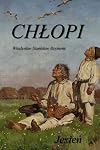
Wladyslaw Stanislaw Reymont, wlasciwie Stanislaw Wladyslaw Rejment (urodzil sie 7 maja 1867 w Kobielach Wielkich, zmarl 5 grudnia 1925 w Warszawie) - polski pisarz, prozaik i nowelista, jeden z glownych przedstawicieli realizmu z elementami naturalizmu w prozie Młodej Polski. Niewielka czesc jego spuscizny stanowia wiersze. Laureat Nagrody Nobla w dziedzinie literatury za czterotomowa epopeje chłopska" Chlopi.Tags
Recommendations























Member Reviews
Actually quite an enjoyable read. Makes me want to learn a bit more about Polish traditions around marriage and family. I also now need to read the other three books in this cycle.
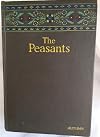
The Peasants is the novel that won Polish author Ladislas Reymont the Nobel Prize in 1924. It was published in four volumes, in total over 1000 pages. Each volume is named for a season: Autumn, Winter, Spring, Summer. It takes place over 10 months in a Polish peasant village, a real place that Reymont had once lived. It has been described by Martin Seymour-Smith as the greatest peasant novel ever written, the most authentic. He accomplished what Emile Zola tried but failed in The Earth, to re-create an entire farming village with a large cast of characters. In fact the plot of The Peasants slightly resembles Zola, but Reymont is clearly the superior because his people are more real, less grotesque, if not a little more boring, show more naturally.
I really did get the feeling of what it was like to be a peasant who has little experience of the "outside" world. To know a few things really well, like how to harvest cabbage, as if born with the skill; to be not so much an individual but a part of a whole village where privacy is limited and life's main events, like marriage, happen outside ones control. Small violence's and graces make up the day, dirt and mud is all encompassing, food the almighty task master and currency.
Unfortunately for Reymont and his obvious masterpiece, no one has bothered to publish a modern translation since it first came out in English in 1925. It was never re-published in any quantity, and so its only available in expensive rare editions, the first volume alone cost me $25. The translation is somewhat stilted and out of date, the brittle pages leak fumes and are darkly colored. While I enjoyed it somewhat, I can't justify spending another $75 to read the remainder under these conditions. I sent a note to the New York Review of Books to look into it as possible re-print. An obvious literary injustice, and a Nobel winning novel at that. show less
I really did get the feeling of what it was like to be a peasant who has little experience of the "outside" world. To know a few things really well, like how to harvest cabbage, as if born with the skill; to be not so much an individual but a part of a whole village where privacy is limited and life's main events, like marriage, happen outside ones control. Small violence's and graces make up the day, dirt and mud is all encompassing, food the almighty task master and currency.
Unfortunately for Reymont and his obvious masterpiece, no one has bothered to publish a modern translation since it first came out in English in 1925. It was never re-published in any quantity, and so its only available in expensive rare editions, the first volume alone cost me $25. The translation is somewhat stilted and out of date, the brittle pages leak fumes and are darkly colored. While I enjoyed it somewhat, I can't justify spending another $75 to read the remainder under these conditions. I sent a note to the New York Review of Books to look into it as possible re-print. An obvious literary injustice, and a Nobel winning novel at that. show less
Ratings
Members
- Recently Added By
Author Information

158+ Works 595 Members
Born into a lower middle-class Catholic family, the novelist Reymont had little formal education, but his eventful life as a theater hand and railroad worker provided him with plentiful material for his writing. Although a straightforward realist, he wrote with a lyrical perfection of style. This, combined with sharp psychological insight, placed show more him in the forefront of Polish fiction until his death. Reymont wrote short stories as well, but he is best known for his novels about Polish life in both rural and urban societies. His magnum opus, The Peasants (1902--09), leading to the Nobel Prize in 1924, is a broad panorama of a village caught in internal conflicts of the magnitude of those in classical Greek tragedy. It is characterized, in the words of Per Hallstrom, "by an art so grand, so sure, so powerful, that we may predict a lasting value and rank for it, not only within Polish literature but also within the whole of that branch of imaginative writing which has here been given a distinctive and monumental shape." (Bowker Author Biography) show less
Series

Work Relationships
Is contained in
Common Knowledge
- Canonical title
- The Peasants: Autumn
- Original publication date
- 1904
- Important places
- Lipce, Poland
- Original language
- Polish
Classifications
Statistics
- Members
- 24
- Popularity
- 1,111,054
- Reviews
- 2
- Rating
- (4.00)
- Languages
- English, Polish, Spanish
- Media
- Paper
- ISBNs
- 1
- ASINs
- 1