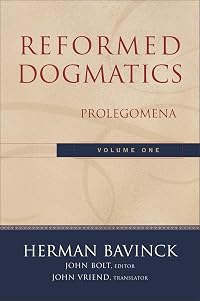
On This Page
Description
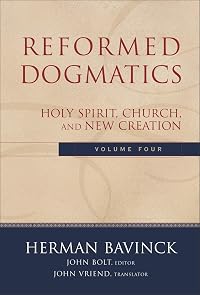
In partnership with the Dutch Reformed Translation Society, Baker Academic is proud to offer the first volume of Herman Bavinck's complete Reformed Dogmatics in English for the very first time. Bavinck's approach throughout is meticulous. As he discusses the standard topics of dogmatic theology, he stands on the shoulders of giants such as Augustine, John Calvin, Francis Turretin, and Charles Hodge. This masterwork will appeal to scholars and students of theology, research and theological show more libraries, and pastors and laity who read serious works of Reformed theology. show lessTags
Recommendations
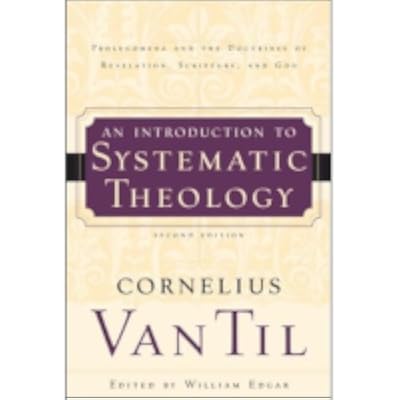
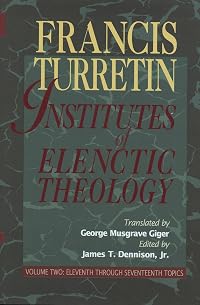
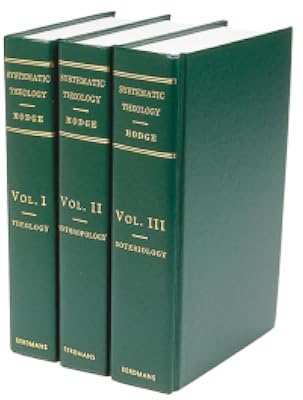
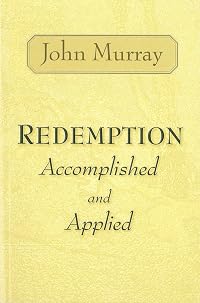


Member Reviews
This first volume of Herman Bavinck's Reformed Dogmatics is exceptional. Bavink addresses the question of the nature of dogmatic discourse after Schleiermacher with an acute sense of what is at stake. His chief contribution lies in his naming the secular sciences' claim of neutrality as deceptive. Here his relation to Abraham Kuyper and later Herman Dooyeveerd and Cornelius Van Til are apparent. He is to be preferred above Kuyper, however, for his historic treatments of dogma and for his handling of 19th century theological developments.
Reformed Dogmatics, Volume 1: Prolegomena is the first of Herman Bavinck's four volume masterwork of Reformed systematic theology. Bavinck (1854-1921) was a pastor and professor in the Netherlands. This work, which was originally written in Dutch, was translated into English and published by the Dutch Reformed Translation Society in 2003. Bavinck's words may be a century old but they speak vibrantly today.
This volume is his prolegomena, or the "first things" that need to be addressed before delving at length into theology proper. While they may be considered preliminary issues there is nothing about Bavinck's treatment of them that is less than thorough. In turn he divides this works as follows: Introduction to Dogmatics; The History show more and Literature of Dogmatic Theology; Foundations of Dogmatic Theology; Revelation; and Faith.
Bavinck is an extremely well-read student of theology and he digs deeply into each aspect of his principle topics. He points out what he feels are the strengths and weaknesses of various theological positions, including the Reformed position in which he is grounded. This includes the Church Fathers, Scholasticism, Roman Catholicism and various strands of Protestantism. As a European theologian of the late 19th century he is acutely aware of the effects of Kant and Schleiermacher on philosophy and theology and he addresses their influence frequently.
Late in this volume he discusses the connection between reason and faith, noting that reason is invaluable in the service of faith, writing: "Furthermore, faith is not an involuntary act but a free act. Christians do not believe on command, out of fear, or in response to violence. Believing has become the natural habit of their mind, not in the sense that there is often not considerable resistance in their soul to that believing, but still in such a way that, though often doing what they do not want to do, they still take delight in God's law in their inmost self. Believing is the natural breath of the children of God. Their submission to the Word of God is not slavery but freedom." (616) These are words that speak powerful truth to Christians of every time and place.
Bavinck is irenic in his writing, which I greatly appreciated, as he can very clearly demonstrate the weaknesses and errors in particular positions without castigating or demonizing the author of that position. Bavinck is also persistently and consistently biblical in his writing. He is adept at integrating both the Old and New Testaments as he lays out the foundation for his viewpoint and/or dismantles a perspective he finds to be in error.
Having read the first volume I am anxious to continue on into Bavicnk's Reformed Dogmatics, for he deeply understands God's Word and he dearly loves God's people. show less
This volume is his prolegomena, or the "first things" that need to be addressed before delving at length into theology proper. While they may be considered preliminary issues there is nothing about Bavinck's treatment of them that is less than thorough. In turn he divides this works as follows: Introduction to Dogmatics; The History show more and Literature of Dogmatic Theology; Foundations of Dogmatic Theology; Revelation; and Faith.
Bavinck is an extremely well-read student of theology and he digs deeply into each aspect of his principle topics. He points out what he feels are the strengths and weaknesses of various theological positions, including the Reformed position in which he is grounded. This includes the Church Fathers, Scholasticism, Roman Catholicism and various strands of Protestantism. As a European theologian of the late 19th century he is acutely aware of the effects of Kant and Schleiermacher on philosophy and theology and he addresses their influence frequently.
Late in this volume he discusses the connection between reason and faith, noting that reason is invaluable in the service of faith, writing: "Furthermore, faith is not an involuntary act but a free act. Christians do not believe on command, out of fear, or in response to violence. Believing has become the natural habit of their mind, not in the sense that there is often not considerable resistance in their soul to that believing, but still in such a way that, though often doing what they do not want to do, they still take delight in God's law in their inmost self. Believing is the natural breath of the children of God. Their submission to the Word of God is not slavery but freedom." (616) These are words that speak powerful truth to Christians of every time and place.
Bavinck is irenic in his writing, which I greatly appreciated, as he can very clearly demonstrate the weaknesses and errors in particular positions without castigating or demonizing the author of that position. Bavinck is also persistently and consistently biblical in his writing. He is adept at integrating both the Old and New Testaments as he lays out the foundation for his viewpoint and/or dismantles a perspective he finds to be in error.
Having read the first volume I am anxious to continue on into Bavicnk's Reformed Dogmatics, for he deeply understands God's Word and he dearly loves God's people. show less
"Que maravilhoso presente. Os tópicos abordados por Bavinck são ainda da maior importância, e ele os discute com um tom teológico surpreendentemente contemporâneo. Minha oração é que o lançamento dessa obra sinalize o início de um ressurgimento de Bavinck.” - Richard J. Mouw, presidente do Fuller Theological Seminary “Assim como Agostinho, Calvino e Jonathan Edwards, Bavinck foi um homem com uma mente gigante, amplo conhecimento, sabedoria perene e enorme habilidade expositiva. Ter esse seu trabalho em nossa língua é um substancial enriquecimento. Sólida, mas lúcida; exigente, mas gratificante; ampla e profunda, perspicaz e equilibrada, a magistral Dogmática Reformada de Bavinck segue após um século sendo a mais show more elevada realização em sua área.” - J.I. Packer, Regent College “A Dogmática Reformada foi o manancial da teologia Reformada nos últimos cem anos. É de longe a mais profunda e abrangente teologia sistemática Reformada do século 20. O leitor ficará maravilhado com a erudição de Bavinck, sua criatividade e equilíbrio. Bavinck é confessionalmente ortodoxo, mas reconhece a necessidade de colocar as tradicionais formulações das Escrituras no contexto das discussões contemporâneas.” - John Frame, Reformed Theological Seminary . show less
Mar 13, 2026Portuguese (Brazil)
Ratings
Members
- Recently Added By
Author Information

78 Works 8,826 Members
Series

Common Knowledge
- Original publication date
- 1895-1901
Classifications
Statistics
- Members
- 979
- Popularity
- 26,966
- Reviews
- 3
- Rating
- (4.65)
- Languages
- Dutch, English, Portuguese
- Media
- Paper, Ebook
- ISBNs
- 4
- ASINs
- 2