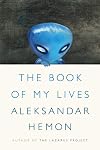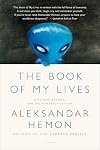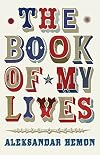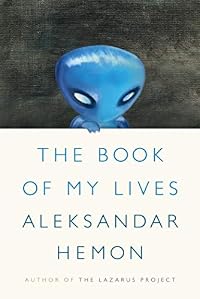
The Book of My Lives {original edition}
by Aleksandar Hemon
On This Page
Description
Aleksandar Hemon's lives begin in Sarajevo, a small, blissful city where a young boy's life is consumed with street soccer with the neighborhood kids, resentment of his younger sister, and trips abroad with his engineer-cum-beekeeper father; a young man's life is about poking at elder pretensions with American music, bad poetry, and slightly better journalism. And then, his life in Chicago: watching from afar as war breaks out and the city comes under siege; his parents and sister fleeing show more Sarajevo, leaving behind all they had ever known; and Hemon himself starting a new life in this new city. And yet this is not really a memoir--Hemon's first book of nonfiction defies convention and expectation. It is a love song to two different cities; it is a paean to the bonds of family; it is an exhortation to go out and play soccer--and not for the exercise. It is a book driven by passions but built on fierce intelligence, devastating experience, and sharp insight. And like the best narratives, it is a book that will leave you a different person, with a new way of looking at the world.--From publisher description. show lessTags
Recommendations






Member Recommendations

Member Reviews
Dear Sasha,
May I even still call you by you that name? Perhaps we should stick with more formal titles. I hope I may still call you Aleksandar. Surely, our relationship is not so torn that we have to refer to one another by our surnames.
We've known each other for some years. At least I've known of you. I first encountered your words eight years ago now. From across a room, your gorgeous prose seduced my ears. They were words spoken with grace. The selection was read during a lecture on word choice entitled “Knocking the World Askew...”. The lecturer was Amy Hassinger, my first MFA mentor. I credit her with introducing the two of us.
Admittedly, I was enamored. I pretended that the language did not somehow arouse and haunt me show more simultaneously. I wrote your name at the margin of my notebook. I wrote it again on my suggested reading list for the semester. I casually mentioned my desire to read “something of this Hemon guy” to my peers. I strolled through these early days of knowing you as though my heart had not been stirred. I'd hoped my feelings were not evident to everyone. Secretly, I couldn't wait to crack open one of your novels, but I waited, desperate to not seem too eager.
And then you wrote to me. No, I couldn't wait too long, but I did wait until the end of that semester to make my first selection. Four long months of waiting for your words. Your letter was aptly titled, Love and Obstacles. Indeed. I found more of the words I'd fallen in love months earlier, though I was disappointed with the stories themselves. I called you an “average storyteller,” but raved to all my friends about your brilliance with the English language. I showered your prose with words that paled in comparison to your own: original, gorgeous, extravagant. And yet, I was slightly disappointed. There was so much beauty but I felt that, for whatever reason, you and I didn't connect. Yet there were so many more opportunities to win me over.
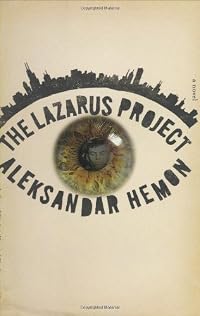
Our next outing came in the shape of The Lazarus Project. Oh, how part of me died with that novel. I had so much hope and it was dashed completely. Such a great idea and such careful orchestration, but all for naught. The language was of course wonderful as always, but I just failed to see your vision for this very personal project. At the time, I thought your words almost felt stilted, as though you were holding something back from me. Were you? Now, I cannot help but think you were. And yet, I had continued to hope. In my response to The Lazarus Project I wrote, “Nevertheless, I look forward to my next meeting with Aleksandar Hemon. I have no doubts it will be a delight.”
If only it were true. Aleksandar, you have failed me time and time again. Or perhaps, I have failed you. When two forces fail to connect, is one more to blame than the other? It's easy to cast blame on you, but I recognize my own faults. Perhaps I romanticized your words far too much. Perhaps they weren't meant for me. Perhaps I am just too shallow and ignorant to truly understand your brilliance.
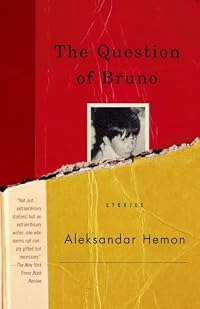
As you may know, next came The Question of Bruno. Some amends were made for the previous letter, but I admit that it was then that I began to wonder about us. I had trouble finding the beauty of the Bruno affair. I didn't hesitate to blame myself. “Perhaps I’m way too lazy,” I said, “or I’ve grown too familiar with Hemon’s style of writing and didn’t notice” the musicality of the words. And though publicly I expressed hope for the one Hemon book that “knocks me off my feet,” inwardly, I doubted that day would ever come.
In the sea of your letters, this last one had finally arrived. I'd left it unopened for some time. The days of peeling back the pages and leaning into the words are long gone. Nevertheless, I hoped. I thought if ever I would fall in love again with the words, it would be in the letter of your life, The Book of My Lives. Oh how I wanted it to be true. I read the pages voraciously, but carefully, yearning for a semblance of what I knew must not be. There were tales of drunkenness and orgies, tales of escapades. And I felt you pulling away, not even a shadow of the person I thought you were. Suddenly, the words began to feel dirty in my hands. I never knew this side of you; I never even imagined it as a possibility. It's not that I expected you to be a saint, by any means, Aleksandar. It's only that I felt there was a grace beneath those words that I thought might make me a better person. I'd hoped for someone who was benevolent and romantic. You lacked sobriety. You were a crass teenager who happened to have a way with words. And yet, you are so much more. I see it in the words you sacrifice in memory of your daughter, the words you end this volume with. In these concluding words, I saw so much potential. I thought to myself, here it comes, the moment I have been waiting for. There was so much beauty in your tribute to Isabel. And all of that was brushed aside to fulfill some rant about religion. It was in this moment, I fell out of love forever.
Dearest Aleksandar, I do not want you to get the wrong idea. I do love your words. There are times in your letters that I am swept away to that moment when I first heard your words spoken. I did think less of The Lazarus Project, but I recognized the beauty. I praised the rest of your letters, but with some apprehension. I wish this were not so. Not for your sake, but my own. The fact is, the more I get to know you, the more I realize you are not the writer I fell in love with eight years ago. I took one passage from afar and shaped into a gorgeous creature that benefited my needs, but this creature was alien to you. It was not you. And yet, I cannot help but think maybe it is you, an alien creature within you that you yourself have yet to face. And perhaps I continue still to this day to hope that is the truth. Maybe I am still projecting my own desires.
I believe in you. I believe there is a beautiful writer in there with words that can change the world. I don't know if you want to be that writer, only you can decide that, but that's what I believe and it's what I hope for. There are letters from your past I have yet to open and I assure you I will open them when I am ready. When new letters from you arrive at my doorstep, I will read them. It's not that I don't love your work (as I hope is evident from the many four-star reviews), it's that I had wanted so much more.
Love is like that sometimes, as I'm sure you know. There's that moment you see her across the room and immediately know, she's the one. You learn all you can about her, you study her from a distance, and the more you learn, the more you are sure. You meet, your infatuation gets in the way, but there is no denying the spark. But the more you get to know her, the more you see: she is beautiful, but there's some disconnect between you. How much you wish it wasn't true. How much you want to fall in love again. And at some point, you may have to choose to let go.
I am letting go. I hope we can still be friends. As I said and I hope you believe, I will not give up on you. I will continue to read your work with great zeal. But it will be as a casual reader who loves to read. It will be as a student of writing who has much to learn and who recognizes your talent. It will be with a closed heart and some apprehension. And if ever again I hear your words spoken across a room by a dazzling voice, I will stop and I will feel, but I will not turn around.
Sincerely,
Chris Blocker, reader show less
May I even still call you by you that name? Perhaps we should stick with more formal titles. I hope I may still call you Aleksandar. Surely, our relationship is not so torn that we have to refer to one another by our surnames.
We've known each other for some years. At least I've known of you. I first encountered your words eight years ago now. From across a room, your gorgeous prose seduced my ears. They were words spoken with grace. The selection was read during a lecture on word choice entitled “Knocking the World Askew...”. The lecturer was Amy Hassinger, my first MFA mentor. I credit her with introducing the two of us.
Admittedly, I was enamored. I pretended that the language did not somehow arouse and haunt me show more simultaneously. I wrote your name at the margin of my notebook. I wrote it again on my suggested reading list for the semester. I casually mentioned my desire to read “something of this Hemon guy” to my peers. I strolled through these early days of knowing you as though my heart had not been stirred. I'd hoped my feelings were not evident to everyone. Secretly, I couldn't wait to crack open one of your novels, but I waited, desperate to not seem too eager.
And then you wrote to me. No, I couldn't wait too long, but I did wait until the end of that semester to make my first selection. Four long months of waiting for your words. Your letter was aptly titled, Love and Obstacles. Indeed. I found more of the words I'd fallen in love months earlier, though I was disappointed with the stories themselves. I called you an “average storyteller,” but raved to all my friends about your brilliance with the English language. I showered your prose with words that paled in comparison to your own: original, gorgeous, extravagant. And yet, I was slightly disappointed. There was so much beauty but I felt that, for whatever reason, you and I didn't connect. Yet there were so many more opportunities to win me over.
Our next outing came in the shape of The Lazarus Project. Oh, how part of me died with that novel. I had so much hope and it was dashed completely. Such a great idea and such careful orchestration, but all for naught. The language was of course wonderful as always, but I just failed to see your vision for this very personal project. At the time, I thought your words almost felt stilted, as though you were holding something back from me. Were you? Now, I cannot help but think you were. And yet, I had continued to hope. In my response to The Lazarus Project I wrote, “Nevertheless, I look forward to my next meeting with Aleksandar Hemon. I have no doubts it will be a delight.”
If only it were true. Aleksandar, you have failed me time and time again. Or perhaps, I have failed you. When two forces fail to connect, is one more to blame than the other? It's easy to cast blame on you, but I recognize my own faults. Perhaps I romanticized your words far too much. Perhaps they weren't meant for me. Perhaps I am just too shallow and ignorant to truly understand your brilliance.
As you may know, next came The Question of Bruno. Some amends were made for the previous letter, but I admit that it was then that I began to wonder about us. I had trouble finding the beauty of the Bruno affair. I didn't hesitate to blame myself. “Perhaps I’m way too lazy,” I said, “or I’ve grown too familiar with Hemon’s style of writing and didn’t notice” the musicality of the words. And though publicly I expressed hope for the one Hemon book that “knocks me off my feet,” inwardly, I doubted that day would ever come.
In the sea of your letters, this last one had finally arrived. I'd left it unopened for some time. The days of peeling back the pages and leaning into the words are long gone. Nevertheless, I hoped. I thought if ever I would fall in love again with the words, it would be in the letter of your life, The Book of My Lives. Oh how I wanted it to be true. I read the pages voraciously, but carefully, yearning for a semblance of what I knew must not be. There were tales of drunkenness and orgies, tales of escapades. And I felt you pulling away, not even a shadow of the person I thought you were. Suddenly, the words began to feel dirty in my hands. I never knew this side of you; I never even imagined it as a possibility. It's not that I expected you to be a saint, by any means, Aleksandar. It's only that I felt there was a grace beneath those words that I thought might make me a better person. I'd hoped for someone who was benevolent and romantic. You lacked sobriety. You were a crass teenager who happened to have a way with words. And yet, you are so much more. I see it in the words you sacrifice in memory of your daughter, the words you end this volume with. In these concluding words, I saw so much potential. I thought to myself, here it comes, the moment I have been waiting for. There was so much beauty in your tribute to Isabel. And all of that was brushed aside to fulfill some rant about religion. It was in this moment, I fell out of love forever.
Dearest Aleksandar, I do not want you to get the wrong idea. I do love your words. There are times in your letters that I am swept away to that moment when I first heard your words spoken. I did think less of The Lazarus Project, but I recognized the beauty. I praised the rest of your letters, but with some apprehension. I wish this were not so. Not for your sake, but my own. The fact is, the more I get to know you, the more I realize you are not the writer I fell in love with eight years ago. I took one passage from afar and shaped into a gorgeous creature that benefited my needs, but this creature was alien to you. It was not you. And yet, I cannot help but think maybe it is you, an alien creature within you that you yourself have yet to face. And perhaps I continue still to this day to hope that is the truth. Maybe I am still projecting my own desires.
I believe in you. I believe there is a beautiful writer in there with words that can change the world. I don't know if you want to be that writer, only you can decide that, but that's what I believe and it's what I hope for. There are letters from your past I have yet to open and I assure you I will open them when I am ready. When new letters from you arrive at my doorstep, I will read them. It's not that I don't love your work (as I hope is evident from the many four-star reviews), it's that I had wanted so much more.
Love is like that sometimes, as I'm sure you know. There's that moment you see her across the room and immediately know, she's the one. You learn all you can about her, you study her from a distance, and the more you learn, the more you are sure. You meet, your infatuation gets in the way, but there is no denying the spark. But the more you get to know her, the more you see: she is beautiful, but there's some disconnect between you. How much you wish it wasn't true. How much you want to fall in love again. And at some point, you may have to choose to let go.
I am letting go. I hope we can still be friends. As I said and I hope you believe, I will not give up on you. I will continue to read your work with great zeal. But it will be as a casual reader who loves to read. It will be as a student of writing who has much to learn and who recognizes your talent. It will be with a closed heart and some apprehension. And if ever again I hear your words spoken across a room by a dazzling voice, I will stop and I will feel, but I will not turn around.
Sincerely,
Chris Blocker, reader show less
Absolutely brilliant collection of essays that are insightful and, occasionally, heartbreaking. Hemon writes about subjects that I'm normally indifferent to, like soccer and chess, in a way that makes them both fascinating and relevant to bigger issues like immigration and war. He also writes about matters that are already big in a way that makes them personal and imaginable.
Recommended by a Bosnian immigrant friend, this title is engaging, a parallel post-Soviet life to my quiet tribulations in '80s-era U.S. suburbia. So far, I have already determined to use the borscht portion with my classes as a "mentor text" to their description of a memorable meal. A brutal highlight of this book is the memorable chapter called "Let There Be What Cannot Be" in which the narrator is "parsing the details of the catastrophe [the Bosnian genocide by the Serbs] to understand how it could have taken place." He writes that "Karadzic was showing his people that he was a tough and determined a leader as need be, yet neither unwise nor unreasonable." Reading this passage in the wake of the latest Trump victory was a chilling show more reminder of history & its possible repeatability. Finally, while I loved this book, the final chapter, about unthinkable family tragedy (aren't societal devolution and genocide adequate for one lifetime?) was both devastating and devoted. As Hemon writes of his elder child's managing the unmanageable, "Narrative imagination--and therefore fiction--is a basic evolutionary tool of survival. We process the world by telling stories and produce human knowledge through our engagement with imagined selves." Highly recommended as recent history, memoir, and story. show less
Recommended by a Bosnian immigrant friend, this title is engaging, a parallel post-Soviet life to my quiet tribulations in '80s-era U.S. suburbia. So far, I have already determined to use the borscht portion with my classes as a "mentor text" to their description of a memorable meal. A brutal highlight of this book is the memorable chapter called "Let There Be What Cannot Be" in which the narrator is "parsing the details of the catastrophe [the Bosnian genocide by the Serbs] to understand how it could have taken place." He writes that "Karadzic was showing his people that he was a tough and determined a leader as need be, yet neither unwise nor unreasonable." Reading this passage in the wake of the latest Trump victory was a chilling show more reminder of history & its possible repeatability. Finally, while I loved this book, the final chapter, about unthinkable family tragedy (aren't societal devolution and genocide adequate for one lifetime?) was both devastating and devoted. As Hemon writes of his elder child's managing the unmanageable, "Narrative imagination--and therefore fiction--is a basic evolutionary tool of survival. We process the world by telling stories and produce human knowledge through our engagement with imagined selves." Highly recommended as recent history, memoir, and story. show less
My takeaway, from page 166, when Aleksandar describes how Peter, a man with whom he plays chess, explodes at a group of students:
I remembered how, a few weeks before, he had gone off at a couple of Loyola students who were babbling at the next table, copiously abusing the word like, barely slowing down to take a breath. I'd been annoyed by the incessant vacuousness of their exchange, the idiotic frequency of the likes, and I couldn't stop listening precisely because I'd had no idea what they were talking about. But I just put up with it, always liable to distraction. Peter, however, suddenly exploded: "Why are you talking so much?" he yelled at them. "You've been talking for an hour, saying nothing. Shut up! Shut up!" The students shut show more up, terrified. Peter's outburst, shocking though it may have been, made perfect sense to me -- not only did he deplore the waste of words, he detested the moral lassitude with which they were wasted. To him, in whose throat the bone of displacement was forever stuck, it was wrong to talk about nothing when there was a perpetual shortage of words for all the horrible things that happened in the world. It was better to be silent than to say what didn't matter. One had to protect from the onslaught of wasted words the silent place deep inside oneself, where all the pieces could be arranged in a logical manner, where the opponents abided by the rules, where even if you ran out of possibilities there might be a way to turn defeat into victory. The students, of course, could not begin to comprehend the painful infinity of Peter's interior space. Inoculated against speechlessness, they had no access to the unspeakable. They could not see us, even though we were there, as we were nowhere and everywhere. So they shut up and sat in wordless oblivion; then they got up and left. Peter and I arranged the pieces for another game of chess.
That pretty much sums up my day-to-day life, minus the outburst, unfortunately. show less
I remembered how, a few weeks before, he had gone off at a couple of Loyola students who were babbling at the next table, copiously abusing the word like, barely slowing down to take a breath. I'd been annoyed by the incessant vacuousness of their exchange, the idiotic frequency of the likes, and I couldn't stop listening precisely because I'd had no idea what they were talking about. But I just put up with it, always liable to distraction. Peter, however, suddenly exploded: "Why are you talking so much?" he yelled at them. "You've been talking for an hour, saying nothing. Shut up! Shut up!" The students shut show more up, terrified. Peter's outburst, shocking though it may have been, made perfect sense to me -- not only did he deplore the waste of words, he detested the moral lassitude with which they were wasted. To him, in whose throat the bone of displacement was forever stuck, it was wrong to talk about nothing when there was a perpetual shortage of words for all the horrible things that happened in the world. It was better to be silent than to say what didn't matter. One had to protect from the onslaught of wasted words the silent place deep inside oneself, where all the pieces could be arranged in a logical manner, where the opponents abided by the rules, where even if you ran out of possibilities there might be a way to turn defeat into victory. The students, of course, could not begin to comprehend the painful infinity of Peter's interior space. Inoculated against speechlessness, they had no access to the unspeakable. They could not see us, even though we were there, as we were nowhere and everywhere. So they shut up and sat in wordless oblivion; then they got up and left. Peter and I arranged the pieces for another game of chess.
That pretty much sums up my day-to-day life, minus the outburst, unfortunately. show less
It was really hard for me to rate this, because I have mixed feelings about it. On one hand, I think Hemon is a fantastic writer, and an important one--his descriptions of the displacement of an immigrant, the horrors of the burning of Sarajevo and the genocide of the Bosnians in the 90s, and the way of life of Sarajevo pre-1990 are precise and evocative.
There seemed to be some confusion in a few of the chapters in terms of timeline; there was some overlap in content, as if two of the essays had been written at different points about roughly the same subject and both included; and I felt that throughout, his anger and bitterness at the world (however just) colored everything (reminding me of Virginia Woolf's injunction in A Room of Our show more Own to not get in the way of the writing--but then, she was talking about fiction, anyway).
I loved the premise "The Book of My Lives" is a series of essays, each cover a "life" that Hemon lived; as a child, as a young adult, as a writer, as an immigrant in Chicago, as a chess player, as a soccer player, as a parent.
Highly recommended, but with notes on a couple issues. show less
There seemed to be some confusion in a few of the chapters in terms of timeline; there was some overlap in content, as if two of the essays had been written at different points about roughly the same subject and both included; and I felt that throughout, his anger and bitterness at the world (however just) colored everything (reminding me of Virginia Woolf's injunction in A Room of Our show more Own to not get in the way of the writing--but then, she was talking about fiction, anyway).
I loved the premise "The Book of My Lives" is a series of essays, each cover a "life" that Hemon lived; as a child, as a young adult, as a writer, as an immigrant in Chicago, as a chess player, as a soccer player, as a parent.
Highly recommended, but with notes on a couple issues. show less
This book took me forever to get through. Really a set of short essays rather than a single narrative, each piece does sit on its own. Found most of the book challenging to get through -- but loved the piece on Chicago, and the last story focused on his daughter.
Members
- Recently Added By
Published Reviews
ThingScore 75
added by eromsted
Author Information

33+ Works 4,164 Members
Aleksandar Hemon was born in Sarajevo. He lives in Chicago. (Bowker Author Biography)
Awards and Honors
Awards
Distinctions
Notable Lists
Work Relationships
Is contained in
Common Knowledge
- Canonical title
- The Book of My Lives {original edition}
- Original title
- The Book of My Lives
- Original publication date
- 2013-03-14
- Dedication
- FOR ISABEL,
forever breathing on my chest - First words
- On the evening of March 27, 1969, my father was in Leningrad, USSR, in pursuit of his advanced electrical engineering degree.
Classifications
Statistics
- Members
- 293
- Popularity
- 109,325
- Reviews
- 13
- Rating
- (4.08)
- Languages
- 6 — Bosnian, Dutch, English, German, Italian, Spanish
- Media
- Paper, Ebook
- ISBNs
- 17
- UPCs
- 1
- ASINs
- 3