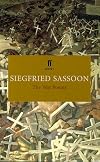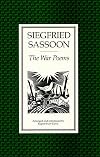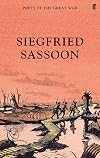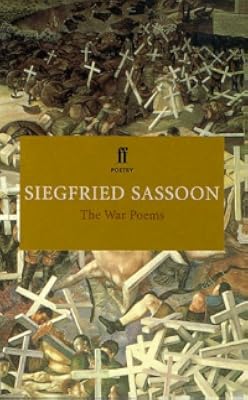
The War Poems
by Siegfried Sassoon
On This Page
Description
ForThe War Poems of Siegfried Sassoon, Sir Rupert Hart-Davis has arranged the poems as far as possible in the order of their composition. A useful Biographical Table is also included, so that students, scholars, and other readers can trace the movement of the soldier alongside the mind of the poet. Fourteen of the poems in this volume are published for the first time.Tags
Recommendations

















Member Reviews
A collection of the poems Siegfried Sassoon wrote about World War I. Very thought-provoking in their observations of a war that Sassoon hated and yet felt compelled to support. A very sad commentary on war from the pen of a participant.
Wonderful poems, though.
Wonderful poems, though.
I love The Poetry Pharmacy: I love the concept, I love the execution, I love how it speaks to my soul and tells me what I need to hear. This particular book in the otherwise fantastic duology gets one less star than its predecessor because I noticed some poems were repeated from The Poetry Remedy and I wished for new content (is this just a problem for us Americans?). I also found myself completely skipping over the explanations of each emotion and just reading the poems. But the poems, they were beautiful!
Sassoon, who lived through Word War One and who died in 1967, was, as the introduction to this book tells us, irritated in his later years at always being thought of as a "war poet". Understandable perhaps from the point of view of the poet: readers on the other hand might wish to demur. The poems gathered here and chronologically ordered, thereby tracing the course of the war, are an extraordinary testimony to the almost unimaginable experiences of a combatant in that bitter conflict. Moving from the patriotic optimism of the first few poems (" ... fighting for our freedom, we are free") to the anguish and anger of the later work (where "hope, with furtive eyes and grappling fists / Flounders in mud ... "), there comes a point when the show more reality of trench-warfare and its aftershocks move beyond comprehension: Sassoon knows this, and it becomes a powerful element in his art. As a book, the images have a cumulative relentlessness that make it almost impossible to read more than a few poems in one sitting.
Unlike the avant-garde experiments developing in Europe in the first decades of this century, Sassoon's verse is formally conservative--but this was perhaps necessary, for as one reads the poems, one feels that the form, the classically inflected tropes, the metre and rhyme, apart from ironising the rhetoric of glory and battle were necessary techniques for containing the emotion (and indeed, a tone of barely controlled irony may have been the only means by which these angry observations would have been considered publishable at the time). When Sassoon's line begins to fragment, as it does in several of the later poems, it is under the extreme pressure to express the inexpressible. Compassion and sympathy are omnipresent here, in their full etymological sense of suffering with or alongside others--something the higher echelons of command (those " ... old men who died / Slow, natural deaths--old men with ugly souls") were never able or willing to contemplate. But Sassoon intuited the future of warfare, could sense that this was not "the war to end all wars": the mock-religious invocation of the final poem prefigures the vicious euphemisms of more recent conflicts: "Grant us the power to prove, by poison gases, / The needlessness of shedding human blood." Sassoon's bile-black irony signals a deep-felt pessimism: it was with good reason. --Burhan Tufail
A body of poems emerging from Sassoon's experiences in the World War I trenches. They demonstrate a bleak realism and contempt for war leaders, which were at first unacceptable to a rather reverential public. Sassoon's reputation did not begin to flourish until well after the War's end. show less
Unlike the avant-garde experiments developing in Europe in the first decades of this century, Sassoon's verse is formally conservative--but this was perhaps necessary, for as one reads the poems, one feels that the form, the classically inflected tropes, the metre and rhyme, apart from ironising the rhetoric of glory and battle were necessary techniques for containing the emotion (and indeed, a tone of barely controlled irony may have been the only means by which these angry observations would have been considered publishable at the time). When Sassoon's line begins to fragment, as it does in several of the later poems, it is under the extreme pressure to express the inexpressible. Compassion and sympathy are omnipresent here, in their full etymological sense of suffering with or alongside others--something the higher echelons of command (those " ... old men who died / Slow, natural deaths--old men with ugly souls") were never able or willing to contemplate. But Sassoon intuited the future of warfare, could sense that this was not "the war to end all wars": the mock-religious invocation of the final poem prefigures the vicious euphemisms of more recent conflicts: "Grant us the power to prove, by poison gases, / The needlessness of shedding human blood." Sassoon's bile-black irony signals a deep-felt pessimism: it was with good reason. --Burhan Tufail
A body of poems emerging from Sassoon's experiences in the World War I trenches. They demonstrate a bleak realism and contempt for war leaders, which were at first unacceptable to a rather reverential public. Sassoon's reputation did not begin to flourish until well after the War's end. show less
Loved it - Sassoon is surgical in the precision with which he characterises human feelings and emotions, the futility of the war, its blind cruelty, and how in the end soldiers keep fighting because of the loyalty they feel to their companions also thrown in what is perceived quite clearly as a senseless butchery.
There are so many verses to quote, so many striking poems that the only thing which makes sense is to read them all - however I found the one below incredibly prescient, and think it should be compulsive reading in all schools
SONG-BOOKS OF THE WAR
In fifty years, when peace outshines
Remembrance of the battle lines,
Adventurous lads will sigh and cast
Proud looks upon the plundered past.
On summer morn or winter’s night,
Their show more hearts will kindle for the fight,
Reading a snatch of soldier-song,
Savage and jaunty, fierce and strong;
And through the angry marching rhymes
Of blind regret and haggard mirth,
They’ll envy us the dazzling times
When sacrifice absolved our earth. show less
There are so many verses to quote, so many striking poems that the only thing which makes sense is to read them all - however I found the one below incredibly prescient, and think it should be compulsive reading in all schools
SONG-BOOKS OF THE WAR
In fifty years, when peace outshines
Remembrance of the battle lines,
Adventurous lads will sigh and cast
Proud looks upon the plundered past.
On summer morn or winter’s night,
Their show more hearts will kindle for the fight,
Reading a snatch of soldier-song,
Savage and jaunty, fierce and strong;
And through the angry marching rhymes
Of blind regret and haggard mirth,
They’ll envy us the dazzling times
When sacrifice absolved our earth. show less
Over 100 short poems written between 1915 and 1919; plus a handful from 1926 and 1933.
Sassoon's anger builds and builds, and he is utterly withering by the end. These poems say more than any biography could about the man.
It's an extraordinary collection, particularly for a British reader for whom the First World War is regarded as unmitigated lunacy. Look no farther than Blackadder Goes Forth for a very British interpretation.
More than once I read a verse and had to put the book down beside me. War, in all its horror, condescended, captured, and retold. And, to one side, a warning of the ways of the ruling class given dominion.
Sassoon's anger builds and builds, and he is utterly withering by the end. These poems say more than any biography could about the man.
It's an extraordinary collection, particularly for a British reader for whom the First World War is regarded as unmitigated lunacy. Look no farther than Blackadder Goes Forth for a very British interpretation.
More than once I read a verse and had to put the book down beside me. War, in all its horror, condescended, captured, and retold. And, to one side, a warning of the ways of the ruling class given dominion.
sassoon's poetry is always beautiful. i'm always in awe of how it manages to be so well-crafted and structured, but also so raw and emotional. i've never known how to do both when it comes to poetry
I am fascinated with Sassoon's World War I story, and hence I have turned to his poetry. His work, often an indictment of the conduct of the war, followed by the disillusionment of his post war poems make interesting and instructive reading.
Members
- Recently Added By
Lists

BOOK WISH LIST
11 works; 1 member

THE WAR ROOM
813 works; 24 members
Author Information

70+ Works 3,829 Members
Sassoon is unusual among the generation of World War I poets in that he survived the war and was able to write of it both immediately and retrospectively. Born into a wealthy family, Sassoon grew up steeped in the genteel pleasures of the Edwardian aristocracy. He enlisted as a second lieutenant in World War I, serving in France. Like many poets, show more Sassoon wrote of the war at first as a noble, chivalric undertaking. But, under the influence of Robert Graves, Sassoon soon developed a more cynical aesthetic. His poem "Repression of War Experience" helps explain the development of his war poetry: It describes the frustration of the soldier trying to communicate the nature of the war to those safe at home and vividly connotes the horror and madness that pervade the soldiers' sustained experience in the trenches. His eventual pacifism and distrust of the military are reflected in his short poem "The General," which blames an uncomprehending and facile wartime leadership for the needless deaths of masses of soldiers. (Bowker Author Biography) show less
All Editions
Series
Belongs to Publisher Series
Work Relationships
Common Knowledge
- Canonical title
- The War Poems
- Original publication date
- 1983
- People/Characters
- Robert Graves
- Important events
- World War I (1914 | 1918)
- First words
- In later years, when Siegfried Sassoon had written much else in prose and verse, he was annoyed at always being referred to simply as a war poet, but it was the Great War that turned him into a poet of international fame, and... (show all) I feel sure that his ghost will forgive me for thus bringing together these magnificently scarifying poems. - Introduction by Rupert Hart-Davis
The anguish of the earth absolves our eyes / Till beauty shines in all that we can see. - Last words
- (Click to show. Warning: May contain spoilers.)God of the dear old Mastadon's morasses / Whose love pervaded pre-diluvial mud, / Grant us the power to prove, by poison gases, / The needlessness of shedding human blood.
- Disambiguation notice
- This is the Rupert Hart-Davies edited compilation of Sassoon's wartime & war-related poetry.
Please do not combine with other, differing compilations, or with the original 1919 volume of the same name which it subsumes... (show all).
Classifications
Statistics
- Members
- 573
- Popularity
- 51,379
- Reviews
- 10
- Rating
- (4.04)
- Languages
- English, Russian
- Media
- Paper, Ebook
- ISBNs
- 16
- ASINs
- 2