On This Page
Description
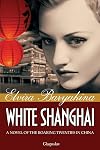
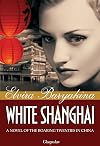
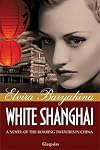
Some call the city the 'Splendor of the East'; others the 'Whore of Asia'. A melting pot of different nations, fused by war and commerce, this is the Shanghai of the 1920s. The Great Powers are greedily exploiting China for its cheap labor and reaping the cruel rewards of the booming opium trade. When a flotilla of ships carries the remnants of the defeated White Army on entry to Shanghai, the fragile balance of this international marketplace comes under threat. Among the refugees is Klim show more Rogov, an emigre journalist whose life and marriage have been claimed by the Russian Revolution. All he has left are his quick wits and keen worldliness that come in quite handy in navigating the lawless jungle of Shanghai. He finds work as a reporter at a British-run newspaper, rubbing shoulders with international gangsters while defying webbed intrigues of sinister communist agents. Amidst the survival frenzy all that keeps him going is the hope that someday he'll be reunited with his beloved wife Nina." show lessTags
Recommendations



































Member Reviews
A fascinating book, and one built on a nineteeth century scale with several complex subplots. Set in the international settlement in Shanghai in the 1920's it revolves around the various fates of escapees from the post 1917 civil war in Russia. The title is a pun, not only does it refer to white, european society, it refers to the fate of the escapees, all of whom had backed the Whites to a greater or lesser extent.
The story follows the main characters as they try to make a living and somehow negotiate the corruption and chaos of 1920's Shanghai, always with the wars and revolutions of 1920's China in the background.
The book is quietly atmospheric and a surprisingly absorbing read ...
The story follows the main characters as they try to make a living and somehow negotiate the corruption and chaos of 1920's Shanghai, always with the wars and revolutions of 1920's China in the background.
The book is quietly atmospheric and a surprisingly absorbing read ...
At 450 pages this is a meaty book and I was okay with that. However, I think there was a little too much meat and not enough bones. There were a few too many storylines and characters so it was hard to grasp everything that was going on.
The story of Klim and Nina is central to the book. Klim was a journalist who had worked around the world before returning to Russia before the First World War. He fell madly in love with Nina, a widow of a count but from humble beginnings. Nina was also passionately in love with Klim at first but after they fled to Vladivastok with the White Russian army she became tired of his lack of drive for material things. They were able to get on a ship going to Shanghai but China did not want to let the Russians show more get off the ship. Nina brokers a deal to sell the armaments on board the ship and as part of her commission she is allowed to leave but she takes another man, not Klim, with her. Klim takes a young orphan, Ada, under his wing when he does leave the ship and manages to get her a job as a taxi girl. A taxi girl dances with men who buy tickets but is not necessarily a prostitute. Nina does quite well for herself and Klim and Ada manage to survive.
Throughout the 1920s the Russian community in Shanghai has its ups and downs. Some wish to return to Russia and accept Communism. Some turn to fascism and some tread a fine line between the two. As Chiang Kai Shek and his rebels take more control of the country the good life that the non-Chinese have in Shanghai is threatened. Most of the Russians don't even have a passport so they can't leave the city for another country. Of course, there are ways of getting a fake passport if you have enough money. That is the driving force for most people.
I'm sure this book could have lost 80 to 100 pages without losing the story line. Too bad the editors didn't manage to whittle it down because it is a very interesting story. show less
The story of Klim and Nina is central to the book. Klim was a journalist who had worked around the world before returning to Russia before the First World War. He fell madly in love with Nina, a widow of a count but from humble beginnings. Nina was also passionately in love with Klim at first but after they fled to Vladivastok with the White Russian army she became tired of his lack of drive for material things. They were able to get on a ship going to Shanghai but China did not want to let the Russians show more get off the ship. Nina brokers a deal to sell the armaments on board the ship and as part of her commission she is allowed to leave but she takes another man, not Klim, with her. Klim takes a young orphan, Ada, under his wing when he does leave the ship and manages to get her a job as a taxi girl. A taxi girl dances with men who buy tickets but is not necessarily a prostitute. Nina does quite well for herself and Klim and Ada manage to survive.
Throughout the 1920s the Russian community in Shanghai has its ups and downs. Some wish to return to Russia and accept Communism. Some turn to fascism and some tread a fine line between the two. As Chiang Kai Shek and his rebels take more control of the country the good life that the non-Chinese have in Shanghai is threatened. Most of the Russians don't even have a passport so they can't leave the city for another country. Of course, there are ways of getting a fake passport if you have enough money. That is the driving force for most people.
I'm sure this book could have lost 80 to 100 pages without losing the story line. Too bad the editors didn't manage to whittle it down because it is a very interesting story. show less
 This review was written for LibraryThing Early Reviewers.
White Shanghai. A Novel of the Roaring Twenties in China by Elvira Baryakina was a bit of a disappointment to me. I have been fascinated by Shanghai ever since I visited there in 1993. The architecture styles are so different on the Bund and other parts of the city and this city has such an unusual history. It is one of those cities that you can feel where the past calling you.
I appreciate the tremendous amount of historical research that the author has put in to write this book, especially little bits of history that I wasn’t familiar with. I liked how she portrayed the prejudices of the Russians and the Chinese. I felt that she portrayed the period and place beautifully.
What I did not favor was the tremendous number of characters to show more follow in this book. I tried to keep track of them on paper but gave up I realized there were so many. I had to look back in the book to remember who they were.
Also, I did not feel sympathetic to either of the main characters, Klim Rogov or Nina Kupina. Both of their characters seemed so opportunistic and uncaring that I did not care about them. I would not like to meet either one if they were living.
For me the best part of the book was the exciting end. I also loved the drawings which were very expressive of the characters. But on the whole, I was disappointed.
If you do not mind not liking the main characters and want to learn some of the history of Shanghai during the 1920s then this book is for you. If you really want to read about a character who you feel close to, then this book is probably not for you.
I received this Advanced Reading Copy as a win from the Library Thing but that in no way influenced my review. show less
I appreciate the tremendous amount of historical research that the author has put in to write this book, especially little bits of history that I wasn’t familiar with. I liked how she portrayed the prejudices of the Russians and the Chinese. I felt that she portrayed the period and place beautifully.
What I did not favor was the tremendous number of characters to show more follow in this book. I tried to keep track of them on paper but gave up I realized there were so many. I had to look back in the book to remember who they were.
Also, I did not feel sympathetic to either of the main characters, Klim Rogov or Nina Kupina. Both of their characters seemed so opportunistic and uncaring that I did not care about them. I would not like to meet either one if they were living.
For me the best part of the book was the exciting end. I also loved the drawings which were very expressive of the characters. But on the whole, I was disappointed.
If you do not mind not liking the main characters and want to learn some of the history of Shanghai during the 1920s then this book is for you. If you really want to read about a character who you feel close to, then this book is probably not for you.
I received this Advanced Reading Copy as a win from the Library Thing but that in no way influenced my review. show less
This review was written for LibraryThing Early Reviewers.I was excited to receive this novel since it is set in Shanghai in the 1920s, a chaotic period in the history of that city and China as a whole. In setting and depiction of the political corruption, public unrest, and rampant racism, the book didn't disappoint. It's a confusing time and I still don't have it clear in my mind but I know a lot more than I did before I read this book. I admire the author's ability to sort it all out.
Whites mostly lived in the white settlement which was forbidden to Chinese unless they were employed by a white family. In this story, the main characters are White Russians who fled the Bolshevik revolution via Vladivostok on the remaining ships of the tsar's navy. From there they sailed south, stopping at show more ports in hopes of finding help and shelter but no one wanted them. As they ran out of supplies and people were dying on the ships, they came to Shanghai and stopped. There was no place to go. At that point many of the more adventurous refugees found a way into the city where they fed and clothed themselves through means both legal and illegal.
I had one huge problem with this novel. I really didn't find any characters that I liked or even cared much what happened to them. The protagonist, Klim Rogov, a journalist is too passive, his estranged wife, Nina, too aggressive and self-centered, and the others just plain unlikable. You must keep in mind that these people are in an impossible situation and I understand that. The Russians are looked down upon and definitely unwanted in Shanghai. Just making enough money for a little food and maybe a room to sleep in requires a lot of luck and courage. Nina makes a success of her businesses because she cares only about herself and doesn't mind trampling on others to get what she wants.
This book was written by a Russian woman who lives in New York, but she wrote it in Russian. It was then translated by a team of two people and they did a marvelous job of it. It still has a Russian flavor to it but the English is impeccable. It was published in London. As I think about it, that's almost as confusing as the situation in Shanghai.
I would recommend this book to anyone who likes historical novels firmly set in the period and place, and who don't mind a long novel of more than 500 pages. The novel carries the reader along without boring passages and tells a good story.
Source: LibraryThing win show less
Whites mostly lived in the white settlement which was forbidden to Chinese unless they were employed by a white family. In this story, the main characters are White Russians who fled the Bolshevik revolution via Vladivostok on the remaining ships of the tsar's navy. From there they sailed south, stopping at show more ports in hopes of finding help and shelter but no one wanted them. As they ran out of supplies and people were dying on the ships, they came to Shanghai and stopped. There was no place to go. At that point many of the more adventurous refugees found a way into the city where they fed and clothed themselves through means both legal and illegal.
I had one huge problem with this novel. I really didn't find any characters that I liked or even cared much what happened to them. The protagonist, Klim Rogov, a journalist is too passive, his estranged wife, Nina, too aggressive and self-centered, and the others just plain unlikable. You must keep in mind that these people are in an impossible situation and I understand that. The Russians are looked down upon and definitely unwanted in Shanghai. Just making enough money for a little food and maybe a room to sleep in requires a lot of luck and courage. Nina makes a success of her businesses because she cares only about herself and doesn't mind trampling on others to get what she wants.
This book was written by a Russian woman who lives in New York, but she wrote it in Russian. It was then translated by a team of two people and they did a marvelous job of it. It still has a Russian flavor to it but the English is impeccable. It was published in London. As I think about it, that's almost as confusing as the situation in Shanghai.
I would recommend this book to anyone who likes historical novels firmly set in the period and place, and who don't mind a long novel of more than 500 pages. The novel carries the reader along without boring passages and tells a good story.
Source: LibraryThing win show less
This review was written for LibraryThing Early Reviewers.The characters in this book are interesting, but I can't say that any of the stories are really compelling. I think I would have preferred more focus on a single character, with fewer tangents, which would've still been able to draw in almost the entire current cast--since everyone ends up connected by the middle of the book. My interest tended to wax and wane depending upon where the focus of the story was. Some of the characters are really unpleasant, but none of them deliciously so.
This review was written for LibraryThing Early Reviewers.Like previous reviewers, I can appreciate that there was a large amount of reasearch put into this novel .However, the storyline and the characters of the book reflect the chaos and confusion of 1920's Shanghai making this a very slow and frustrating read.
A disparate group of White Russians arrive in Shanghai harbour seeking refuge from the conflict of the Russian Revolution. Conditions on board are desperate and several individuals make there way to the shore by illegal means. Among them are Klim Rogov and his estranged wife Nina Kupina. We follow their many ventures both legal and illegal as they try to survive in this multi-cultural city.
I found myself trying to write a list of characters and how their lives intersected with each show more other, but I reached a point where I ceased to care and I just wanted to reach the end of this saga. I found the complex political background confusing as well. It became clear that this was a translated work, as I read and reread sentences which were structurally incorrect.
I did enjoy the illustrations peppered somewhat randomly through the story. This is a book that needed some judicial editing for it to succeed. Disappointing. show less
A disparate group of White Russians arrive in Shanghai harbour seeking refuge from the conflict of the Russian Revolution. Conditions on board are desperate and several individuals make there way to the shore by illegal means. Among them are Klim Rogov and his estranged wife Nina Kupina. We follow their many ventures both legal and illegal as they try to survive in this multi-cultural city.
I found myself trying to write a list of characters and how their lives intersected with each show more other, but I reached a point where I ceased to care and I just wanted to reach the end of this saga. I found the complex political background confusing as well. It became clear that this was a translated work, as I read and reread sentences which were structurally incorrect.
I did enjoy the illustrations peppered somewhat randomly through the story. This is a book that needed some judicial editing for it to succeed. Disappointing. show less
This review was written for LibraryThing Early Reviewers.*I received this book through LibraryThing Early Reviewers.*
White Shanghai chronicles the lives of a diverse and interconnected cast of characters in Shanghai during the 1920s. Opening with the arrival of a group of Russian refugees in Shanghai following the upheaval of the Russian Revolution, the novel displays the struggles, opportunities, and pitfalls of life in China during the 20s. The large number of characters and the constant ups and downs of their lives makes the plot somewhat difficult to discern in this novel, although I did appreciate the author's ability to depict a realistic picture of life in Shanghai in all its variations.
White Shanghai chronicles the lives of a diverse and interconnected cast of characters in Shanghai during the 1920s. Opening with the arrival of a group of Russian refugees in Shanghai following the upheaval of the Russian Revolution, the novel displays the struggles, opportunities, and pitfalls of life in China during the 20s. The large number of characters and the constant ups and downs of their lives makes the plot somewhat difficult to discern in this novel, although I did appreciate the author's ability to depict a realistic picture of life in Shanghai in all its variations.
This review was written for LibraryThing Early Reviewers.Members
- Recently Added By
Author Information

7 Works 39 Members
Series

Common Knowledge
- Canonical title
- White Shanghai A Novel of the Roaring Twenties in China
- Original title
- Белый Шанхай
- Original publication date
- 2011 [Russian]; 2012-12-10 [English]
- People/Characters
- Klim Rogov; Nina Kupina; Ada Marshall; Felix Rodionov; Lissie Wayer; Rober Wayer (show all 16); Chiang Kai-shek; Sun Yat-sen; Edna Bernard; Daniel Bernard; Martha Spencer; Paul Marie Lemoine; Jiří Labuda; Johnny Collor; Hua Binbin; Don Fernando Jose Burbano
- Important places
- Shanghai, China; Russia; Vladivostok, Russia; Canton, China; Wuhan, China; Beijing, China (show all 9); Nanjing, China; Nanking, China; Guangzhou, Guangdong, China
- Important events
- Russian Revolution (1917); Russian Civil War (1917 | 1922); Nanking Incident (1927); May Thirtieth Movement (1925); Nanjing Road Incident (1925-05-30); Shanghai Massacre (1927)
- First words
- Father Seraphim was built like a bear, with cannonballs for fists and a grand bushy beard—white around the lips and dark on the cheeks. His parish was the church of Saint Nicholas the Miracle-Worker in St. Petersburg.
- Last words
- (Click to show. Warning: May contain spoilers.)Ada pulled her shoulders back and gave him a proud look. “All my dreams come true.”
Klim turned to Mitya. “And you’re going to Panama, too? What about Tamara?”
“She doesn’t need me anymore. Ada does.”
A horn sounded on the little steamer transporting passengers to the big ocean liners.
Ada crossed herself. “That’s us, we’re off. If God allows, we’ll see you again.”
Mitya lifted the sacks, “Where to?”
“Follow me.”
In his eyes: love, love, love.
Classifications
- Genres
- Fiction and Literature, General Fiction, Historical Fiction
- DDC/MDS
- 891.735 — Literature & rhetoric Literatures of other languages East Indo-European and Celtic literatures Russian and East Slavic languages Russian fiction 1991–
- LCC
- PG3491.42 .R53 .B45 — Language and Literature Slavic languages and literatures. Baltic languages. Albanian language Slavic. Baltic. Albanian Russian literature Individual authors and works 2001-
- BISAC
Statistics
- Members
- 29
- Popularity
- 955,795
- Reviews
- 11
- Rating
- (2.64)
- Languages
- English, Russian
- Media
- Paper, Ebook
- ISBNs
- 7
- ASINs
- 3