On This Page
Description
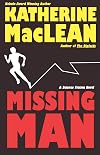
George Sanford has a gift for guessing right the first time and very little else going for him. When Ahmed and his other friends graduate school and got jobs in The City, George finds himself left behind. He never wanted to sign his name, let alone fill out applications and reports.Then George bumps into the Rescue Squad and is swept up in the excitement of a hunt for a trapped girl. It is George who finds her with his special talent for guessing right ... and it is George who suddenly show more becomes the pride of the Rescue Squad. With a friend running interference for him with the bureaucracy, George lands a place for himself as a "consultant" - and the more he works, the more his strange talents grow.With each success George begins to change. Using his special talents to rescue a computer technician from a gang of revolutionaries, he finds he has become a pawn in a mad iconoclastic game. A game where his own talents pose the greatest threat to The City - and the world show lessTags
Recommendations






















Member Reviews
"Mass produced people, all differences all covered up and hidden. No creation, no evolution. Evolution is, we're here to try our differences, enjoy our own thing, make it or fail our own way. The differences are what matters, but you won't let them have differences to argue over. Just mass-produced people with the same personality and philosophy. Your personality and philosophy. Yours."
The short story this was based on absolute deserves its Nebula Award. Mrs. MacLean takes us through what it means to be human and asks the philosophical age old questions: Is good control over people just as bad as evil control over people? Is the illusion of choice when the outcomes are pre-programmed desirable? Are people who only stick with their own show more kind, those with exactly the same beliefs happy? Better people?
The above questions still being so fitting; especially in our day and age where simple opposing views or personal opinions, politely put forth are often shouted down and condemned engendering an intense frustration at the lack of discourse.
"Maybe a person would be half happy living your way, doing your thing, for a lifetime, but he has only one lifetime and you want to make him live your lifetime instead of his own. You'd make them into saints. You'd take away man's chance to be himself. That's murder or robbery. You humble saints are trying to steal lives."
The book is disjointed and confusing at times but this is on purpose the main character switches consciousnesses suddenly and without warning so the reader, rather than being hand held/spoon fed, experiences it just as the main character does.
The ending is excellent not at all what it seemed to be going toward. The climax perfect, exquisite. I can only echo other reviewers in saying "Why has this classic not been on more people's radars?" I consider myself incredibly lucky to have received this book among a Sci-Fi book bundler (Think opening collectible card packs but for books!). I will be seeking out her other works for sure. show less
The short story this was based on absolute deserves its Nebula Award. Mrs. MacLean takes us through what it means to be human and asks the philosophical age old questions: Is good control over people just as bad as evil control over people? Is the illusion of choice when the outcomes are pre-programmed desirable? Are people who only stick with their own show more kind, those with exactly the same beliefs happy? Better people?
The above questions still being so fitting; especially in our day and age where simple opposing views or personal opinions, politely put forth are often shouted down and condemned engendering an intense frustration at the lack of discourse.
"Maybe a person would be half happy living your way, doing your thing, for a lifetime, but he has only one lifetime and you want to make him live your lifetime instead of his own. You'd make them into saints. You'd take away man's chance to be himself. That's murder or robbery. You humble saints are trying to steal lives."
The book is disjointed and confusing at times but this is on purpose the main character switches consciousnesses suddenly and without warning so the reader, rather than being hand held/spoon fed, experiences it just as the main character does.
The ending is excellent not at all what it seemed to be going toward. The climax perfect, exquisite. I can only echo other reviewers in saying "Why has this classic not been on more people's radars?" I consider myself incredibly lucky to have received this book among a Sci-Fi book bundler (Think opening collectible card packs but for books!). I will be seeking out her other works for sure. show less
I put this on my SF Mistressworks list several years ago based on its reputation, and the fact it won a Nebula, although that was for the original novella, not the novel (although the novel too was nominated four years later). MacLean’s name popped up a number of times in Judith Merril’s (auto)biography (see here) – she was part of the same Futurians group, with Merril and Pohl, banging out stories for the sf mags, which garnered praise from the likes of Damon Knight and Brian Aldiss. So it came as something of a surprise to discover that Missing Man was actually sort of rubbish. George is an idiot savant – an uneducated orphan, physically strong but good-natured, with an unnaturally strong empathic ability. He meets up with a show more friend from childhood, who is in the Rescue Squad, and is hired as a consultant because he can use his ability to find missing people. Meanwhile, there’s a blackmail plot by a gang of teenagers, who have kidnapped a city engineer (the missing man of the title) and learnt of a design flaw in the city’s systems. As proof of this, they cause the collapse of two undersea cities, killing thousands. MacLean clearly just made shit up as she went along. It’s bad enough that Missing Man, a mid-1970s novel, reads more like a mid-1960s one, but then you come across a line like “The distilled water, being pure and without salts, carried no radiation back from the ‘hot’ place it circulated through”, and it’s clear the author’s grasp of science is feeble at best… But then, from what Merril wrote in her autobiography, they were really quite cynical about writing for money, and would bang out any old crap, knowing that Pohl, as editor, would buy it (although he pocketed half of the fee). I had expected much more of Missing Man, given the author’s reputation. Disappointing. show less
Some interesting speculative ideas, some nice interpersonal scenes, some awful info dumps, unconvincing motivations... the usual hodgepodge in 1970's SF. The original novella won a Nebula which says a lot about how far SF writing has come.
New York City has broken up into immigrant enclaves, at an uneasy truce with each other. There are also a few underwater dome cities, but they seem to exist primarily for plot purposes. The core SF idea is one that Campbell may have provided, as was his habit: people in trouble give off vibes that affect the behavior of the people around them. The Rescue Squad uses empaths and incident statistics to triangulate and locate such people. All this is explained in the aforementioned info-dumps.
The story show more follows the development of George Sanford, a very strong empath with fairly weak social and critical reasoning skills -- almost a Lenny to his friend Ahmed's George. Though told primarily from George's point of view, a lot of his backstory and motivations are not revealed until fairly late. Most of the plot, politics, philosophy and science are clumsily presented, but there are enough nicely done human-sized set pieces to make the book overall worth a quick read. show less
New York City has broken up into immigrant enclaves, at an uneasy truce with each other. There are also a few underwater dome cities, but they seem to exist primarily for plot purposes. The core SF idea is one that Campbell may have provided, as was his habit: people in trouble give off vibes that affect the behavior of the people around them. The Rescue Squad uses empaths and incident statistics to triangulate and locate such people. All this is explained in the aforementioned info-dumps.
The story show more follows the development of George Sanford, a very strong empath with fairly weak social and critical reasoning skills -- almost a Lenny to his friend Ahmed's George. Though told primarily from George's point of view, a lot of his backstory and motivations are not revealed until fairly late. Most of the plot, politics, philosophy and science are clumsily presented, but there are enough nicely done human-sized set pieces to make the book overall worth a quick read. show less
http://nhw.livejournal.com/213781.html
This book, published in 1975, is a fix-up of three stories published in Analog between 1968 and 1971 featuring psychic detective George Sandford, the last of which won a Nebula. The setting is remarkable - New York in a world recovering from environmental catastrophe, where there is much greenery and derelict buildings (and vulnerable underwater suburbs), and significant social control in return for quality of life. Sandford's somewhat seedy character and his feelings of blurred identity when he tries to read the minds of criminals (or their victims) are quite vivid. It is reminiscent of Alfred Bester, Philip K Dick and John Brunner. MacLean was obviously a pretty talented author who simply didn't show more produce as much as the other three; the only other story by her I remember reading is "The Snowball Effect", about the small town sewing circle that takes over the world. show less
This book, published in 1975, is a fix-up of three stories published in Analog between 1968 and 1971 featuring psychic detective George Sandford, the last of which won a Nebula. The setting is remarkable - New York in a world recovering from environmental catastrophe, where there is much greenery and derelict buildings (and vulnerable underwater suburbs), and significant social control in return for quality of life. Sandford's somewhat seedy character and his feelings of blurred identity when he tries to read the minds of criminals (or their victims) are quite vivid. It is reminiscent of Alfred Bester, Philip K Dick and John Brunner. MacLean was obviously a pretty talented author who simply didn't show more produce as much as the other three; the only other story by her I remember reading is "The Snowball Effect", about the small town sewing circle that takes over the world. show less
Ratings
Members
- Recently Added By
Author Information

42+ Works 556 Members
Some Editions
Awards and Honors
Awards
Series

Belongs to Publisher Series
Common Knowledge
- Canonical title*
- Der Esper und die Stadt
- Original title
- Missing Man
- Original publication date
- 1975
- People/Characters*
- George Sanford; Ahmed Kosvakatats; Bessie; Jean Fitzpatrick; Carl Hodges; Judd Oslow (show all 12); Akbar Hisham; Larry Rubaschow; Mr. Kracken; Weeny; Nicholi; Perry
- Important places*
- New York, New York, USA
- First words*
- Ich war unterwegs zum Arbeitsamt in der Oberstadt.
- Last words*
- (Click to show. Warning: May contain spoilers.)New York. Ich war wieder in meiner Stadt.
- Publisher's editor*
- Alpers, Hans Joachim
- Original language*
- Englisch
- Disambiguation notice*
- This is the fix-up novel 'Missing Man'. Please don't combine with the novella 'The Missing Man'.
*Some information comes from Common Knowledge in other languages. Click "Edit" for more information.
Classifications
Statistics
- Members
- 149
- Popularity
- 219,894
- Reviews
- 4
- Rating
- (3.19)
- Languages
- English, German
- Media
- Paper, Ebook
- ISBNs
- 6
- UPCs
- 1
- ASINs
- 5