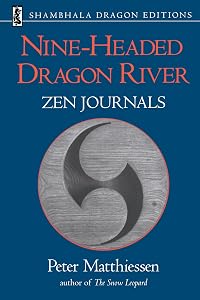
Nine-Headed Dragon River: Zen Journals 1969-1982 (Shambhala Dragon Editions)
by Peter Matthiessen
On This Page
Description
In August 1968, naturalist-explorer Peter Matthiessen returned from Africa to his home in Sagaponack, Long Island, to find three Zen masters in his driveway--guests of his wife, a new student of Zen. Thirteen years later, Matthiessen was ordained a Buddhist monk. Written in the same format as his best-selling The Snow Leopard, Nine-Headed Dragon River reveals Matthiessen's most daring adventure of all: the quest for his spiritual roots.Tags
Recommendations














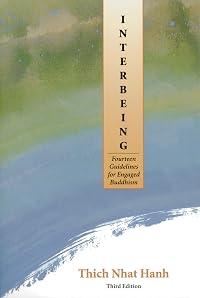
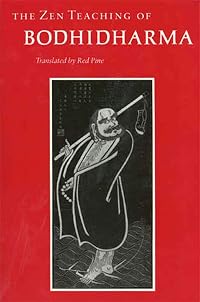
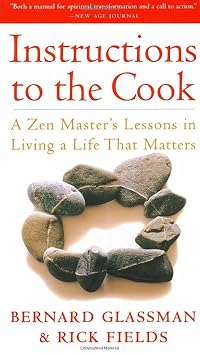

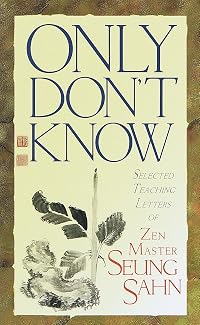



















Member Recommendations
Member Reviews
The first person accounts of Matthiessen's Buddhist journey are usually captivating.
The book in my opinion goes seriously off the rails when he attempts to recount the history of Japanese Zen. It reads like a biblical list of generations to no real purpose and is all uncertain anecdote anyway.
The book in my opinion goes seriously off the rails when he attempts to recount the history of Japanese Zen. It reads like a biblical list of generations to no real purpose and is all uncertain anecdote anyway.
"In this hauntingly beautiful book, renowned explorer, naturalist, and novelist Peter Matthiessen describes his highly personal quest for a spiritual path. Drawn from a journal he began back in 1969 when he first met three Japanese Zen masters, [this book] reveals his journey deep into the heart of American and Japanese Zen, culminating with his 1982 pilgrimage to Japan with his Zen teacher." from book jacket
In August 1968, naturalist-explorer Peter Matthiessen returned from Africa to his home in Sagaponack, Long Island, to find three Zen masters in his driveway—guests of his wife, a new student of Zen. Thirteen years later, Matthiessen was ordained a Buddhist monk. Written in the same format as his best-selling The Snow Leopard, Nine-Headed Dragon River reveals Matthiessen's most daring adventure of all: the quest for his spiritual roots.
Ratings
Members
- Recently Added By
Author Information

48+ Works 13,947 Members
Peter Matthiessen was born in Manhattan, New York on May 22, 1927. He served in the Navy at Pearl Harbor. He graduated with a degree in English from Yale University in 1950. It was around this time that he was recruited by the CIA and traveled to Paris, where he became acquainted with several young expatriate American writers. In the postwar years show more the CIA covertly financed magazines and cultural programs to counter the spread of Communism. While in Paris, he helped found The Paris Review in 1953. After returning to the United States, he worked as a commercial fisherman and the captain of a charter fishing boat. His first novel, Race Rock, was published in 1954. His other fiction works include Partisans, Raditzer, Far Tortuga, and In Paradise. His novel, Shadow Country, won a National Book Award. His novel, At Play in the Fields of the Lord, was made into a movie. He started writing nonfiction after divorcing his first wife. An assignment for Sports Illustrated to report on American endangered species led to the book Wildlife in America, which was published in 1959. His travels took him to Asia, Australia, South America, Africa, New Guinea, the Florida swamps, and beneath the ocean. These travels led to articles in The New Yorker as well as numerous nonfiction books including The Cloud Forest: A Chronicle of the South American Wilderness, Under the Mountain Wall: A Chronicle of Two Seasons of Stone Age New Guinea, Blue Meridian: The Search for the Great White Shark, The Tree Where Man Was Born, and Men's Lives. The Snow Leopard won the 1979 National Book Award for nonfiction. He died from leukemia on April 5, 2014 at the age of 86. (Bowker Author Biography) show less
Series
Belongs to Publisher Series
Common Knowledge
- Epigraph
- The great way of the Buddhas is profound, wondrous, inconceivable; how could its practice be easy? Have you not seen how the ancients gave up their bodies and lives, abandoned their countries, cities, and families, lookin... (show all)g upon them as like shards of tile? After that they passed eons living alone in the mountains and forests, bodies and minds like dead trees; only then did they unite with the way. Then they could use mountains and rivers for words, raise the wind and rain for a tongue, and explain the great void. . . .
Shobogenzo
EIHEI DOGEN - Dedication
- To my excellent teacher and kind friend Bernard
Tetsugen Glassman-sensei, with admiration,
gratitude, and deep affection. - Publisher's editor
- Sell, Emily Hilburn
- Blurbers
- Maezumi, Hakuyu T.
Classifications
- Genres
- Religion & Spirituality, Biography & Memoir, Fiction and Literature
- DDC/MDS
- 813.54 — Literature & rhetoric American literature in English American fiction in English 1900-1999 1945-1999
- LCC
- PS3563 .A8584 .Z475 — Language and Literature American literature American literature Individual authors 1961-
- BISAC
Statistics
- Members
- 406
- Popularity
- 76,701
- Reviews
- 3
- Rating
- (3.83)
- Languages
- 5 — Dutch, English, German, Italian, Spanish
- Media
- Paper, Ebook
- ISBNs
- 12
- ASINs
- 5