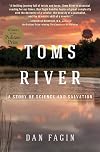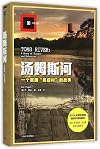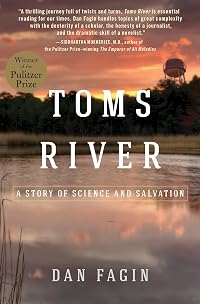
Toms River: A Story of Science and Salvation
by Dan Fagin
On This Page
Description
WINNER OF THE PULITZER PRIZE • Winner of The New York Public Library’s Helen Bernstein Book Award • “A new classic of science reporting.”—The New York TimesThe riveting true story of a small town ravaged by industrial pollution, Toms River melds hard-hitting investigative reporting, a fascinating scientific detective story, and an unforgettable cast of characters into a sweeping narrative in the tradition of A Civil Action, The Emperor of All Maladies, and The Immortal Life of show more Henrietta Lacks.
One of New Jersey’s seemingly innumerable quiet seaside towns, Toms River became the unlikely setting for a decades-long drama that culminated in 2001 with one of the largest legal settlements in the annals of toxic dumping. A town that would rather have been known for its Little League World Series champions ended up making history for an entirely different reason: a notorious cluster of childhood cancers scientifically linked to local air and water pollution. For years, large chemical companies had been using Toms River as their private dumping ground, burying tens of thousands of leaky drums in open pits and discharging billions of gallons of acid-laced wastewater into the town’s namesake river.
In an astonishing feat of investigative reporting, prize-winning journalist Dan Fagin recounts the sixty-year saga of rampant pollution and inadequate oversight that made Toms River a cautionary example for fast-growing industrial towns from South Jersey to South China. He tells the stories of the pioneering scientists and physicians who first identified pollutants as a cause of cancer, and brings to life the everyday heroes in Toms River who struggled for justice: a young boy whose cherubic smile belied the fast-growing tumors that had decimated his body from birth; a nurse who fought to bring the alarming incidence of childhood cancers to the attention of authorities who didn’t want to listen; and a mother whose love for her stricken child transformed her into a tenacious advocate for change.
A gripping human drama rooted in a centuries-old scientific quest, Toms River is a tale of dumpers at midnight and deceptions in broad daylight, of corporate avarice and government neglect, and of a few brave individuals who refused to keep silent until the truth was exposed.
NAMED ONE OF THE BEST BOOKS OF THE YEAR BY NPR AND KIRKUS REVIEWS
“A thrilling journey full of twists and turns, Toms River is essential reading for our times. Dan Fagin handles topics of great complexity with the dexterity of a scholar, the honesty of a journalist, and the dramatic skill of a novelist.”—Siddhartha Mukherjee, M.D., author of the Pulitzer Prize–winning The Emperor of All Maladies
“A complex tale of powerful industry, local politics, water rights, epidemiology, public health and cancer in a gripping, page-turning environmental thriller.”—NPR
“Unstoppable reading.”—The Philadelphia Inquirer
“Meticulously researched and compellingly recounted . . . It’s every bit as important—and as well-written—as A Civil Action and The Immortal Life of Henrietta Lacks.”—The Star-Ledger
“Fascinating . . . a gripping environmental thriller.”—Kirkus Reviews (starred review)
“An honest, thoroughly researched, intelligently written book.”—Slate
... show less
Tags
Recommendations







Member Recommendations
The Demon under the Microscope: From Battlefield Hospitals to Nazi Labs, One Doctor's Heroic Search for the World's First Miracle Drug by Thomas Hager
sweetbug The Demon Under the Microscope traces the history of the development of antibiotics. It tells the stories of many scientific discoveries and their connections to events in European history through WWII. Toms River is a more modern take on the same type of story, tracing the history of dye manufacturing and its connection to an epidemic of childhood cancer cases in a small town in New Jersey. Both are written as great stories, with lots of details on the lives of the people (doctors, patients, families and community members) involved.
Member Reviews
Outstanding book!
Industrial pollution on a monumental scale
Incompetent local, state, and federal agencies doing nothing to prevent it or stop it
A coordinated campaign to lie to the citizens
A excellent breakdown of why it is nearly impossible to prove cause and effect regarding cancer rates of those living near toxic sites.
Excellent book! Read it if you think the government is any better than the company’s doing the polluting.
Industrial pollution on a monumental scale
Incompetent local, state, and federal agencies doing nothing to prevent it or stop it
A coordinated campaign to lie to the citizens
A excellent breakdown of why it is nearly impossible to prove cause and effect regarding cancer rates of those living near toxic sites.
Excellent book! Read it if you think the government is any better than the company’s doing the polluting.
Corporations will cut corners and will try to get away with as much polluting as they can in order to maximize profit. Families will stop at nothing to get answers regarding the illnesses their children have suffered.
The intersection of these tendencies is well exemplified by Dan Fagin in Toms River: A Story of Science and Salvation.
In its pages, the author masterfully traces the history of Toms River, New Jersey, its Ciba plant, the history of tracing the effects of chemicals upon human health, dumping of Union Carbide waste products, and the elaborate investigations of a spate of childhood cancers in Toms River in the 1990s and early 2000s.
It’s a compelling story, and another indicator of the dangers of how we have decided, as a show more culture and society, to treat “advancements” in technology and science: as opposed to making sure chemicals are safe enough to allow in our environment or our bodies before giving them the green light, corporations will do whatever they want until there is some kind of effect on people and/or the environment. The corporations will then almost invariably work hard to deny or suppress the problem until it can no longer be contained, and then far more corporate and taxpayer monies are spent to try to clean up the problem than was ever generated by the profits made from the products themselves.
What have we learned? Absolutely nothing, apparently. Only God knows how much long-term environmental and economic damage is being done in the name of short-term profit. And the science regarding the effects is always well behind the science of those wishing to make money on new chemical products. show less
The intersection of these tendencies is well exemplified by Dan Fagin in Toms River: A Story of Science and Salvation.
In its pages, the author masterfully traces the history of Toms River, New Jersey, its Ciba plant, the history of tracing the effects of chemicals upon human health, dumping of Union Carbide waste products, and the elaborate investigations of a spate of childhood cancers in Toms River in the 1990s and early 2000s.
It’s a compelling story, and another indicator of the dangers of how we have decided, as a show more culture and society, to treat “advancements” in technology and science: as opposed to making sure chemicals are safe enough to allow in our environment or our bodies before giving them the green light, corporations will do whatever they want until there is some kind of effect on people and/or the environment. The corporations will then almost invariably work hard to deny or suppress the problem until it can no longer be contained, and then far more corporate and taxpayer monies are spent to try to clean up the problem than was ever generated by the profits made from the products themselves.
What have we learned? Absolutely nothing, apparently. Only God knows how much long-term environmental and economic damage is being done in the name of short-term profit. And the science regarding the effects is always well behind the science of those wishing to make money on new chemical products. show less
“The very big idea that would transform Toms River and reshape the global economy was born in 1856 in the attic laboratory of a precocious eighteen-year-old chemistry student named William Henry Perkin...” who was occupying a school break with experiments suggested by his mentor, August Wilhelm von Hoffman. The focus of his attention was coal tar, a waste product of coal converted into coal gas and coke. The hope was to synthesize quinine, an amine. The result was a bright purple residue that stuck to the test tube and transferred to a cotton wipe. This was not to be idly dismissed as a failure. In a world of expensive dyes made from snails or insects or lichens, aniline dyes made from industrial waste were phenomenal. Within six show more months, he had dropped out of school to build a factory near London.
In Basel Switzerland, on the Rhine river, three dye manufacturers (Ciba, Geigy, Sandoz) took advantage of lax patent laws and extended the idea to other coal tar constituents and a rainbow of colors. In 1920, these three formed a partnership and entered the US market by purchasing a factory in Cincinnati OH, on the Ohio River. As in Switzerland, waste was discharged into the river, and as in Switzerland, there were rumors about cancer and complaints about pollution and gestures of governmental concern. ”The Swiss could see what was coming, and they reacted in time-honored fashion: They made plans to skip town.” In 1952, they skipped to a rural area without a formal name, which became known as Toms River NJ. Cincinnati Chemical Works became Toms River Chemical Company.
The factory was built on sand and gravel. The company initially expected that separation of wells for water and lagoons for waste would be sufficient, but the ground was absorbent and the waste corroded the liners, in part because the company crushed waste drums for efficient use of space. By the mid 1950s, employees were complaining about the smell of drinking fountain water in company buildings. The company shifted waste containers to the river, where wells two miles downstream supplied water to the town. By the mid 1960s, employees who were also customers of Toms River Water Company recognized the smell of tap water at home. Neither company wanted to invite investigation, so the chemical company began piping waste to the ocean, and the water company closed the worst of the wells and added chlorine to the others. In 1972, the Clean Water Act established standards and a permit process, requiring waste treatment at an off-site facility, but the chemical company saved substantial money by not complying. This came to light in 1984, when a road buckled, and the ground underneath was found to be saturated with black liquid, traced to a wastepipe leak. A reporter published the list of chemicals from the permit application, and residents petitioned the EPA to refuse renewal.
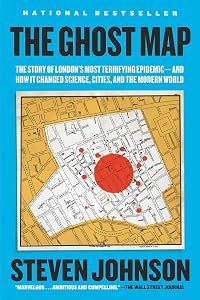
Meanwhile, cancer. Here the book has bits of overlap with The Emperor of All Maladies in a history of cancer research and The Ghost Map in a history of epidemiology and mapping, and a thorough explanation of why a “cancer cluster” is so difficult to determine: everything clusters by chance, cancer is more ubiquitous than most people realize, cancer is not a single disease. Left to mere statistical analysis, things would have gone nowhere. Instead, a number of intensely persistent people got involved. Linda Gillick’s son was diagnosed with neuroblastoma; when he was 10 and had survived beyond expectations, she founded Oceans of Love and became “the hub of information about childhood cancer in Ocean County”. Lisa Boornazian was a nurse on a cancer ward in Philadelphia; she noticed a disproportionate number of cases from Toms River and mentioned this to her sister-in-law, an EPA hazardous waste specialist, who contacted an acquaintance at the Agency for Toxic Substances and Disease Registry, who requested a formal investigation by the New Jersey Department of Health, which sent a letter to local physicians, among them a friend of Linda Gillick. Loop closed, she contacted Jan Schlichtmann of A Civil Action. Behind the scenes, a chemist ran tests and read studies to determine exactly what the problem was with the water.
This book was a page turner from the start, weaving history and science and law and drama in impressive and fascinating detail. Sooo much more to it than I have briefly outlined. I bogged down somewhat in the court case at the end, but this is because the law aspect is not so much my thing, and the science by then was mostly done. Highly recommended.
(read 15 Mar 2013) show less
In Basel Switzerland, on the Rhine river, three dye manufacturers (Ciba, Geigy, Sandoz) took advantage of lax patent laws and extended the idea to other coal tar constituents and a rainbow of colors. In 1920, these three formed a partnership and entered the US market by purchasing a factory in Cincinnati OH, on the Ohio River. As in Switzerland, waste was discharged into the river, and as in Switzerland, there were rumors about cancer and complaints about pollution and gestures of governmental concern. ”The Swiss could see what was coming, and they reacted in time-honored fashion: They made plans to skip town.” In 1952, they skipped to a rural area without a formal name, which became known as Toms River NJ. Cincinnati Chemical Works became Toms River Chemical Company.
The factory was built on sand and gravel. The company initially expected that separation of wells for water and lagoons for waste would be sufficient, but the ground was absorbent and the waste corroded the liners, in part because the company crushed waste drums for efficient use of space. By the mid 1950s, employees were complaining about the smell of drinking fountain water in company buildings. The company shifted waste containers to the river, where wells two miles downstream supplied water to the town. By the mid 1960s, employees who were also customers of Toms River Water Company recognized the smell of tap water at home. Neither company wanted to invite investigation, so the chemical company began piping waste to the ocean, and the water company closed the worst of the wells and added chlorine to the others. In 1972, the Clean Water Act established standards and a permit process, requiring waste treatment at an off-site facility, but the chemical company saved substantial money by not complying. This came to light in 1984, when a road buckled, and the ground underneath was found to be saturated with black liquid, traced to a wastepipe leak. A reporter published the list of chemicals from the permit application, and residents petitioned the EPA to refuse renewal.
Meanwhile, cancer. Here the book has bits of overlap with The Emperor of All Maladies in a history of cancer research and The Ghost Map in a history of epidemiology and mapping, and a thorough explanation of why a “cancer cluster” is so difficult to determine: everything clusters by chance, cancer is more ubiquitous than most people realize, cancer is not a single disease. Left to mere statistical analysis, things would have gone nowhere. Instead, a number of intensely persistent people got involved. Linda Gillick’s son was diagnosed with neuroblastoma; when he was 10 and had survived beyond expectations, she founded Oceans of Love and became “the hub of information about childhood cancer in Ocean County”. Lisa Boornazian was a nurse on a cancer ward in Philadelphia; she noticed a disproportionate number of cases from Toms River and mentioned this to her sister-in-law, an EPA hazardous waste specialist, who contacted an acquaintance at the Agency for Toxic Substances and Disease Registry, who requested a formal investigation by the New Jersey Department of Health, which sent a letter to local physicians, among them a friend of Linda Gillick. Loop closed, she contacted Jan Schlichtmann of A Civil Action. Behind the scenes, a chemist ran tests and read studies to determine exactly what the problem was with the water.
This book was a page turner from the start, weaving history and science and law and drama in impressive and fascinating detail. Sooo much more to it than I have briefly outlined. I bogged down somewhat in the court case at the end, but this is because the law aspect is not so much my thing, and the science by then was mostly done. Highly recommended.
(read 15 Mar 2013) show less
 This review was written for LibraryThing Early Reviewers.
Tom's River is a meticulously researched thoroughly engrossing book about the consequences of industrial pollution. It's also scary as hell.
I began the book thinking that it was a great cautionary tale that thankfully wasn't in my back yard. But oh no, just a few pages in it turns out this New Jersey nightmare started in Cincinnati. Suddenly it was a lot more personal. What's in my water?
The author very skillfully wove together the origins of the Tom's River cancer clusters with the history of the chemical industry and medical/scientific research. He gives thereader enough information to understand what is happening without boring the.
I began the book thinking that it was a great cautionary tale that thankfully wasn't in my back yard. But oh no, just a few pages in it turns out this New Jersey nightmare started in Cincinnati. Suddenly it was a lot more personal. What's in my water?
The author very skillfully wove together the origins of the Tom's River cancer clusters with the history of the chemical industry and medical/scientific research. He gives thereader enough information to understand what is happening without boring the.
This review was written for LibraryThing Early Reviewers.The problem for manufacturing companies, and especially chemical manufacturers, is what to do with the waste products. Disposing of it safely can get expensive and eat into profits, so historically companies just dumped it in a river and it was on its way to the ocean - or at least it wasn't their problem anymore. Of course, a river can only take so much before people start to notice... and complain!
Toms River was a pretty little place near the Jersey shore when Ciba-Geigy relocated their manufacturing there in 1949. They were moving operations from Cincinnati (and the Ohio River) where they'd been making fabric dyes from petroleum and tar products for years. Before that they'd made their products in Basel, Switzerland, along the banks show more of the Rhine River. They purchased a large piece of wooded New Jersey property and built their factory in the middle, surrounded by trees that hid it from the outside. But they didn't dump *all* their wastes into the river - that would have drawn complaints. Instead they burned some of it (at night to reduce complaints from the town) and built holding ponds on the property. Unfortunately those ponds weren't lined and the wastes seeped easily into the sandy soil (the level sometimes dropping as much as five feet in a day) and into the groundwater that provided the growing town's drinking water. But it wasn't just Ciba polluting the town and water. In an effort to keep disposal costs down, Union Carbide paid a contractor to "dispose" of their wastes and it and it ended up being dumped in a pit in a back corner of an old egg farm.
Dan Fagin tells the story of how a cluster of children in Toms River (actually named Dover Township) developed cancer and the medical sleuthing that was able to point the finger at the toxic wastes being generated nearby. And for a fairly lengthy book (460 pages) it's hard to put down. Fagin covers not only Toms River but also the history of how links to cancer were uncovered along the way - and it's a fascinating story. I found his explanations of how cancers happen (there are about 150 different kinds) as well as the history of the chemical industry very interesting, not to mention disturbing - the part about "salvation" in the title is misleading, since there wasn't much of it in the story. The science gets a little technical, but not overly so. And it's plain from the beginning who the bad guys in this story are, but Fagin does a good job explaining why it's so difficult to *prove* blame in such cases even if his telling doesn't always feel very balanced. And as for blame, Fagin makes it pretty clear it wasn't just the chemical companies - plenty of people from politicians to plant workers were perfectly willing to turn a blind eye to what was going on. show less
Toms River was a pretty little place near the Jersey shore when Ciba-Geigy relocated their manufacturing there in 1949. They were moving operations from Cincinnati (and the Ohio River) where they'd been making fabric dyes from petroleum and tar products for years. Before that they'd made their products in Basel, Switzerland, along the banks show more of the Rhine River. They purchased a large piece of wooded New Jersey property and built their factory in the middle, surrounded by trees that hid it from the outside. But they didn't dump *all* their wastes into the river - that would have drawn complaints. Instead they burned some of it (at night to reduce complaints from the town) and built holding ponds on the property. Unfortunately those ponds weren't lined and the wastes seeped easily into the sandy soil (the level sometimes dropping as much as five feet in a day) and into the groundwater that provided the growing town's drinking water. But it wasn't just Ciba polluting the town and water. In an effort to keep disposal costs down, Union Carbide paid a contractor to "dispose" of their wastes and it and it ended up being dumped in a pit in a back corner of an old egg farm.
Dan Fagin tells the story of how a cluster of children in Toms River (actually named Dover Township) developed cancer and the medical sleuthing that was able to point the finger at the toxic wastes being generated nearby. And for a fairly lengthy book (460 pages) it's hard to put down. Fagin covers not only Toms River but also the history of how links to cancer were uncovered along the way - and it's a fascinating story. I found his explanations of how cancers happen (there are about 150 different kinds) as well as the history of the chemical industry very interesting, not to mention disturbing - the part about "salvation" in the title is misleading, since there wasn't much of it in the story. The science gets a little technical, but not overly so. And it's plain from the beginning who the bad guys in this story are, but Fagin does a good job explaining why it's so difficult to *prove* blame in such cases even if his telling doesn't always feel very balanced. And as for blame, Fagin makes it pretty clear it wasn't just the chemical companies - plenty of people from politicians to plant workers were perfectly willing to turn a blind eye to what was going on. show less
The problem for manufacturing companies, and especially chemical manufacturers, is what to do with the waste products. Disposing of it safely can get expensive and eat into profits, so historically companies just dumped it in a river and it was on its way to the ocean - or at least it wasn't their problem anymore. Of course, a river can only take so much before people start to notice... and complain!
Toms River was a pretty little place near the Jersey shore when Ciba-Geigy relocated their manufacturing there in 1949. They were moving operations from Cincinnati (and the Ohio River) where they'd been making fabric dyes from petroleum and tar products for years. Before that they'd made their products in Basel, Switzerland, along the banks show more of the Rhine River. They purchased a large piece of wooded New Jersey property and built their factory in the middle, surrounded by trees that hid it from the outside. But they didn't dump *all* their wastes into the river - that would have drawn complaints. Instead they burned some of it (at night to reduce complaints from the town) and built holding ponds on the property. Unfortunately those ponds weren't lined and the wastes seeped easily into the sandy soil (the level sometimes dropping as much as five feet in a day) and into the groundwater that provided the growing town's drinking water. But it wasn't just Ciba polluting the town and water. In an effort to keep disposal costs down, Union Carbide paid a contractor to "dispose" of their wastes and it and it ended up being dumped in a pit in a back corner of an old egg farm.
Dan Fagin tells the story of how a cluster of children in Toms River (actually named Dover Township) developed cancer and the medical sleuthing that was able to point the finger at the toxic wastes being generated nearby. And for a fairly lengthy book (460 pages) it's hard to put down. Fagin covers not only Toms River but also the history of how links to cancer were uncovered along the way - and it's a fascinating story. I found his explanations of how cancers happen (there are about 150 different kinds) as well as the history of the chemical industry very interesting, not to mention disturbing - the part about "salvation" in the title is misleading, since there wasn't much of it in the story. The science gets a little technical, but not overly so. And it's plain from the beginning who the bad guys in this story are, but Fagin does a good job explaining why it's so difficult to *prove* blame in such cases even if his telling doesn't always feel very balanced. And as for blame, Fagin makes it pretty clear it wasn't just the chemical companies - plenty of people from politicians to plant workers were perfectly willing to turn a blind eye to what was going on. show less
Toms River was a pretty little place near the Jersey shore when Ciba-Geigy relocated their manufacturing there in 1949. They were moving operations from Cincinnati (and the Ohio River) where they'd been making fabric dyes from petroleum and tar products for years. Before that they'd made their products in Basel, Switzerland, along the banks show more of the Rhine River. They purchased a large piece of wooded New Jersey property and built their factory in the middle, surrounded by trees that hid it from the outside. But they didn't dump *all* their wastes into the river - that would have drawn complaints. Instead they burned some of it (at night to reduce complaints from the town) and built holding ponds on the property. Unfortunately those ponds weren't lined and the wastes seeped easily into the sandy soil (the level sometimes dropping as much as five feet in a day) and into the groundwater that provided the growing town's drinking water. But it wasn't just Ciba polluting the town and water. In an effort to keep disposal costs down, Union Carbide paid a contractor to "dispose" of their wastes and it and it ended up being dumped in a pit in a back corner of an old egg farm.
Dan Fagin tells the story of how a cluster of children in Toms River (actually named Dover Township) developed cancer and the medical sleuthing that was able to point the finger at the toxic wastes being generated nearby. And for a fairly lengthy book (460 pages) it's hard to put down. Fagin covers not only Toms River but also the history of how links to cancer were uncovered along the way - and it's a fascinating story. I found his explanations of how cancers happen (there are about 150 different kinds) as well as the history of the chemical industry very interesting, not to mention disturbing - the part about "salvation" in the title is misleading, since there wasn't much of it in the story. The science gets a little technical, but not overly so. And it's plain from the beginning who the bad guys in this story are, but Fagin does a good job explaining why it's so difficult to *prove* blame in such cases even if his telling doesn't always feel very balanced. And as for blame, Fagin makes it pretty clear it wasn't just the chemical companies - plenty of people from politicians to plant workers were perfectly willing to turn a blind eye to what was going on. show less
When I received this book I was not in the mood to read about chemical companies' complete disregard for anything but profits or pollution or cancer. However, it immediately drew me in and I read 134 pages in the first sitting. I've also been compelled to tell everyone I'm in contact with about it.
Fagin's writing and structuring is particularly effective in keeping the book lively and interesting and preventing it from becoming overwhelming. He shifts between the specific history of Toms River, of the plant, its employees, and the citizens, and the history of industrial waste disposal, environmental safeguards, and the history of epidemiology, cancer, cancer treatments and research. The background feeds directly into the issues in Toms show more River, and each section seemed necessary.
While I find science interesting, it's certainly not my specialist subject, but I didn't feel overwhelmed by the information presented. Fagin writes very clearly, and seems to keep the general audience in mind. For instance, if an acronym hasn't been used for a while he reminds you what it stands for (a move I greatly appreciate). There is a real balance in this book, both in the information reported (epidemiology is rarely completely obvious and solid) and between telling the scientific story and the human story.
I highly recommend this book, and really can't find anything to criticize. show less
Fagin's writing and structuring is particularly effective in keeping the book lively and interesting and preventing it from becoming overwhelming. He shifts between the specific history of Toms River, of the plant, its employees, and the citizens, and the history of industrial waste disposal, environmental safeguards, and the history of epidemiology, cancer, cancer treatments and research. The background feeds directly into the issues in Toms show more River, and each section seemed necessary.
While I find science interesting, it's certainly not my specialist subject, but I didn't feel overwhelmed by the information presented. Fagin writes very clearly, and seems to keep the general audience in mind. For instance, if an acronym hasn't been used for a while he reminds you what it stands for (a move I greatly appreciate). There is a real balance in this book, both in the information reported (epidemiology is rarely completely obvious and solid) and between telling the scientific story and the human story.
I highly recommend this book, and really can't find anything to criticize. show less
This review was written for LibraryThing Early Reviewers.Members
- Recently Added By
Published Reviews
ThingScore 100
"..surely a new classic of science reporting"
added by Stbalbach
Lists

Pulitzer Prize for General Non-Fiction
16 works; 3 members

Books Read in 2016
4,666 works; 197 members
Author Information

2 Works 491 Members
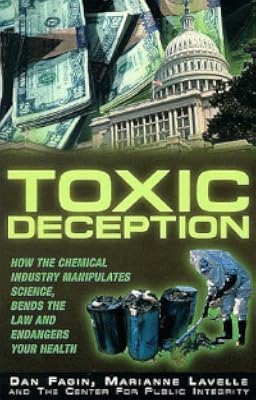
Dan Fagin is an associate professor of Journalism and the director of the Science Health, and Environmental Reporting Program at New York University's Arthur L. Carter Journalism Institute. His work has been recently published in Nature, The New York Times, Scientific American, and Slate and he is also the coauthor of Toxio Deception. Visit show more www.danfagin.com for more information. show less
Awards and Honors
Awards
Distinctions
Common Knowledge
- Original publication date
- 2013
- Important places
- Toms River, New Jersey, USA
- Epigraph
- Every Tree / carries the snow with its own grace / bends to the breeze with its own sway / etches the clouds with its own stroke / bows to the ice with its own resolve / rights its trunk clenched by its own roots / drenches i... (show all)tself in its own desire / and creates its own spring. -Lois Levin Roisman
- First words
- On the rare occasions when Michael Gallick needed to know what day it was, he could check his pillbox. -Prologue, Marking Time
Who Tom was, if he ever was, is the first unsolved mystery of Toms River. -Chapter One, Pirates - Original language
- English
- Canonical DDC/MDS
- 363.720974948
- Canonical LCC
- RA592.N5
Classifications
- Genres
- Science & Nature, Nonfiction, General Nonfiction, History
- DDC/MDS
- 363.720974948 — Society, government, & culture Social problems and social services Public Safety - Police, Crime Investigation Environmental Issues - Pollution, Recycling, Global Warming Sanitation - Waste control, recycling
- LCC
- RA592 .N5 — Medicine Public aspects of medicine Public aspects of medicine Public health. Hygiene. Preventive medicine Environmental health
- BISAC
Statistics
- Members
- 446
- Popularity
- 68,802
- Reviews
- 36
- Rating
- (4.09)
- Languages
- Chinese, English
- Media
- Paper, Audiobook, Ebook
- ISBNs
- 8
- ASINs
- 2