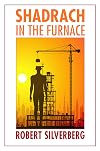
Shadrach in the Furnace
by Robert Silverberg
On This Page
Description
The stunning novel of a man surrounded by machines that flash instantaneous pictures of everything happening...a man surfeited with drugs that allow him to be eyewitness to the living past and pleasured by sensual women who vie for his favours...a man named Shadrach who finds little rest in his miracle-infested world. A supershocker about what happens when telemetric sensors no longer suffice, when the great Khan, ruler of the Earth, needs more...when he needs to survive through the body of show more a virile, healthy very special man - through Shadrach Mordecai show lessTags
Recommendations













Member Reviews
SPOILER & QUASI-SPOILER AHEAD:
This is a perfectly written book, on the sentence level — for it contains a few very well-crafted sentences indeed. The setting is interesting. But I cannot give a book more than three stars that took me such a long time to read. It was easier to put down than pick up.
Why?
The characters are not exactly the world's most likeable bunch, and Silverberg failed to really plumb the depths of a man, a doctor, who would serve a mad king — the king of the world, so to speak, called Genghis Mao (and that's not his full name, which is something like Genghis II Mao IV Khan!) — who wants to use the doctor's body to live, if not forever, longer.
Well, that's a mid-book revelation, so I guess I have to mark this with show more a spoiler warning.
The setting is a post-viral "apocalypse" world (2012!) where all authority has been consolidated by a power center in Ulan Baator. The government folks there have "the Antidote" and mete it out to the rest of the world in a way that would disappoint your average socialist reader. This is a regime that understands scarcity, and how to use scarcity to increase power. Silverberg makes some interesting points about anti-democratic post-republican power politics, and mass surveillance, but never really gets to the heart of the new order. Though the protagonist, Dr. Shadrach Mordecai (a fit African-American), does ponder some of the mysteries of the world, this is not exactly adequate to the task.
In many ways, though, the storyline is realistic to the setting, for we do not get a hero, but an important person in a subservient position almost wandering through his own life, directionless except for his job of keeping the tyrant alive. This wandering, directionless element is indicated in the episodic nature of the first half of the book, where Mordecai engages in sexual relations and woodworking therapy and a bizarre drug-induced time-shift hallucination. But then it is made crystal clear by the character wandering the world as he contemplates how to survive the Genghis Mao's design to live longer by taking over his body.
I confess: I have enough of a pulp fiction mentality to have hoped, as I was reading this tale, that the concluding scenario would have been something lurid, like the body switch engaged, but undermined by his lover in charge of the operation, where the world thinks Genghis Khan is in this new black body, but he and his lover know that the tyrant is dead, and he has become the tyrant. That would have been fun.
Silverberg does something different. I'm not spoiling it for you, to say what didn't happen?
I was reminded many times in reading this novel of my two favorite writers to come out of pulp sf, Jack Vance and Philip K. Dick. There are many parallels with their work in this, many common themes. While Silverberg is a better writer than Dick, he is also less poetic than Vance. There is something humble about his approach. We begin with Shadrach Mordecai, servant of a tyrant. He has only one mission, his job of keeping the tyrant alive. The result is not a reversal of fortune, but a marginal upgrade in his condition. It's almost circular, in the manner of comedy, but there is that small element of upgrade.
Silverberg, it seems to me, is always just one step below greatness. PKD would have really made you feel the horror of the surveillance state; Vance would have had his wanderer be a bit more suave and a rogue and not the wet blanket that is Shadrach, furnace notwithstanding. On the sentence level, he's better than PKD but not as individual or classical as Vance. He writes perfectly of imperfect things. show less
This is a perfectly written book, on the sentence level — for it contains a few very well-crafted sentences indeed. The setting is interesting. But I cannot give a book more than three stars that took me such a long time to read. It was easier to put down than pick up.
Why?
The characters are not exactly the world's most likeable bunch, and Silverberg failed to really plumb the depths of a man, a doctor, who would serve a mad king — the king of the world, so to speak, called Genghis Mao (and that's not his full name, which is something like Genghis II Mao IV Khan!) — who wants to use the doctor's body to live, if not forever, longer.
Well, that's a mid-book revelation, so I guess I have to mark this with show more a spoiler warning.
The setting is a post-viral "apocalypse" world (2012!) where all authority has been consolidated by a power center in Ulan Baator. The government folks there have "the Antidote" and mete it out to the rest of the world in a way that would disappoint your average socialist reader. This is a regime that understands scarcity, and how to use scarcity to increase power. Silverberg makes some interesting points about anti-democratic post-republican power politics, and mass surveillance, but never really gets to the heart of the new order. Though the protagonist, Dr. Shadrach Mordecai (a fit African-American), does ponder some of the mysteries of the world, this is not exactly adequate to the task.
In many ways, though, the storyline is realistic to the setting, for we do not get a hero, but an important person in a subservient position almost wandering through his own life, directionless except for his job of keeping the tyrant alive. This wandering, directionless element is indicated in the episodic nature of the first half of the book, where Mordecai engages in sexual relations and woodworking therapy and a bizarre drug-induced time-shift hallucination. But then it is made crystal clear by the character wandering the world as he contemplates how to survive the Genghis Mao's design to live longer by taking over his body.
I confess: I have enough of a pulp fiction mentality to have hoped, as I was reading this tale, that the concluding scenario would have been something lurid, like the body switch engaged, but undermined by his lover in charge of the operation, where the world thinks Genghis Khan is in this new black body, but he and his lover know that the tyrant is dead, and he has become the tyrant. That would have been fun.
Silverberg does something different. I'm not spoiling it for you, to say what didn't happen?
I was reminded many times in reading this novel of my two favorite writers to come out of pulp sf, Jack Vance and Philip K. Dick. There are many parallels with their work in this, many common themes. While Silverberg is a better writer than Dick, he is also less poetic than Vance. There is something humble about his approach. We begin with Shadrach Mordecai, servant of a tyrant. He has only one mission, his job of keeping the tyrant alive. The result is not a reversal of fortune, but a marginal upgrade in his condition. It's almost circular, in the manner of comedy, but there is that small element of upgrade.
Silverberg, it seems to me, is always just one step below greatness. PKD would have really made you feel the horror of the surveillance state; Vance would have had his wanderer be a bit more suave and a rogue and not the wet blanket that is Shadrach, furnace notwithstanding. On the sentence level, he's better than PKD but not as individual or classical as Vance. He writes perfectly of imperfect things. show less
’Sadrac en el horno’ (Sadrach in the Furnace, 1976), sin ser una de las mejores novelas de Silverberg, sí es una obra interesante de ciencia ficción, donde las reflexiones sobre religión, enfermedad, megalomanía, el Bien y el Mal, así como los dilemas morales que conllevan, están bien desarrollados. Sadrac es el médico privado del Presidente del planeta, Genghis II Mao IV Khan, que ha establecido la capital en Ulan Bator, Mongolia. La Tierra ha pasado por una serie de catástrofes, entre ellas un gran terremoto, pero lo que ha afectado al planeta definitivamente ha sido un virus que ha acabado con más de la mitad de la población mundial; pero la enfermedad, que produce la descomposición orgánica, sigue vigente. De este show more modo, ante el caos mundial, Genghis se hizo con el poder e impuso el orden. Genghis, para perpetuarse en el poder (ya es nonagenario), pasa por continuas operaciones de transplante de órganos. Su salud está muy controlada, y el máximo encargado es Sadrac, el protagonista. Al mismo tiempo, se están estudiando varios proyectos para volver a Genghis prácticamente inmortal, entre ellos el traspaso de su conciencia a otro cuerpo más joven y sano.
Resulta curioso observar cómo, pese a que el gobierno de Genghis es claramente dictatorial y vigilante (existen cámaras en todo el mundo captando imágenes subversivas), la población se ha adaptado a esta situación, sin protestar. En el gobierno de Genghis existen elementos conspiratorios, pero parece que nadie se atreve a dar el paso. Y es que Genghis no es un déspota de manual.
Aunque le sobran páginas (y eso que no es una novela excesivamente larga), ’Sadrac en el horno’ resulta una buena historia. Me ha gustado reencontrarme con Silverberg, sin duda uno de los grandes del género. show less
Resulta curioso observar cómo, pese a que el gobierno de Genghis es claramente dictatorial y vigilante (existen cámaras en todo el mundo captando imágenes subversivas), la población se ha adaptado a esta situación, sin protestar. En el gobierno de Genghis existen elementos conspiratorios, pero parece que nadie se atreve a dar el paso. Y es que Genghis no es un déspota de manual.
Aunque le sobran páginas (y eso que no es una novela excesivamente larga), ’Sadrac en el horno’ resulta una buena historia. Me ha gustado reencontrarme con Silverberg, sin duda uno de los grandes del género. show less
Robert Silverberg has the distinction of being nominated for the Best Novel Hugo nine times without winning once. This was his last shot at the silver spaceship, and out of the random chance of a used bookstore, a copy came into my possession.
Shadrach is a biotech and political thriller, centering around the personal doctor of Genghis II Mao IV, dictator of earth. The century-old supreme ruler survives only due to organ transplants, and seeks immortality through multiple routes. Meanwhile, the Earth is slowly dying: most of the people dead from the aftermath of the late 20th century Virus Wars, and the remaining 2 billion incubating the inevitably fatal 'organ rot' disease. Only Genghis II Mao IV and his cronies have an antidote, living show more a life of paranoid power and drug-induced debauchery while the rest of the world waits for a cure.
The main plot centers around Project Avatar, a plan to make Genghis II Mao IV effectively immortal by imprinting his brainwaves on a young body. When the original test subject commits suicide, Genghis II Mao IV's personal physician, Shadrach Mordechai (an African American with an MD from Harvard) becomes the proposed victim. Shadrach has to come to turns with being nothing more than a spare part in his master's biomachinery, and the callous evil of the whole regime he has worked for. In the end, he finds survival in a new balance of power.
In some ways this book is so 70s it hurts, with sex, drugs, paranoid religious fantasy, and all that. Silverberg has the gut of a pulp writer, and the basic core of the story always pokes through the stylish cruft. Maybe not the greatest book, but a fun one. show less
Shadrach is a biotech and political thriller, centering around the personal doctor of Genghis II Mao IV, dictator of earth. The century-old supreme ruler survives only due to organ transplants, and seeks immortality through multiple routes. Meanwhile, the Earth is slowly dying: most of the people dead from the aftermath of the late 20th century Virus Wars, and the remaining 2 billion incubating the inevitably fatal 'organ rot' disease. Only Genghis II Mao IV and his cronies have an antidote, living show more a life of paranoid power and drug-induced debauchery while the rest of the world waits for a cure.
The main plot centers around Project Avatar, a plan to make Genghis II Mao IV effectively immortal by imprinting his brainwaves on a young body. When the original test subject commits suicide, Genghis II Mao IV's personal physician, Shadrach Mordechai (an African American with an MD from Harvard) becomes the proposed victim. Shadrach has to come to turns with being nothing more than a spare part in his master's biomachinery, and the callous evil of the whole regime he has worked for. In the end, he finds survival in a new balance of power.
In some ways this book is so 70s it hurts, with sex, drugs, paranoid religious fantasy, and all that. Silverberg has the gut of a pulp writer, and the basic core of the story always pokes through the stylish cruft. Maybe not the greatest book, but a fun one. show less
ORIGINALLY POSTED AT Fantasy Literature.
Itƒ??s the summer of 2012 and the Earth is a disaster. A deadly virus has killed most of the world population and those who remain will eventually succumb to its organ-rotting effects if they are not given an antidote before they start to show symptoms. All of the national governments have collapsed and the world is now ruled by the opportunistic dictator Genghis II Mao IV Khan with the help of the bureaucrats who do his bidding. All of them have been inoculated against the virus and, according to the Khan, they are working on increasing their supply of the antidote so it can be distributed to the people. Meanwhile, the Khan spends his day in his room, observing the dying people with the show more surveillance equipment that watches every part his domain.
One of the KhanÂ??s most important advisors is his doctor, Mordecai Shadrach, a tall attractive black man whose implanted sensors constantly alert him of the KhanÂ??s physical and emotional status. He loyally attends the Khan daily and regularly performs organ transplants and other surgeries that keep the elderly leader alive. All of this has worked fine so far, but what will happen when the KhanÂ??s brain starts to deteriorate? There are signs of it already.
To prepare, the Khan has teams of scientists working on different projects that he hopes will ensure his survival. When Shadrach learns that one of these plans involves transferring the KhanÂ??s consciousness into ShadrachÂ??s body, he has a big decision to make. If he stays, heÂ??ll lose himself. If he flees, heÂ??ll be caught, tried as a traitor, and sent to one of the KhanÂ??s organ farms. He is being watched very closely...
I�?m always fascinated by Robert Silverberg�?s novels, but I can�?t say that I always like them. I did, however, thoroughly enjoy Shadrach in the Furnace. The dystopic �?Big Brother� setting is intriguing, the plot is exciting and tense, there are numerous ethical issues to consider, and Shadrach is a likeable protagonist. Silverberg uses the story to discuss the history and possible future of the field of medicine. Especially interesting are the ideas about how we might preserve someone�?s consciousness after the body deteriorates �? a common theme in modern SF, but not so common in 1976 when this was written.
Silverberg takes the usual time-outs for sex scenes and extended drug trances, but these fit into the plot successfully (not always the case in SilverbergÂ??s stories). For example, the hallucinogenic trips allow us to visit major historical and fictional world events and to see them from the perspective of people who lived in that time.
Similarly, ShadrachÂ??s vacation (when heÂ??s trying to discover whether he can flee) takes us to Jerusalem, Istanbul, and Rome where we see the evidences of a past glorious civilization alongside the new devastated Â?? but still hopeful Â?? life that people are now leading. Silverberg also uses this time to remind us of the slavery that the Jews and Blacks endured in Egypt and America and the pain that Jesus Christ suffered along the Via Dolorosa on his way to the cross.
There are other Biblical allusions. (There often are in SilverbergÂ??s novels.) The title Shadrach in the Furnace refers, of course, to the Biblical story of Shadrach, Meshach and Abednego who were put into the furnace by King Nebuchadnezzar because they refused to worship him. When they didnÂ??t burn up, Nebuchadnezzar acknowledged the power of the Hebrew God. Will Shadrach burn up when he refuses to bow to the Khan? Or will he walk the Via Dolorosa and become the savior of the world?
Shadrach in the Furnace was nominated for the Hugo and Nebula Awards. I listened to Audible FrontiersÂ?? production which was narrated by Paul Boehmer who always gives a great performance. He never overacts or uses annoying accents and his enunciation is crystal clear. This was an excellent story for audio. show less
Itƒ??s the summer of 2012 and the Earth is a disaster. A deadly virus has killed most of the world population and those who remain will eventually succumb to its organ-rotting effects if they are not given an antidote before they start to show symptoms. All of the national governments have collapsed and the world is now ruled by the opportunistic dictator Genghis II Mao IV Khan with the help of the bureaucrats who do his bidding. All of them have been inoculated against the virus and, according to the Khan, they are working on increasing their supply of the antidote so it can be distributed to the people. Meanwhile, the Khan spends his day in his room, observing the dying people with the show more surveillance equipment that watches every part his domain.
One of the KhanÂ??s most important advisors is his doctor, Mordecai Shadrach, a tall attractive black man whose implanted sensors constantly alert him of the KhanÂ??s physical and emotional status. He loyally attends the Khan daily and regularly performs organ transplants and other surgeries that keep the elderly leader alive. All of this has worked fine so far, but what will happen when the KhanÂ??s brain starts to deteriorate? There are signs of it already.
To prepare, the Khan has teams of scientists working on different projects that he hopes will ensure his survival. When Shadrach learns that one of these plans involves transferring the KhanÂ??s consciousness into ShadrachÂ??s body, he has a big decision to make. If he stays, heÂ??ll lose himself. If he flees, heÂ??ll be caught, tried as a traitor, and sent to one of the KhanÂ??s organ farms. He is being watched very closely...
I�?m always fascinated by Robert Silverberg�?s novels, but I can�?t say that I always like them. I did, however, thoroughly enjoy Shadrach in the Furnace. The dystopic �?Big Brother� setting is intriguing, the plot is exciting and tense, there are numerous ethical issues to consider, and Shadrach is a likeable protagonist. Silverberg uses the story to discuss the history and possible future of the field of medicine. Especially interesting are the ideas about how we might preserve someone�?s consciousness after the body deteriorates �? a common theme in modern SF, but not so common in 1976 when this was written.
Silverberg takes the usual time-outs for sex scenes and extended drug trances, but these fit into the plot successfully (not always the case in SilverbergÂ??s stories). For example, the hallucinogenic trips allow us to visit major historical and fictional world events and to see them from the perspective of people who lived in that time.
Similarly, ShadrachÂ??s vacation (when heÂ??s trying to discover whether he can flee) takes us to Jerusalem, Istanbul, and Rome where we see the evidences of a past glorious civilization alongside the new devastated Â?? but still hopeful Â?? life that people are now leading. Silverberg also uses this time to remind us of the slavery that the Jews and Blacks endured in Egypt and America and the pain that Jesus Christ suffered along the Via Dolorosa on his way to the cross.
There are other Biblical allusions. (There often are in SilverbergÂ??s novels.) The title Shadrach in the Furnace refers, of course, to the Biblical story of Shadrach, Meshach and Abednego who were put into the furnace by King Nebuchadnezzar because they refused to worship him. When they didnÂ??t burn up, Nebuchadnezzar acknowledged the power of the Hebrew God. Will Shadrach burn up when he refuses to bow to the Khan? Or will he walk the Via Dolorosa and become the savior of the world?
Shadrach in the Furnace was nominated for the Hugo and Nebula Awards. I listened to Audible FrontiersÂ?? production which was narrated by Paul Boehmer who always gives a great performance. He never overacts or uses annoying accents and his enunciation is crystal clear. This was an excellent story for audio. show less
This story was written in the mid 1970s and set in May 2012 of a possible future 30 years from then. It pictures a world ruled by an autocrat who has taken advantage of its weakened state following a devastating virus war that has left all mankind susceptible to the organ rot. Shadrach is his personal physician, but like his biblical namesake, he finds himself in a difficult situation facing almost certain death with no apparent way out. That he finds a way out and manages to maintain his Hippocratic oath is remarkable. This is a good story without achieving great heights. There is drama and there is suspense, but not enough of either to make it a great novel.
Ratings
Members
- Recently Added By
Lists

Books Read in 2024
4,623 works; 126 members
Author Information

989+ Works 62,423 Members
Some Editions
Awards and Honors
Awards
Series
Belongs to Publisher Series
Work Relationships
Is contained in
Common Knowledge
- Canonical title*
- Schadrach im Feuerofen
- Original title
- Shadrach in the Furnace
- Alternate titles*
- Shadrak dans la fournaise
- Original publication date
- 1976
- People/Characters
- Shadrach Mordecai; Genghis Mao
- Dedication
- For Norbert Slepyan
- First words
- It is nine minutes before sunrise in the great city of Ulan Bator, capital of the reconstituted world.
- Last words
- (Click to show. Warning: May contain spoilers.)He touches the tips of his fingers to his lips and blows a kiss to all the world.
- Blurbers
- Asimov, Isaac
- Original language*
- Englisch
*Some information comes from Common Knowledge in other languages. Click "Edit" for more information.
Classifications
Statistics
- Members
- 486
- Popularity
- 62,280
- Reviews
- 5
- Rating
- (3.39)
- Languages
- 5 — English, French, German, Italian, Spanish
- Media
- Paper, Audiobook, Ebook
- ISBNs
- 18
- ASINs
- 14