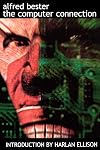
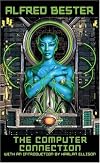
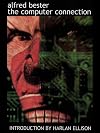
The Computer Connection
by Alfred Bester
On This Page
Description
Fiction. Science Fiction. Alfred Bester's first science fiction novel since The Stars My Destination was a major event--a fast-moving adventure story set in Earth's future. A band of immortals--as charming a bunch of eccentrics as you'll ever come across--recruit a new member, the brilliant Cherokee physicist Sequoya Guess. Dr. Guess, with the group's help, gains control of Extro, the super-computer that controls all mechanical activity on Earth. The plan to rid Earth of political repression show more and to further Guess's researches--which may lead to a great leap in human evolution to produce a race of supermen. But Extro takes over Guess instead of turns malevolent. The task of the merry band suddenly becomes a fight in deadly earnest for the future of Earth. Sequoya Guess, whom they love, must be killed. And how do you kill an immortal? show lessTags
Recommendations

















Member Reviews
https://nwhyte.livejournal.com/3287464.html
Very much in the shadow of Bester's better-known The Demolished Man (winner of the first Hugo for Best Novel) and The Stars My Destination, this was his first novel for almost 20 years when it came out in 1974. Critical reaction then was disappointed; Bester had perhaps laid the path for the New Wave writers of the intervening period but was now behind the curve. Forty years on, I must say I enjoyed it a lot; the plot concerns a group of immortals in the very near future, who are dealing with a supercomputer that has acquired human intelligence, and the style remains pyrotechnical - and yet I never lost track of what was going on, or why we should care about these characters. Bester's reading show more of Native American traditions would not really pass muster today, but in fact he uses the perspective of his Cherokee characters to make some statements about American society in general and to an extent also about gender politics. I came away feeling that his has been underrated and might be due a reappraisal. show less
Very much in the shadow of Bester's better-known The Demolished Man (winner of the first Hugo for Best Novel) and The Stars My Destination, this was his first novel for almost 20 years when it came out in 1974. Critical reaction then was disappointed; Bester had perhaps laid the path for the New Wave writers of the intervening period but was now behind the curve. Forty years on, I must say I enjoyed it a lot; the plot concerns a group of immortals in the very near future, who are dealing with a supercomputer that has acquired human intelligence, and the style remains pyrotechnical - and yet I never lost track of what was going on, or why we should care about these characters. Bester's reading show more of Native American traditions would not really pass muster today, but in fact he uses the perspective of his Cherokee characters to make some statements about American society in general and to an extent also about gender politics. I came away feeling that his has been underrated and might be due a reappraisal. show less
Science fiction authors must get frustrated, because on the one hand they try to clearly explore issues, then to see them play out for real years later without any intelligent discussion taking place, and on the other hand sometimes it seems no matter how crazy the future they imagine, some aspects of it end up coming true. Now our modern world is not quite like the one imagined in Alfred Bester's The Computer Connection (called Extro in the UK) yet there are some aspects of his society with its collapse into hedonism and pervasive (and sometimes perverse) advertisement that can be seen reflected in a funhouse mirror in ours. Of course Bester is writing a sort of demented tongue-in-cheek future, not some serious prediction of future show more events. Nevertheless I am always amazed, given the time period in which some books were written, how they can still resonate, however crazily, with current times. Extro is a very entertaining, wildly creative book, there are immortals and Indians living on dry Great Lake beds, and a chase that spans from Ceres to tunnels deep beneath the earth. It's all really quite mad and frequently amusing. show less
My reactions to reading this novel in 1991. Spoilers follow.
This is not, as Bester said in an interview, an undefined failure.
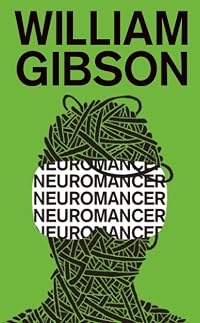
The story works in terms of interest after a slow start. The novel picks up after the murder of Fee-5 Grauman's Chinese. It is without the more strained typographical devices and incomprehensibility of his Golem100. The story of immortals killing to increase their number and their eventual transcendence to virtual godlike omniscient was coherent. It prefigures some cyberpunk themes in books like William Gibson's Neuromancer as does his unusual emphasis on the criminal underworld -- here less pronounced than, say, his The Demolished Man or The Stars My Destination. I wonder if this was one of the first sf novels show more to show computers running society through electronic networks of linked devices -- both inputs of data and executing machines -- rather than a central monolith computer. These elements help explain cyberpunk authors listing Bester as an influence.
It's interesting to see how Bester repeatedly uses certain elements at certain points in his writing career. Here the ecological themes and idea of a computer run society echo Bester's "Somebody Up There Likes Me", a violent America and Indians show up in his "The Four-Hour Fugue" and Golem100. (I liked his witty satire and rioting, illiterate students.)
I didn't, after awhile, mind the contrived romance between Curzon and Natorna. I'm even able to overlook lapses in plot logic. (Why go to Titan to get the Neanderthal immortal to fool Extro? Why not just go back to the salt mine and detain Guess by force so he can't serve as Extro switchboard by surfacing from the salt mine?.) I liked the brilliant, colorful group of immortals. But the story didn't work nearly as well The Stars My Destination or The Demolished Man. Both these novels were, especially the former, rather grim books. In Bester's latter novels, his wit and urbanity overwhelm his emotional effects, make the story an exercise in plot mechanics and cleverness with no emotional depth. In these latter books -- especially Golem100 -- typographical devices are not as well integrated, seem to be present more out of habit than need. To be sure, the glibness, wit, and superficiality of this book's story was due to the nature of the narrating character but that makes it no more effective show less
This is not, as Bester said in an interview, an undefined failure.
The story works in terms of interest after a slow start. The novel picks up after the murder of Fee-5 Grauman's Chinese. It is without the more strained typographical devices and incomprehensibility of his Golem100. The story of immortals killing to increase their number and their eventual transcendence to virtual godlike omniscient was coherent. It prefigures some cyberpunk themes in books like William Gibson's Neuromancer as does his unusual emphasis on the criminal underworld -- here less pronounced than, say, his The Demolished Man or The Stars My Destination. I wonder if this was one of the first sf novels show more to show computers running society through electronic networks of linked devices -- both inputs of data and executing machines -- rather than a central monolith computer. These elements help explain cyberpunk authors listing Bester as an influence.
It's interesting to see how Bester repeatedly uses certain elements at certain points in his writing career. Here the ecological themes and idea of a computer run society echo Bester's "Somebody Up There Likes Me", a violent America and Indians show up in his "The Four-Hour Fugue" and Golem100. (I liked his witty satire and rioting, illiterate students.)
I didn't, after awhile, mind the contrived romance between Curzon and Natorna. I'm even able to overlook lapses in plot logic. (Why go to Titan to get the Neanderthal immortal to fool Extro? Why not just go back to the salt mine and detain Guess by force so he can't serve as Extro switchboard by surfacing from the salt mine?.) I liked the brilliant, colorful group of immortals. But the story didn't work nearly as well The Stars My Destination or The Demolished Man. Both these novels were, especially the former, rather grim books. In Bester's latter novels, his wit and urbanity overwhelm his emotional effects, make the story an exercise in plot mechanics and cleverness with no emotional depth. In these latter books -- especially Golem100 -- typographical devices are not as well integrated, seem to be present more out of habit than need. To be sure, the glibness, wit, and superficiality of this book's story was due to the nature of the narrating character but that makes it no more effective show less
A mad thing of a book. Wild and fun ride. The Moleman a great conception well palayed through out, a bit like a trip on Jose Farmer's Riverboat, but the Extro thing was not so well executed. Came to this one too late I fear. In 1975 I would have been utterly bewitched.
I am happy to see that quite a few reviewers here liked this. I wanted to like it too, but in the end I can't quite bring myself to say that I did. There are brief hints of the bravura storytelling that made The Demolished Man and The Stars My Destination so memorable (but of course what was groundbreaking in the 1950s might be pretty ho-hum by 1975). In any case the storytelling can do little for characters whose uniqueness can't hide their superficiality and a plot that feels utterly random (most particularly the motivations of the bad "guy"). Oh well...
Bizarre, wacky story that enthralls despite its absurdity. A group of immortals fights to rid itself of a threat from within that has joined with a monstrous supercomputer to threaten most of the world (and their livelihood). The narrator and the characterizations of a few of his cohorts shine through in this jumbled adventure. Given the era, I suppose one must forgive some language/charactization that might be construed as homophobic.
There was a strain of exuberant writing in the late 1960s and early 1970s and this is solidly in that vein. It ranged from Hunter S. Thompson to Richard Brautigan and beyond. This is solidly in that micro-tradition.
Let go and join the flow. Don't try to figure out the science or the slang or any of those things you are used to digging into in an SF novel. This is a wild ride with fireworks at every turn.
Let go and join the flow. Don't try to figure out the science or the slang or any of those things you are used to digging into in an SF novel. This is a wild ride with fireworks at every turn.
Members
- Recently Added By
Lists

Books Read in 2024
4,727 works; 128 members
Author Information

99+ Works 17,385 Members
Awards and Honors
Awards
Series
Belongs to Publisher Series
Work Relationships
Common Knowledge
- Canonical title*
- Computer Connection
- Original title
- Computer connection
- Alternate titles
- Extro
- Original publication date
- 1975-05
- People/Characters
- Extro; Sequoya Guess
- Dedication
- To the Three "B's"
- First words
- I tore down the Continental Shelf off the Bogue Bank while the pogo made periscope hops trying to track me.
- Last words
- (Click to show. Warning: May contain spoilers.)Dio! My son is crying again. Excuse me.
- Blurbers
- Ballard, J.G.
- Original language
- English
*Some information comes from Common Knowledge in other languages. Click "Edit" for more information.
Classifications
Statistics
- Members
- 877
- Popularity
- 30,978
- Reviews
- 16
- Rating
- (3.19)
- Languages
- 8 — Bulgarian, English, French, German, Hebrew, Italian, Spanish, Swedish
- Media
- Paper, Ebook
- ISBNs
- 22
- ASINs
- 16