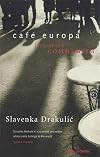
Café Europa: Life After Communism
by Slavenka Drakulic
On This Page
Description
Today in Eastern Europe the architectural work of revolution is complete: the old order has been replaced by various forms of free-market economy and de jure democracy. But as Slavenka Drakulic observes, "in everyday life, the revolution consists much more of the small things - of sounds, looks and images. In this brilliant work of political reportage filtered through her own experience, we see that Europe remains a divided continent. In the place of the fallen Berlin Wall, there is a chasm show more between East and West, consisting of the different way people continue to live and understand the world. Are these differences a communist legacy, or do they run even deeper? What divides us today? To say simply that it is the understanding of the past, or a different concept of time, is not enough. But a visitor to this part of the world will soon discover that the Eastern Europeans live in another time zone. They live in the twentieth century, but at the same time they inhabit a past full of myths and fairy tales, of blood and national belonging. show lessTags
Recommendations



























Member Reviews
A collection of the author's observations and reflections about daily life in the early post-Communist days in several Eastern European countries. The snippets give us a down-to-earth version of the impact of the transition on ordinary people's lives, mainly the cultural adjustment they confronted in a new so-called democracy. The title refers to the ubiquitous Cafe Europa one finds in every city and town in Eastern Europe that imitates in, according to her, rather very bad taste similarly named cafes in sophisticated Paris, Rome and the like. She portrays this as simply representing the almost pathological anxiety of ordinary people to overcome the deprivations of their past. Some articles tend toward some materialistic babble -- for show more example, her envy, when she travels, of other people who have "perfect" teeth, who have "better" quality stuff, and equating this with self-respect and independence from shoddy state-sponsored services and institutions. I find her also a bit hypocritical when she mentions the indignity and anger she feels when in international forums, she is classed or identified mainly as "an Eastern European" author, and not recognized as simply a writer free from any association of having lived through "the regime." I find disconcerting her going back again and again to lack or absence of toilet paper (in Romania mainly) as emblematic of the failure of these governments to learn the basics of democracy.
While she writes with humor and frankness, the book fell short of my expectations. I found her analysis too simplistic, and her reflections lacking depth. I thought it strange that she could make sweeping conclusions about these societies, including her own, based on a few random incidents and experiences. These societies were undergoing transformation (the book was published in 1999), and unlearning the habits of decades of closed rule take time, and expectedly not without pain. It doesn't mean either that adopting "capitalist" behaviour and customs is always right or the superior path, although this is what she seems to underline throughout.
She is a journalist, so perhaps I was looking for more journalistic type of writing, with critical analysis (not mere criticisms, as she did here) and more insightful views, which were not evident in this book. show less
While she writes with humor and frankness, the book fell short of my expectations. I found her analysis too simplistic, and her reflections lacking depth. I thought it strange that she could make sweeping conclusions about these societies, including her own, based on a few random incidents and experiences. These societies were undergoing transformation (the book was published in 1999), and unlearning the habits of decades of closed rule take time, and expectedly not without pain. It doesn't mean either that adopting "capitalist" behaviour and customs is always right or the superior path, although this is what she seems to underline throughout.
She is a journalist, so perhaps I was looking for more journalistic type of writing, with critical analysis (not mere criticisms, as she did here) and more insightful views, which were not evident in this book. show less
http://nhw.livejournal.com/685280.html
Collection of short pieces (presumably newspaper columns) by this Croatian writer, who I have not previously read. To be honest, after the first third of it, I was ready to put the book down: too much whining about the state of the world, very much reminding me of why I didn't much like living in Zagreb in 1998: Croatia then seemed both smug and fragile, a curious combination. Things have improved, however, and every time I return to the country now I find myself liking it more and more as normality takes deeper root. The same was true of Drakulić's book: there were two really good pieces about Croatia's failure to deal with its fascist historical legacy, and about the psychology of Arkan's show more uniform, and after that it somehow all seemed to make more sense and become more readable. So, worth persevering with, though perhaps the editors should have chopped a bit more of the early stuff. show less
Collection of short pieces (presumably newspaper columns) by this Croatian writer, who I have not previously read. To be honest, after the first third of it, I was ready to put the book down: too much whining about the state of the world, very much reminding me of why I didn't much like living in Zagreb in 1998: Croatia then seemed both smug and fragile, a curious combination. Things have improved, however, and every time I return to the country now I find myself liking it more and more as normality takes deeper root. The same was true of Drakulić's book: there were two really good pieces about Croatia's failure to deal with its fascist historical legacy, and about the psychology of Arkan's show more uniform, and after that it somehow all seemed to make more sense and become more readable. So, worth persevering with, though perhaps the editors should have chopped a bit more of the early stuff. show less
A collection of essays.
I read this book while on holiday in modern day Croatia, chosen because the author is Croatian (although she now lives in Vienna with her Swedish husband).
It is basically a collection of essays which appear to be strangely frozen in time between the fall of Communism and the modern Croatia which I visited. It was this photograph of a country in turmoil that was its appeal.
Writing this review six months later, several things have stuck with me about the book.
Firstly, the fact that Communism did work for many people and for those above a certain age, the difficulties in adjusting to the changes were huge, both culturally and financially. No longer were they in a job for life, nor were they supported into their old show more age - and many did not have sufficient time ahead to earn enough for their retirement.
At the time that the book was written (1996-1999) Drakulic seemed unable to envision a time when Croatia might become in any way truly Western. The title refers to the cafes that sprung up in Eastern Europe, pertaining to be like their Western counterparts but falling well short of the mark, but the Croatia that I visited in 2010 seemed to be making its mark in modern Europe. I saw few old communist style vehicles, for example, and even though I was searching for signs of the old regime, there seemed little of it left.
One or two anecdotes also stuck with me, particularly the problem of smuggling items such as vacuum cleaners across the border from Austia bacause they were either too expensive or not available back home. One vacuum cleaner absorbed the entire allowance, and that was even with a false receipt for its cost written by the seller.
I don't think I would have got as much out of the book had I read it at a different time and place but it was fascinating to realise how much the country had changed in such a relatively short space of time. show less
I read this book while on holiday in modern day Croatia, chosen because the author is Croatian (although she now lives in Vienna with her Swedish husband).
It is basically a collection of essays which appear to be strangely frozen in time between the fall of Communism and the modern Croatia which I visited. It was this photograph of a country in turmoil that was its appeal.
Writing this review six months later, several things have stuck with me about the book.
Firstly, the fact that Communism did work for many people and for those above a certain age, the difficulties in adjusting to the changes were huge, both culturally and financially. No longer were they in a job for life, nor were they supported into their old show more age - and many did not have sufficient time ahead to earn enough for their retirement.
At the time that the book was written (1996-1999) Drakulic seemed unable to envision a time when Croatia might become in any way truly Western. The title refers to the cafes that sprung up in Eastern Europe, pertaining to be like their Western counterparts but falling well short of the mark, but the Croatia that I visited in 2010 seemed to be making its mark in modern Europe. I saw few old communist style vehicles, for example, and even though I was searching for signs of the old regime, there seemed little of it left.
One or two anecdotes also stuck with me, particularly the problem of smuggling items such as vacuum cleaners across the border from Austia bacause they were either too expensive or not available back home. One vacuum cleaner absorbed the entire allowance, and that was even with a false receipt for its cost written by the seller.
I don't think I would have got as much out of the book had I read it at a different time and place but it was fascinating to realise how much the country had changed in such a relatively short space of time. show less
Many worthy bits, but it seems a bit like Drakulic, a Croat journalist with a great Brecht-alienation turn of phrase, had a book in her about mixture of identities and the struggle to come to terms with the twisted past in ex-Yugoslavia, amidst the awareness that it had given way to an even-more-twisted present (the book was written in 1996), and then her editor wanted her to expand it to take in all the former Communist countries of Eastern Europe, from post-commie daze to Europalust und -Frust (hence the title), about which she had some very interesting vague generalities and supporting anecdotes - like about the Swedish filmmaker who thought he was being cheated by his Czech interpreter because she literally didn't show up to work, show more and she thought he was cheating her because she had no concept of the relation between pay and work and it was more like "WHERE'S MY WINDFALL?!" or all about the generalized Russia-horror and German-lovehate in the satellites even now today - but not enough to support a whole book on. But many tasty bits in a slightly watery post-Communist borscht. Also, it is very interesting to muse on how Drakulic in '96 could treat all these places as part of the same in ways, and now some are practically normal (Poland, Czech) and others have fallen so far behinder even (poor Albania) and there are at least three tiers if not more. show less
This is a collection of political reportage written in the years immediately following the fall of communism in Eastern Europe. According to the inside cover of the book, Drakulic “contributes regularly” The Nation and the New Republic, which would fit with the quasi-journalistic, descriptive approach that she takes in these pieces. I use with the word “journalistic” as a slight pejorative here, as a way of denoting a style that is more inclined to be demonstrative and flat, as opposed to couching her opinions in a critical framework that would offer the reader insightful explanations. Most of her conclusions are fairly banal, though some of her observations are not devoid of interest.
For a book of barely two hundred pages, show more there are twenty-five essays, so they are short and accessible, almost made for picking up and putting down at leisure. In fact, the one major criticisms I have of the book is that the essays are a little too short, so much that it sometimes inhibits Drakulic’s ability to fully flesh out the ideas at hand. The essay topics are varied, but tend to revolve around a constellation of relatively abiding concerns: two of these are the consumerism of post-liberalized, post-communist Eastern Europe and its growing homogeneity, and shifting political attitudes.
Drakulic is deeply ambivalent about Europe being taken over by the cultural accoutrements – really only simulacra – of Western Europe, symbolized by the ubiquitous “Café Europa,” the iconic Viennese coffee shop, which has apparently cropped up all over the place. Even the name “Europe” has come to signify a kind of sybaritic luxury. A cinema in Drakulic’s home city of Zagreb changed its name from “The Balkan” to “Cinema Europa,” indicative of a willed escape from primitivism, war, and everything non-European. One of the most interesting aspects of the book is how Drakulic looks at Europe as a name “loaded with the complexity of positive values” (p. 11). Which begs the question: is Europe one thing any longer, or merely what we make of it for ourselves?
The highlights of the collection, not surprisingly, are the pieces in which Drakulic gives herself the appropriate space to think through an issue. Here are a few of my favorites, including a short description of each. “The Trouble with Sales” explores some patterns – ones that Drakulic herself admits are paradoxes – about shopping and consumerism in an age of the new economic logic of capitalism, especially her old habit of seeking out sales – a habit which she can’t seem to finally kick. “Invisible Walls Between Us” looks at the bizarre and discriminatory travel strictures imposed on Easterners, who are often looked down upon as suspicious foreigners while traveling in Western Europe. “A King for the Balkans” is an insightful look at the political psychology in Yugoslavia as Prince Alexander Karadjordjevic makes his first post-exilic visit to an unusually warm reception given the country’s history under previous monarchy. show less
For a book of barely two hundred pages, show more there are twenty-five essays, so they are short and accessible, almost made for picking up and putting down at leisure. In fact, the one major criticisms I have of the book is that the essays are a little too short, so much that it sometimes inhibits Drakulic’s ability to fully flesh out the ideas at hand. The essay topics are varied, but tend to revolve around a constellation of relatively abiding concerns: two of these are the consumerism of post-liberalized, post-communist Eastern Europe and its growing homogeneity, and shifting political attitudes.
Drakulic is deeply ambivalent about Europe being taken over by the cultural accoutrements – really only simulacra – of Western Europe, symbolized by the ubiquitous “Café Europa,” the iconic Viennese coffee shop, which has apparently cropped up all over the place. Even the name “Europe” has come to signify a kind of sybaritic luxury. A cinema in Drakulic’s home city of Zagreb changed its name from “The Balkan” to “Cinema Europa,” indicative of a willed escape from primitivism, war, and everything non-European. One of the most interesting aspects of the book is how Drakulic looks at Europe as a name “loaded with the complexity of positive values” (p. 11). Which begs the question: is Europe one thing any longer, or merely what we make of it for ourselves?
The highlights of the collection, not surprisingly, are the pieces in which Drakulic gives herself the appropriate space to think through an issue. Here are a few of my favorites, including a short description of each. “The Trouble with Sales” explores some patterns – ones that Drakulic herself admits are paradoxes – about shopping and consumerism in an age of the new economic logic of capitalism, especially her old habit of seeking out sales – a habit which she can’t seem to finally kick. “Invisible Walls Between Us” looks at the bizarre and discriminatory travel strictures imposed on Easterners, who are often looked down upon as suspicious foreigners while traveling in Western Europe. “A King for the Balkans” is an insightful look at the political psychology in Yugoslavia as Prince Alexander Karadjordjevic makes his first post-exilic visit to an unusually warm reception given the country’s history under previous monarchy. show less
It's whatever.
As far as essays go, these essays are very repetitive. The same themes are reiterated and explained many times, to the point of bordem. Many of these themes and motifs are simple and don't require that much to explain, like that Eastern Europeans and Western Europeans are divided, that Europe is just a continent that can't do anything, that history should not be erased, individualism is an ideal, and similar themes. Sometimes her themes get spicy, as she critiques elements of capitalism, nationalism, and the idea of a nation-state. They are not developed much, however.
The book is well written and certainly can be a page-turner at times. Other times, however, I wish I could finish a chapter and get on with my day. The show more translation used lots of hyphens, colons, semicolons, and British commas, which can spice up sentences. Sometimes, however, the translator treated H as a vowel and used phrases like "an history" which certainly broke my concentration. For Americans like me, Drakulic explains the context of what happened/is happening in Eastern Europe. Towards the end of the book, however, she drops the ball, and if you are an American like me, will probably have no idea about the conflicts between Muslims in Bosnia and Serbians in the Balkans (?). At least for me, I missed out on some of the themes she was trying to develop.
My main problem with this book is that it is most certainly a biased propaganda piece. Don't get me wrong, I very much dislike the USSR, the satellite states it created, the lack of democracy, its materially deficient life, and the mass murders, but the author straight-up lies to the audience at times. As a biased Marxist myself, my eyes were certainly rolling at phrases like "communist country" or how Drakulic contrasted communism and democracy, or how Drakulic equated communism to fascism.
I remarked in my notes that Drakulic lied to her audience for several reasons:
1. she simply forgot her state education (if they actually taught her anything Marxist related)
2. she remembers her state education but doesn't care and lies anyway
Either way, I find it disgusting that Drakulic would lie to her audience about what the USSR actually was, or what Yugoslavia actually was. At one point in her book, Drakulic writes, "But according to the egalitarian principles of any communist society, those ‘haves’ should share with the ‘have nots’. And because there is not much to share anyway, in the end, that egalitarianism boils down to the equal distribution of poverty. At least it would in theory - in practice it did not quite work." Anybody who knows a bit about Marxism will know that Drakulic is lying about Marxist principles. Marx very clearly disliked the idea of equality or egalitarianism for its own sake as a political goal in Critique of the Gotha Progamme; Marx instead advocated for the abolition of classes instead of mindless equality or egalitarianism.
Overall, this book is great as a condemnation of authoritarian state capitalism and showing the development of new ideas in Eastern Europe. This book would be rated higher if the author wasn't lying boldy to their audience, and if the book was cut down a bit. I would like this book a lot more if the author replaced the words "communism" with "state capitalism." show less
As far as essays go, these essays are very repetitive. The same themes are reiterated and explained many times, to the point of bordem. Many of these themes and motifs are simple and don't require that much to explain, like that Eastern Europeans and Western Europeans are divided, that Europe is just a continent that can't do anything, that history should not be erased, individualism is an ideal, and similar themes. Sometimes her themes get spicy, as she critiques elements of capitalism, nationalism, and the idea of a nation-state. They are not developed much, however.
The book is well written and certainly can be a page-turner at times. Other times, however, I wish I could finish a chapter and get on with my day. The show more translation used lots of hyphens, colons, semicolons, and British commas, which can spice up sentences. Sometimes, however, the translator treated H as a vowel and used phrases like "an history" which certainly broke my concentration. For Americans like me, Drakulic explains the context of what happened/is happening in Eastern Europe. Towards the end of the book, however, she drops the ball, and if you are an American like me, will probably have no idea about the conflicts between Muslims in Bosnia and Serbians in the Balkans (?). At least for me, I missed out on some of the themes she was trying to develop.
My main problem with this book is that it is most certainly a biased propaganda piece. Don't get me wrong, I very much dislike the USSR, the satellite states it created, the lack of democracy, its materially deficient life, and the mass murders, but the author straight-up lies to the audience at times. As a biased Marxist myself, my eyes were certainly rolling at phrases like "communist country" or how Drakulic contrasted communism and democracy, or how Drakulic equated communism to fascism.
I remarked in my notes that Drakulic lied to her audience for several reasons:
1. she simply forgot her state education (if they actually taught her anything Marxist related)
2. she remembers her state education but doesn't care and lies anyway
Either way, I find it disgusting that Drakulic would lie to her audience about what the USSR actually was, or what Yugoslavia actually was. At one point in her book, Drakulic writes, "But according to the egalitarian principles of any communist society, those ‘haves’ should share with the ‘have nots’. And because there is not much to share anyway, in the end, that egalitarianism boils down to the equal distribution of poverty. At least it would in theory - in practice it did not quite work." Anybody who knows a bit about Marxism will know that Drakulic is lying about Marxist principles. Marx very clearly disliked the idea of equality or egalitarianism for its own sake as a political goal in Critique of the Gotha Progamme; Marx instead advocated for the abolition of classes instead of mindless equality or egalitarianism.
Overall, this book is great as a condemnation of authoritarian state capitalism and showing the development of new ideas in Eastern Europe. This book would be rated higher if the author wasn't lying boldy to their audience, and if the book was cut down a bit. I would like this book a lot more if the author replaced the words "communism" with "state capitalism." show less
A collection of interesting pieces written after the fall of Communism in the Balkans and the partition of Yugoslavia into its various ethnic, historical divisions. Lots of interesting musings on life during and after that time, reflections on the idea of "Europe" and how that manifests itself in the Balkans.
Members
- Recently Added By
Lists

Books about the Balkans
19 works; 2 members
Author Information

28+ Works 2,526 Members
Common Knowledge
- Canonical title
- Café Europa: Life After Communism
- Important places
- Croatia
- Dedication
- For Richard, who knows it all
- First words
- Vienna seems to be very popular in Sofia, judging by the konditoreien, or coffee shops - there are at least two named after it.
Classifications
- Genres
- Nonfiction, General Nonfiction, Politics and Government, History, Biography & Memoir
- DDC/MDS
- 306.0947 — Society, government, & culture Social sciences, sociology & anthropology Social Behavior - Dating, Marriage, Divorce Social history Europe Eastern Europe And Russia
- LCC
- HN380.7 .A8 .D73 — Social sciences Social history and conditions. Social problems. Social reform Social history and conditions. Social problems. By region or country
- BISAC
Statistics
- Members
- 454
- Popularity
- 67,389
- Reviews
- 12
- Rating
- (3.81)
- Languages
- 6 — Dutch, English, German, Greek, Italian, Swedish
- Media
- Paper, Ebook
- ISBNs
- 12
- ASINs
- 3