On This Page
Description
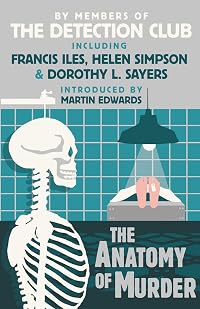
This classic crime novel by six different authors is introduced by Martin Edwards, archivist of the Detection Club, and includes a never-before-published Preface by Agatha Christie, 'Detective Writers in England', in which she discusses her approach to writing and her fellow writers in the Detection Club. Lord Comstock is a barbarous newspaper tycoon with enemies in high places. His murder in the study of his country house poses a dilemma for the Home Secretary. In the hours before his show more death, Lord Comstock's visitors included the government Chief Whip, an Archbishop, and the Assistant Commissioner for Scotland Yard. Suspicion falls upon them all and threatens the impartiality of any police investigation. Abandoning protocol, the Home Secretary invites four famous detectives to solve the case: Mrs Adela Bradley, Sir John Saumarez, Lord Peter Wimsey, and Mr Roger Sheringham. All are different, all are plausible, all are on their own - and none of them can ask a policeman... The contributors to ASK A POLICEMAN are: John Rhode, Helen Simpson, Gladys Mitchell, Anthony Berkeley, Dorothy L. Sayers, Milward Kennedy, with Agatha Christie and Martin Edwards. show lessTags
Recommendations


















Member Reviews
Ask a Policeman provides a treat -- albeit an uneven one -- thanks to a collaboration of six (mostly British) mystery writers who were members of the noteworthy Detection Club. (Dame Agatha Christie was a member, although she did not work on Ask a Policeman.) The 1934 novel began as an idea of Milward Kennedy, who wrote the Sir George Bull series and who also came up with the title. The author of the Dr. Lancelot Priestley series, John Rhode, penned the first fifth of the novel, Part I, which sets up the premise: A bullying press baron named Lord Comstock (clearly based on Lord Beaverbrook) is murdered while being visited by an archbishop, the chief whip of the ruling party, and the assistant commissioner for Scotland Yard. Who could show more have done it? One of these eminent people? Comstock's beleaguered secretary? Or someone else?
In Part II, each of four mystery writers take a crack at writing the solution to the mystery. However, rather than using their own detective creations, they swap. The first chapter of Part II, which features Mrs. Adela Lestrange Bradley, was written not by Gladys Mitchell, but by Australian writer Helen de Guerry Simpson. Mitchell returns the favor in the next chapter, "Sir John Takes His Cue," which features Simpson's amateur sleuth: the charming and handsome Sir John Saumarez, an actor and theater company manager. I am not really familiar with Sir John, but Simpson's portrayal of Mrs. Bradley was picture perfect, right down to the sly humor; I thoroughly enjoyed the chapter. While I enjoyed Mitchell's portrayal of Sir John, I wasn't in a position to know how accurate it was. Unfortunately, Mitchell did end the chapter with a whimper rather than a bang; even so, she piqued my interest in Sir John Saumarez, and I'll be reading the first of the three Sir John novels, Enter Sir John, as soon as I can.
The third chapter of Part II, "Lord Peter's Privy Counsel," penned by Detection Club founder and writer Anthony Berkeley rather than Lord Peters' originator, Dorothy L. Sayers, falls pretty flat. Admittedly, even in Sayers' skillful hands, at times, Lord Peter seems just on the verge of being a parody; however, Berkeley kicks him right over the edge and into an abyss. Berkeley's portrayal makes Lord Peter seem like a fey, flightly fool who, sadly, was born a century too soon to get the prescription for Ritalin or Adderall XR he needs to calm his distracted attention span. The chapter was literally unreadable -- I couldn't finish it. Berkeley was going for a light parody, but he stumbled into silly territory instead.
Sayers fared much better with her treatment of Berkeley's detective, the witty but guileful man about town Roger Sheringham. Indeed, Sayers' chapter, "The Conclusions of Mr. Roger Sheringham," was by far the most amusing part of the book. Roger Sheringham is portrayed as a sly and humorous gentleman who is not above a bit of deceit to suss out the truth. If Anthony Berkeley (whose real name was Anthony Berkeley Cox) was anything like the entertaining Roger Sherington, he must have been much in demand at London dinner parties in the 1930s and 1940s! Sayers' chapter on Sheringham was enough to convince me to buy a novel in the Sheringham series, Roger Sheringham and the Vane Mystery. (It's the third novel in the series, but at $1.99 for the Kindle edition, I thought it was a good case of trying before committing to the other, more expensive Sheringham novels.)
Needless to say, each of the four mystery writers develop the rest of the story in a different way and pin the murder on a different character. Who got it right? At the start of Part III, Milward Kennedy writes
In Part II, each of four mystery writers take a crack at writing the solution to the mystery. However, rather than using their own detective creations, they swap. The first chapter of Part II, which features Mrs. Adela Lestrange Bradley, was written not by Gladys Mitchell, but by Australian writer Helen de Guerry Simpson. Mitchell returns the favor in the next chapter, "Sir John Takes His Cue," which features Simpson's amateur sleuth: the charming and handsome Sir John Saumarez, an actor and theater company manager. I am not really familiar with Sir John, but Simpson's portrayal of Mrs. Bradley was picture perfect, right down to the sly humor; I thoroughly enjoyed the chapter. While I enjoyed Mitchell's portrayal of Sir John, I wasn't in a position to know how accurate it was. Unfortunately, Mitchell did end the chapter with a whimper rather than a bang; even so, she piqued my interest in Sir John Saumarez, and I'll be reading the first of the three Sir John novels, Enter Sir John, as soon as I can.
The third chapter of Part II, "Lord Peter's Privy Counsel," penned by Detection Club founder and writer Anthony Berkeley rather than Lord Peters' originator, Dorothy L. Sayers, falls pretty flat. Admittedly, even in Sayers' skillful hands, at times, Lord Peter seems just on the verge of being a parody; however, Berkeley kicks him right over the edge and into an abyss. Berkeley's portrayal makes Lord Peter seem like a fey, flightly fool who, sadly, was born a century too soon to get the prescription for Ritalin or Adderall XR he needs to calm his distracted attention span. The chapter was literally unreadable -- I couldn't finish it. Berkeley was going for a light parody, but he stumbled into silly territory instead.
Sayers fared much better with her treatment of Berkeley's detective, the witty but guileful man about town Roger Sheringham. Indeed, Sayers' chapter, "The Conclusions of Mr. Roger Sheringham," was by far the most amusing part of the book. Roger Sheringham is portrayed as a sly and humorous gentleman who is not above a bit of deceit to suss out the truth. If Anthony Berkeley (whose real name was Anthony Berkeley Cox) was anything like the entertaining Roger Sherington, he must have been much in demand at London dinner parties in the 1930s and 1940s! Sayers' chapter on Sheringham was enough to convince me to buy a novel in the Sheringham series, Roger Sheringham and the Vane Mystery. (It's the third novel in the series, but at $1.99 for the Kindle edition, I thought it was a good case of trying before committing to the other, more expensive Sheringham novels.)
Needless to say, each of the four mystery writers develop the rest of the story in a different way and pin the murder on a different character. Who got it right? At the start of Part III, Milward Kennedy writes
that the [four] Solvers have been more than good-natured. Even if they have introduced a touch or two of parody, they have nade their fellow sleuths extremely ingenious. In fact it seems plain to me that each of the four solutions is the right one.I can vouch that that's the case for three out of the four detectives' chapters. Part III reveals the actual denouement that Milwarad Kennedy envisioned. Read his solution for yourself and see who scored a hit. show less
This is an interesting experiment by various members of The Detection Club. John Rhode presents the problem of Death at Hursley Lodge, and four members of the club write their own solutions to the case, as deduced by their respective detectives. (Or rather, by their friends’ detectives; Gladys Mitchell and Helen de Guerry Simpson swapped sleuths, as did Dorothy L. Sayers and Anthony Berkeley.) Milward Kennedy then presents his solution, which is supposed to be the final one. And that final solution I felt was a rip-off, although to be fair Kennedy does freely admit he doesn’t play fair with the reader.
More dedicated fans of the Golden Age of crime fiction may get more out of this, especially those familiar with the sleuths presented show more in these pages. Because the authors are writing about each other’s detectives, there is some level of parody and in-joking that a casual reader might miss. show less
More dedicated fans of the Golden Age of crime fiction may get more out of this, especially those familiar with the sleuths presented show more in these pages. Because the authors are writing about each other’s detectives, there is some level of parody and in-joking that a casual reader might miss. show less
Well, that was a dismal failure. The first chapter, by Rhode, is very well written. He is undervalued. Then Simpson and Mitchel parody each other and Berkeley and Sayers parody each other. Berkeley is by far the best. The conclusion by Kennedy is crap. He organized the project, so blame him.
First a warning - although her name appears in large letters on the cover of the edition I own, Agatha Christie had nothing to do with the original book, but has had a short essay added for this edition (presumably in order to boost sales). This is frankly misleading. Having said that, the book proper is worth reading, if only for its quite unusual premise, which is that it involves four well-known (at the time of original printing in 1933) crime writers pastiching each other's work. So the part of the book involving Lord Peter Wimsey was written by Helen Simpson, and the part involving her detective, the actor Sir John Saumarez, was written by Dorothy Sayers. Similarly Gladys Mitchell and Anthony Berkeley exchanged sleuths. This works show more surprisingly well, but the effectiveness is somewhat cancelled by the fact that only two of these characters (Wimsey and Mrs. Bradley) are likely to be known to modern readers. The actual plot is somewhat melodramatic (an evil press baron is murdered, and the suspects include an archbishop and a politician) but the main problem is that the separate sections don't really gel with each other. The best part is that involving Mrs. Bradley, which makes one regret that Helen Simpson wrote so few books before her premature death. Martin Edwards, who is the Detection Club's official archivist, provides a real foreword with useful information about the contributors (the other two, John Rhode and Milward Kennedy, set up the plot and provide the denouement respectively). Overall verdict - worth reading at least once, but whether you'll ever want to reread it is somewhat doubtful. show less
This is one a few books published by The Detective Club, established in London between the wars (and still alive today)as an invitation only club of detective writers, primarily for social and dining reasons.
At one stage some members were convinced to put on a radio play, in which a number of members participated. After some modest success, a number of books followed, each following a similar but not identical formats. In all,there were multiple authors; in some an author would write a chapter before handing it on to author who would be obliged to take the story and move it along before handing it over to the next and so on to a conclusion; in this book, one author (Rhode) sets the scene by describing the death (and its immediately show more before and after events, which includes Scotland Yard calling in four renown amateur sleuths to assist (because of the importance of the deceased and the obvious suspects, and the scandal attached) by independently (not only from SY but also of each other) investigate the mystery.
Thus four chapters follow with wildly different solutions, and finally another author attempting to reconcile these and provide THE definitive.solution.
I had heard so much about these books but this was the first I had come across in my forays in second hand book stores, so was delighted to pick it up.
But i was so disappointed ...it just did not work for me. with the four solutions being written not in the authors' own style, but rather riffing off the style one of the other authors,I suspect that this book was more interesting to the members of The Detection Club and true aficionados of Golden Age mystery novels. I have read, and enjoyed, a lot of such, but this came across as too contrived.
The most interesting part was a Preface by Agatha Christie (written in 1945, some 12 years after the book being first published) which reads like an interview in which she is asked to candidly assess the merits of then contemporary crime writers; Christie does not hold back as to her views.
Perhaps the Preface, starting as an essay commissioned by the British Ministry of Information for publication in a Russian periodical, was never intended by Christie to be seen by her contemporaries!
Big Ship
8 August 2024 show less
At one stage some members were convinced to put on a radio play, in which a number of members participated. After some modest success, a number of books followed, each following a similar but not identical formats. In all,there were multiple authors; in some an author would write a chapter before handing it on to author who would be obliged to take the story and move it along before handing it over to the next and so on to a conclusion; in this book, one author (Rhode) sets the scene by describing the death (and its immediately show more before and after events, which includes Scotland Yard calling in four renown amateur sleuths to assist (because of the importance of the deceased and the obvious suspects, and the scandal attached) by independently (not only from SY but also of each other) investigate the mystery.
Thus four chapters follow with wildly different solutions, and finally another author attempting to reconcile these and provide THE definitive.solution.
I had heard so much about these books but this was the first I had come across in my forays in second hand book stores, so was delighted to pick it up.
But i was so disappointed ...it just did not work for me. with the four solutions being written not in the authors' own style, but rather riffing off the style one of the other authors,I suspect that this book was more interesting to the members of The Detection Club and true aficionados of Golden Age mystery novels. I have read, and enjoyed, a lot of such, but this came across as too contrived.
The most interesting part was a Preface by Agatha Christie (written in 1945, some 12 years after the book being first published) which reads like an interview in which she is asked to candidly assess the merits of then contemporary crime writers; Christie does not hold back as to her views.
Perhaps the Preface, starting as an essay commissioned by the British Ministry of Information for publication in a Russian periodical, was never intended by Christie to be seen by her contemporaries!
Big Ship
8 August 2024 show less
Members of the Detection Club write chapters of a classic Golden Age style mystery, complete with maps of the scene. The twist is that each author writes a chapter using the detective and style of another author. Dorothy Sayers, for example used Anthony Berkeley's Roger Shearingham while Berkeley borrowed Lord Peter. Would probably have been more amusing if I had been familiar with all the fictional detectives. As it is, only Lord Peter and Gladys Mitchell''s Mrs. Bradley are known to me.
realized this is duplicate copy
Members
- Recently Added By
Lists

Agatha Christie
28 works; 3 members

Books Read in 2022
5,226 works; 115 members
Author Information

10 Works 1,569 Members
All Editions
Some Editions
Series

Belongs to Publisher Series
I bassotti [Polillo] (58)
Common Knowledge
- Canonical title
- Ask a Policeman
- Original title
- Ask a Policeman
- Alternate titles
- Introduction / Martin Edwards, archivist of the Detection Club - 2013 edition; Preface: Detective Writers in England / Agatha Christie - 2013 edition; 1. Death at Hursley Lodge / John Rhode; 2. Mrs. Bradley’s Dilemma / Helen de Guerry Simpson; 3. Sir John Takes his Cue / Gladys Mitchell; 4. Lord Peter’s Privy Counsel / Anthony Berkeley (show all 8); 5. The Conclusions of Mr. Roger Sheringham / Dorothy L. Sayers; 6. "If you want to know" / Milward Kennedy
- Original publication date
- 1933; 2013 (80th anniversary edition) (80th anniversary edition)
- People/Characters
- Beatrice Adela Lestrange Bradley; Peter Death Bredon Wimsey; Roger Sheringham; Sir John Saumarez
- First words
- "Dear John Rhode,
"People ask me, when they find out (let me be honest, when I tell them") that I write detective stories, 'Oh, how do you begin? - Last words
- (Click to show. Warning: May contain spoilers.)Mr. Gambrell frowned, and slowly and reluctantly rose to his feet. . .
- Original language
- English
Classifications
Statistics
- Members
- 217
- Popularity
- 150,616
- Reviews
- 8
- Rating
- (3.18)
- Languages
- English, Portuguese
- Media
- Paper, Audiobook, Ebook
- ISBNs
- 15
- UPCs
- 1
- ASINs
- 9