On This Page
Description
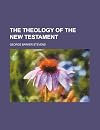
Purchase of this book includes free trial access to www.million-books.com where you can read more than a million books for free. This is an OCR edition with typos. Excerpt from book: CHAPTER II THE GOSPEL AND THE LAW In his teaching Jesus took his stand, as ve have seen, upon the Old Testament. He did not aim to introduce a wholly new religion. He clearly foresaw that some of his disciples would suppose that it was his purpose to break with the Old Testament system, and he warned them show more against this serious mistake by telling them that any of them who should feel themselves free to break the least commandment of the Old Testament law, and should teach others accordingly, should be called the least in the Kingdom of God (Mt. v. 19). His constant manner of speaking in regard to the Jewish religion and Scriptures shows the reverence in which he held them.1 There is in one of his parables a significant expression in regard to the gradual progress of his truth in the world: First the blade, then the ear, after that the full corn in the ear (Mk. iv. 28). This statement might be fitly applied to the whole process of revelation of which the Old Testament represents the earlier stages. It would as truly describe Jesus' idea of this process as it does the growth to which he immediately applied it. The Old Testament represents the first steps in a great course of revelation and redemption which reaches its consummation in Christ himself. While, therefore, Jesus builds upon the Jewish religious system, he also builds far above and beyond it. Whilesalvation, historically considered, is from the Jews, it is none the less necessary that the Jewish religion should be greatly elevated and enriched. The actual religion of the people, though embodying essential and permanent elements of true religion, is not adequate to the needs of the world; it must be further developed, supplemented, and completed at many points before it can become the universal, the absolute re... show lessTags
Recommendations




















Member Reviews
This is an excellent overview of the New Testament, even though it was first written in 1899 and revised in 1918 (I have the latest 1968 edition). He provides some great throught-provoking insights. This book is on par with modern day basic systematic theologies and probably better than some more thorough ones. I especially was engrossed in his chapters on "The Idea of God", "Eschatology", "Flesh and Spirit", and "The Divine Purpose". One may argue that nothing really new is presented and it fails to engage present day discussions, but the way Stevens explains his position is so clear, consistent, and concise so as to gain a much better understanding of traditional doctrinal concepts to help me better articulate NT teaching. Even for show more those who are more scholarly in their reading of contemporary systematice theologies, I think reading Stevens NT Theology would be a great review of the doctrines of the Christian faith and might even stimulate further thoughts on already too familiar subjects. show less
Members
- Recently Added By
Author Information
11 Works 119 Members
Series

Classifications
Statistics
- Members
- 70
- Popularity
- 449,033
- Reviews
- 1
- Rating
- (5.00)
- Languages
- English
- Media
- Paper, Ebook
- ISBNs
- 7
- ASINs
- 11