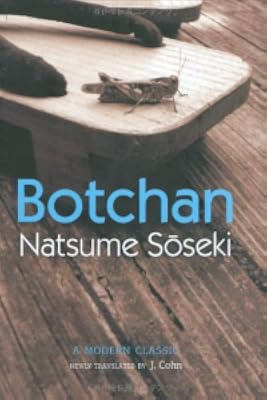
Botchan
by Natsume Sōseki
On This Page
Description
Princess Tillie is brave and bold, clever and curious, daring and very determined. Which is just as well because there is trouble in the Queendom of Blumenfeld. A sneaky thief has been stealing the royal roses. The Summer Harvest Festival will be a disaster! Princess Tillie sets out to trap the thief and solve the mystery, with the help of King Edwin's latest invention. But a sassy, golden unicorn called Honey Blossom turns everything upside down. Can Princess Tillie and Honey Blossom save show more the day? show lessTags
Recommendations









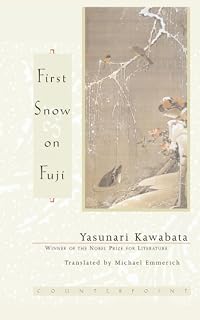
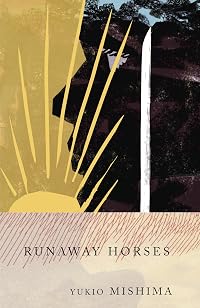
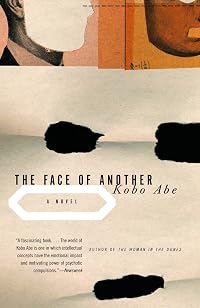
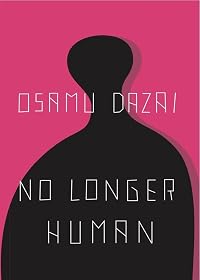

Member Recommendations
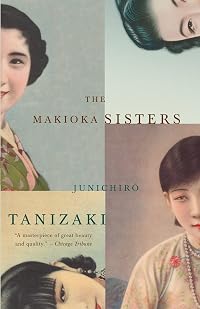
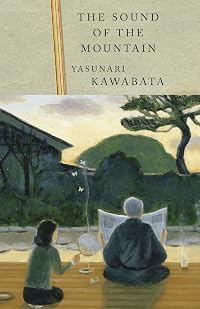
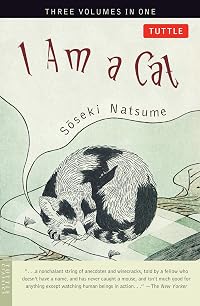
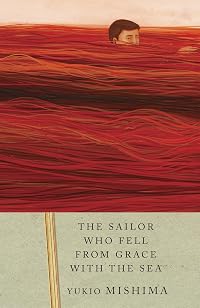
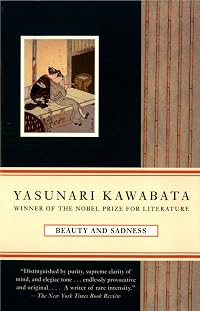
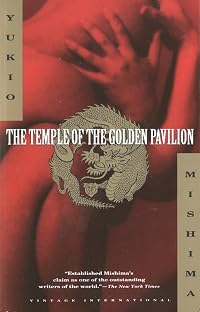
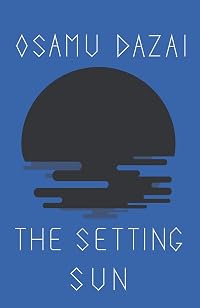
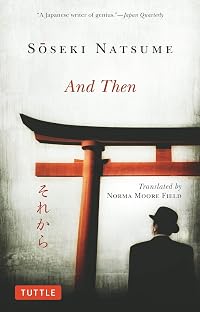
bunnygirl Both are about secondary schools in small towns; their protagonists are somewhat outcast from the school staff, and the staff is largely made up of ineffectual, flawed characters who derive enjoyment from playing mind games with the other teachers.
Member Reviews
[Note: this very well-known author's name is old-school Japanese, so 'Natsume' is his surname.]
I had a moment of delight while reading this. I was re-watching a favorite anime series when I noticed this author, likely this very book, was called out in the dialogue ("Given," episode 11)! Two high school students complaining about having to read Natsume Soseki describing stupid people a long time ago. I can't think of a more clear expression of how familiar this is in Japanese culture, both as a near-universally assigned reading and as a total drag to generations of teens. Reading it, I can see both positions clearly.
Natsume's narrator, the titular Botchan, is young, inexperienced, entitled, and callow, venturing into his first big show more adventure; in RPG terms, he's a First-Level PC. He's NOT a Japanese Holden Caulfield or Huck Finn, he's a young adult finding out how adult he really isn't yet. Full of self-assurance with no chops to back it up, he picks confrontation after confrontation that anyone with more on their resume would know to avoid. What keeps him interesting and entertaining, though, is his self-awareness that he is impatient and green. While much is made of the city-mouse/country-mouse nature of the story (a Tokyo boy out in the boonies), what's more relevant than the setting is the cast; he enters a Small Pond inhabited by a couple of pretenders to Big Fish status. Hilarity ensues.
What is undeniably neat to me is that Natsume's tale is very much set in a Japan of over a century ago but every step of the way, every character and conversation could be set today, or in Wisconsin.
"You'd think they'd be able to walk in a straight line without saying anything, but Japanese people are born mouth first, ..."
Has any teacher, manager, or employee anywhere ever NOT looked around and thought that of their colleagues or students? This would make a brilliant Netflix movie. show less
I had a moment of delight while reading this. I was re-watching a favorite anime series when I noticed this author, likely this very book, was called out in the dialogue ("Given," episode 11)! Two high school students complaining about having to read Natsume Soseki describing stupid people a long time ago. I can't think of a more clear expression of how familiar this is in Japanese culture, both as a near-universally assigned reading and as a total drag to generations of teens. Reading it, I can see both positions clearly.
Natsume's narrator, the titular Botchan, is young, inexperienced, entitled, and callow, venturing into his first big show more adventure; in RPG terms, he's a First-Level PC. He's NOT a Japanese Holden Caulfield or Huck Finn, he's a young adult finding out how adult he really isn't yet. Full of self-assurance with no chops to back it up, he picks confrontation after confrontation that anyone with more on their resume would know to avoid. What keeps him interesting and entertaining, though, is his self-awareness that he is impatient and green. While much is made of the city-mouse/country-mouse nature of the story (a Tokyo boy out in the boonies), what's more relevant than the setting is the cast; he enters a Small Pond inhabited by a couple of pretenders to Big Fish status. Hilarity ensues.
What is undeniably neat to me is that Natsume's tale is very much set in a Japan of over a century ago but every step of the way, every character and conversation could be set today, or in Wisconsin.
"You'd think they'd be able to walk in a straight line without saying anything, but Japanese people are born mouth first, ..."
Has any teacher, manager, or employee anywhere ever NOT looked around and thought that of their colleagues or students? This would make a brilliant Netflix movie. show less
High 4/5
Call me edgy or whatever, but I think I kind of relate to Botchan a lot.
I think this book is fun, because instead of lecturing me about the subjectivity of morality or whatever in a long 20 pages, it just shows it directly through the narration.
And now, I want to check out Natsume Soseki's other work.
Call me edgy or whatever, but I think I kind of relate to Botchan a lot.
I think this book is fun, because instead of lecturing me about the subjectivity of morality or whatever in a long 20 pages, it just shows it directly through the narration.
And now, I want to check out Natsume Soseki's other work.
Botchan (1906) is a comic novel whose enduring appeal continues to entertain generations of Japanese readers. It's main character is a newly graduated Tokyo-bred young man sent to teach mathematics at middle school in an out of the way locality. As a young boy, Botchan, as he was fondly called by the household help Kiyo, is destined to be the black sheep of the family. His relationship with his father and brother is civil at best. Kiyo is the only one who was patient with him and who believed he will amount to something great. But Botchan can be a bit foolish as he runs to all kinds of trouble.
Another time a distant relative sent me a western pocketknife. I was holding the blade up to the sun to show my friend how nicely it caught the show more light and he said, "Sure it looks nice, but I bet it can't cut."
"Yeah right," I said. "This knife'll cut through anything, I'll show you."
"Bet it won't cut through your finger."
Well I couldn't let him get away with that so I shouted You bet I will! and sliced through the back of my thumb. Fortunately for me the knife was small, and the bone was hard, so my thumb is still stuck to the side of my hand like it should be. But the scar will be there till I die.
The novel's comedy partly derives its laughs from the utter silliness of situations. Botchan himself is a strong character, surprisingly winsome despite (or may be due to) his sarcastic view of things and constant complaints about every little thing. He finds his match, however, with his co-teachers in the school. He finds himself right in the middle of petty politics and bureaucratic maneuverings of his colleagues. Even his students are party to making his life in the country a living hell. His students start to stalk him and to make fun of him by daily writing up, on the blackboard, what he ate the previous night. And when he erupts into anger, it only seems to embolden his students.
When you take a joke too far it's not funny anymore. If you burn your bread it's not good anymore, it's just charred—but that was probably too much thinking for these little rednecks. They thought they could keep pushing it. What did they know about the world, living in a Podunk town like this? Growing up on a patch of grass with no charm, no visitors, and no brains, they'd see a guy eat tempura and confuse it for a world war. Pathetic twerps. With an education like this, I could imagine the sort of warped people they'd grow into. If it was all innocent fun I'd laugh along with them. but it wasn't. They may have been kids but their pranks were pregnant with hatred.
Botchan becomes the sore subject of endless jokes in school. This inflames him more and more even as he becomes the target of intrigues among his teaching colleagues. A couple of teachers are painted as duplicitous and scheming individuals. "Not a shred of human decency to be found in the whole place!" he cries at one point. To his credit, Botchan (the name can also have derogatory meaning) holds fast to his principles of honesty and simplicity.
It's like they believe you can't succeed in society without letting yourself rot to the core. Then they see someone who's honest and pure, and they have to sneer at them and call them Botchan and naive and whatever else they can think of that helps them get to sleep at night. If that's how people are going to be about it then we should stop telling children not to lie. If that's how they're going to be we should give children classes on how to lie and get away with it and how to doubt people and how to take advantage of others and so on.... Red Shirt was laughing because he thought I was simple. Well if we live in a world that laughs at the simple and honest, then I guess I should learn to expect it—but what a world that would be!
Natsume Sōseki effectively uses comedy in this otherwise serious critique of the education system run by corrupt leadership. In effect, he seems to be also mocking the shallowness and backwardness of a society that produced, and was perpetuated by, such kind of education. There are also hints of the clash between the rural/traditional mindset of the educators in the community and Botchan's liberal views coming from the open city of Tokyo. The entertainment value of the sometimes slapstick comedy is foil to the societal conflicts in the novel.
Another significant aspect in the novel is in providing a glimpse not only to this dire "isolationist" mindset of a provincial school but also the display of nationalism of the local people. Near the end of the book, Botchan witnesses a street parade celebrating Japan's victory over Russia during the war of the previous year.
The song went on, the lazy beat drooping like spilled syrup from a tabletop. [The drummer] made abrupt pauses in the beats to help the spectators find the beat, and soon enough though I don't know how they did it, everyone was clapping along. The thirty men started to whip their glinting swords to the beat, faster and faster. It was fascinating and terrifying to watch. They were all crammed so close on the stage that if one of them missed a beat, he'd be sliced to pieces. If they'd just swung the swords up and down there'd be no real danger, but there were times [when] they turned left and right, spun in circles, dropped to their knees. I half expected noses and ears to go flying. They all had control over their swords, but were swiping and flipping them in a space of two feet—all while crouching, ducking, spinning, and twirling.
The fascinating parade scene may be offering a glimpse into Japanese militarism in the early years of the twentieth century. Indeed there's a large gap between the discipline exhibited by the students in this street dance and the pettiness they are prone to in school.
In the afterword, translator Glenn Anderson admits that certain passages in the novel are omitted or altered in the interest of "readability and accessibility". The translation decisions to domesticate the novel are explained in the afterword itself. The resulting text appears to be an idiomatic novel that retains the comedy while making it sound contemporary. This is evident in the nicknames Botchan gave to his co-teachers. The novel itself has been translated five times already. (Here's a review comparing the translations of the first passage quoted above.) The present translation is highly readable, spunky, and fun, though I'm a little bit bothered by some typographical errors.
I received a copy of the book from the publisher. show less
Another time a distant relative sent me a western pocketknife. I was holding the blade up to the sun to show my friend how nicely it caught the show more light and he said, "Sure it looks nice, but I bet it can't cut."
"Yeah right," I said. "This knife'll cut through anything, I'll show you."
"Bet it won't cut through your finger."
Well I couldn't let him get away with that so I shouted You bet I will! and sliced through the back of my thumb. Fortunately for me the knife was small, and the bone was hard, so my thumb is still stuck to the side of my hand like it should be. But the scar will be there till I die.
The novel's comedy partly derives its laughs from the utter silliness of situations. Botchan himself is a strong character, surprisingly winsome despite (or may be due to) his sarcastic view of things and constant complaints about every little thing. He finds his match, however, with his co-teachers in the school. He finds himself right in the middle of petty politics and bureaucratic maneuverings of his colleagues. Even his students are party to making his life in the country a living hell. His students start to stalk him and to make fun of him by daily writing up, on the blackboard, what he ate the previous night. And when he erupts into anger, it only seems to embolden his students.
When you take a joke too far it's not funny anymore. If you burn your bread it's not good anymore, it's just charred—but that was probably too much thinking for these little rednecks. They thought they could keep pushing it. What did they know about the world, living in a Podunk town like this? Growing up on a patch of grass with no charm, no visitors, and no brains, they'd see a guy eat tempura and confuse it for a world war. Pathetic twerps. With an education like this, I could imagine the sort of warped people they'd grow into. If it was all innocent fun I'd laugh along with them. but it wasn't. They may have been kids but their pranks were pregnant with hatred.
Botchan becomes the sore subject of endless jokes in school. This inflames him more and more even as he becomes the target of intrigues among his teaching colleagues. A couple of teachers are painted as duplicitous and scheming individuals. "Not a shred of human decency to be found in the whole place!" he cries at one point. To his credit, Botchan (the name can also have derogatory meaning) holds fast to his principles of honesty and simplicity.
It's like they believe you can't succeed in society without letting yourself rot to the core. Then they see someone who's honest and pure, and they have to sneer at them and call them Botchan and naive and whatever else they can think of that helps them get to sleep at night. If that's how people are going to be about it then we should stop telling children not to lie. If that's how they're going to be we should give children classes on how to lie and get away with it and how to doubt people and how to take advantage of others and so on.... Red Shirt was laughing because he thought I was simple. Well if we live in a world that laughs at the simple and honest, then I guess I should learn to expect it—but what a world that would be!
Natsume Sōseki effectively uses comedy in this otherwise serious critique of the education system run by corrupt leadership. In effect, he seems to be also mocking the shallowness and backwardness of a society that produced, and was perpetuated by, such kind of education. There are also hints of the clash between the rural/traditional mindset of the educators in the community and Botchan's liberal views coming from the open city of Tokyo. The entertainment value of the sometimes slapstick comedy is foil to the societal conflicts in the novel.
Another significant aspect in the novel is in providing a glimpse not only to this dire "isolationist" mindset of a provincial school but also the display of nationalism of the local people. Near the end of the book, Botchan witnesses a street parade celebrating Japan's victory over Russia during the war of the previous year.
The song went on, the lazy beat drooping like spilled syrup from a tabletop. [The drummer] made abrupt pauses in the beats to help the spectators find the beat, and soon enough though I don't know how they did it, everyone was clapping along. The thirty men started to whip their glinting swords to the beat, faster and faster. It was fascinating and terrifying to watch. They were all crammed so close on the stage that if one of them missed a beat, he'd be sliced to pieces. If they'd just swung the swords up and down there'd be no real danger, but there were times [when] they turned left and right, spun in circles, dropped to their knees. I half expected noses and ears to go flying. They all had control over their swords, but were swiping and flipping them in a space of two feet—all while crouching, ducking, spinning, and twirling.
The fascinating parade scene may be offering a glimpse into Japanese militarism in the early years of the twentieth century. Indeed there's a large gap between the discipline exhibited by the students in this street dance and the pettiness they are prone to in school.
In the afterword, translator Glenn Anderson admits that certain passages in the novel are omitted or altered in the interest of "readability and accessibility". The translation decisions to domesticate the novel are explained in the afterword itself. The resulting text appears to be an idiomatic novel that retains the comedy while making it sound contemporary. This is evident in the nicknames Botchan gave to his co-teachers. The novel itself has been translated five times already. (Here's a review comparing the translations of the first passage quoted above.) The present translation is highly readable, spunky, and fun, though I'm a little bit bothered by some typographical errors.
I received a copy of the book from the publisher. show less
Botchan by Sōseki Natsume, translated by J Cohn, is something I'd been meaning to read for, well, a couple of decades now. I've had a physical copy longer than I can recall when I got it, perhaps a gift from my Grandmother. I've tried getting into it a number of times, but just couldn't. I finally did.
The most serious attempt at this book was in the 90s when I was taking Japanese 101 at Seattle Central Community College. I had a Japanese friend outside of class that was shocked to see I had the book with me, and that I was reading it, because it was such a deep and specific cultural phenomenon. I ended up saying it was a bit boring, and I didn't really think much of it. I didn't finish it. In fact, now that I've read it, I don't think show more I got very far into it at all, that time.
I still don't like it. It's a story about a bunch of awful people being awful and nothing good comes of any of it. The main character is infantile, rash, and gullible. Everyone else is also deeply flawed. They stay that way.
There's an awful lot of what appears to me homophobic but gratuitous preoccupation with criticizing how feminine other males are. Ironically there's a scene where the main character is totally mesmerised by the flexing, bulging muscles of a compatriot.
There's also few female characters at all, with three that appear for any meaningful amount of the story. The first is Botchan's nanny, who constantly lavishes praise and care on him with an irrational, one might say economically dependant and sycophantic, way that fails to be recognized as such. There's a beautiful woman who is fickle and the object of a conspiracy who is mostly seen from a distance, when seen at all. There is an old landlady who always cooks sweet potatoes for dinner and is, as it turns out, a useful gossip. There's others mentioned in passing, but this is really to extent of it.
And, pretty much everyone is miserable or awful to each other, and usually both, including the narrator. It is strange, in a way, to think about how this story is, as described in the front matter, as probably being pretty biographical, because the narrator seems to be to be an ass. The front matter seems to describe the main character as a kind of heroic rebel, but no. Not close. He's constantly getting tricked. He constantly jumps to conclusions based on hearsay from people he doesn't trust. And so on.
And, there's not really any character arc for anyone in the story. In fact, in the end, not much changes. The same awful people just, probably, keep on being awful. That's the worst part, I guess. I somewhat identify with the situation of being surrounded by people that I can't really trust, who are up to something; and if I say anything about what they're doing they just say I started it and I look bad but they're the assholes. That whole bit of bullshit is too familiar. This story doesn't resolve that for the characters and doesn't offer any insight into a way out; except to take some petty revenge then pack up and leave. Maybe that is the only answer then, as it's kind of what I've ended up doing in similar situations.
I just don't see how this is a "treasured novel" with "timeless popularity" or "a hilarious tale about a young man's rebellion against 'the system'". Maybe I really missed it without the deep and specific cultural or period context. But, unless someone can enlighten me to what's there but not there, it's a miss for me. There's no treasure here. I felt the ploding passage of my time while reading it. It's painfully not funny at all. He's not a rebel against any system, just largely oblivious and angry to no ultimate effect. It's a bleak and boring pastoral about unending pervasive and dismal angst not worth remembering.
Still, it's well written. It's an experience of a moment in time in another culture that made me think about life. I'm not glad I read it, but I'm glad I'm done with it.
I made 14 highlights. show less
The most serious attempt at this book was in the 90s when I was taking Japanese 101 at Seattle Central Community College. I had a Japanese friend outside of class that was shocked to see I had the book with me, and that I was reading it, because it was such a deep and specific cultural phenomenon. I ended up saying it was a bit boring, and I didn't really think much of it. I didn't finish it. In fact, now that I've read it, I don't think show more I got very far into it at all, that time.
I still don't like it. It's a story about a bunch of awful people being awful and nothing good comes of any of it. The main character is infantile, rash, and gullible. Everyone else is also deeply flawed. They stay that way.
There's an awful lot of what appears to me homophobic but gratuitous preoccupation with criticizing how feminine other males are. Ironically there's a scene where the main character is totally mesmerised by the flexing, bulging muscles of a compatriot.
There's also few female characters at all, with three that appear for any meaningful amount of the story. The first is Botchan's nanny, who constantly lavishes praise and care on him with an irrational, one might say economically dependant and sycophantic, way that fails to be recognized as such. There's a beautiful woman who is fickle and the object of a conspiracy who is mostly seen from a distance, when seen at all. There is an old landlady who always cooks sweet potatoes for dinner and is, as it turns out, a useful gossip. There's others mentioned in passing, but this is really to extent of it.
And, pretty much everyone is miserable or awful to each other, and usually both, including the narrator. It is strange, in a way, to think about how this story is, as described in the front matter, as probably being pretty biographical, because the narrator seems to be to be an ass. The front matter seems to describe the main character as a kind of heroic rebel, but no. Not close. He's constantly getting tricked. He constantly jumps to conclusions based on hearsay from people he doesn't trust. And so on.
And, there's not really any character arc for anyone in the story. In fact, in the end, not much changes. The same awful people just, probably, keep on being awful. That's the worst part, I guess. I somewhat identify with the situation of being surrounded by people that I can't really trust, who are up to something; and if I say anything about what they're doing they just say I started it and I look bad but they're the assholes. That whole bit of bullshit is too familiar. This story doesn't resolve that for the characters and doesn't offer any insight into a way out; except to take some petty revenge then pack up and leave. Maybe that is the only answer then, as it's kind of what I've ended up doing in similar situations.
I just don't see how this is a "treasured novel" with "timeless popularity" or "a hilarious tale about a young man's rebellion against 'the system'". Maybe I really missed it without the deep and specific cultural or period context. But, unless someone can enlighten me to what's there but not there, it's a miss for me. There's no treasure here. I felt the ploding passage of my time while reading it. It's painfully not funny at all. He's not a rebel against any system, just largely oblivious and angry to no ultimate effect. It's a bleak and boring pastoral about unending pervasive and dismal angst not worth remembering.
Still, it's well written. It's an experience of a moment in time in another culture that made me think about life. I'm not glad I read it, but I'm glad I'm done with it.
I made 14 highlights. show less
I much preferred this translation of Sōseki's classic tale of arrogant youth coming to terms with the realities of life. Botchan is cartoon like in his extremes, and very funny. His brief interlude among the inhabitants of a country town is infuriating and entertaining in equal measure.
Very enjoyable read, a bit like early Evelyn Waugh filtered through someone who relishes the idea of writing in the voice of an uneducated, naive, morally upright young man, who is also a bit of a jerk. The translator does a pretty solid job, given that filter.
Botchan was written by Soseki in 1905, and it is widely considered to be one of the most important works of Japanese literature, as it was one of the first modern works that touches on the conflict between traditional values and beliefs found in remote Japanese villages, and the influence of the West and a modern society in a major city such as Tokyo.
The narrator is a young man of slight build but feisty spirit who has recently graduated from university with a degree in physics, who has been hired to teach mathematics in a middle school in a small rural town. Botchan is guided by his personal moral code and sense of duty, which is exceeded only by his self importance and pomposity. Almost immediately he runs afoul of several of the show more students in his classes, who torment him with blackboard comments and juvenile tricks. He subsequently angers his immediate supervisor, the principal of the school, and several of his fellow teachers, who conspire against him and his supervisor. Botchan strikes out against his accusers and foes, as he longs to return to Tokyo and to the old woman who served as the family maid during his troubled childhood, as she is the only person who nurtured and believed in him.
Despite its short length of 92 pages, Botchan was a tedious read that seemed at least twice as long as its actual length. Not recommended. show less
The narrator is a young man of slight build but feisty spirit who has recently graduated from university with a degree in physics, who has been hired to teach mathematics in a middle school in a small rural town. Botchan is guided by his personal moral code and sense of duty, which is exceeded only by his self importance and pomposity. Almost immediately he runs afoul of several of the show more students in his classes, who torment him with blackboard comments and juvenile tricks. He subsequently angers his immediate supervisor, the principal of the school, and several of his fellow teachers, who conspire against him and his supervisor. Botchan strikes out against his accusers and foes, as he longs to return to Tokyo and to the old woman who served as the family maid during his troubled childhood, as she is the only person who nurtured and believed in him.
Despite its short length of 92 pages, Botchan was a tedious read that seemed at least twice as long as its actual length. Not recommended. show less
Members
- Recently Added By
Lists

Japanese Literature
230 works; 40 members

all aboard for malory towers (grownups)
28 works; 5 members

Reading LIst
648 works; 1 member
Talk Discussions
Past Discussions
Botchan by Natsume Soseki in Author Theme Reads (January 2012)
Author Information

249+ Works 11,638 Members
Natsume Soseki's early education included the study of Chinese classics and architecture, but as an English literature major he found his life's work, as well as the friendship of haiku poet Masaoka Shiki, an important personal and literary influence. Soseki's prose, for example, is often interspersed with his own haiku. In 1900 the Japanese show more government sent Soseki, who was a professor of English literature, to London, but, poorly funded and isolated, he found his years abroad painful and began to exhibit neurotic behavior. On his return, he shocked society by giving up his teaching position at Tokyo University to write fiction for the Asahi newspaper, a profession associated with the world of "entertainers." Despite poor health in the last years of his life, Soseki continued to write an average of one novel a year. (Bowker Author Biography) show less
Some Editions
Awards and Honors
Notable Lists
Series
Belongs to Publisher Series
Work Relationships
Common Knowledge
- Canonical title
- Botchan
- Original title
- 坊っちゃん
- Original publication date
- 1906 (original Japanese) (original Japanese); 2005 (English: Cohn) (English: Cohn)
- People/Characters
- Kiyo; Botchan; The Principal ('Badger'); The Head Teacher ('Red Shirt'); Mr Koga ('Hubbard Squash', English teacher); Mr Hotta ('Porcupine', maths teacher) (show all 7); Mr Yoshikawa ('Clown', drawing teacher)
- Important places
- Japan (Shikoku)
- First words
- From the time I was a boy the reckless streak that runs in my family has brought me nothing but trouble.
Because of an hereditary recklessness, I have been playing always a losing game since my childhood.-----------Translation by Morri/ Kennedy 1919
. - Last words
- (Click to show. Warning: May contain spoilers.)And that's why her grave is in Yongen Temple in Kobinata.
(Click to show. Warning: May contain spoilers.)So Kiyo's grave is in the Yogen temple at Kobinata.------------Translation by Morri/ Kennedy 1919 . - Blurbers*
- Murakami, Haruki
- Original language
- Japanese
- Canonical DDC/MDS
- 895.63
*Some information comes from Common Knowledge in other languages. Click "Edit" for more information.
Classifications
- Genres
- General Fiction, Fiction and Literature
- DDC/MDS
- 895.63 — Literature & rhetoric Literatures of other languages Literatures of East and Southeast Asia Japanese Japanese fiction
- LCC
- PL812 .A8 .B614 — Language and Literature Languages and literatures of Eastern Asia, Africa, Oceania Languages of Eastern Asia, Africa, Oceania Japanese language and literature Japanese literature Individual authors and works
- BISAC
Statistics
- Members
- 1,259
- Popularity
- 19,526
- Reviews
- 38
- Rating
- (3.54)
- Languages
- 14 — Catalan, Czech, Dutch, English, French, German, Galician, Hungarian, Indonesian, Italian, Japanese, Malay, Portuguese, Spanish
- Media
- Paper, Audiobook, Ebook
- ISBNs
- 114
- ASINs
- 23