The One-Way Bridge
by Cathie Pelletier
On This Page
Description
"Cathie Pelletier is one of my favorite novelists, and she's at the top of her game with The One-Way Bridge."—Wally Lamb, author of She's Come UndoneIn her highly anticipated new novel, acclaimed literary master Cathie Pelletier returns to Mattagash, Maine, the beloved New England town where it all started.
Welcome to Mattagash, the last town in the middle of the northern Maine wilderness. The road dead-ends here, but Mattagash's citizens are fiercely proud.
Yet this simple town connected show more by a single one-way bridge is anything but tranquil. While neighbors bicker publicly over trivialities such as offensive mailbox designs and gossip about suspicious newcomers, they privately struggle to navigate deeper issues—scandals, loss, failed ambitions, the scars of war...and a mysterious dead body in the woods.
With her trademark wit and keen eye for detail, Pelletier has assembled an unforgettable cast of endearing and eccentric characters, from scheming mailmen and peeping toms to lovesick waitresses and loggers whose underhandedness belies their ingenuity. The citizens of Mattagash will make you laugh and cheer for them as they stumble into one another's lives and strive to define themselves in a changing world that threatens to leave them behind.
The One-Way Bridge is an extraordinary portrait of family, loneliness, and community—and the kinds of compromises we all make in the name of love.
Praise for The One-Way Bridge:
"The One-Way Bridge is the novel Cathie Pelletier fans have long awaited. Her Mattagash, Maine, is one of the most fully realized fictional locales I've ever visited, it's geography as vivid and precise as any actual place, its citizens as real and compelling as our own friends and neighbors."—Richard Russo, author of Empire Falls
"In her new book, Cathie Pelletier's brilliantly drawn, true-to-life characters break your heart and make you laugh at the same time, a rare talent indeed."—Fannie Flagg, author of Fried Green Tomatoes at the Whistle Stop Café
. show less
Tags
Recommendations
















Member Reviews
“What’s going on here?” Ray asked.
Orville hunched his shoulders.
“I don’t know,” he answered honestly. “ I guess I ran out of self-control.”
— Cathie Pelletier, “The One-Way Bridge”
Running out of self-control is something that plagues several of Cathie Pelletier’s characters in “The One-Way Bridge.” Yet a one-way bridge, her novel’s main metaphor, is something that needs self-control to work. Whoever gets there first has right of way. Anyone coming from the opposite direction must wait his turn. A one-way bridge, like a four-way stop or society in general, requires a measure of patience and respect for others.
There were three such one-way bridges in Pelletier’s hometown of Allagash in northern Maine when show more she was growing up. (Now she has returned and lives in the same house where she was born.) And so it was easy for her to imagine a one-way bridge in her fictional town of Mattagash in northern Maine. A map at the front of the novel’s helps readers visualize the town, the bridge at its center and the homes and businesses of her various characters.
These characters include Orville, the Mattagash mail carrier in his last week of work who now regrets his decision to retire; Edna, mother of identical twin boys who, fantasizing about a man she conversed with when he passed through town, tells her husband she wants a divorce; Harry, who still recovering from the shocks of a rough experience in Vietnam and the death of his wife, gets a different kind of shock when the woman who runs the local eatery makes it plain she desires him; and Billy Thunder, impatient for Orville to deliver his latest shipment of illicit drugs so he can sell them and pay off a couple of hapless hoods, as well as an ex-girlfriend he stole from.
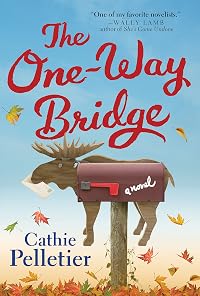
All this sounds like serious business, and it is, but Pelletier mixes in so much humor that it seems like a comic novel, a suggestion buttressed by the cover illustration, which the author said she hated when I saw her in St. Petersburg in January. I love the cover and think it's perfect for the book.
A bridge is something that joins, not just two sides of a town separated by a river but also people separated by whatever. Pelletier’s one-way bridge, instead of just being the source of a crisis when two vehicles enter it at the same time, becomes the catalyst for the solution to just about everyone’s conflict, or loss of self-control.
This novel won't suit everyone. Some will find it too pat, too light or too unrealistic. I, however, found it wonderful. show less
Orville hunched his shoulders.
“I don’t know,” he answered honestly. “ I guess I ran out of self-control.”
— Cathie Pelletier, “The One-Way Bridge”
Running out of self-control is something that plagues several of Cathie Pelletier’s characters in “The One-Way Bridge.” Yet a one-way bridge, her novel’s main metaphor, is something that needs self-control to work. Whoever gets there first has right of way. Anyone coming from the opposite direction must wait his turn. A one-way bridge, like a four-way stop or society in general, requires a measure of patience and respect for others.
There were three such one-way bridges in Pelletier’s hometown of Allagash in northern Maine when show more she was growing up. (Now she has returned and lives in the same house where she was born.) And so it was easy for her to imagine a one-way bridge in her fictional town of Mattagash in northern Maine. A map at the front of the novel’s helps readers visualize the town, the bridge at its center and the homes and businesses of her various characters.
These characters include Orville, the Mattagash mail carrier in his last week of work who now regrets his decision to retire; Edna, mother of identical twin boys who, fantasizing about a man she conversed with when he passed through town, tells her husband she wants a divorce; Harry, who still recovering from the shocks of a rough experience in Vietnam and the death of his wife, gets a different kind of shock when the woman who runs the local eatery makes it plain she desires him; and Billy Thunder, impatient for Orville to deliver his latest shipment of illicit drugs so he can sell them and pay off a couple of hapless hoods, as well as an ex-girlfriend he stole from.
All this sounds like serious business, and it is, but Pelletier mixes in so much humor that it seems like a comic novel, a suggestion buttressed by the cover illustration, which the author said she hated when I saw her in St. Petersburg in January. I love the cover and think it's perfect for the book.
A bridge is something that joins, not just two sides of a town separated by a river but also people separated by whatever. Pelletier’s one-way bridge, instead of just being the source of a crisis when two vehicles enter it at the same time, becomes the catalyst for the solution to just about everyone’s conflict, or loss of self-control.
This novel won't suit everyone. Some will find it too pat, too light or too unrealistic. I, however, found it wonderful. show less
Cathy Pelletier knows her subject matter. She has captured the dialect, the life-style, the scenery, and the personalities of the fiercely independent population of Mattagash, "the last town in the middle of the northern Maine wilderness." The cover illustration opens the book as about-to-retire postman Orville Craft is confronted with the Moose mailbox of town resident and Vietnam vet Harry Plunkett. Plunkett has turned the mailbox so that Orville must insert the mail into the "$%X"end of the giant mammal container. Orville is convinced that Plunkett has it in for him.
The one -way bridge probably exists in many towns. In Mattagash, the unwritten rule states that when two vehicles approach the bridge from opposite ends, the car whose show more wheels enter the bridge first has the right-of-way. The other must back off and wait. This rule will eventually become central to the story.
But in addition to Orville and Harry, there's small time, homeless, jobless thug Billy Thunder. He's actually not homeless...he can sleep in his vintage Mustang convertible, except that the top won't go up, and winter is coming. And he's not actually jobless - he's a "salesman" of sorts and it's just that his suppliers (the thugs one step up in the food chain) are refusing to send him any more "supplies" until he pays what he owes. His resorting to selling faux goods of a slightly different composition nets him funds for a short time only.
There are an assortment of other lovable, laughable characters, each one symbolic of a specific social ill, whether it's boredom, unemployment, divorce, empty nests, unfulfilled fantasies, or post traumatic stress. Pelletier has painted a picture of a town that is trying, of a citizenry that still has a can-do attitude, and of a way of life that seems at once surreal and actual. The dialect is spot on. The scenery is painted with a broad brush enhanced with subtle shadings.
Without spoilers, this is not just a fun or funny book. The life issues of a variety of inhabitants are addressed with empathy, compassion and well-researched knowledge of cause and effect. The drama that develops as Orville and Harry's feud escalates serves to highlight a myriad of problems residents would rather not contemplate. It's a deep book, and one that would make an excellent choice for book discussion groups.
If you want eccentric but credible characters, beautiful scenery, and poignant emotional situations, this one's for you. show less
The one -way bridge probably exists in many towns. In Mattagash, the unwritten rule states that when two vehicles approach the bridge from opposite ends, the car whose show more wheels enter the bridge first has the right-of-way. The other must back off and wait. This rule will eventually become central to the story.
But in addition to Orville and Harry, there's small time, homeless, jobless thug Billy Thunder. He's actually not homeless...he can sleep in his vintage Mustang convertible, except that the top won't go up, and winter is coming. And he's not actually jobless - he's a "salesman" of sorts and it's just that his suppliers (the thugs one step up in the food chain) are refusing to send him any more "supplies" until he pays what he owes. His resorting to selling faux goods of a slightly different composition nets him funds for a short time only.
There are an assortment of other lovable, laughable characters, each one symbolic of a specific social ill, whether it's boredom, unemployment, divorce, empty nests, unfulfilled fantasies, or post traumatic stress. Pelletier has painted a picture of a town that is trying, of a citizenry that still has a can-do attitude, and of a way of life that seems at once surreal and actual. The dialect is spot on. The scenery is painted with a broad brush enhanced with subtle shadings.
Without spoilers, this is not just a fun or funny book. The life issues of a variety of inhabitants are addressed with empathy, compassion and well-researched knowledge of cause and effect. The drama that develops as Orville and Harry's feud escalates serves to highlight a myriad of problems residents would rather not contemplate. It's a deep book, and one that would make an excellent choice for book discussion groups.
If you want eccentric but credible characters, beautiful scenery, and poignant emotional situations, this one's for you. show less
Have you seen the photographs of those charming, rustic covered bridges? The ones that only one car at a time can drive across because they were not designed with our high speed, rush, rush, rush world in mind? I've always wanted to see one of them in person, probably because I envision them as something idyllic and peaceful. But the bridge at the center of Cathie Pelletier's newest novel, The One-Way Bridge, does not sit in the middle of a quiet, deserted, bucolic place, it sits smack in the middle of a contentious, decades long feud in Mattagash, a small Maine town that faces all the problems, realities, and social ills that plague larger towns.
The long acknowledged rule of the Mattagash bridge is that the first vehicle to reach the show more bridge has the right of way and any vehicle coming from the opposite direction must wait. Locals abide by this informal rule until the day that Orville Craft, the town's retiring mailman, and Vietnam vet Harry Plunkett, who have been feuding for almost their entire adult lives meet head on in the center of the bridge, each one maintaining that he was the first one on the bridge and therefore the other man must reverse off the bridge to allow him the right of way. They are so cantankerous that they are willing to sit at their impasse all day and night, blocking the bridge and causing all of this small town five hours north of Portland to come to a stand still. How they came to this is the focus of the novel.
The novel opens with new resident and small time drug dealer Billy Thunder waiting impatiently beside his mailbox for his anticipated package from his dealers in Portland. As he drives along delivering the mail, Orville's route offers the reader an opening glimpse of each of the characters who will play a large part in the novel, culminating in Orville's discovery that Harry Plunkett has turned his moose-shaped mailbox around so that Orville must now reach into the moose's backside to deliver mail. The everyday dramas of each of the characters, like this feud, play out alongside the bigger, more universal dramas of things like dissatisfaction in marriage, drugs, dead-end jobs and economic troubles, the devastating mental anguish left from the Vietnam War, and the insularity of the town.
The novel is quirky and delightfully eccentric with some truly comedic moments. Pelletier is spot on when describing her characters' interpersonal relationships, their misunderstandings and oddities. She's definitely captured the feel of a rural small town and the personalities that give it its unique character. The large cast of characters here does sometimes give the narrative a choppy feel as each of the plot lines alternates but they do eventually come together into one cohesive whole. Those who have read previous Mattagash-set novels will enjoy this latest foray into the fictional town while those new to the town and its residents will want to seek out prior novels. show less
The long acknowledged rule of the Mattagash bridge is that the first vehicle to reach the show more bridge has the right of way and any vehicle coming from the opposite direction must wait. Locals abide by this informal rule until the day that Orville Craft, the town's retiring mailman, and Vietnam vet Harry Plunkett, who have been feuding for almost their entire adult lives meet head on in the center of the bridge, each one maintaining that he was the first one on the bridge and therefore the other man must reverse off the bridge to allow him the right of way. They are so cantankerous that they are willing to sit at their impasse all day and night, blocking the bridge and causing all of this small town five hours north of Portland to come to a stand still. How they came to this is the focus of the novel.
The novel opens with new resident and small time drug dealer Billy Thunder waiting impatiently beside his mailbox for his anticipated package from his dealers in Portland. As he drives along delivering the mail, Orville's route offers the reader an opening glimpse of each of the characters who will play a large part in the novel, culminating in Orville's discovery that Harry Plunkett has turned his moose-shaped mailbox around so that Orville must now reach into the moose's backside to deliver mail. The everyday dramas of each of the characters, like this feud, play out alongside the bigger, more universal dramas of things like dissatisfaction in marriage, drugs, dead-end jobs and economic troubles, the devastating mental anguish left from the Vietnam War, and the insularity of the town.
The novel is quirky and delightfully eccentric with some truly comedic moments. Pelletier is spot on when describing her characters' interpersonal relationships, their misunderstandings and oddities. She's definitely captured the feel of a rural small town and the personalities that give it its unique character. The large cast of characters here does sometimes give the narrative a choppy feel as each of the plot lines alternates but they do eventually come together into one cohesive whole. Those who have read previous Mattagash-set novels will enjoy this latest foray into the fictional town while those new to the town and its residents will want to seek out prior novels. show less
Way up north in the Maine woods is a small lumberjack town on the river. In the middle of town stands a one-way bridge, the only way to get over the river and from one side of town to the other (sans canoe). Everybody in town knows everybody else's business (and half of them are related to boot), so no one is taken by any surprise as a disagreement between the mechanic and the mailman begins to escalate to nonsensical heights which reverberate through relationships in town. The One-Way Bridge is a perfect read-it-in-one day book, full of entertaining (but never over-the-top) characters and some nice insight into human nature. Things turn out maybe just a little too pat in the end, but the resolutions of the most pressing conflicts are show more satisfying. Well worth a read. show less
The inhabitants of the remote Maine town are colorful and opinionated and searching for meaning in their own ways. The humor is occasionally slapstick, but the story is good-hearted and upbeat.
This author could not seem to decide if she wanted to be a story teller, a historian or a literary author. I enjoyed the book and the flashes of depth she showed ... until I got to the authors note where she found it necessary to pound her political view and thereby turning off the 50% of American readers who heartily disagree with her opinion. I am one of them and will not read any of her other works.
Folksy Maine novel in the manner of Fannie Flagg. The small town is modeled on Allagash, way up north of Bangor. Very enjoyable light reading.
Members
- Recently Added By
Lists

Best 21st Century Books (So Far)
670 works; 86 members

Favourite Books
1,819 works; 316 members

Books That Deserve A Wider Audience
36 works; 1 member
Author Information

28+ Works 1,369 Members
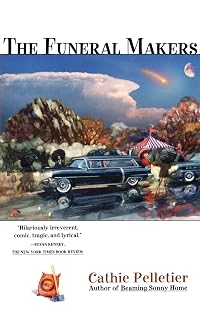
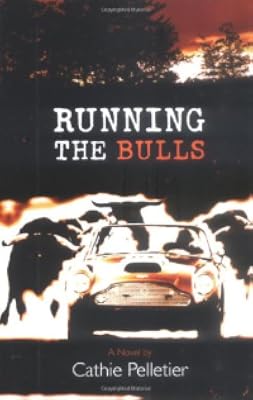
Cathie Pelletier was born in Allagash, Maine in 1953. She received a B.A. from the University of Maine in 1976. She has written books under her own name and the pseudonym K. C. McKinnon. The books written under her own name include The Funeral Makers, A Marriage Made at Woodstock, The Summer Experiment, and A Year After Henry. She has received show more several awards including the New England Booksellers Award for The Weight of Winter and the 2006 Paterson Prize for Running the Bulls. Under the pseudonym of K. C. McKinnon she wrote two novels, Dancing at the Harvest Moon and Candles on Bay Street. Both were adapted into television movies by CBS and Hallmark respectively. She writes country music lyrics. She has co-written several books with singers including 100 Ways to Beat the Blues with Tanya Tucker, The Christmas Note with Skeeter Davis, and The Ragin' Cajun with Doug Kershaw. (Bowker Author Biography) show less
Awards and Honors
Awards
Distinctions
Common Knowledge
- Canonical title
- The One-Way Bridge
- Original publication date
- 2013
- First words
- There is something in the northern Maine air that speaks of the first snowfall hours before it arrives.
Classifications
Statistics
- Members
- 95
- Popularity
- 338,951
- Reviews
- 9
- Rating
- (3.65)
- Languages
- English
- Media
- Paper, Ebook
- ISBNs
- 4
- UPCs
- 1
- ASINs
- 1