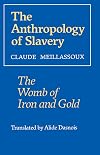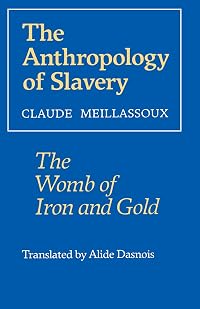
The Anthropology of Slavery: The Womb of Iron and Gold
by Claude Meillassoux
On This Page
Description
This controversial examination of precolonial African slavery looks at the various social systems that made slavery on such a scale possible and argues that the institutions of slavery were far more complex and pervasive than previously suspected.Tags
Recommendations








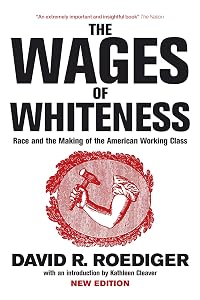
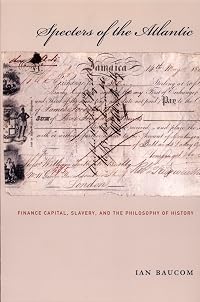

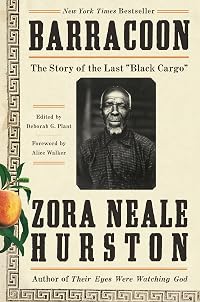
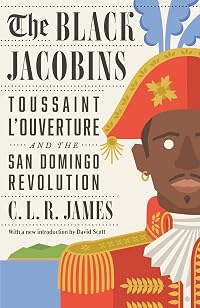




Member Recommendations
Members
- Recently Added By
Lists

Books in the Bibliography of The Dawn of Everything by Graeber & Wengrow
478 works; 2 members
Author Information
12 Works 129 Members
Historical anthropologist Claude Meillassoux was born in Roubaix, France, and educated in part at the Institute of Political Studies in Paris. In addition to his diploma from the institute, he earned a B.A. from the Faculty of Law and Economics in Paris, an M.A. from the University of Michigan, and a Ph.D. from the University of Paris. Before show more embarking upon a scholarly career, he worked in a factory, in advertising, and as an interpreter. In 1957, he became an assistant in the Practical School of Higher Studies in Paris, a position he held until 1964. At that point in time, he became a research fellow at the National Center of Scientific Research, also in Paris. Recognized for his firmly radical political convictions, Meillassoux is regarded as one of the most influential historical anthropologists and is noted for his contributions toward understanding the complex institution of slavery within Africa itself. He is best known for his theory of slavery in Africa, as expressed in his 1975 work, "L'Esclavage en Afrique Pre-coloniale" (Slavery in Pre-colonial Africa). Meillassoux's recent research, particularly "The Anthropology of Slavery: The Womb of Iron and Gold" (1991), has had an enormous influence on discerning a theory of slavery in Africa. (Bowker Author Biography) show less
Classifications
- Genres
- Anthropology, Nonfiction, History, General Nonfiction
- DDC/MDS
- 306.3 — Society, government, & culture Social sciences, sociology & anthropology Social Behavior - Dating, Marriage, Divorce Economic institutions
- LCC
- HT1321 .M4513 — Social sciences Communities. Classes. Races Communities. Classes. Races Classes Slavery
- BISAC
Statistics
- Members
- 52
- Popularity
- 585,051
- Languages
- 5 — English, French, German, Portuguese, Spanish
- Media
- Paper
- ISBNs
- 8