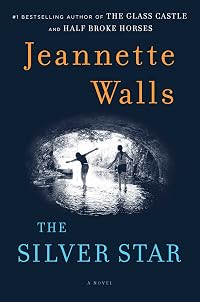
The Silver Star
by Jeannette Walls
On This Page
Description
Two motherless sisters--Bean and Liz--are shuttled to Virginia, where their Uncle Tinsley lives in the decaying mansion that's been in their family for generations. When school starts in the fall, Bean easily adjusts and makes friends, and Liz becomes increasingly withdrawn. Then something happens to Liz and Bean is left to challenge the injustice of the adult world.Tags
Recommendations






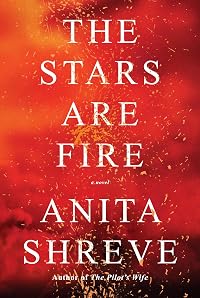
Member Recommendations
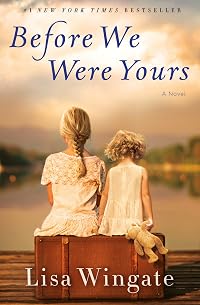
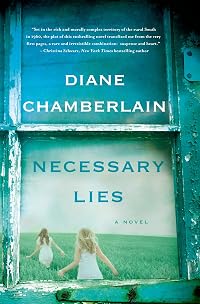
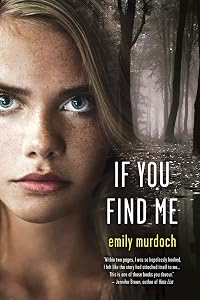
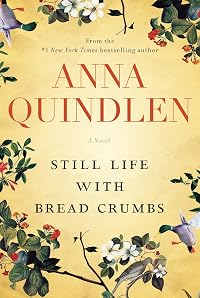
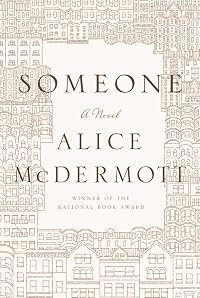
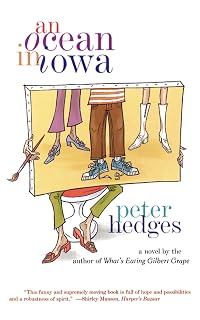
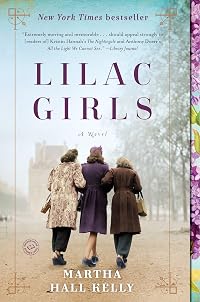
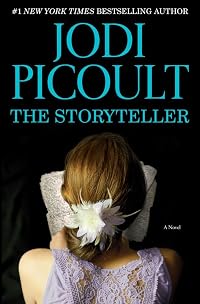
BookshelfMonstrosity Girls who have lost their families must find security and forge their own identities in these reflective coming-of-age stories set in the South.
BookshelfMonstrosity Though more humorous in tone than the bittersweet, reflective Silver Star, The Summer of Naked Swim Parties is another character-driven novel set in the 1970s featuring teenage sisters who grow up quickly when confronted with abandonment and betrayal by adults.
Member Reviews
While I recommend this book, it is done so with a caveat that it deals with some heavy subjects, such as abandonment, abuse, sexual misconduct, bullying, and mental health issues.
In small town California in 1970, two sisters await their mother who once again decided to take off and leave them alone. Usually she returns in a timely manner, but not so for this most recent time. The girls are isolated and very poor. Their mother leaves enough money for them to buy some pot pies at a local grocery store.
The Holladay sisters are only twelve and fifteen. Somehow their mother believes they are old enough to consistently be left alone. Bean and her older sister live in poverty. Their mother deems herself a talented singer. She vows to find the show more man who will discover her, help her to be "found," and accept the daughters so they might all live a full life.
In order to live her life, mother Charlotte tells lies. Her most recent lie to her daughters is fraught with holes. Claiming a well to do man has discovered her and knows she has great talent, she writes letters that seem to be written by the mystery man. Only this time, Bean doesn't believe her. And, realizing the truth leads to great misery.
When their mother who doesn't come home after a long period of time , Liz, the older sister who can usually take care of both of them, knows the gig is up her younger sister sees police looking in the house windows, and the man who owns the grocery store has some straightforward questions that are not answered. Liz gets together enough money to enable the girls to travel to the town in Virginia where their mother's Uncle lives.
Deciding to just show up is the best way to go, Liz believes the Uncle Tinsley and his wife will take care of them, and hopefully love them enough to provide some semblance of stability.
Bean discovers the real story behind who her biological father is, as tales swirl regarding their mother and her behavior. There is no Aunt, but Uncle Tinsley is a kind older man who does the very best he can for the girls. Not wanting to be a burden, the girls decided to help by doing wash and babysitting for Jerry Maddox, a hard, difficult and nasty man who runs the town's major source of income for those who live there -- a mill.
Jerry Maddox is cruel to everyone who works for him, and anyone who comes under his radar. All to soon, Bean's older sister has a major personality shift. Usually the strong one, the one who always finds a way for them to survive is depressed and very withdrawn. Something has occurred to Liz, and it has to do with Jerry.
There are some shining moments of good times regarding living with Uncle Tinsley. He is a kind man who will do what he can to get to the bottom of what happened to Liz, and to bring justice to bully, inappropriate, nasty Jerry Maddox.
Four Stars for this book, but I struggled with the sheer unrelenting hard times the girls have to live with. Thankfully, Uncle Tinsley is the shining star that is needed. show less
In small town California in 1970, two sisters await their mother who once again decided to take off and leave them alone. Usually she returns in a timely manner, but not so for this most recent time. The girls are isolated and very poor. Their mother leaves enough money for them to buy some pot pies at a local grocery store.
The Holladay sisters are only twelve and fifteen. Somehow their mother believes they are old enough to consistently be left alone. Bean and her older sister live in poverty. Their mother deems herself a talented singer. She vows to find the show more man who will discover her, help her to be "found," and accept the daughters so they might all live a full life.
In order to live her life, mother Charlotte tells lies. Her most recent lie to her daughters is fraught with holes. Claiming a well to do man has discovered her and knows she has great talent, she writes letters that seem to be written by the mystery man. Only this time, Bean doesn't believe her. And, realizing the truth leads to great misery.
When their mother who doesn't come home after a long period of time , Liz, the older sister who can usually take care of both of them, knows the gig is up her younger sister sees police looking in the house windows, and the man who owns the grocery store has some straightforward questions that are not answered. Liz gets together enough money to enable the girls to travel to the town in Virginia where their mother's Uncle lives.
Deciding to just show up is the best way to go, Liz believes the Uncle Tinsley and his wife will take care of them, and hopefully love them enough to provide some semblance of stability.
Bean discovers the real story behind who her biological father is, as tales swirl regarding their mother and her behavior. There is no Aunt, but Uncle Tinsley is a kind older man who does the very best he can for the girls. Not wanting to be a burden, the girls decided to help by doing wash and babysitting for Jerry Maddox, a hard, difficult and nasty man who runs the town's major source of income for those who live there -- a mill.
Jerry Maddox is cruel to everyone who works for him, and anyone who comes under his radar. All to soon, Bean's older sister has a major personality shift. Usually the strong one, the one who always finds a way for them to survive is depressed and very withdrawn. Something has occurred to Liz, and it has to do with Jerry.
There are some shining moments of good times regarding living with Uncle Tinsley. He is a kind man who will do what he can to get to the bottom of what happened to Liz, and to bring justice to bully, inappropriate, nasty Jerry Maddox.
Four Stars for this book, but I struggled with the sheer unrelenting hard times the girls have to live with. Thankfully, Uncle Tinsley is the shining star that is needed. show less
Having uncomfortably enjoyed (as much as one can "enjoy" reading about someone else's painful and completely dysfunctional childhood) [b:The Glass Castle|7445|The Glass Castle|Jeannette Walls|https://images.gr-assets.com/books/1400930557s/7445.jpg|2944133], I was a bit hesitant to read a YA novel about (dun-dun-DUUUUN!) two sisters with an unstable mother. Would it just be a thinly veiled rehashing of the author's own childhood? A watered down version for a younger audience? I was pleasantly surprised to find a story entirely its own with historical context, diverse characters, and an entertaining plot.
Our narrator, 12-year-old Bean Holladay, has lived a transient life with her older sister, Liz, and her mother, Charlotte, an aspiring show more singer-songwriter who is already working on a musical version of her life story. Charlotte grew up in an old-money Virginian family, who did not approve of her lifestyle. (Liz and Bean, who would have been born in the 1950s, have different fathers, and Charlotte was only married to one of them.) But when Charlotte takes off for an unknown length of time and the authorities come snooping around, Liz and Bean head for the only other family member they know: their uncle Tinsley who lives alone in the crumbling Holladay mansion.
I really love Bean, who is spunky and outspoken without being obnoxious. While intellectual Liz has a difficult time adapting to Southern culture in a small town (and suffers a traumatic event*), Bean learns more about herself, her family (including her father's side), and her roots. It's 1970, and the sisters' new school has just been integrated, with racial tensions running high. The separation between working-class ("mill hill") and rich whites is almost as distinct as between blacks and whites, but now the entire pecking order is shaken up. Bean is an outsider, but with multiple family connections, caught in the midst of all the turmoil.
There's a lot going on in this novel: family relationships, mental health, racial tension, social expectations, a predatory adult, and a girl trying to figure out who she is. But, for me, it was all fairly harmonious and well written.
*There's a villain in the story, who is very, very bad, and ultimately gets what he deserves. It's satisfyingly simple, in a way that "real life" seldom is. (And that had to be very satisfying for the author.) show less
Our narrator, 12-year-old Bean Holladay, has lived a transient life with her older sister, Liz, and her mother, Charlotte, an aspiring show more singer-songwriter who is already working on a musical version of her life story. Charlotte grew up in an old-money Virginian family, who did not approve of her lifestyle. (Liz and Bean, who would have been born in the 1950s, have different fathers, and Charlotte was only married to one of them.) But when Charlotte takes off for an unknown length of time and the authorities come snooping around, Liz and Bean head for the only other family member they know: their uncle Tinsley who lives alone in the crumbling Holladay mansion.
I really love Bean, who is spunky and outspoken without being obnoxious. While intellectual Liz has a difficult time adapting to Southern culture in a small town (and suffers a traumatic event*), Bean learns more about herself, her family (including her father's side), and her roots. It's 1970, and the sisters' new school has just been integrated, with racial tensions running high. The separation between working-class ("mill hill") and rich whites is almost as distinct as between blacks and whites, but now the entire pecking order is shaken up. Bean is an outsider, but with multiple family connections, caught in the midst of all the turmoil.
There's a lot going on in this novel: family relationships, mental health, racial tension, social expectations, a predatory adult, and a girl trying to figure out who she is. But, for me, it was all fairly harmonious and well written.
*There's a villain in the story, who is very, very bad, and ultimately gets what he deserves. It's satisfyingly simple, in a way that "real life" seldom is. (And that had to be very satisfying for the author.) show less
Having loved Walls’ memoir, The Glass Castle, I looked forward to reading her most recent novel. Unfortunately, her work of fiction is not of the same quality.
It is 1970. Two sisters, Liz, 15, and Jean, 12, are abandoned by their mother so they leave their home in California and take a bus to Byler, Virginia, to visit their Uncle Tinsley, their mother’s brother, who still lives in the ancestral home. The girls end up staying and taking part-time jobs working for Jerry Maddox, a foreman for the town’s major employer, who has no qualms about using his position to get people to do what he wants.
Jean, known as Bean, is the narrator. Is the name a derivation of the author’s name and is the relationship between Liz and Jean just a show more reworking of the Lori and Jeannette relationship described in The Glass Castle? Therein lies a problem I have with the novel: there are so many parallels between the memoir and the novel. Bean is like Jeannette in her adventurous spirit; Liz is like Lori, Jeanette’s bookish older sister. Charlotte, Liz and Bean’s mother, is a free spirit like Rose Mary Walls. Both Bean and Jeannette come to feel differently about their parents and the bohemian lifestyle imposed by them. Both books show girls surviving and thriving despite the adults around them.
The book is also derivative in that Bean is like an older version of Jean Louise (Scout) Finch in To Kill a Mockingbird. She is precocious and feisty and because of a court case learns about the unfairness of the world and the meaning of courage. Jerry Maddox, the novel’s villain, resembles Bob Ewell in Harper Lee’s novel: he does not hesitate to intimidate children. Aunt Al is the Calpurnia figure who serves as a surrogate mother.
Another issue with the book is the stereotypical characterization. Jerry Maddox, the villain, has no redeeming qualities. The book jacket describes him well: “a big man who bullies his workers, his tenants, his children, and his wife.” Everyone fears him because of his power in the small town. School officials are portrayed as clueless. For example, Miss Clay, a vice principal, chastises Bean for being unladylike (shades of Scout again) and even says, “’School officials never get to the bottom of these quarrels, and in my mind, we shouldn’t try’” (190). Aunt Al is too good to be believable: “Aunt Al also had it really tough . . . but she never complained. Instead, she was always talking about how blessed she was” (115).
There are symbols in the novel, but they lack subtlety. That the Silver Star is a symbol of courage is obvious so when Bean tries to give her father’s medal to a person, she is clearly recognizing that person’s bravary. The emus on a neighbour’s farm are symbols of outsiders. Liz especially identifies with them, describing them as “special” because they are “beautifully weird” (94) and even says, “She felt that she was sort of like an emu herself” (241).
I can see this book being used, like To Kill a Mockingbird, in junior classes in high school. It has a spunky narrator young adult readers will identify with as she struggles to find her place in a world which has not provided her with much stability. Like Bean, adolescents ask questions such as, “Was there such a thing as completely right and completely wrong” (86). The themes are developed clearly using symbols that students will be able to identify fairly easily. It is not a demanding read and begs comparison to Lee’s novel which virtually all students encounter in their literature classes show less
It is 1970. Two sisters, Liz, 15, and Jean, 12, are abandoned by their mother so they leave their home in California and take a bus to Byler, Virginia, to visit their Uncle Tinsley, their mother’s brother, who still lives in the ancestral home. The girls end up staying and taking part-time jobs working for Jerry Maddox, a foreman for the town’s major employer, who has no qualms about using his position to get people to do what he wants.
Jean, known as Bean, is the narrator. Is the name a derivation of the author’s name and is the relationship between Liz and Jean just a show more reworking of the Lori and Jeannette relationship described in The Glass Castle? Therein lies a problem I have with the novel: there are so many parallels between the memoir and the novel. Bean is like Jeannette in her adventurous spirit; Liz is like Lori, Jeanette’s bookish older sister. Charlotte, Liz and Bean’s mother, is a free spirit like Rose Mary Walls. Both Bean and Jeannette come to feel differently about their parents and the bohemian lifestyle imposed by them. Both books show girls surviving and thriving despite the adults around them.
The book is also derivative in that Bean is like an older version of Jean Louise (Scout) Finch in To Kill a Mockingbird. She is precocious and feisty and because of a court case learns about the unfairness of the world and the meaning of courage. Jerry Maddox, the novel’s villain, resembles Bob Ewell in Harper Lee’s novel: he does not hesitate to intimidate children. Aunt Al is the Calpurnia figure who serves as a surrogate mother.
Another issue with the book is the stereotypical characterization. Jerry Maddox, the villain, has no redeeming qualities. The book jacket describes him well: “a big man who bullies his workers, his tenants, his children, and his wife.” Everyone fears him because of his power in the small town. School officials are portrayed as clueless. For example, Miss Clay, a vice principal, chastises Bean for being unladylike (shades of Scout again) and even says, “’School officials never get to the bottom of these quarrels, and in my mind, we shouldn’t try’” (190). Aunt Al is too good to be believable: “Aunt Al also had it really tough . . . but she never complained. Instead, she was always talking about how blessed she was” (115).
There are symbols in the novel, but they lack subtlety. That the Silver Star is a symbol of courage is obvious so when Bean tries to give her father’s medal to a person, she is clearly recognizing that person’s bravary. The emus on a neighbour’s farm are symbols of outsiders. Liz especially identifies with them, describing them as “special” because they are “beautifully weird” (94) and even says, “She felt that she was sort of like an emu herself” (241).
I can see this book being used, like To Kill a Mockingbird, in junior classes in high school. It has a spunky narrator young adult readers will identify with as she struggles to find her place in a world which has not provided her with much stability. Like Bean, adolescents ask questions such as, “Was there such a thing as completely right and completely wrong” (86). The themes are developed clearly using symbols that students will be able to identify fairly easily. It is not a demanding read and begs comparison to Lee’s novel which virtually all students encounter in their literature classes show less
Jeannette Walls is back with another story utilizing her background with abusive adults. In The Silver Star, Liz and Bean Holladay find themselves at the mercy of their loving but whimsical mother. After a longer-than-normal absence by their mother, the girls find it prudent to decamp to their uncle’s house across the country in bucolic Virginia. As they settle into this new lifestyle, so very different from the gypsy existence with their mother, they learn more about their family and about themselves. Unfortunately, their well-meaning attempt to earn some spending money has tragic consequences that forces the girls to grow up in ways they never had to do before with their flighty mother.
While the tragedy that befalls Liz is show more heartbreaking, it is Bean who is the true heart of the novel. For being twelve years old, she has a surprisingly strong sense of self that protects her when things in Virginia gets tough. She also has an immensely well-defined moral code that allows her to see through any situation and recognize it for what it is. While she remains one of the most pleasant girls in the novel, her total embrace of her extended family is an agonizing reminder that for all her optimism, she is still a little girl desperately seeking stability and love. She both amuses and engenders a mothering instinct as her entire attitude is refreshingly innocent in spite of everything she experiences.
There are no major surprises in The Silver Star. Everything that befalls Liz is obvious from the moment Jerry Maddox enters the scene. That does not prevent the story from providing chills and other roiling emotions. Even more upsetting is the suggestion that although the novel is set in the 1970s, things have not changed enough in the legal system and in a small-town Southern mentality to make this a truly historical novel.
Ms. Walls successfully captures the fear, the apathy, and the unwillingness to get involved that usually occur in such situations, and a reader cannot help but feel indignant at such behavior or lack thereof. Even though the entire story is somewhat timeworn, the message remains important, and a reader’s reactions even more so. Bean’s charm softens the repetitiveness and unoriginality of the story, as she ambles through life making friends, loving family, and listening to her moral compass. We all need to learn some lessons from Miss Bean Holladay. show less
While the tragedy that befalls Liz is show more heartbreaking, it is Bean who is the true heart of the novel. For being twelve years old, she has a surprisingly strong sense of self that protects her when things in Virginia gets tough. She also has an immensely well-defined moral code that allows her to see through any situation and recognize it for what it is. While she remains one of the most pleasant girls in the novel, her total embrace of her extended family is an agonizing reminder that for all her optimism, she is still a little girl desperately seeking stability and love. She both amuses and engenders a mothering instinct as her entire attitude is refreshingly innocent in spite of everything she experiences.
There are no major surprises in The Silver Star. Everything that befalls Liz is obvious from the moment Jerry Maddox enters the scene. That does not prevent the story from providing chills and other roiling emotions. Even more upsetting is the suggestion that although the novel is set in the 1970s, things have not changed enough in the legal system and in a small-town Southern mentality to make this a truly historical novel.
Ms. Walls successfully captures the fear, the apathy, and the unwillingness to get involved that usually occur in such situations, and a reader cannot help but feel indignant at such behavior or lack thereof. Even though the entire story is somewhat timeworn, the message remains important, and a reader’s reactions even more so. Bean’s charm softens the repetitiveness and unoriginality of the story, as she ambles through life making friends, loving family, and listening to her moral compass. We all need to learn some lessons from Miss Bean Holladay. show less
1970. Liz(15) and Bean(12) Halladay have a crazy mother -- shades of Glass Castle crazy -- and as she tries to pursue her stage dream, she often leaves the girls behind. When she disappears for 2 weeks, Child Servies starts nosing around and Liz and Bean hit the road -- heading to their mother's hometown of Byler, Virginia to their only living relative, Uncle Tinsley. There they learn about their roots, experience the small-town life that quashed their mother's creativity, and get into some trouble with Jerry Maddox, a local mob boss, Southern style. Things come to a head when Jerry "steals" the money he owes Liz and assaults her. The case goes to trial and the town is divided on who is the true victim.In addition, the town is also on show more edge due to recent integration at the high school. Tensions swirl with echoes of To Kill a Mockingbird and Bean who narrates the entire stoy brings her own adolescent insight and discovery to the events that play out. Jerry gets a comeuppance, which is gratifying and Liz and Bean get some peace and purpose via 2 emus, which was a bit anticlimactic for the ending. Overall page-turner with a fresh voice and interesting collection of characters. show less
Oh, I have to say right up front that I loved Jeanette Walls's latest book The Silver Star. Walls is a consummate raconteur, as evidenced by her best selling memoirs The Glass Castle and Half Broke Horses.
Although The Silver Star is fiction, I could see pieces that may have been gleaned from Walls' past as well.
1970. California. Twelve year old Bean Holladay and her fifteen year old sister Liz are used to their mother Charlotte leaving them on them on their own for a few days. She always stocks up on chicken pot pies - enough to last them 'til she returns. But this time is different - she leaves them with money to last a month - or two if they're careful. When the money runs out and she still hasn't returned, the girls decide to make show more their way to their mother's hometown - to a place they don't know and to relatives they've never met.
I fell in love with Bean right from the get go. Her curiosity, her forthrightness, her loyalty to those she loves, her devotion to her sister Liz and her resilience all endeared her to me. To Kill a Mockingbird is referenced in the book and Scout was brought to mind when I thought of Bean. Liz is just as well drawn, but on a quieter scale. She's the one who ensures they go to school, that they have meals together, that protects Bean from realizing their plight is more desperate than she lets on.
I had been racing through the book, I was so caught up in the girls' story. But, their arrival in Virginia had me putting the book down and stepping away. I just knew 'something' was going to happen and I wasn't sure if I wanted to know what that was yet, although I had a pretty good idea.
I waited a few days and picked up the book again, when I knew I had time to read right through to the end. (Although I must admit - I had to sneak a peek a few chapters ahead, then go back) And yes, something does happen and it shapes and redefines Liz and Bean's lives as well as those of their new found family. Childhood is left behind in this coming of age story. But much is gained as well....
There isn't a problem distinguishing who is 'bad' and who is 'good' in this book. The extended family that Liz and Bean find are wonderfully warm and eccentric. While I was thinking good and bad, I sat and thought about Charlotte. I'm not sure she can be defined as one or the other. My opinion on her sits firmly in the middle. I'm curious as to what others thought about her.
Walls touches on many familiar issues and themes in The Silver Star - mental illness, dysfunctional relationships, racial integration, bullying, poverty and so much more. And has woven them into yet another riveting read. show less
Although The Silver Star is fiction, I could see pieces that may have been gleaned from Walls' past as well.
1970. California. Twelve year old Bean Holladay and her fifteen year old sister Liz are used to their mother Charlotte leaving them on them on their own for a few days. She always stocks up on chicken pot pies - enough to last them 'til she returns. But this time is different - she leaves them with money to last a month - or two if they're careful. When the money runs out and she still hasn't returned, the girls decide to make show more their way to their mother's hometown - to a place they don't know and to relatives they've never met.
I fell in love with Bean right from the get go. Her curiosity, her forthrightness, her loyalty to those she loves, her devotion to her sister Liz and her resilience all endeared her to me. To Kill a Mockingbird is referenced in the book and Scout was brought to mind when I thought of Bean. Liz is just as well drawn, but on a quieter scale. She's the one who ensures they go to school, that they have meals together, that protects Bean from realizing their plight is more desperate than she lets on.
I had been racing through the book, I was so caught up in the girls' story. But, their arrival in Virginia had me putting the book down and stepping away. I just knew 'something' was going to happen and I wasn't sure if I wanted to know what that was yet, although I had a pretty good idea.
I waited a few days and picked up the book again, when I knew I had time to read right through to the end. (Although I must admit - I had to sneak a peek a few chapters ahead, then go back) And yes, something does happen and it shapes and redefines Liz and Bean's lives as well as those of their new found family. Childhood is left behind in this coming of age story. But much is gained as well....
There isn't a problem distinguishing who is 'bad' and who is 'good' in this book. The extended family that Liz and Bean find are wonderfully warm and eccentric. While I was thinking good and bad, I sat and thought about Charlotte. I'm not sure she can be defined as one or the other. My opinion on her sits firmly in the middle. I'm curious as to what others thought about her.
Walls touches on many familiar issues and themes in The Silver Star - mental illness, dysfunctional relationships, racial integration, bullying, poverty and so much more. And has woven them into yet another riveting read. show less
Jeannette Walls is, for me, one of those authors who writes such quiet, powerful stories that I always have to mentally steel myself by before picking up her newest books. It was no different with The Silver Star. I thought I was prepared, I really did, but then... as Walls has done in her previous books, I was completely undone by Liz and Bean's story.
From the beginning I was hooked, the story of Liz and Bean and the neglect of their mother and those frozen pot pies - I could taste them as they were eaten time and time again. Each twist and turn that lead to the movement of the girls to their uncle's house and the unfolding story there had me completely hooked.
There are times when I pick up a book described like this one and wonder show more what I'll be getting. I knew from past experience that Walls wouldn't disappoint, but what I didn't know was that this book would stick with me long after I finished reading it. It's been over two weeks and still I remember and think about certain details and twists that were in the story and I consider them for what lessons they can teach me about my own life.
I highly recommend this read if you are in the mood for a pensive, melancholy story. show less
From the beginning I was hooked, the story of Liz and Bean and the neglect of their mother and those frozen pot pies - I could taste them as they were eaten time and time again. Each twist and turn that lead to the movement of the girls to their uncle's house and the unfolding story there had me completely hooked.
There are times when I pick up a book described like this one and wonder show more what I'll be getting. I knew from past experience that Walls wouldn't disappoint, but what I didn't know was that this book would stick with me long after I finished reading it. It's been over two weeks and still I remember and think about certain details and twists that were in the story and I consider them for what lessons they can teach me about my own life.
I highly recommend this read if you are in the mood for a pensive, melancholy story. show less
Members
- Recently Added By
Lists

Southern Fiction
212 works; 52 members

Best Books With Sisters
130 works; 30 members

Top Five Books of 2016
795 works; 229 members

Dysfunctional Families
133 works; 7 members

Carole's List
445 works; 13 members

Books Read in 2016
4,666 works; 199 members

Books Read in 2017
4,249 works; 130 members

Books Read in 2013
1,630 works; 51 members
Author Information

12+ Works 31,882 Members
Jeannette Walls was born in Phoenix, Arizona on April 21, 1960. She graduated from Barnard College and was a journalist in New York City for twenty years. Her books include a memoir entitled The Glass Castle and several novels including Half Broke Horses and The Silver Star. (Bowker Author Biography)
Some Editions
Awards and Honors
Awards
Common Knowledge
- Canonical title
- The Silver Star
- Original publication date
- 2013-06-11
- People/Characters
- Jean 'Bean' Holladay; Liz Holladay; Jerry Maddox; Charlotte Holladay; Uncle Tinsley; Joe Wyatt (show all 9); Aunt Al Wyatt; Uncle Clarence Wyatt; Ruth Wyatt
- Important places
- Byler, Virginia, USA; California, USA
- Dedication
- To John, for helping me figure out Bean, and for loving her.
- First words
- My sister saved my life when I was just a baby.
- Last words
- (Click to show. Warning: May contain spoilers.)Every now and then a car passed and the driver slowed and the kids inside rolled down the windows and waved wildly at the sight of Liz and me bringing those big crazy birds back home.
- Original language
- English
Classifications
Statistics
- Members
- 2,091
- Popularity
- 9,882
- Reviews
- 96
- Rating
- (3.65)
- Languages
- 5 — English, French, German, Hungarian, Spanish
- Media
- Paper, Audiobook, Ebook
- ISBNs
- 34
- ASINs
- 7