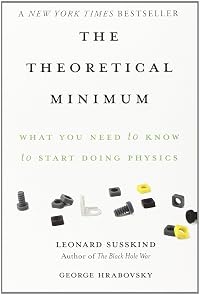
The Theoretical Minimum: What You Need to Know to Start Doing Physics
by Leonard Susskind, George Hrabovsky
The Theoretical Minimum (book 1)
On This Page
Description
"A first course in physics and associated math for the ardent amateur ... beginning with classical mechanics"--Dust jacket flap.Tags
Recommendations

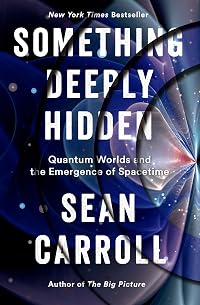
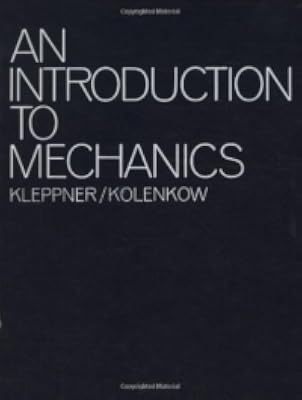
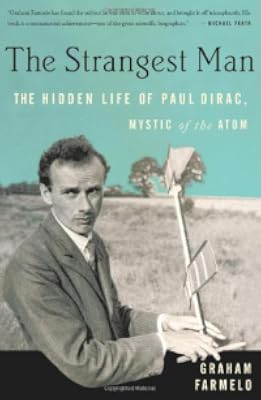
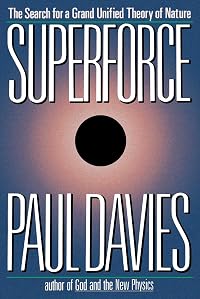

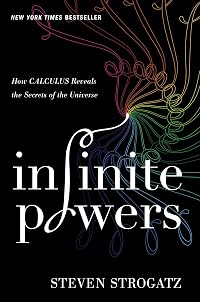
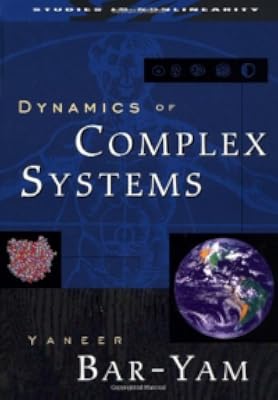
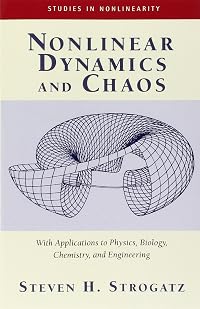
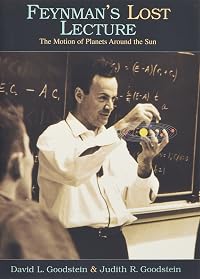
Member Recommendations
by bertilak
Member Reviews
If you’ve had a calculus course or two in your distant past but chose a vocation in the liberal arts or “soft” sciences, this might be the perfect introduction to a more than superficial understanding of physics. Be warned, however. Partial differential equations and integrals appear on almost every page. Nevertheless, the authors provide succinct tutorials with practice exercises to help you remember those old college math courses. (Note: You can also catch free lectures by Susskind online, easy enough to find via YouTube.)
I was delighted to learn that LaGrange and Hamilton had derived alternate, but equivalent, formulations of Newtonian mechanics. Actually playing with the relevant equations (which the authors force you to do) show more produces a much deeper, more subtle, understanding of the way the world works than you would obtain from reading a purely verbal description of the phenomena. Conservation laws and symmetries appear much more profound when demonstrated mathematically. I admit to struggling with this book, but the effort was worth it.
(JAB) show less
I was delighted to learn that LaGrange and Hamilton had derived alternate, but equivalent, formulations of Newtonian mechanics. Actually playing with the relevant equations (which the authors force you to do) show more produces a much deeper, more subtle, understanding of the way the world works than you would obtain from reading a purely verbal description of the phenomena. Conservation laws and symmetries appear much more profound when demonstrated mathematically. I admit to struggling with this book, but the effort was worth it.
(JAB) show less
This is an excellent layperson's introduction to the mathematics and viewpoints used in the modern approach to classical (non-quantum) mechanics. The intent is obviously to pave the way for the next book on quantum mechanics, as they waste no time in going from Newtonian to Lagrangian and Hamiltonian mechanics. There are just a few errata and some hand-waving sentences that would make most mathematicians cringe (ie., the author sometimes conflates smooth functions with analytic ones, and in one instance equated a vanishing second derivative with the presence of a point of inflection), but a visit to the website and some experience with calculus should allow the reader to get past these minor errors. The value of the text is primarily show more that it is the only one at this time that concisely and entertainingly introduces the layperson to modern mechanics in a fully usable form which emphasizes the practical applications, not merely as a series of anecdotes. show less
Math is just a skill, like any other and not everyone can do it. What gets my goat is the "anyone can do anything if only they try hard enough "attitude. No, they can't. Some people are good at certain skills and not other, and others have different skills. I happen to be good at math. I get annoyed when people say "Ooh, you must be so clever!" when I tell them. No - I just have that particular skill - I can no doubt be as dumb as the next person at something else. As Courtney Barnett puts it: "The ambulance driver thinks I'm clever 'cos I play guitar /I think she's clever 'cos she stops people dying." Laughing at general illiteracy isn't so funny, because that is a relatively simple skill that most of us can learn, and it hurts people show more not to have it; but Quantum Mechanics? Come on, no one groks it, and it really doesn't matter for most of us.
The innumeracy and scientific illiteracy that is being normalised is part of the social environment which enables a powerful minority to continue to dominate and exploit a majority by ensuring that as few people as possible have the necessary logical skills and knowledge to seriously question the stories they are told about the world. Accepting this kind of thing as "humour" is accepting a narrative which says that math and science are things that only a tiny number of geeky people care about or understand on account of its alleged "difficulty" and irrelevance. It's all part and parcel of the maintenance of power. In truth, math and science are not that hard until they get to work on us school to persuade us that they are. They also get to work on suppressing our creativity. There's nothing funny about this at all. Mass literacy has been accepted as a necessary evil and it's no longer acceptable to be proud of illiteracy.
Why aren’t more kids learning Physics? It has to be a combination of teaching methods and the way physics is stereotyped in the media. Physics is an absolutely fascinating subject. It's about understanding the very fabric of reality. What could be more interesting than that? It depresses me that most people seem to see the subject as being dry and dull. It really isn't. On top of that, people who study physics have to do it because they love physics, and many people do love it. However, there is virtually no prospect of future employment in the field in Portugal.
A lot of physics at degree level can be downright dull IF NOT TAUGHT RIGHT. You really have to be interested in why things are the way they are from an early age to circumvent that, and I find it hard to believe that gawking at Carl Sagan (the one I grew up with) on the telly is going to make that happen. I can't remember having role models as such - I just loved taking things like hifi, toasters, phones and bikes to bits to see what made them tick (or to see if they'd worked when I'd put them back together...), and finding math equations extraordinarily beautiful. Yes, there's the sexy stuff like astrophysics (relatively easy as much of it was qualitative when I studied it), but to have even the barest of a good all-round grasp of physics as a whole, you have to have done the fairly sophisticated mathematical groundwork, get your head around such utterly scintillating concepts like statistical mechanics, thermodynamics and Fourier optics, before you can set the world alight with your re-jigged theory of quantum gravity (which I did study after I finished my Computer Science college degree).
Moving in a little closer to the book’s content. His explanation of the Lagrangean is something I've never seen done this way before. We have determined experimentally that we can represent very generally the laws of physics by deriving them from a condition which states that a certain quantity (called the Action) must be kept minimum. The action is differently defined for each system, but always represented as the integral between two points in time of another quantity (Called the "Lagrangian Quantity") that is a function of position and velocity at any point in time. Since the action must be kept minimum, the derivative of it (with respect to position) must be kept 0. Both position and velocity are considered to change with respect to time. As such, we can write:
dAction/dx = d/dt(dLagrangian/dv)-dLagrangian/dx = 0 (Euler-Lagrange Equation)
By selecting the Lagrangean function to equal KE-PE, the above equation derives Newton's 2nd law of motion. Brilliant. Moreover, the lagrangean's form can be changed in order to change coordinate system. By doing so first and then solving the Euler-Lagrange equation, the laws of motion for even Non-Inertial Reference Frames can be readily computed (as long as they are non-relativistic), such as in a circularly moving Reference frame. Like so, fictitious forces (those observed in NIRFs but not in IRFs) can be calculated, such as the Coriolis force.
[Paraphrased] "There are some things you only want to experience once, like a book. You don't want to read the same thing over and over again. But there are other things, like music, that you'll want to listen to continually because it just feels good. I hope my lectures are like that... (Paraphrased)." Why yes, Professor Susskind, the lectures in your book are a treasure to read.
I have never seen some of these topics explained with so much clarity. He is one of the greatest teacher in physics, and I admire his effort to go through all of physics for the benefit of beginning students. It is a great contribution to the field as a whole, and hopefully some of his readers will become future physics stars thanks to this, just like the Feynman lectures. Incidentally, I had a Professor in college, José Maria Quadros e Costa, who approached Physics in just the same manner Prof. Susskind does, i.e., from first principles. One can never over emphasize the basics. This is what separates great teachers from ordinary ones. I find that a lot of the students brush through the basics and find later that they do not have a deep understanding. The concepts of state/phase space is a good example of this; they’re actually not as simple and are so critical in understanding a lot of the world, and they’re worth spending some time on.
Bottom-line: Everyone knows leptons live in Alentejo and spend their lives looking for crocks of gold at the end of rainbows. However, I concede that without scientific discoveries, mathematics, physics and books like these, we'd be explaining the universe in myth and legend. show less
The innumeracy and scientific illiteracy that is being normalised is part of the social environment which enables a powerful minority to continue to dominate and exploit a majority by ensuring that as few people as possible have the necessary logical skills and knowledge to seriously question the stories they are told about the world. Accepting this kind of thing as "humour" is accepting a narrative which says that math and science are things that only a tiny number of geeky people care about or understand on account of its alleged "difficulty" and irrelevance. It's all part and parcel of the maintenance of power. In truth, math and science are not that hard until they get to work on us school to persuade us that they are. They also get to work on suppressing our creativity. There's nothing funny about this at all. Mass literacy has been accepted as a necessary evil and it's no longer acceptable to be proud of illiteracy.
Why aren’t more kids learning Physics? It has to be a combination of teaching methods and the way physics is stereotyped in the media. Physics is an absolutely fascinating subject. It's about understanding the very fabric of reality. What could be more interesting than that? It depresses me that most people seem to see the subject as being dry and dull. It really isn't. On top of that, people who study physics have to do it because they love physics, and many people do love it. However, there is virtually no prospect of future employment in the field in Portugal.
A lot of physics at degree level can be downright dull IF NOT TAUGHT RIGHT. You really have to be interested in why things are the way they are from an early age to circumvent that, and I find it hard to believe that gawking at Carl Sagan (the one I grew up with) on the telly is going to make that happen. I can't remember having role models as such - I just loved taking things like hifi, toasters, phones and bikes to bits to see what made them tick (or to see if they'd worked when I'd put them back together...), and finding math equations extraordinarily beautiful. Yes, there's the sexy stuff like astrophysics (relatively easy as much of it was qualitative when I studied it), but to have even the barest of a good all-round grasp of physics as a whole, you have to have done the fairly sophisticated mathematical groundwork, get your head around such utterly scintillating concepts like statistical mechanics, thermodynamics and Fourier optics, before you can set the world alight with your re-jigged theory of quantum gravity (which I did study after I finished my Computer Science college degree).
Moving in a little closer to the book’s content. His explanation of the Lagrangean is something I've never seen done this way before. We have determined experimentally that we can represent very generally the laws of physics by deriving them from a condition which states that a certain quantity (called the Action) must be kept minimum. The action is differently defined for each system, but always represented as the integral between two points in time of another quantity (Called the "Lagrangian Quantity") that is a function of position and velocity at any point in time. Since the action must be kept minimum, the derivative of it (with respect to position) must be kept 0. Both position and velocity are considered to change with respect to time. As such, we can write:
dAction/dx = d/dt(dLagrangian/dv)-dLagrangian/dx = 0 (Euler-Lagrange Equation)
By selecting the Lagrangean function to equal KE-PE, the above equation derives Newton's 2nd law of motion. Brilliant. Moreover, the lagrangean's form can be changed in order to change coordinate system. By doing so first and then solving the Euler-Lagrange equation, the laws of motion for even Non-Inertial Reference Frames can be readily computed (as long as they are non-relativistic), such as in a circularly moving Reference frame. Like so, fictitious forces (those observed in NIRFs but not in IRFs) can be calculated, such as the Coriolis force.
[Paraphrased] "There are some things you only want to experience once, like a book. You don't want to read the same thing over and over again. But there are other things, like music, that you'll want to listen to continually because it just feels good. I hope my lectures are like that... (Paraphrased)." Why yes, Professor Susskind, the lectures in your book are a treasure to read.
I have never seen some of these topics explained with so much clarity. He is one of the greatest teacher in physics, and I admire his effort to go through all of physics for the benefit of beginning students. It is a great contribution to the field as a whole, and hopefully some of his readers will become future physics stars thanks to this, just like the Feynman lectures. Incidentally, I had a Professor in college, José Maria Quadros e Costa, who approached Physics in just the same manner Prof. Susskind does, i.e., from first principles. One can never over emphasize the basics. This is what separates great teachers from ordinary ones. I find that a lot of the students brush through the basics and find later that they do not have a deep understanding. The concepts of state/phase space is a good example of this; they’re actually not as simple and are so critical in understanding a lot of the world, and they’re worth spending some time on.
Bottom-line: Everyone knows leptons live in Alentejo and spend their lives looking for crocks of gold at the end of rainbows. However, I concede that without scientific discoveries, mathematics, physics and books like these, we'd be explaining the universe in myth and legend. show less
...This work presents classical mechanics including conservation laws, Hamiltonian mechanics, and planetary orbits. Such focus is appropriate for a book under two hundred fifty pages. There are little to no mentions of relativity, quantum mechanics, and string theory. This allows room for the clear description of advanced classical physics concepts. Somewhat surprising, the authors also use that room for the breezy and humorous. I challenge anyone to show me a book that can skip from a groaner joke about George and Lennie from Of Mice and Men discussing physics to Poisson brackets in a single page. This is an excellent work for its intended audience and the authors succeed in making the material concise and easy to read. I am very glad show more to see that future volumes are promised. I do have to say that in the age of LaTeX typesetting is at times surprising how careless some of the mathematical typography is. Dots notating differentiation are absolutely untethered from their function and exponents drift about in a disconcerting manner.
[See my entire review at MAA Reviews] show less
[See my entire review at MAA Reviews] show less
Before we begin, here's a bit of background on my mathematical education. I have taken math up to Calculus II and got a pretty good grade, but I never went further then that. Thus, when someone starts mentioning Lagrangians and Hamiltonians, and the Principle of Least Action, Curls, Grads and all of that my eyes begin to glaze over. That didn't happen with this book, and I will attempt to explain why.
In the Preface to the book, Professor Susskind talks about how he felt an itch to help people get into Physics. So he was teaching courses up in California, where he lives and found it to be fun. This is mainly because the people he was teaching had seen a bit of how life is and wanted to satisfy their curiosity. The second author on this show more book, George Hrabovsky stumbled on some of his work and wanted to do a book together. Thus was this book written.
Now this book starts by assuming some things. The first is that you have had some advanced math, but are now rusty. The second is that you had some experience with Physics. So the book is split into eleven chapters, or as they are called in the book, Lectures. It covers everything you need to know in Classical Mechanics, and gives a good enough mathematical grounding to segue into Quantum Mechanics, but that is another book; one that by chance I happen to own.
The Theoretical Minimum starts with The Nature of Classical Physics, where they talk about Phase States and goes on to familiarize you with some math. It covers Trigonometry, Spaces, Vectors, Integral and Differential Calculus, Dynamics, Partial Differentiation, Poisson Brackets, the Hamitonian, the Lagrangian, and a few more subjects.
Susskind and Hrabovsky also go at a good pace, in my opinion. While they don't hold your hand, they don't exactly throw you into the deep end right off the bat. When something is explained or introduced, Susskind and Hrabovsky explain the terminology and what the symbols are and what they do. I had read a book on Classical Mechanics and Quantum Physics; it was far beyond my level, but the author also expected you to know what the heck a Bra-Ket was or what a Lagrangian did. Back on the Theoretical Minimum though. Since they explain the symbols used, you don't have to invent weird names for them, or call it a "thingie" as I tend to do when I am overladen with Greek Letters. I can recognize the capital Sigma, and many others, but I do mix up the names sometimes.
Thus, I feel that this is a good book for someone like me and others that may be rusty at Classical Mechanics. This is more than enough to earn an excellent score of five out of five. show less
In the Preface to the book, Professor Susskind talks about how he felt an itch to help people get into Physics. So he was teaching courses up in California, where he lives and found it to be fun. This is mainly because the people he was teaching had seen a bit of how life is and wanted to satisfy their curiosity. The second author on this show more book, George Hrabovsky stumbled on some of his work and wanted to do a book together. Thus was this book written.
Now this book starts by assuming some things. The first is that you have had some advanced math, but are now rusty. The second is that you had some experience with Physics. So the book is split into eleven chapters, or as they are called in the book, Lectures. It covers everything you need to know in Classical Mechanics, and gives a good enough mathematical grounding to segue into Quantum Mechanics, but that is another book; one that by chance I happen to own.
The Theoretical Minimum starts with The Nature of Classical Physics, where they talk about Phase States and goes on to familiarize you with some math. It covers Trigonometry, Spaces, Vectors, Integral and Differential Calculus, Dynamics, Partial Differentiation, Poisson Brackets, the Hamitonian, the Lagrangian, and a few more subjects.
Susskind and Hrabovsky also go at a good pace, in my opinion. While they don't hold your hand, they don't exactly throw you into the deep end right off the bat. When something is explained or introduced, Susskind and Hrabovsky explain the terminology and what the symbols are and what they do. I had read a book on Classical Mechanics and Quantum Physics; it was far beyond my level, but the author also expected you to know what the heck a Bra-Ket was or what a Lagrangian did. Back on the Theoretical Minimum though. Since they explain the symbols used, you don't have to invent weird names for them, or call it a "thingie" as I tend to do when I am overladen with Greek Letters. I can recognize the capital Sigma, and many others, but I do mix up the names sometimes.
Thus, I feel that this is a good book for someone like me and others that may be rusty at Classical Mechanics. This is more than enough to earn an excellent score of five out of five. show less
I came to this book as a jobbing scientist, though in the biological sciences, and somewhat frustrated that the other popular physics books I'd read rarely gave mathematically detailed explanations. I was hoping that this would fill that gap. On the whole I was disappointed, and left a little perplexed at who this book is actually aimed at.
The book tries to give a theoretical grounding to physics prior to the 20th century (so not relativity or quantum mechanics, which are promised in later books, one of which has already been published). It starts relatively gently on the mathematical teaching, but ramps up incredibly fast. There are exercises, and although half have decent answers online, half don't. From halfway I became quite lost in show more many mathematical places, and frustrated. The physics covered is sometimes exciting, for instance how you see the conservation laws just fall out of the maths. But many times the physics covered is somewhat minimal, and far from exhaustive, almost a token for the mathematical framework. I can't class this in any way as a popular science book, as the mathematics is way too difficult and not clearly enough explained. And anyone wanting to learn physics seriously would probably do far better studying from a decent physics text book. The only people I think would appreciate this book is those who already have a good amount of university mathematics behind them, but no physics, and who want to get a quick feel for how maths underpins physics.
This whole book feels somewhat rushed to me (just look at the huge errata list online). If it were twice as long and written far more carefully, with more steps in between, it could have been a real classic to appeal to a far wider audience. Instead, it just feels like a big compromise and I got an awful lot more out of a slightly similar book, The Theory of Almost Everything by Robert Oerter. show less
The book tries to give a theoretical grounding to physics prior to the 20th century (so not relativity or quantum mechanics, which are promised in later books, one of which has already been published). It starts relatively gently on the mathematical teaching, but ramps up incredibly fast. There are exercises, and although half have decent answers online, half don't. From halfway I became quite lost in show more many mathematical places, and frustrated. The physics covered is sometimes exciting, for instance how you see the conservation laws just fall out of the maths. But many times the physics covered is somewhat minimal, and far from exhaustive, almost a token for the mathematical framework. I can't class this in any way as a popular science book, as the mathematics is way too difficult and not clearly enough explained. And anyone wanting to learn physics seriously would probably do far better studying from a decent physics text book. The only people I think would appreciate this book is those who already have a good amount of university mathematics behind them, but no physics, and who want to get a quick feel for how maths underpins physics.
This whole book feels somewhat rushed to me (just look at the huge errata list online). If it were twice as long and written far more carefully, with more steps in between, it could have been a real classic to appeal to a far wider audience. Instead, it just feels like a big compromise and I got an awful lot more out of a slightly similar book, The Theory of Almost Everything by Robert Oerter. show less
Schöne Übersicht der wichtigsten Prinzipien der klassischen Mechanik. Der Autor stellt Verbindungen her, die in Vorlesungen nicht direkt ersichtlich sind durch die Fülle an Inhalt.
Members
- Recently Added By
Published Reviews
ThingScore 100
This is the most important reason for recommending this book and books like it (few though they are). We live in a scientific world, where our everyday lives are dependent on the technology that science has provided for us. "Popular" accounts of things like black holes and quantum physics can make them seem like magic, which can lead some people to believe other seemingly magic worldviews are show more equally valid. They are not, and nowhere is the irony more apparent than when pseudoscientific ideas, such as claims that the world is about to end, are disseminated widely around the world using one of the ultimate achievements of real science, the Internet. Anyone who grasps the theoretical minimum outlined here will be well-placed to distinguish reality from wishful thinking. show less
added by tim.taylor
Lists

Mathematics and Physics
29 works; 1 member
Author Information

10+ Works 4,006 Members
Leonard Susskind is the Felix Bloch Professor in theoretical physics at Stanford University. He is the author of The Cosmic Landscape , The Black Hole War, and TheTheoretical Minimum: What You Need to Know to Start Doing Physics. Susskind is a member of the National Academy of Science and the American Academy of Arts and Sciences, and the show more recipient of numerous prizes including the science writing prize of the American Institute of Physics for his Scientific American article on black holes. (Bowker Author Biography) show less
1 Work 970 Members
Awards and Honors
Awards
Distinctions
Series

Common Knowledge
- Canonical title*
- Klassische Mechanik: Das theoretische Minimum. Alles, was Sie brauchen, um Physik zu treiben
- Original title
- The Theoretical Minimum: What You Need to Know to Start Doing Physics
- Alternate titles
- Classical Mechanics: The Theoretical Minimum
- Original publication date
- 2013
- Dedication*
- Für unsere Ehefrauen - die sich entschieden haben, es mit uns auszuhalten - und für die Studenten von Prof. Susskinds Continuing Education Courses
- First words
- Somewhere in Steinbeck country two tired men sit down by the side of the road.
- Original language*
- English
*Some information comes from Common Knowledge in other languages. Click "Edit" for more information.
Classifications
- Genres
- Science & Nature, Nonfiction, General Nonfiction
- DDC/MDS
- 530 — Natural sciences & mathematics Physics Physics
- LCC
- QC23.2 .S87 — Science Physics Physics General
- BISAC
Statistics
- Members
- 1,024
- Popularity
- 25,425
- Reviews
- 12
- Rating
- (4.04)
- Languages
- 6 — English, French, German, Italian, Polish, Russian
- Media
- Paper, Ebook
- ISBNs
- 16
- UPCs
- 1
- ASINs
- 7
