Lost Drag Strips: Ghosts of Quarter Miles Past (Cartech)
by Tommy Lee Byrd
On This Page
Description
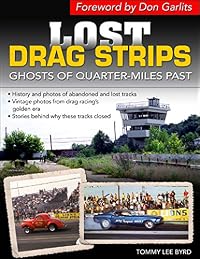
During the 1950s and 1960s, the sport of drag racing exploded in popularity. In its early days, drag racing had a class for everybody, from professional rails to 4 door sedans. As a participant sport, drag racing made itself very accessible, and as a result, drag racing facilities sprang up all over the country, some national in scale and others very small and local. This was great, for a while, but with the sprawl of suburbia and various economic conditions including the growing expense of show more racing, hundreds of drag racing facilities were lost across the country. Many of these were places of legend where the biggest names in the sport got their start or ran some of their most memorable passes. Others were relatively unknown, but served a local area's needs for a safe place for local speed addicts to run their cars. For whatever reason, they are no longer in business, but evidence of their former existence remains. This book takes a look at many of the lost quarter-mile tracks across the country. Some of them are gone completely, paved over to make room for housing developments or strip malls. Others are ghostly remnants of what once was, offering a sad and even eerie subject for the photographer. The images are teamed with vintage shots of drag racing's glory days, sharing what once was one of America's most popular pastimes with the modern reality facing these facilities today. For fans of drag racing's past, it's a sobering and interesting study. The stories are true and the photos are thought provoking, which makes this book hard to put down. Lost Drag Stripsis a 2013 International Automotive Media Competition award winner and won "best-of" in the book category. Tracks include:Lions Associated Drag Strip, Orange County International Raceway, Riverside International Raceway, Bee Line Dragway, Motion Raceway, Motor City Dragway, Oswego Dragway, U.S. 30 Drag Strip, Dover Drag Strip, Pittsburgh International Dragway, Connecticut Dragway, Pocono Drag Lodge, Lakeland International Raceway, Green Valley Raceway, Dallas International Motor Speedway, Hudson Drag Strip, Shuffletown Dragway, Brainerd Optimist Club Drag Strip, Brainerd Optimist Drag Strip, Paradise Drag Strip, Double H Drag Strip, Southeastern International Dragway, Smithville Drag Strip, Lloyd's Drag Strip, Harriman Drag Strip, Green Valley Raceway Drag Strip, Drag City, Loudon Raceway. show lessTags
Recommendations





















Member Reviews
I was particularly excited to receive a review copy of this book because the summer weekends of my youth revolved around watching my father race at Keystone Raceway. When I was 14 I got bit by the racing bug and had begged my father to help me build a junior dragster. That never happened, and though I’ve long since given up on that dream, it still would be awesome to try drag racing just once.
But according to this book, that may not be a possibility. Lost Drag Strips is a beautifully illustrated wealth of knowledge that takes you around the country to hear the stories about some of the US’s favorite drag strips and how this sport has seemingly died out. The “current condition” profiles, complete with photos of the overgrown show more tracks, will bring out a nostalgic feeling even from those who have never watched a drag race in their lives.
This book will make a great gift for anyone in your family who enjoys history, racing, or both. show less
But according to this book, that may not be a possibility. Lost Drag Strips is a beautifully illustrated wealth of knowledge that takes you around the country to hear the stories about some of the US’s favorite drag strips and how this sport has seemingly died out. The “current condition” profiles, complete with photos of the overgrown show more tracks, will bring out a nostalgic feeling even from those who have never watched a drag race in their lives.
This book will make a great gift for anyone in your family who enjoys history, racing, or both. show less
 This review was written for LibraryThing Early Reviewers.
An excellent and colorful trip down memory lane. Almost everyone in North America will have, at some point, heard, seen or driven a Hot Rod, Dragster, Formula 1, Sprint or any variation of racing vehicles. For me, I remember hearing the races on the mud flats, but only saw the vehicles on the road when they weren't racing. Afficionados will enjoy the well-written histories of the tracks and racers. Readers who don't know a stock-car from a sprint-car will become well-versed on the many different styles and how they evolved.
There was a lot of research and interviews involved in writing this book, I congratulate Tom Lee Byrd on a very informative book written with such feeling. The photographs, from actual collections by the people who show more lived, crewed, and drove at the speedways are fabulous. The storyline is historic, factual, nostalgic and intriguing. Hard to put down, unusual in this type of book. A tribute to the author and the innovative drivers and their crews. This is not just about the drag strips or what happened to them. It's also about how the vehicles from streetracers and hot rods to the dynamic race cars of today have brought about changes and inspired the automotive industry for all makes and models of cars on the roads now.
As a teen in the 1950s, I grew up in the heyday of the growth of the sport in Canada. I found in reading this book that I wish I had seen more. I was fascinated by the speed at which changes were made in the industry and on the track to get more out of the vehicles. The growth in length of the old dragsters to the elongated parachuted dragsters of today is all documented. The death knell came for the old original community tracks and even many of the later safer tracks as the value of property increased, and in some cases population grew up around the tracks and then complaints of noise, smell and traffic "bothered" the very people who moved in next to tracks. I was actually surprised to learn that most tracks were on leased land.
I highly recommend this book to all racing car enthusiasts, those who remember the early days and those who like to learn a little bit of exciting North American vehicle and racing history. Those were the days! But not the last. show less
There was a lot of research and interviews involved in writing this book, I congratulate Tom Lee Byrd on a very informative book written with such feeling. The photographs, from actual collections by the people who show more lived, crewed, and drove at the speedways are fabulous. The storyline is historic, factual, nostalgic and intriguing. Hard to put down, unusual in this type of book. A tribute to the author and the innovative drivers and their crews. This is not just about the drag strips or what happened to them. It's also about how the vehicles from streetracers and hot rods to the dynamic race cars of today have brought about changes and inspired the automotive industry for all makes and models of cars on the roads now.
As a teen in the 1950s, I grew up in the heyday of the growth of the sport in Canada. I found in reading this book that I wish I had seen more. I was fascinated by the speed at which changes were made in the industry and on the track to get more out of the vehicles. The growth in length of the old dragsters to the elongated parachuted dragsters of today is all documented. The death knell came for the old original community tracks and even many of the later safer tracks as the value of property increased, and in some cases population grew up around the tracks and then complaints of noise, smell and traffic "bothered" the very people who moved in next to tracks. I was actually surprised to learn that most tracks were on leased land.
I highly recommend this book to all racing car enthusiasts, those who remember the early days and those who like to learn a little bit of exciting North American vehicle and racing history. Those were the days! But not the last. show less
This review was written for LibraryThing Early Reviewers.I got this book for my grandfather, who watches drag racing and used to drag race when he was younger. (I'll post his review when he's finished!) But I also took a quick read through it myself, and I was very impressed. The book gives you a surprisingly sentimental view of the history of drag racing in the US, beautifully illustrated with photographs on every page. Drag racing has never been my thing, but I feel like this book gave me an appreciation of what it used to be - old school, grassroots, and fully of hobbyists and innovation.
Absolutely recommended for any drag race fan or hobbyist, or anyone who likes local histories.
Absolutely recommended for any drag race fan or hobbyist, or anyone who likes local histories.
This review was written for LibraryThing Early Reviewers.The first time I became uncounsciously aware of the strange machines known as "dragsters" was when visiting a hobby store at the age of 4. Then I put this vision of an elongated nose, ridiculously small wheels and enormous back tires (I did not know they were called racing slicks because they had no tread until reading [[Lost Drag Strips, Ghosts of quarter-miles pass]] of Tommy Lee Byrd.
The second time was many years later when looking at a documentary over the famed "American Muscle Cars" on Netflix during which I saw black and white films in which enthusiastic audiences were looking at a two-car race in a cloud of tire smoke on a seemingly short track. I remember a packed tribune of fans and a huge timing tower. I also thought of show more James Dean 1955 "Chickie Run" in "Rebel without a Cause" during which two cars, driven by High Schoolers, race towards a cliff, on a script of Nicholas Ray.
Then I stored these memories until this part of American Auto Racing History all resurfaced - like in Proust's cup of tea - and was explained at length in the great book of Mr. Byrd.
The origins of this sport as described by Mr. Byrd has cinematographic qualities to it. A generation returning from World War II, or growing up after it, experiences speed races all over the U.S.A. In their modified every day man GM or Ford, often on dirt strips or abandoned runways, with a cord separating the racers from the spectators, all the participants taking enormous risks in less litigation prone times, like as many James Dean characters.
It is the story of the rise, the fall, the nostalgia and perhaps the revival of this sport that Mr. Byrd describes.
The photos are fresh and according to the author often come from shoe boxes of fans where they were stored unseen for years.
It has interest for the sociologist as much as for the race fan or car enthusiast. Why did such a sport spread continent-wide in America and nowhere else? How did it influence the making of cars and the aftermarket? What where the economics of this sport and the causes of its decay? You will have to read it to find out. Great work. show less
The second time was many years later when looking at a documentary over the famed "American Muscle Cars" on Netflix during which I saw black and white films in which enthusiastic audiences were looking at a two-car race in a cloud of tire smoke on a seemingly short track. I remember a packed tribune of fans and a huge timing tower. I also thought of show more James Dean 1955 "Chickie Run" in "Rebel without a Cause" during which two cars, driven by High Schoolers, race towards a cliff, on a script of Nicholas Ray.
Then I stored these memories until this part of American Auto Racing History all resurfaced - like in Proust's cup of tea - and was explained at length in the great book of Mr. Byrd.
The origins of this sport as described by Mr. Byrd has cinematographic qualities to it. A generation returning from World War II, or growing up after it, experiences speed races all over the U.S.A. In their modified every day man GM or Ford, often on dirt strips or abandoned runways, with a cord separating the racers from the spectators, all the participants taking enormous risks in less litigation prone times, like as many James Dean characters.
It is the story of the rise, the fall, the nostalgia and perhaps the revival of this sport that Mr. Byrd describes.
The photos are fresh and according to the author often come from shoe boxes of fans where they were stored unseen for years.
It has interest for the sociologist as much as for the race fan or car enthusiast. Why did such a sport spread continent-wide in America and nowhere else? How did it influence the making of cars and the aftermarket? What where the economics of this sport and the causes of its decay? You will have to read it to find out. Great work. show less
This review was written for LibraryThing Early Reviewers.I read this book with my husband who is a big car nut. He loved the pictures and the memories they brought back. I found the stories of the now defunct race tracks both interesting and sad. The development of the sport of drag racing from its early days, through the regulations and safety aspects of the sport, to the political and economical factors that put an end to these tracks. The photos provide a rich glimpse to the past, not just the tracks, and cars, but the people, the crowds, the era of simplicity, fun and commonality. I would have loved to have read more about those trailblazers, and rebels, but this is a very good compilation that the author put together. Entered to win this for my husband, but think i stole it from his show more hands more than he stole it from mine. show less
This review was written for LibraryThing Early Reviewers.This richly illustrated look at now-defunct drag strips is both beautiful and heartbreaking. Following an introduction by racing legend "Big Daddy" Don Garlits, an overview of the history of drag racing is offered. After the history, the book offers an up close look at many drag strips that are now abandoned. The drag strips are discussed by geographic region, discussing any regional specialties or concerns. It shows photos and offers tales of the drag strips during their glory days, as well as a follow up of the current status of the property. This book is highly recommended for fans of motor sports, particularly those active in drag racing in their youth.
This review was written for LibraryThing Early Reviewers.I entered for this book for my boyfriend, but I ended up reading through it first. It was good. Informative but not so much that it was boring. The pictures were amazing. I plowed through it in two days and have already lent it to my father who went ga-ga over it.
This review was written for LibraryThing Early Reviewers.Members
- Recently Added By
Author Information
3 Works 39 Members
Classifications
- Genres
- Nonfiction, Sports and Leisure, History
- DDC/MDS
- 796.72 — Arts & recreation Recreation, sports, and performing arts Sports Car Racing Motor racing
- LCC
- GV1029.3 .B97 — Geography, Anthropology and Recreation Recreation. Leisure Recreation. Leisure Sports Automobile travel. Motoring. Automobile racing
- BISAC
Statistics
- Members
- 21
- Popularity
- 1,229,893
- Reviews
- 15
- Rating
- (4.60)
- Languages
- English
- Media
- Paper
- ISBNs
- 1