On This Page
Description
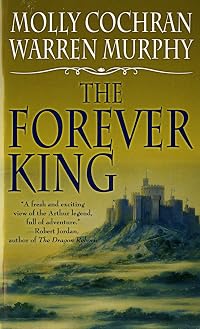
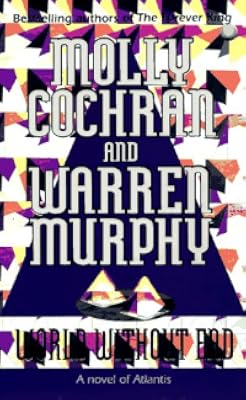
The Holy Grail's protectors are few and weak, an ex-FBI agent, an old gentleman, and a ten-year-old boy, Arthur Blessing.Tags
Recommendations















Member Reviews
I can't say I overly enjoyed this book, but it wasn't bad either. It was the mention of Saladin that peaked my interest in the beginning, and really it was this character that held my interest throughout the book. I did not really grow attached to any of the other characters, even though they were the supposed protagonists. In addition, as the book progressed, things became less and less explained or believable.I very much liked the idea and story of the cup, of Kaana, and of Saladin. However, when Merlin's story was introduced, complete with his fledgling telepathic abilities and the awesome power hidden deep within, that was a little much. There is certainly a place in fantasy for wizards and druids, but in this book it felt out of show more place, almost as if it was added in an afterthought.Perhaps that sensation comes from the difference in the explanation; while the cup and its powers, while definitely supernatural, were limited and well explained, powers of Merlin or even Nimue were wholly "strange" and no attempt was made to explain them. I could wholly believe that a cup like that could exist in our world. I suppose the distinction lies in that had the cup been the only supernatural element in the book, I wouldn't hesitate to classify the book as sci-fi, while the addition of Merlin and Arthur and all that mess created some mean mixture of sci-fi and fantasy that did not work for me.Things got even worse with the addition of Arthur and Galahad being reborn, Camelot appearing on the site of its ruins, knights riding out and delivering the "heroes" from certain demise, and the dubious result of the match between Hal and Saladin. There was no cohesion there at all, it was just a collection of random bits that did not in any way fit together.Had the authors contented themselves with the story of the cup and left all the familiar and worn-out Arthurian elements in peace, I feel the book would have been much better. It would give a different and fresh perspective on the Holy Grail, which would have been welcome. As it is, the latter part of the book is not worth the paper it's printed on. show less
One of those rare books about which I was enthused at first but then slowly fell out of love with as I went on. By the last sixty pages or so, I had to force myself to carry on to the end. The idea is that King Arthur has been reborn as a ten- year-old boy in contemporary times; Galahad is a washed-up FBI agent. Merlin is flitting about (I won't spoil plot points here), and a villain known to them all from the Middle Ages is plotting plots. The Holy Grail is involved. I was intrigued at first and really enjoying seeing how Cochran and Murphy were slotting things together. But by the time things started to come to a head, the intrigue had fallen out of the bottom of the thing. This is possibly partly due to the habit (common among show more thriller writers, I find, and that's fine) of the writers dwelling on and wallowing in the gruesome details of violence and death, especially of characters who have been made interesting to you just a paragraph before only in order to then be killed horribly. I despise this. /tangent about my idiosyncratic personal preferences in fiction. The more compelling reason I probably stopped caring about the story so much was that it stopped feeling relevant to a better, fuller, or more entertaining understanding of the Arthur legends. While the first half of the book felt invested in reinventing and retelling Arthuriana, by the end the bits felt a little tacked on. There also wasn't much in the way of exploring what it would mean to be King Arthur in the twentieth century, which is what I was most excited about seeing. Ah well. show less
Hal was a fantastic FBI agent, but after a child died during one of his cases, he left the bureau and became an alcoholic mess. Arthur was just a bright but ordinary boy until he discovered a strange metallic cup. A serious of coincidences and the dastardly deeds of the immortal Saladin bring them to England, where they discover they are the reincarnations of Galahad and King Arthur. But their vague memories of their past lives will be little use against the clever and ruthless man who was once known as the Saracen knight.
I did like this book; it strips out a lot of the icky psychosexual undertones of modern Arthurian tales, and instead focuses on the knights' justice and loyalty. But I couldn't help but get creeped out that all of the show more non-white characters are evil, or that the only queer character is a twisted madman. I really resented how many chapters were told through the sociopathic and thoroughly unpleasant point of view of Saladin. And I have two quibbles with the last few chapters of this book:1)I don't get why Emily Blessed has to stay in hiding, sure that her nephew is dead. There's no longer any danger from Saladin and the Grail is gone. Why not let her continue to raise her only family member, and pursue her relationship with Hal? Why do Hal and Arthur ride off into the sunset, leaving her on the run and in mourning? And 2)Arthur turns down keeping the Grail because he says immortality would make him like Saladin. But actually, the first person who had the Grail for thousands of years was a compassionate and kind man, and Saladin was clearly a sociopath long before he touched the Grail. So it's clear that the Grail or immortality doesn't determine morality or groundedness to the world, yet the authors present Arthur's choice as the right one.
I don't plan on reading the rest of this series, because no one seems to enjoy them very much. But I'm glad I read this one; even though Hal isn't given much of a character (he's a character type I usually love, but I felt nothing for him in this iteration) and the battle between evil Arabs vs honorable Anglos reads offensively to me, I still enjoyed the effort to bring King Arthur into the modern age. The moment when Arthur pulls the sword from the stone a second time, for instance--I nearly teared up. show less
I did like this book; it strips out a lot of the icky psychosexual undertones of modern Arthurian tales, and instead focuses on the knights' justice and loyalty. But I couldn't help but get creeped out that all of the show more non-white characters are evil, or that the only queer character is a twisted madman. I really resented how many chapters were told through the sociopathic and thoroughly unpleasant point of view of Saladin. And I have two quibbles with the last few chapters of this book:
I don't plan on reading the rest of this series, because no one seems to enjoy them very much. But I'm glad I read this one; even though Hal isn't given much of a character (he's a character type I usually love, but I felt nothing for him in this iteration) and the battle between evil Arabs vs honorable Anglos reads offensively to me, I still enjoyed the effort to bring King Arthur into the modern age. The moment when Arthur pulls the sword from the stone a second time, for instance--I nearly teared up. show less
I highly enjoyed this imaginative take on the Arthur legend. Arthur returns--as a young boy living in the modern day. He finds a mysterious cup (the Holy Grail), which puts the bad guys--led by the evil Saladin--on his tale. And Galahad, his loyal knight is also around, as is Merlin but in guises suited for the modern age. It's a rollicking good adventure story and I highly reccomend it for fans of adventure, especially if you enjoy Arthurian legends.
Once and Future - Arthus revisiting, 28. Dez. 2002
A beautiful, intelligent and promising retelling of Arthurian legend together with an interesting reinterpretation of Christ`s Cup/The Holy Grail.
I just finished reading the book for the sixth or seventh time and still like it very much.
A beautiful, intelligent and promising retelling of Arthurian legend together with an interesting reinterpretation of Christ`s Cup/The Holy Grail.
I just finished reading the book for the sixth or seventh time and still like it very much.
I wish I remembered more of this story, but I definitely remember enjoying it. Sadly I was taking a lot of painkillers and reading during injury recovery.
Arthur as 10 year old, Grail as extraterrestial artifact, Galahad as ex FBI man
Members
- Recently Added By
Lists

Teen Sci-Fi Fantasy Male Lead
47 works; 1 member

Best Arthurian Fiction
104 works; 33 members
Modern Arthurian Fiction
237 works; 16 members
Author Information

15+ Works 2,269 Members
Author Molly Cochran was born in Tokyo, Japan in 1949. She received a degree in fiction writing from the University of Pittsburgh and studied at the Sorbonne in Paris. She has written over 25 books, including ghosted novels and non-fiction works. She won the Mystery Writers of America's Edgar Award for Grandmaster. She also writes under the name show more Dev Stryker. She currently lives in Bethlehem, Pennsylvania. (Bowker Author Biography) show less
1 Work 1,016 Members

263+ Works 11,277 Members
Warren Murphy was born in Jersey City, New Jersey on September 13, 1933. Before becoming an author, worked in journalism and politics. In 1971, he started the Destroyer series with Richard Sapir. His other novels include Jericho Day, The Red Moon, The Ceiling of Hell, The Sure Thing, and Honor Among Thieves. He has received various awards show more including the Mystery Writers of America's Edgar Award for The Grandmaster and Pigs Get Fat, and a Special Award for Trace. He has also received the Private Eye Writers of America's Shamus Award for The Ceiling of Hell and Another Day, Another Dollar. He also wrote the screenplays for the movies Lethal Weapon 2 and The Eiger Sanction. (Bowker Author Biography) show less
Awards and Honors
Awards
Series

Common Knowledge
- Canonical title
- The Forever King
- Original publication date
- 1992
- People/Characters
- Hal Woczniak; Saladin; Bertram Taliesin; Arthur Blessing; Emily Blessing; Milton Goldberg (show all 9); Merlin; Nimue; Arthur, King of the Britons
- Important places
- New York, New York, USA; Chicago, Illinois, USA; England, UK
- Dedication
- This book is dedicated to Tony Seidl
You were valiant, knight, and true. - First words
- The king was dead; of that there was no doubt.
- Last words
- (Click to show. Warning: May contain spoilers.)Write it all, Tom, Merlin thought. It will make a good story. A jolly marvelous story.
Classifications
Statistics
- Members
- 1,018
- Popularity
- 25,517
- Reviews
- 10
- Rating
- (3.81)
- Languages
- Dutch, English, Italian, Spanish
- Media
- Paper, Ebook
- ISBNs
- 15
- ASINs
- 3
