On This Page
Description
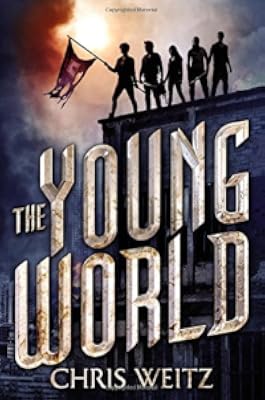
Jefferson, with his childhood friend Donna, leads a tribe of teenagers in New York City on a dangerous quest to find an antidote for a mysterious illness that wiped out all adults and children.Tags
Recommendations
Member Reviews
Many stories explore what happens to civilization when the world collapses. The Young World is no different in that element. However, Mr. Weitz takes his version one step further by establishing a post-pandemic civilization with no hope and no chance of survival. This one twist creates a society in which there are essentially no rules. Survivors make them up as they go along depending on the group of people with whom they surround themselves. That there are factions fighting for limited resources is no surprise. That there are factions who separate themselves out into decency and pure terror is also no surprise. Thankfully, the interactions between them are intense in spite of their predictability.
One of the most intriguing aspects of show more The Young World is the fact that it could take place tomorrow. The references to Before are all modern, including technology, music, fashion, and the like. The potential for a global pandemic is always flitting around in the background as a possible danger, and Mr. Weitz capitalizes on this when creating his world. This familiarity with Jeff’s and Donna’s world adds an extra layer of terror to the proceedings precisely because it is so easy to imagine happening.
The Young World follows the same format as so many of its predecessors. What sets it apart however are the intriguing possibilities raised by the last chapter. Yes, there is the ubiquitous cliffhanger ending, but readers will not mind it. The ending raises a lot of questions and has the potential to be a complete game changer for the story. It is the potential that will keep readers from crying out in frustration at yet another abruptly ended story. show less
One of the most intriguing aspects of show more The Young World is the fact that it could take place tomorrow. The references to Before are all modern, including technology, music, fashion, and the like. The potential for a global pandemic is always flitting around in the background as a possible danger, and Mr. Weitz capitalizes on this when creating his world. This familiarity with Jeff’s and Donna’s world adds an extra layer of terror to the proceedings precisely because it is so easy to imagine happening.
The Young World follows the same format as so many of its predecessors. What sets it apart however are the intriguing possibilities raised by the last chapter. Yes, there is the ubiquitous cliffhanger ending, but readers will not mind it. The ending raises a lot of questions and has the potential to be a complete game changer for the story. It is the potential that will keep readers from crying out in frustration at yet another abruptly ended story. show less
Moderately well written, but not entirely thought out. If all the children below age 12 died out during the plague there should not be any that age several years into teotwawki. Duh! The last couple of chapters made little sense as they rushed past and the ending was a total cheat. It made a loud clanging sound that did not harmonize with anything in the rest of the book.
I had my doubts before starting The Young World, largely because I felt I had read this story before. However, this fast-paced dystopian adventure story was entertaining and unique enough that I didn’t much mind the somewhat familiar plot elements. Featuring a diverse cast of characters, an action-packed journey through teen-ruled Manhattan, and some reflections on the privileges of modern society, this book is one I tore through in one sitting.
The story is told through two alternating narrators: Jefferson, who’s half-Japanese, is a thoughtful, socially conscious teen and de-facto leader of his group once his brother succumbs to the virus. His narration adds depth to the novel as he reflects on the various responses to the loss of show more technology shown by his peers, the many ways pre-virus society was flawed, and the hope of building a better civilization than one lost. He also spends time thinking about his feelings for Donna. In contrast we have Donna, the medic of the group, whose flippant and matter-of-fact narration provides some humor. Despairing and more than a little judgmental, Donna is still overwhelmed by grief for her family, her little brother in particular, and doesn’t feel capable of deeply caring for anyone ever again. While Jefferson is heroic in a movie-lead kind of way, Donna is more flawed but I found her sympathetic. The two POVs are very distinct, both in voice and in displayed font, something I really appreciated.
Rounding out the cast is Peter, Donna’s African American gay Christian friend, Brain Box, the genius who discovers the document that may lead to a cure for the disease, and a Chinese American girl nicknamed “SeeThrough” who wants to prove herself to the group and has a relationship with Brain Box. These characters aren’t quite as developed as I would like, due to the fact that we are very much in the heads of the Jefferson and Donna, who characteristically focus on their own issues rather than the state of the group. However each character does have their moments: Peter, for example, saves the day a few times and Brain Box and SeeThrough each have their heroic time to shine
Plot-wise, the story begins after the virus has run its course and the survivors have organized themselves in various ways. This allows the action to pick up right away as the group leaves the home they've built in Washington Square and head uptown to the main branch of the library to obtain answers about the origins of the virus. On the way they must pass through the dangerous territories of other groups, leading to many tense action sequences that bring to mind Mad Max and The Walking Dead. As a New Yorker I particularly enjoyed the accurate details given in describing this journey, including a sequence that includes the poor polar bear from the Central Park Zoo. The writing is serviceable, although a sentence goes wrong occasionally. Example: “We glimpse each other in the meat of our bodies.” p.27. No. Absolutely not.
The thing I feel elevates The Young World to being more than the sum of its parts is the social commentary present throughout the story. It is my opinion that all good dystopias critique present society in some way. Here, among other things, there is blatant criticism of capitalism present in the description of the violent and exploitive Bazaar created by the Uptowners , children of the 1%. There’s also some reflection on privilege, reliance on technology, and the ubiquitous nature of brands. All of this is slipped in between tense scenes of battles, chases, and a quest to solve a mystery, as well as jokes and more emotional scenes. The Young World is a summer blockbuster of a book with a surprisingly thoughtful center, and I found it to be very entertaining. show less
The story is told through two alternating narrators: Jefferson, who’s half-Japanese, is a thoughtful, socially conscious teen and de-facto leader of his group once his brother succumbs to the virus. His narration adds depth to the novel as he reflects on the various responses to the loss of show more technology shown by his peers, the many ways pre-virus society was flawed, and the hope of building a better civilization than one lost. He also spends time thinking about his feelings for Donna. In contrast we have Donna, the medic of the group, whose flippant and matter-of-fact narration provides some humor. Despairing and more than a little judgmental, Donna is still overwhelmed by grief for her family, her little brother in particular, and doesn’t feel capable of deeply caring for anyone ever again. While Jefferson is heroic in a movie-lead kind of way, Donna is more flawed but I found her sympathetic. The two POVs are very distinct, both in voice and in displayed font, something I really appreciated.
Rounding out the cast is Peter, Donna’s African American gay Christian friend, Brain Box, the genius who discovers the document that may lead to a cure for the disease, and a Chinese American girl nicknamed “SeeThrough” who wants to prove herself to the group and has a relationship with Brain Box. These characters aren’t quite as developed as I would like, due to the fact that we are very much in the heads of the Jefferson and Donna, who characteristically focus on their own issues rather than the state of the group. However each character does have their moments: Peter, for example, saves the day a few times and Brain Box and SeeThrough each have their heroic time to shine
Plot-wise, the story begins after the virus has run its course and the survivors have organized themselves in various ways. This allows the action to pick up right away as the group leaves the home they've built in Washington Square and head uptown to the main branch of the library to obtain answers about the origins of the virus. On the way they must pass through the dangerous territories of other groups, leading to many tense action sequences that bring to mind Mad Max and The Walking Dead. As a New Yorker I particularly enjoyed the accurate details given in describing this journey, including a sequence that includes the poor polar bear from the Central Park Zoo. The writing is serviceable, although a sentence goes wrong occasionally. Example: “We glimpse each other in the meat of our bodies.” p.27. No. Absolutely not.
The thing I feel elevates The Young World to being more than the sum of its parts is the social commentary present throughout the story. It is my opinion that all good dystopias critique present society in some way. Here, among other things, there is blatant criticism of capitalism present in the description of the violent and exploitive Bazaar created by the Uptowners , children of the 1%. There’s also some reflection on privilege, reliance on technology, and the ubiquitous nature of brands. All of this is slipped in between tense scenes of battles, chases, and a quest to solve a mystery, as well as jokes and more emotional scenes. The Young World is a summer blockbuster of a book with a surprisingly thoughtful center, and I found it to be very entertaining. show less
I am more than a few years out of the demographic that THE YOUNG WORLD is aimed at, but I enjoy reading the occasional YA fantasy/scifi series, such as the GONE books by Michael Grant, and I am a sucker for a good end of civilization apocalypse story. Those are the elements that led me to pick up THE YOUNG WORLD and give it a try despite some rather negative reviews online, and while I understand where those readers were coming from, I think the majority of them were too harsh.
The story is told through the POV’s of two characters, Jefferson and Donna, survivors of one of those made to order viruses beloved by authors of end of the world fiction, one that conveniently kills all of the adults and younger children, while apparently show more anyone going through puberty is immune; the problem being that once puberty is done with you, the virus gets you. Set in New York City a couple of years after the epidemic that ended the world as they knew it, Jefferson, Donna, and the rest of their small tribe precariously try to get by amid the ruins of civilization, while the rest of the world around them has gone full Mad Max. When one of the tribe thinks he has found some clues that might lead to a cure, five of the teens set out on a journey, under Jefferson’s leadership, to try and save themselves. Soon they are exchanging gunfire with gangs, escaping cannibals in a library, attempting to blend into a Times Square market where everything, including human flesh is for sale, all in an attempt to get to Long Island and a chance at salvation. It’s the kind of through the paces plot we’ve seen many times before in books where it is not the destination, but the journey.
The characters are mostly YA archetypes, Jefferson is the nice guy who wants to do right, while Donna is the insecure girl who puts up a false bravado to mask her feelings; there’s a gay dude who can’t stop reminding everyone they are gay, the requisite brainy nerd who somehow manages to figure out things that stumped a roomful of researchers at the CDC, and an Asian girl who is, of course, good at martial arts. The dialogue is not very believable, it reads like a movie script. And this being the first book of a trilogy, there is no final resolution at the end, but the usual twist that no one saw coming, mainly because there was no foreshadowing at all. The author, Chirs Weitz, directed TWILIGHT: NEW MOON, and co-wrote AMERICAN PIE, so he knows how to create pop culture teens; he also co-wrote ROGUE ONE, the best Star Wars film since EMPIRE.
The biggest problem I have with THE YOUNG WORLD, and many other books of its type, is that the back story is much better than the main story; what I mean is, the story of how the Sickness spread through New York and then around the world, and ended civilization, is much more compelling. I’d rather meet Jefferson and Donna and all the rest before their world ends, see the people they once were, and how they dealt with the apocalypse that befell them, how they managed in those first hours and then days when there were suddenly no parents, and no rules, and no authority to make them do anything. To me, that would have been the better story; it’s how Stephen King did it in THE STAND, the GONE WITH THE WIND of all epidemic ends the world stories.
Still, THE YOUNG WORLD is a quick read and an easy read, and if it does not hit the ball out of the park, it is a solid base hit for fans of the genre, and I will read the sequel, THE NEW ORDER, just to see how that twist plays out. show less
The story is told through the POV’s of two characters, Jefferson and Donna, survivors of one of those made to order viruses beloved by authors of end of the world fiction, one that conveniently kills all of the adults and younger children, while apparently show more anyone going through puberty is immune; the problem being that once puberty is done with you, the virus gets you. Set in New York City a couple of years after the epidemic that ended the world as they knew it, Jefferson, Donna, and the rest of their small tribe precariously try to get by amid the ruins of civilization, while the rest of the world around them has gone full Mad Max. When one of the tribe thinks he has found some clues that might lead to a cure, five of the teens set out on a journey, under Jefferson’s leadership, to try and save themselves. Soon they are exchanging gunfire with gangs, escaping cannibals in a library, attempting to blend into a Times Square market where everything, including human flesh is for sale, all in an attempt to get to Long Island and a chance at salvation. It’s the kind of through the paces plot we’ve seen many times before in books where it is not the destination, but the journey.
The characters are mostly YA archetypes, Jefferson is the nice guy who wants to do right, while Donna is the insecure girl who puts up a false bravado to mask her feelings; there’s a gay dude who can’t stop reminding everyone they are gay, the requisite brainy nerd who somehow manages to figure out things that stumped a roomful of researchers at the CDC, and an Asian girl who is, of course, good at martial arts. The dialogue is not very believable, it reads like a movie script. And this being the first book of a trilogy, there is no final resolution at the end, but the usual twist that no one saw coming, mainly because there was no foreshadowing at all. The author, Chirs Weitz, directed TWILIGHT: NEW MOON, and co-wrote AMERICAN PIE, so he knows how to create pop culture teens; he also co-wrote ROGUE ONE, the best Star Wars film since EMPIRE.
The biggest problem I have with THE YOUNG WORLD, and many other books of its type, is that the back story is much better than the main story; what I mean is, the story of how the Sickness spread through New York and then around the world, and ended civilization, is much more compelling. I’d rather meet Jefferson and Donna and all the rest before their world ends, see the people they once were, and how they dealt with the apocalypse that befell them, how they managed in those first hours and then days when there were suddenly no parents, and no rules, and no authority to make them do anything. To me, that would have been the better story; it’s how Stephen King did it in THE STAND, the GONE WITH THE WIND of all epidemic ends the world stories.
Still, THE YOUNG WORLD is a quick read and an easy read, and if it does not hit the ball out of the park, it is a solid base hit for fans of the genre, and I will read the sequel, THE NEW ORDER, just to see how that twist plays out. show less
"It's another gorgeous spring day after the fall of civilization." Black humor, diverse characters. and a vividly descriptive contemporary New York setting help push this novel to the front of the post-apocalyptic pack. The whole quest and the perils the group encounter along their way to saving the world make for a fast-paced and absorbing read. Science fiction, with enough pop cultural references and political reasoning to make the book's premise uncomfortably plausible. Highly recommended for reluctant readers because the pacing, short chapters, and action sequences will easily rope them in and keep them engaged. The first of a trilogy, The Young World concludes neatly but leaves readers with a whole new conundrum to ponder. I'm show more definitely on board for book #2. show less
I'll admit it, I requested this book simply because it was all about teens ruling a dystopian world. Sure, I've read stories similar to The Young World before. It still never stops me from wanting to read the next one. I love seeing how each new author tackles the important points of a society like this. How the authors perceive young people, and how they would behave if a catastrophic event like this actually happened. I was eager to see what Weitz would do, and I had high hopes for this book.
First off, kudos go to Chris Weitz for explaining how the Sickness came about. Is it something that is likely to happen in real life? Probably not. Am I happy that I wasn't left wondering how on Earth only teens were left in the world? Yes, show more absolutely. If, as an author, you take the time to share with me where your whole story stems from, I'm happy to follow along. I'll suspend disbelief to enjoy the tale that you've woven. Just give me something to latch onto. Weitz did just that, and it made me one very happy reader.
I was also fairly enamored with the society aspect in this story. The stark contrast between the small community that Jefferson and his brother set up, and the other bands of kids around them, was interesting. I liked that, depending on who was in charge, each group of teens had their own laws, their own caste systems, essentially whatever it was that tenuously held them together. It made for a read that raised a lot of questions, and I appreciated it.
What I didn't like so much, as reflected by my rating, was the way that the narrative was done. Jefferson and Donna were our two main characters, and they couldn't be more different if they tried. Jefferson was quiet, intelligent, and mostly peaceful. Donna was rowdy, opinionated, and honestly kind of annoying at times. I didn't mind that story skipped back and forth between these two. I only wished that they didn't have such different ways of relaying their pieces of the story. It was disorienting, and frustrating.
In fact, I wasn't a fan of most of the characters. They felt like cut-outs. Like people who were included in order to make sure the group was rounded out. You have your brainy/jack of all trades guy, your unassuming girl who is actually a ninja, the flamboyant guy for comedy relief, and then Jefferson and Donna to round it all out. I didn't dislike these characters. I just never connected with them. So three stars to The Young World for great world-building and for actually letting me in on the secret of the Sickness! I see a lot of people definitely enjoying this book. I say, give it a shot. show less
First off, kudos go to Chris Weitz for explaining how the Sickness came about. Is it something that is likely to happen in real life? Probably not. Am I happy that I wasn't left wondering how on Earth only teens were left in the world? Yes, show more absolutely. If, as an author, you take the time to share with me where your whole story stems from, I'm happy to follow along. I'll suspend disbelief to enjoy the tale that you've woven. Just give me something to latch onto. Weitz did just that, and it made me one very happy reader.
I was also fairly enamored with the society aspect in this story. The stark contrast between the small community that Jefferson and his brother set up, and the other bands of kids around them, was interesting. I liked that, depending on who was in charge, each group of teens had their own laws, their own caste systems, essentially whatever it was that tenuously held them together. It made for a read that raised a lot of questions, and I appreciated it.
What I didn't like so much, as reflected by my rating, was the way that the narrative was done. Jefferson and Donna were our two main characters, and they couldn't be more different if they tried. Jefferson was quiet, intelligent, and mostly peaceful. Donna was rowdy, opinionated, and honestly kind of annoying at times. I didn't mind that story skipped back and forth between these two. I only wished that they didn't have such different ways of relaying their pieces of the story. It was disorienting, and frustrating.
In fact, I wasn't a fan of most of the characters. They felt like cut-outs. Like people who were included in order to make sure the group was rounded out. You have your brainy/jack of all trades guy, your unassuming girl who is actually a ninja, the flamboyant guy for comedy relief, and then Jefferson and Donna to round it all out. I didn't dislike these characters. I just never connected with them. So three stars to The Young World for great world-building and for actually letting me in on the secret of the Sickness! I see a lot of people definitely enjoying this book. I say, give it a shot. show less
"It's only the end of the world if you think we don't have a future."
I liked this more than I thought I would. In a see of Dystopia books....it's hard to be excited about a new one. Sometimes you can feel like the story is already told.
But I definitely felt like this one had a new slant. I think the world was told a little grittier and uglier. I think the slip of kids has gone a little more disturbing than some authors delve in to. And I liked that this story had a subtle but not all-encompassing love story.
All in all, the story held me and the end left me wanting more.
I will continue this series!
I liked this more than I thought I would. In a see of Dystopia books....it's hard to be excited about a new one. Sometimes you can feel like the story is already told.
But I definitely felt like this one had a new slant. I think the world was told a little grittier and uglier. I think the slip of kids has gone a little more disturbing than some authors delve in to. And I liked that this story had a subtle but not all-encompassing love story.
All in all, the story held me and the end left me wanting more.
I will continue this series!
Members
- Recently Added By
Lists

World without adults
27 works; 2 members
Author Information

25+ Works 5,712 Members
Some Editions
Series

Common Knowledge
- Canonical title
- The Young World
- Original title
- The Young World
- Original publication date
- 2012
Classifications
Statistics
- Members
- 527
- Popularity
- 56,755
- Reviews
- 22
- Rating
- (2.97)
- Languages
- 8 — Dutch, English, Finnish, French, German, Italian, Portuguese, Spanish
- Media
- Paper, Audiobook, Ebook
- ISBNs
- 27
- ASINs
- 4