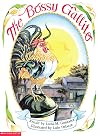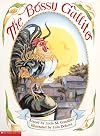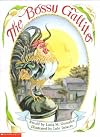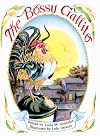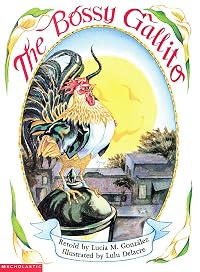
The Bossy Gallito
by Lucia M. Gonzalez
On This Page
Description
In this cumulative Cuban folktale, a bossy rooster dirties his beak when he eats a kernel of corn and must find a way to clean it before his parrot uncle's wedding. Includes a glossary of Spanish words and information about the different birds in the story.Tags
Recommendations


















Member Reviews
This book made me laugh on the second page. I think this book will be very amusing to children. It was cute and funny. I loved how they had Spanish and English on each page. I read it in English to myself, and then read it to my tia abuela in Spanish and she was cracking up. She really enjoyed the book and said the children will enjoy it with a great laugh. If I were to do a read aloud with this book, I would have to sound bossy like the rooster because I think it will be difficult for the students to pick up that the gallito got what he wanted by finally saying "please." I would have to emphasize the word please while reading it for the students to catch on.
I wasn't familiar with this folktalke, but it's about a bossy rooster who gets his beak dirty and then spends the rest of the story trying to get some blades of grass to clean his beak for him, la la. He uses threats of violence and natural disasters to cajole the recalcitrant blades of grass into doing his bidding. Finally he convinces his friend the sun to help him out, and the blades of grass finally clean his beak. Weird. I guess it ties into the "supremacy" of the rooster and how he has to prove his leadership and become the boss. Apparently the rooster plays an important role in the popular culture of Hispanic Caribbean cultures. (This I got from the last page which has a nice author's note section. Otherwise I'd be all, show more "huh?")
That said, the artwork is what makes this book worth cracking open. The book is full of many different kinds of beautiful, colorful birds including herons, toucans, parakeets, etc. In the background of the story is a wedding that the rooster is trying to get to and the illustrations of a great white heron in full bridal regalia are absolutely stunning. The illustrations also clearly convey a sense of place - the lushness of Little Havana is quite compellingly portrayed! Really lovely. show less
That said, the artwork is what makes this book worth cracking open. The book is full of many different kinds of beautiful, colorful birds including herons, toucans, parakeets, etc. In the background of the story is a wedding that the rooster is trying to get to and the illustrations of a great white heron in full bridal regalia are absolutely stunning. The illustrations also clearly convey a sense of place - the lushness of Little Havana is quite compellingly portrayed! Really lovely. show less
This Cuban folktale includes some Spanish words and is about a rooster that has grass in his beak and goes walks around seeking revenge on those who will not help him remove it. I had mixed feelings about this book after reading it. I liked the book because the story was told in first person point of view by the rooster. This made the book very interesting because the rooster conversed with other speaking animals and inanimate objects. One example of this is when the rooster who spoke to a stick. He said, “Stick, hit the goat who won’t eat the grass/ who won’t clean my pico so that I can go to the wedding of my Tio Perico.”
One thing I did not like was the message this book portrayed. The rooster is very demanding and belittling show more of others throughout the book. Eventually, he does get what he wants by seeking out revenge on all those that refused to do as he told. He received this satisfaction when he went to the sun saying, “Please, deal Sol, dry the water who won’t quench the fire/ who won’t burn the stick…” The sun replied, “With pleasure. My friend!” When the water heard that he would be evaporated he gave into the roosters demands and so did the rest of the animals and objects.” This message shows the reader that people can be rewarded for foul behavior and revenge. show less
One thing I did not like was the message this book portrayed. The rooster is very demanding and belittling show more of others throughout the book. Eventually, he does get what he wants by seeking out revenge on all those that refused to do as he told. He received this satisfaction when he went to the sun saying, “Please, deal Sol, dry the water who won’t quench the fire/ who won’t burn the stick…” The sun replied, “With pleasure. My friend!” When the water heard that he would be evaporated he gave into the roosters demands and so did the rest of the animals and objects.” This message shows the reader that people can be rewarded for foul behavior and revenge. show less
This book is written in both English and Spanish and is the kind of folktale my mom would tell me when I was very young. It is about a rooster that was finely dressed and getting ready to attend his uncle’s wedding. Along the way he saw two pieces of shiny corn in the mud, and even though he knew he would get dirty, the gallito went and ate them up. But now he was dirty! So he asked a patch of grass to wipe his beak, and the patch of grass said no. Gallito was frustrated so he told a goat to eat the patch of grass because it would not wipe his beak. And the goat said he would not. The book goes on like this where he asks a stick, a fire, water, and then the sun. And when the sun said they would help the gallito everyone was afraid and show more did what they were asked to do until the patch of grass wiped the gallitos beak in time to get to his uncles wedding. This folktale is funny with its build up, I would love to read it to children. show less
I liked this book, but I would not call it one of my favorite. First I liked the writing. It contained repetition throughout the entire book creating structure and symmetry for the reader. For example, when Gallito wanted to do something new he would repeat, "I'll dirty my beak and I won't be able to go to the wedding of my Tio Perico." Second, the characters were well-developed. Gallito being a rooster was not only significant to the story but also is a symbol in the Spanish heritage. Roosters play an important role in Hispanic countries symbolizing pride and bravery which many men look up to. This explains why Gallito is bossy because he feels by bossing others around he is inferior and proves his leadership. The moral of the story is show more one does not need to boss others around to gain power or leadership because people will not respect you the same. show less
The Bossy Gallito is a bilingual story about a very rude rooter who had a hard time asking for things nicely. I chose this story due to its connection with the Cuban culture and its brief mention of a wedding. I did not realize initially the story was bilingual. This aspect of the book makes it a perfect tool to begin teaching children about other cultures and languages. It does include a guide in the back to teach children different phrases in Spanish, however, I feel it would be even more beneficial to also add an audio cd so kids can hear how each phrase is pronounced.
Using your manners can go a long way. The bossy gallito learned that lesson the hard and long way. Throughout the story the gallito (rooster) bosses around different objects in order to achieve a goal, however none of them will listen or obey his demands. Finally at the end of the story the rooster asks the sun for his final demand, but this time he says "Please!" This is an excellent refresher book for older students, as well as a great way to incorporate the Spanish language, and words into a lesson or activity.
Members
- Recently Added By
Author Information
3 Works 832 Members
Awards and Honors
Awards
Common Knowledge
- Canonical title
- The Bossy Gallito
- Important places
- Cuba
- Dedication
- Para Annie, que le gustan tanto los cuentos. Para Moro y mis padres, por su apoyo y amor. L.M.G.
Para Marta Elena y Brad, los recién casados. L.D.
Classifications
Statistics
- Members
- 694
- Popularity
- 41,131
- Reviews
- 13
- Rating
- (3.57)
- Languages
- English, Spanish
- Media
- Paper, Ebook
- ISBNs
- 10
- ASINs
- 3