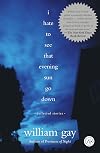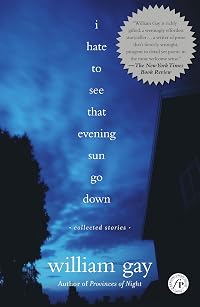
I Hate To See That Evening Sun Go Down: Collected Stories
by William Gay
On This Page
Description
William Gay firmly established himself as "the big new name to include in the storied annals of Southern Lit" (Esquire) with his debut novel, The Long Home, and his critically acclaimed follow-up, Provinces of Night. Like Faulkner's Mississippi and Cormac McCarthy's American West, Gay's Tennessee is redolent of broken, colorful souls hard at work charting the pathos of their interior lives.His debut collection, I Hate to See That Evening Sun Go Down, brings together what Gay's dedicated show more readers are eager for and what new readers will find the perfect introduction to his world: thirteen stories that are mined from this same fertile soil teeming with the grizzled, everyday folk that Gay is famous for bringing to life. In these pages readers meet old man Meecham, who escapes from his new nursing home only to find his son has rented their homestead to "white trash"; Quincy Nell Qualls, who not only falls in love with the town lothario but, pregnant, is faced with an inescapable end when he abandons her; Finis and Doneita Beasley, whose forty-year marriage is broken up by a dead dog; Bobby Pettijohn, who is awakened in the middle of the night by the noise and lights of a search party looking for clues after a body is discovered in his backwoods.
William Gay expertly sets these conflicted people who make bad choices in life and love against lush back-country scenery, and somehow manages to defy moral logic as we grow to love his characters for the weight of their human errors. Diverse as these tales are, what connects them is the powerful voice of a born storyteller.
. show less
Tags
Recommendations


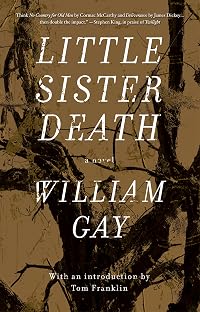

Member Reviews
William Gay’s stories have gravity, intensity, and a deep sense of place. His characters learn the hard way “that sometimes in life you go through doors that only open one way.” Many of them have reached the end of the line in one manner or another, often involving violent death.
People treat each other with cruelty but somehow retain their dignity, most of the time. Marriages are broken, people are deeply wounded. Stubborn old men are featured. In Sugarbaby a man takes stubbornness to the extreme – and this is after he shoots his wife’s dog off the porch because he “just couldn’t stand that goddamned yip yip yip.” An apparent suicide on a couple’s property reveals an unknown aspect of their relationship in A Death in show more the Woods. An old man whose son has put him in a nursing home returns on his own to find his house rented to a “loafer” in the title story, which also has some of the more amusing episodes in the collection.
Gay has created his own town of Ackerman’s Field and a wild forest area called The Harrikin, based on his native Tennessee. He describes nature with passion: “Beyond the Rorschach trees the heavens were burnished with metallic rose so bright it seemed to pulse.” “The horizon had almost merged with the darkness. It was dissolving rapidly, like a horizon cut from paper and dropped into acid.”
William Gay's South is a distinct place with a character of its own and stories that have strength and resonance. show less
People treat each other with cruelty but somehow retain their dignity, most of the time. Marriages are broken, people are deeply wounded. Stubborn old men are featured. In Sugarbaby a man takes stubbornness to the extreme – and this is after he shoots his wife’s dog off the porch because he “just couldn’t stand that goddamned yip yip yip.” An apparent suicide on a couple’s property reveals an unknown aspect of their relationship in A Death in show more the Woods. An old man whose son has put him in a nursing home returns on his own to find his house rented to a “loafer” in the title story, which also has some of the more amusing episodes in the collection.
Gay has created his own town of Ackerman’s Field and a wild forest area called The Harrikin, based on his native Tennessee. He describes nature with passion: “Beyond the Rorschach trees the heavens were burnished with metallic rose so bright it seemed to pulse.” “The horizon had almost merged with the darkness. It was dissolving rapidly, like a horizon cut from paper and dropped into acid.”
William Gay's South is a distinct place with a character of its own and stories that have strength and resonance. show less
Thanks to a recommendation from an LT friend, William Gay may become a favorite author. Relatively unknown, out of the Southern Gothic tradition, Gay's stories in this collection pack a punch, for the language's poetic brilliance and characters working through the chaos of their lives. By highlighting everyday, while fringe, people, Gay manages to weave a thread of the human condition that is recognizable to all. Even if the circumstances of any one of the stories might be absolutely foreign to the common life, the underlying internal lives are familiar and evocative. Great introduction to an author who more people should read. A favorite all-time book.
Gay's stories, like his novels, are atmospheric, dark, and deeply satisfying. It's the voice, though, that grabs. After one paragraph you know you are in the hands of an assured, confident writer. In addition to a formidable vocabulary (stygian?) he reinvents language, creates compounds that make poetic sense : hearthammer, foldup, halfbent. In later books, more dashes appear to legitimize his creations, which is a shame, but what can you do? If kittens, rainbows and bloodless murder mysteries are your favorite things, steer clear of this southern gothic writer who shrinks from nothing. "The Paperhanger" in particular, is not for the faint of heart.
These well-written short stories will not be everyone's cup of tea -- they all contain some dark and/or disturbing elements. However, that darkness was just right for reading in October! The stories engaged me right away & the descriptions of Tennessee, both physical and cultural, were brilliant. I look forward to reading some of Gay's full length novels!
There wasn't much diversity in the emotion department in this collection. All the stories were filled with sad, depressing or gloomy feelings. While most of the stories were engaging, I did become tired of experiencing dreariness. And, the lack of quotation marks was not helpful either. However, overall I enjoyed the writing, especially the fact that Gay was able to draw me into his stories even when I knew they were not going to turn out well. The average rating of all 13 stories correlates with my general feelings by the end of the book.
Originally posted on: Thoughts of Joy
Originally posted on: Thoughts of Joy
I love William Gay's writing and was so sad to learn of his passing.
His writing is unlike any I've ever read before. People praise Cormac McCarthy - and rightfully so - but Gay surpasses the portraits he paints with his words, even as sparse as McCarthy.
Such a treat.
His writing is unlike any I've ever read before. People praise Cormac McCarthy - and rightfully so - but Gay surpasses the portraits he paints with his words, even as sparse as McCarthy.
Such a treat.
This is my absolute favorite book of all time. The title story is amazing, the paperhanger is so scary. The best story for me was My Hand Is Just Fine Where It Is. That was an amazing story, and Mr. Gay was such a great writer. Thaey made a movie off of the title story and it was great, just one of those indie movies that touch your heart.
Members
- Recently Added By
Lists

Books That Deserve A Wider Audience
36 works; 1 member
Author Information

17+ Works 1,905 Members
William Gay was born in Hohenwald, Tennessee on October 27, 1941. After graduating from high school, he joined the United States Navy and served during the Vietnam War. Before becoming a writer at the age of 57, he worked as a carpenter, drywall-hanger and house painter. His first short story, I Hate to See That Evening Sun Go Down, was published show more in the Georgia Review literary journal in 1998. In 2009, it was adapted into a film entitled That Evening Sun starring Hal Holbrook. His first novel, The Long Home, was published in 1999 and won the James A. Michener Memorial Prize. His other works include Twilight, The Lost Country, and Provinces of Night, which was also adapted into a film, entitled Bloodworth starring Val Kilmer and Kris Kristofferson in 2010. He died of a heart attack on February 23, 2012 at the age of 70. (Bowker Author Biography) show less
Work Relationships
Common Knowledge
- Original publication date
- 2002
Classifications
Statistics
- Members
- 333
- Popularity
- 95,438
- Reviews
- 9
- Rating
- (4.21)
- Languages
- English
- Media
- Paper, Audiobook, Ebook
- ISBNs
- 7
- ASINs
- 2