How to Use Your Eyes
by James Elkins 
On This Page
Description
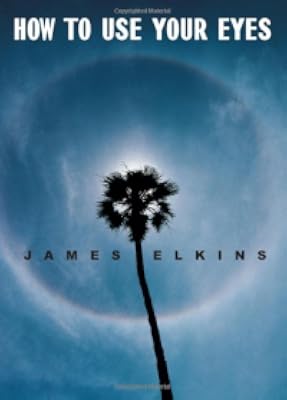
James Elkins's How to Use Your Eyes invites us to look at--and maybe to see for the first time--the world around us, with breathtaking results. Here are the common artifacts of life, often misunderstood and largely ignored, brought into striking focus. With the discerning eye of a painter and the zeal of a detective, Elkins explores complicated things like mandalas, the periodic table, or a hieroglyph, remaking the world into a treasure box of observations--eccentric, ordinary, marvelous.Tags
Recommendations


















Member Reviews
Almost what I'm looking for. Each short essay was interesting in its own right - but *for me* it would have been better if the bits I was especially interested in were expanded. I suck at crystals, x-rays, and some others... but other essays really enhanced my appreciation of, for example, sand. Large trade pb book with bright clear photos, drawings, and reproductions of antique images.
Visualization... is not a subject, as some psychologists take it to be. It is a skill that depend narrowly and precisely on what is there to be seen."
Boy do I agree with that. The chapter on grass was *easy* for me... because I grew up weeding quack grass and others from the gardens at the farm, laying in the lawn playing with the grass both there and at show more home in town, studying prairie grasses in preserved patches in Minnesota....
Using your eyes more effectively is not, however, simply a matter of looking more carefully & closely. It's having some actually understanding of the subject, and some vocabulary to help articulate the thoughts. In the chapter on Linear B, Elkins teaches us how to look at unknown scripts: "If there are only about 25 (unique signs), then the script has an alphabet, like English. If there are around 100, it may be a syllabary, like Linear B. If you lose count entirely, it must be an ideographic script, like Chinese."
It's also having an understanding of alternative theories. Schoolchildren learn the primary colors as red, blue, yellow. Our computer printers use cyan, magenta, and yellow. Turns out there are at least a dozen other ways to think of 'basic' or 'pure' colors. There is no right answer.
I do recommend this, with the caveat that we don't expect you to love every chapter in it." show less
Visualization... is not a subject, as some psychologists take it to be. It is a skill that depend narrowly and precisely on what is there to be seen."
Boy do I agree with that. The chapter on grass was *easy* for me... because I grew up weeding quack grass and others from the gardens at the farm, laying in the lawn playing with the grass both there and at show more home in town, studying prairie grasses in preserved patches in Minnesota....
Using your eyes more effectively is not, however, simply a matter of looking more carefully & closely. It's having some actually understanding of the subject, and some vocabulary to help articulate the thoughts. In the chapter on Linear B, Elkins teaches us how to look at unknown scripts: "If there are only about 25 (unique signs), then the script has an alphabet, like English. If there are around 100, it may be a syllabary, like Linear B. If you lose count entirely, it must be an ideographic script, like Chinese."
It's also having an understanding of alternative theories. Schoolchildren learn the primary colors as red, blue, yellow. Our computer printers use cyan, magenta, and yellow. Turns out there are at least a dozen other ways to think of 'basic' or 'pure' colors. There is no right answer.
I do recommend this, with the caveat that we don't expect you to love every chapter in it." show less
Disappointing. I was expecting a book that taught you how to see what was in front of you, how to get past what you think you see to really notice all the important details. Instead, what we get is a list of things the author is interested in, presented in a rather boring manner. Either the material is rather anecdotal and doesn't tell you much other than the author thinks it's interesting, or the level of detail is textbook, with long lists of names and diagrams. The former is interesting in a down to earth way, and the latter could be really useful if you are actually drawing a shoulder blade or the face, which is to say the book isn't a write-off in terms of quality. The book is half illustrations and photographs, and is quite show more beautiful. I even share many of Elkins' interests. Yet the total is just deadly dull instead of fascinating, tedious rather than informative. And no where was my hope met, except for the oft repeated finding that naming a feature will help you notice it and reproduce it better.
I would've given it 3 or 3.5 stars, except it gets a major knock down for his expressed desire to not have certain phenomenon explained to him, or ever to be explained at all! Just romantically inane.
2.5 stars on oc show less
I would've given it 3 or 3.5 stars, except it gets a major knock down for his expressed desire to not have certain phenomenon explained to him, or ever to be explained at all! Just romantically inane.
2.5 stars on oc show less
Ratings
Members
- Recently Added By
Author Information

52+ Works 2,133 Members
James Elkins is E.C. Chadbourne Chair in the Department of Art History, Theory, and Criticism at the School of the Art Institute of Chicago. He is the author of Pictures and Tears, How to Use Your Eyes, Stories of Art, Visual Studies, Why Are Our Pictures Puzzles?, Our Beautiful, Dry, and Distant Texts, On the Strange Place of Religion in show more Contemporary Art, and Master Narratives and Their Discontents, all published by Routledge. He is editor of Art History Versus Aesthetics, Photography Theory, Landscape Theory, The State of Art Criticism, and Visual Literacy, all published by Routledge. show less
James Elkins is a LibraryThing Author, an author who lists their personal library on LibraryThing.
Classifications
Statistics
- Members
- 203
- Popularity
- 160,807
- Reviews
- 2
- Rating
- (3.61)
- Languages
- Chinese, English
- Media
- Paper, Ebook
- ISBNs
- 8
- ASINs
- 3