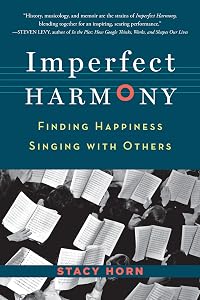
Imperfect Harmony: Finding Happiness Singing with Others
by Stacy Horn
On This Page
Description
“In this one-of-a-kind celebration of singing with others, I’d call her pitch nearly perfect.”—The AtlanticFor Stacy Horn, regardless of what is going on in the world or her life, singing in an amateur choir—the Choral Society of Grace Church in New York—never fails to take her to a place where hope reigns and everything good is possible. She’s not particularly religious, and her voice is not exceptional (so she says), but like the 32.5 million other chorus members throughout show more this country, singing makes her happy. Horn brings us along as she sings some of the greatest music humanity has ever produced, delves into the dramatic stories of conductors and composers, unearths the fascinating history of group singing, and explores remarkable discoveries from the new science of singing, including all the unexpected health benefits. Imperfect Harmony is the story of one woman who has found joy and strength in the weekly ritual of singing and in the irresistible power of song.
. show less
Tags
Recommendations

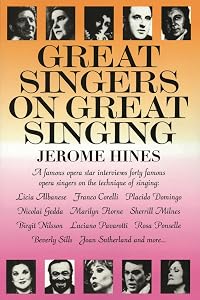





Member Reviews
This book has taught me more about choral music than I ever knew before, and for that I am grateful. I have attended a number of choral performances in several countries and have friends and relatives who sing in choirs, but have never previously understood the intricacies of both a choir singer's and a conductor's task. Stacy Horn does an admirable job of explaining these. As a historian, I also found Ms. Horn's historical overview of choral singing in the Western tradition very interesting.
A weaker point of the book for me was that it contains no awareness of the existence of choral music beyond the West (or none to speak of). Much of what she said about singing in a church setting reminded me of Sufi chanting, but she did not make show more links like that to any non-Western tradition.
I realise, of course, that the book is by and about a woman singing in a church-based choir, so the lack of references to non-Western musical traditions makes some sense. What bothers me on the level of intellectual honesty is the author's exuberant joy at singing Christian religious music combined with her professed near-absolute disbelief in the message of the words she is singing. This disbelief is not incidental to the book, but rather central to it. She keeps stressing it in chapter after chapter. Now affirming a faith with your mouth by singing the associated religion's sacred music in its place of worship while believing in your heart that the message promoted by this faith is a metaphor at best and a delusion at worst strikes me as verging on hypocrisy. And that, ultimately, is why this book, despite its many merits, made me deeply uncomfortable. show less
A weaker point of the book for me was that it contains no awareness of the existence of choral music beyond the West (or none to speak of). Much of what she said about singing in a church setting reminded me of Sufi chanting, but she did not make show more links like that to any non-Western tradition.
I realise, of course, that the book is by and about a woman singing in a church-based choir, so the lack of references to non-Western musical traditions makes some sense. What bothers me on the level of intellectual honesty is the author's exuberant joy at singing Christian religious music combined with her professed near-absolute disbelief in the message of the words she is singing. This disbelief is not incidental to the book, but rather central to it. She keeps stressing it in chapter after chapter. Now affirming a faith with your mouth by singing the associated religion's sacred music in its place of worship while believing in your heart that the message promoted by this faith is a metaphor at best and a delusion at worst strikes me as verging on hypocrisy. And that, ultimately, is why this book, despite its many merits, made me deeply uncomfortable. show less
 This review was written for LibraryThing Early Reviewers.
Stacy Horn's memoir about the joy of choral singing flooded me with memories of some of the happiest periods of my life. I had an outstanding choir director in high school and by my senior year I spent half of my day in the choir room, sometimes as accompanist and sometimes as singer. Horn didn't have to convince me of the beneficial aspects of music. She was preaching to the choir! (Pun intended).
I was amused when Horn confessed her dismay when, after years of singing first soprano, she was assigned to the second soprano section, only to discover the joy and wonder of harmony. I experienced this in reverse. After years in the alto section, I was moved to second soprano in my junior year of college. When we sang in four parts, this show more meant that I had to sing the melody, and I find harmony much more interesting and enjoyable.
I also loved this passage where Horn recalls singing to herself as she walks on city streets:
Watching someone sing a choral piece alone is like seeing someone have a lively conversation with not just one imaginary person but a whole crowd of them. It starts off okay, you sing your part, but then you have to keep pausing while you listen in your head to what all the other parts are doing. Sing-pause-sing-pause-pause-sing.
I had to laugh because I do the same thing, although not necessarily while walking in public. Something I read or hear will remind me of a phrase from a choral piece I learned by heart decades ago and I'll immediately start singing along to the recording in my head.
If anything could improve the book, it would be a sound track or at least a playlist. Pieces performed by Horn's community choir provide the themes for the chapters. I'm familiar with the composers, but not many of these particular works. I found recordings of some of the pieces on YouTube. If you're looking for a special gift for someone who loves choral music, you could create your own compilation CD and give it along with a copy of the book.
This review is based on a complimentary copy provided by the publisher through LibraryThing's Early Reviewers program. show less
I was amused when Horn confessed her dismay when, after years of singing first soprano, she was assigned to the second soprano section, only to discover the joy and wonder of harmony. I experienced this in reverse. After years in the alto section, I was moved to second soprano in my junior year of college. When we sang in four parts, this show more meant that I had to sing the melody, and I find harmony much more interesting and enjoyable.
I also loved this passage where Horn recalls singing to herself as she walks on city streets:
Watching someone sing a choral piece alone is like seeing someone have a lively conversation with not just one imaginary person but a whole crowd of them. It starts off okay, you sing your part, but then you have to keep pausing while you listen in your head to what all the other parts are doing. Sing-pause-sing-pause-pause-sing.
I had to laugh because I do the same thing, although not necessarily while walking in public. Something I read or hear will remind me of a phrase from a choral piece I learned by heart decades ago and I'll immediately start singing along to the recording in my head.
If anything could improve the book, it would be a sound track or at least a playlist. Pieces performed by Horn's community choir provide the themes for the chapters. I'm familiar with the composers, but not many of these particular works. I found recordings of some of the pieces on YouTube. If you're looking for a special gift for someone who loves choral music, you could create your own compilation CD and give it along with a copy of the book.
This review is based on a complimentary copy provided by the publisher through LibraryThing's Early Reviewers program. show less
This review was written for LibraryThing Early Reviewers.Ok, last year I read a hundred books. This year I've read about five and it's already June. But one of those five was Imperfect Harmony by Stacy Horn. It was sent to me as an advance review copy from Library Thing and it arrived on my doorstep the day before I left on a two-month sojourn back to my childhood Midwestern home to take care of my 90-something parents. My mother had just been diagnosed with cancer. My father, with Parkinson's and dementia, had fallen and, after a brief stay in the local hospital, was in a nursing home. So I packed Horn's book thinking it would cheer me up. Instead, I cried all the way through. Good cleansing salty tears. Every chapter and every tear took me to some singing place I'd been in an earlier part show more of my life.
I grew up among harmony-loving Midwestern Mennonites who loved food and singing. Four-part harmony was standard. Now perfectionism wasn't exactly what I remember about singing the Messiah every Christmas, but the absolute joy of singing such beautiful work and harmonizing with singers far better than I and the terror of missing one of those high notes or squeaking out of key, as Horn recounts, brought me right back to those moments filled with equal parts terror and bliss. Later, I joined several other church choirs for reasons similar to Ms. Horn's. So Stacy Horn's memoir of her choral singing called me back over and over to my own singing adventures. There just aren't too many experiences that bring such meditative peace week after week as singing with a choir.
But, for me, this book isn't just about choir singing, it's also about the love of classical music: sacred, instrumental, and choral. My mother, barely able to talk in her final stages of cancer, was a lifelong devotee of classical music. Growing up in her household, I ironed to the tune of her radio station always set to classical music, though at night I listened to rock and roll, blues, and jazz. Over the years, rock and roll's glory faded while those complex minor keyed classical works became more stirring and rewarding. Also, much of the book deals with death since, as Horn points out, frequently, classical choral music deals with life's mysterious "last invocation." If only we could all "be wafted" so tenderly when that final moment comes. Then there is all the brain science, which Horn weaves in so beautifully. My father can't remember my name, but he can sing whole hymns without hesitation, such power is in singing. My mother died. My father grieves without words but still sings whole hymns, every verse.
So thank you, Stacy Horn, for sharing your experiences about the joy of singing in a choir, for the rich histories about choral societies, and for all the unexpected findings into brain science on how singing changes our brains. But most of all, thank you for giving me a chance to cry all the way through my own journey of joy and sorrow. Crying and singing are two parts of the same human expression, though I have never met anyone who cries out of tune. show less
I grew up among harmony-loving Midwestern Mennonites who loved food and singing. Four-part harmony was standard. Now perfectionism wasn't exactly what I remember about singing the Messiah every Christmas, but the absolute joy of singing such beautiful work and harmonizing with singers far better than I and the terror of missing one of those high notes or squeaking out of key, as Horn recounts, brought me right back to those moments filled with equal parts terror and bliss. Later, I joined several other church choirs for reasons similar to Ms. Horn's. So Stacy Horn's memoir of her choral singing called me back over and over to my own singing adventures. There just aren't too many experiences that bring such meditative peace week after week as singing with a choir.
But, for me, this book isn't just about choir singing, it's also about the love of classical music: sacred, instrumental, and choral. My mother, barely able to talk in her final stages of cancer, was a lifelong devotee of classical music. Growing up in her household, I ironed to the tune of her radio station always set to classical music, though at night I listened to rock and roll, blues, and jazz. Over the years, rock and roll's glory faded while those complex minor keyed classical works became more stirring and rewarding. Also, much of the book deals with death since, as Horn points out, frequently, classical choral music deals with life's mysterious "last invocation." If only we could all "be wafted" so tenderly when that final moment comes. Then there is all the brain science, which Horn weaves in so beautifully. My father can't remember my name, but he can sing whole hymns without hesitation, such power is in singing. My mother died. My father grieves without words but still sings whole hymns, every verse.
So thank you, Stacy Horn, for sharing your experiences about the joy of singing in a choir, for the rich histories about choral societies, and for all the unexpected findings into brain science on how singing changes our brains. But most of all, thank you for giving me a chance to cry all the way through my own journey of joy and sorrow. Crying and singing are two parts of the same human expression, though I have never met anyone who cries out of tune. show less
This review was written for LibraryThing Early Reviewers."The melodies Verdi gives us (in Requiem) make it impossible to sing it any other way. But you don't get the full effect until all the different voice parts are singing together. The sweetness that Verdi wrote to embody such an important request as forgiveness and mercy comes from the harmony. No one voice alone can produce this sound."
Stacy Horn in Imperfect Harmony
These lines from the last page of Stacy Horn's "Imperfect Harmony: Finding Happiness Singing with Others" (Algonquin, $15.95) nicely sum up the message in her book. Singing together with other people, not alone in the shower, makes all the difference.
Horn, a middle-aged New Yorker, confesses to being an atheist, yet every week she walks several blocks to sing some of the show more greatest choral works of Christendom with the Choral Society of Grace Church. She has been doing this for a number of years. "Singing," she writes, "is the one thing in my life that never fails to take me to where disenchantment is almost nonexistent and feeling good is pretty much guaranteed." Maybe she doesn't always believe what she's singing about, but, she says, "I believe in singing." Elsewhere she writes, "Singing is the ultimate communion."
She cites research showing the benefits of singing to mind and body. She interviews other singers, as well as composers and choral leaders. Mostly, however, she writes about her own experiences and the joy she feels each time she sings with other people.
Horn admits to not being among the best sopranos in her choir. She says, however, that singers don't need to be great to make great music together. As evidence of this, she points to the Virtual Choir, the brainchild of composer Eric Whitacre. Thousands of people from around the world submit videos of themselves singing one of Whitacre's compositions, and the voices are combined into some intensely beautiful music. Nobody is turned away because of an inadequate singing voice. Imperfect voices blend into perfect harmony. Check out Virtual Choir 4 video on YouTube to see for yourself. show less
Stacy Horn in Imperfect Harmony
These lines from the last page of Stacy Horn's "Imperfect Harmony: Finding Happiness Singing with Others" (Algonquin, $15.95) nicely sum up the message in her book. Singing together with other people, not alone in the shower, makes all the difference.
Horn, a middle-aged New Yorker, confesses to being an atheist, yet every week she walks several blocks to sing some of the show more greatest choral works of Christendom with the Choral Society of Grace Church. She has been doing this for a number of years. "Singing," she writes, "is the one thing in my life that never fails to take me to where disenchantment is almost nonexistent and feeling good is pretty much guaranteed." Maybe she doesn't always believe what she's singing about, but, she says, "I believe in singing." Elsewhere she writes, "Singing is the ultimate communion."
She cites research showing the benefits of singing to mind and body. She interviews other singers, as well as composers and choral leaders. Mostly, however, she writes about her own experiences and the joy she feels each time she sings with other people.
Horn admits to not being among the best sopranos in her choir. She says, however, that singers don't need to be great to make great music together. As evidence of this, she points to the Virtual Choir, the brainchild of composer Eric Whitacre. Thousands of people from around the world submit videos of themselves singing one of Whitacre's compositions, and the voices are combined into some intensely beautiful music. Nobody is turned away because of an inadequate singing voice. Imperfect voices blend into perfect harmony. Check out Virtual Choir 4 video on YouTube to see for yourself. show less
This review was written for LibraryThing Early Reviewers.I sing in a choir. My wife doesn't. I was only on page 42 of this book when I said to her, "If you ever want to know why I love singing in choir so much - read this book!"
This book is the best expression I've read of the joy of singing together in groups. I laughed out loud repeatedly, I shivered with shared experience. Throughout, I kept thinking to myself, "I know exactly what she means!"
Her descriptions of the physical effects - the visceral sensation - of singing harmony are especially powerful.
If I have one fault to pick with this book, it's that it feels a bit too fragmentary overall. In her "Prelude", Ms. Horn states that she intended this book to be an eclectic collection of stories from her experience, stories from the history show more of choral singing and its music, and what surprisingly little we know about the science of singing.
So criticizing this book for being "fragmentary" isn't really fair. And the through-line for all of it is the joy and wonder of choral singing, and all the gifts it gives to those who participate. show less
This book is the best expression I've read of the joy of singing together in groups. I laughed out loud repeatedly, I shivered with shared experience. Throughout, I kept thinking to myself, "I know exactly what she means!"
Her descriptions of the physical effects - the visceral sensation - of singing harmony are especially powerful.
If I have one fault to pick with this book, it's that it feels a bit too fragmentary overall. In her "Prelude", Ms. Horn states that she intended this book to be an eclectic collection of stories from her experience, stories from the history show more of choral singing and its music, and what surprisingly little we know about the science of singing.
So criticizing this book for being "fragmentary" isn't really fair. And the through-line for all of it is the joy and wonder of choral singing, and all the gifts it gives to those who participate. show less
I am not a singer myself, but I found immense satisfaction in this book. Stacy Horn is able to relay the pleasure and joy she finds in choirs in an infectious manner.
Horn approaches the subject from many different angles. Much of the book is her personal experience, but I also appreciated the passages on the history of choirs, neurology of group singing, the virtual choir on facebook, comfort in grief, etc. So many different ways to love choirs!
I especially enjoyed the gossipy passages- beloved but perfectionist conductors, territorial seating issues, miffed sopranos complaining that the shortage of men means tenors don't need to audition.
This is a book that I will heartily recommend to my friends who do sing. I want to sing more show more because of this book. show less
Horn approaches the subject from many different angles. Much of the book is her personal experience, but I also appreciated the passages on the history of choirs, neurology of group singing, the virtual choir on facebook, comfort in grief, etc. So many different ways to love choirs!
I especially enjoyed the gossipy passages- beloved but perfectionist conductors, territorial seating issues, miffed sopranos complaining that the shortage of men means tenors don't need to audition.
This is a book that I will heartily recommend to my friends who do sing. I want to sing more show more because of this book. show less
This review was written for LibraryThing Early Reviewers.I received this book as part of the LibraryThing Early Reviewers program. I wish there were more than five stars available for this. As someone who has sung in choirs practically all my life (I started in 5th grade), I requested this book because I thought it would be fun to read about another person's experience with ensemble singing. This book did not disappoint in that area. In fact, as Stacy is writing about being "demoted" (not really a demotion) to Soprano II I was laughing out loud but also had tears in my eyes. I have SO been there. This is just one of many examples of times I so related to her experiences and felt like we could be instant folder partners and friends. But, in addition to just her memoirs, Ms. Horn gives so much show more more. I learned about pieces I have never sung, nor heard, I learned history and insight about pieces I love and have sung often (Handel's Messiah, Brahm's German Requiem to name two), and I gained inspiration to keep singing and to keep working with choirs (currently accompany a Middle School girls' show choir) for the rest of my life. I even went so far as to create a playlist on Spotify with the pieces mentioned and studied in the book so I can go back and re-read sections while listening to the actual music. Unfortunately, there were a few pieces I could not find there but I intend to search them out. I highly and strongly recommend this book to anyone interested in choral singing, vocal music, the importance of music to the brain and the body (she also explores and shares insight on why this type of activity is so important physically and emotionally citing another of my favorite books, This Is Your Brain On Music by Daniel Levitin. show less
This review was written for LibraryThing Early Reviewers.Members
- Recently Added By
Author Information

7 Works 1,015 Members
Common Knowledge
- People/Characters
- John Maclay (Music Director)
- Important places
- New York, New York, USA; Grace Episcopal Church, New York, New York, USA
- Epigraph
- I believe in singing. I believe in singing together.
- - BRIAN ENO - Dedication
- In Memory of Frank Cedric Smith
Thank you, and Dilys, for the music - First words
- Anthracite is the most beautiful coal in the world.
- Quotations
- . . .the ease from mental pain that other men have sought in alcohol, I always found in song.
Classifications
Statistics
- Members
- 175
- Popularity
- 187,223
- Reviews
- 67
- Rating
- (3.79)
- Languages
- English
- Media
- Paper, Ebook
- ISBNs
- 2
- ASINs
- 1