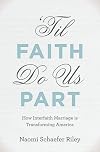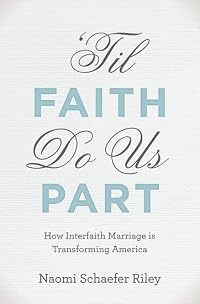
'Til Faith Do Us Part: How Interfaith Marriage is Transforming America
by Naomi Schaefer Riley
On This Page
Description
Naomi Schaefer Riley offers a compelling look at the struggles of interfaith marriages in the United States.Tags
Recommendations



















Member Reviews
What a fascinating book. I started reading this because it's a topic that is completely affecting the Jewish community today. It was interesting to see all the different perspectives that were being portrayed. This is a very divisive topic in the Jewish community as I am sure it is in many other communities as well.
As someone who is single but wholly committed to her faith, I'm not sure, especially after reading this book, how this will impact my future marriage and life with children. I've always just assumed that I would marry someone Jewish even though I've dated non-Jews. Now that I'm thirty, I'm not sure if I want to narrow myself to just Jews but on the other hand, I want to make sure that my Jewish values stay strong and true and show more this may not be something that is so easy if I'm married to someone who isn't Jewish. Lots of food for thought. show less
As someone who is single but wholly committed to her faith, I'm not sure, especially after reading this book, how this will impact my future marriage and life with children. I've always just assumed that I would marry someone Jewish even though I've dated non-Jews. Now that I'm thirty, I'm not sure if I want to narrow myself to just Jews but on the other hand, I want to make sure that my Jewish values stay strong and true and show more this may not be something that is so easy if I'm married to someone who isn't Jewish. Lots of food for thought. show less
 This review was written for LibraryThing Early Reviewers.
This book is a penetrating and nuanced look at the sociological underpinnings of intermarriage between different previously-endogamous religious communities in 20th and 21st century North America. The book treats intermarriage neither as an ill to be combatted, nor as a triumph of tolerance, but rather as a phenomenon whose implications are decidedly mixed, both for the families involved, and for the religious communities that support them and enrich their lives. Neither doomsaying or pollyannish, the book does a good job of unpacking and bringing to light the complexities of intermarried family life — including that of the author.
This review was written for LibraryThing Early Reviewers.Riley's exploration of interfaith marriages is grounded in a nationwide survey she conducted of over two thousand interfaith couples and several hundred in-depth interviews. Overall, I was impressed by her thoughtful analysis and believe the study is a solid contribution to the field. I was particularly pleased that Riley -- a Jewish woman married to a Christian man -- ranged beyond the Judeo-Christian context to look at a variety of other cross-religion pairings. A few minor notes: I was puzzled by her categorization of mainline-evangelical Christian unions as "interfaith"; while clearly such couples will come from different religious culture backgrounds, they are not interfaith in the sense most people understand. I was also show more frustrated with her subtle dismissal of the possibility that people with common values might find their different religious upbringings less important than current beliefs and practices. I don't think "common values" is necessarily a wishy-washy glossing over of difference; it can (and often does) have real thought behind it. And finally, I was struck by her pessimism and sense of struggle: her overall fear that interfaith marriage will dilute religious traditions and lead to greater unhappiness for couples and less religious identity and grounding for their children. Left unanswered was the obvious question: if there are so many downsides to interfaith unions, how and why are they growing exponentially here in the U.S.? show less
This review was written for LibraryThing Early Reviewers.This book takes the work of the author in studying the many varied relationships of interfaith couples and presents it to the general public. She gives readers a very comprehensive look at many different aspects of the relationships: getting to know each other, wedding ceremonies, kids, ect. Personal stories and interviews are scattered throughout the book to mix up the extreme amount of data that is thrown at readers. All in all, the content is fairly solid. I was surprised by the material and it made me reevaluate my own relationship. It isn't a turn pager, but those interested in the subject should stay engaged.
However, this ebook has a massive amount of grammatical errors. I doubt that this has gotten through much of the editing show more process yet. Even worse, the tables were not formatted at all and made those sections (which I actually wanted to see!) completely un-readable. This made a dry ebook a great chore to read.
If you really want to know more about this topic, take a chance reading it, but buy a paper copy. If you have passing curiosity, go elsewhere. show less
However, this ebook has a massive amount of grammatical errors. I doubt that this has gotten through much of the editing show more process yet. Even worse, the tables were not formatted at all and made those sections (which I actually wanted to see!) completely un-readable. This made a dry ebook a great chore to read.
If you really want to know more about this topic, take a chance reading it, but buy a paper copy. If you have passing curiosity, go elsewhere. show less
This review was written for LibraryThing Early Reviewers.This was an intriguing and troubling read. The material seemed well researched and was presented clearly and thoughtfully. While there seemed to be less statistical data for Jews and Mormons, the three religious groups most represented throughout the book were Jews, Catholics and Mormons - I found it perhaps less than thorough in that respect. Most of the rest of this review is my reaction to what the results presented show, less to the book itself.
It was unfortunate to read about how little religion enters into the thoughts of dating or engaged couples, until they have to decide who will say what at the wedding. Then, to see it become a huge deal, and be forgotten again until the couple has to decide if they will baptize or circumcise show more their son is kind of mind blowing. The author astutely points out that as much as we value "diversity", marriage isn't necessarily the place for it, and religion isn't skin color. The things that seemed to come from "inter-faith" marriages that were cast in a positive light I found mixed. On the one hand, she points out that struggle over these things can make people realize that all religions aren't the same and don't make the same claims. But it seems that couples might recognize this and then make some poor attempt at fusion, or choose to weakly follow one faith. So this isn't too much of a positive. One of the other major so-called benefits is acceptance of the family and religion of the spouse by the other family. And while it's great to accept and respect people as people - the sort of tolerance that it's suggested is fostered is a many roads lead to God, non-truth discerning neo-tolerance. I found the success and how of Mormons encouraging, with success, marriage within the church, and how they are willing to wait for, while engaging, a non-Mormon spouse helpful in thinking about how Christians might foster the same patterns. show less
It was unfortunate to read about how little religion enters into the thoughts of dating or engaged couples, until they have to decide who will say what at the wedding. Then, to see it become a huge deal, and be forgotten again until the couple has to decide if they will baptize or circumcise show more their son is kind of mind blowing. The author astutely points out that as much as we value "diversity", marriage isn't necessarily the place for it, and religion isn't skin color. The things that seemed to come from "inter-faith" marriages that were cast in a positive light I found mixed. On the one hand, she points out that struggle over these things can make people realize that all religions aren't the same and don't make the same claims. But it seems that couples might recognize this and then make some poor attempt at fusion, or choose to weakly follow one faith. So this isn't too much of a positive. One of the other major so-called benefits is acceptance of the family and religion of the spouse by the other family. And while it's great to accept and respect people as people - the sort of tolerance that it's suggested is fostered is a many roads lead to God, non-truth discerning neo-tolerance. I found the success and how of Mormons encouraging, with success, marriage within the church, and how they are willing to wait for, while engaging, a non-Mormon spouse helpful in thinking about how Christians might foster the same patterns. show less
This review was written for LibraryThing Early Reviewers.Interfaith marriage is a part of life in America. It has affected the way various religions treat people who want to marry someone of a different faith, (e.g., Greek Orthodox and Roman Catholics have fewer obstacles in marrying each other, Catholics can marry non-Catholics in a church, the non-Catholic spouse doesn’t have to convert or promise to raise their children as Catholic.)
Naomi Schaefer Riley, who did marry someone of another faith, interviewed 200 members of the clergy, marriage counselors, and interfaith couples of many religious combinations and commissioned an Interfaith Marriage Survey, to learn more about the road interfaith couples travel including dating, wedding, families, and children. She learned that childhood show more experiences, both at home and at a religious institution, don’t play as large a role in determining whether a person will marry someone of another religion as many people assume. The divorce rate is also higher than for same-faith marriages.
One reason for the increase in interfaith marriage is that people are marrying later in life than previous generations. Once people leave their parents’ homes for school and careers, they are less involved in religion than they had been. They are exploring many avenues as they seek to find out what they believe and who they are. They have learned the importance of diversity, tolerance, and understanding. Their culture has taught them to look for their “soul mate” which puts the emphasis on them and not on the community. They do not seek the advice of clergy to direct their souls but believe they will find the “right one” eventually. Parents, many of whom are divorced, do not offer advice since they don’t feel qualified.
These are also the years that they are likely to be preparing to marry. Religions that encourage early marriage, such as the Mormons, have fewer interfaith marriages than other groups.
More often than not, the couple do not discuss religion before they start planning their wedding. They then have to find out where to have it, who will officiate that will not upset both sides of the family (some clergy will or cannot perform intermarriages), and what to serve (Alcohol? Meat? Shellfish?), what to say or have said by the clergy. During this time the clergy may ask about what religion they will follow and what they will do about their children’s religious upbringing. Often, they haven’t really considered those in any depth.
Once they do have children, those issues become real. What religion/s is/are observed at home? Who takes them to services? How do they deal with families with different faiths?
One important chapter is about how religious institutions treat them. Are they welcomed as an interfaith family? Is the spouse who is not a member of that religion encouraged to convert? What should religious institutions be doing?
She points out that religion is more than “Be a nice person.” There are values and structures in place to guide, support, and explain what the religion means. Too often the couple doesn’t really know what they are or the couple don’t discuss them with each other.
Two points I found interesting were that the December dilemma wasn’t as important as what happens the rest of the year and that people who fight to protect endangered species don’t consider passing on their religious heritage to be important.
‘TIL FAITH DO US PART is composed of case studies, statistics (including graphs), and commentary. It raised a lot of interesting ideas, many of which are too often ignored by both people who may intermarry and by the religious institutions established to help people live their lives.
I received an advanced, uncorrected proof of this book from LibraryThing. show less
Naomi Schaefer Riley, who did marry someone of another faith, interviewed 200 members of the clergy, marriage counselors, and interfaith couples of many religious combinations and commissioned an Interfaith Marriage Survey, to learn more about the road interfaith couples travel including dating, wedding, families, and children. She learned that childhood show more experiences, both at home and at a religious institution, don’t play as large a role in determining whether a person will marry someone of another religion as many people assume. The divorce rate is also higher than for same-faith marriages.
One reason for the increase in interfaith marriage is that people are marrying later in life than previous generations. Once people leave their parents’ homes for school and careers, they are less involved in religion than they had been. They are exploring many avenues as they seek to find out what they believe and who they are. They have learned the importance of diversity, tolerance, and understanding. Their culture has taught them to look for their “soul mate” which puts the emphasis on them and not on the community. They do not seek the advice of clergy to direct their souls but believe they will find the “right one” eventually. Parents, many of whom are divorced, do not offer advice since they don’t feel qualified.
These are also the years that they are likely to be preparing to marry. Religions that encourage early marriage, such as the Mormons, have fewer interfaith marriages than other groups.
More often than not, the couple do not discuss religion before they start planning their wedding. They then have to find out where to have it, who will officiate that will not upset both sides of the family (some clergy will or cannot perform intermarriages), and what to serve (Alcohol? Meat? Shellfish?), what to say or have said by the clergy. During this time the clergy may ask about what religion they will follow and what they will do about their children’s religious upbringing. Often, they haven’t really considered those in any depth.
Once they do have children, those issues become real. What religion/s is/are observed at home? Who takes them to services? How do they deal with families with different faiths?
One important chapter is about how religious institutions treat them. Are they welcomed as an interfaith family? Is the spouse who is not a member of that religion encouraged to convert? What should religious institutions be doing?
She points out that religion is more than “Be a nice person.” There are values and structures in place to guide, support, and explain what the religion means. Too often the couple doesn’t really know what they are or the couple don’t discuss them with each other.
Two points I found interesting were that the December dilemma wasn’t as important as what happens the rest of the year and that people who fight to protect endangered species don’t consider passing on their religious heritage to be important.
‘TIL FAITH DO US PART is composed of case studies, statistics (including graphs), and commentary. It raised a lot of interesting ideas, many of which are too often ignored by both people who may intermarry and by the religious institutions established to help people live their lives.
I received an advanced, uncorrected proof of this book from LibraryThing. show less
This review was written for LibraryThing Early Reviewers.Well-researched and analyzed, 'Til Faith Do Us Part's author Naomi Schaefer Riley discusses the challenges, tensions, successes, and the taboo of interfaith marriage, including the wedding ceremony and raising children. This book has definitely given me a lot to think about and I recommend this to interfaith couples discussing marriage.
Members
- Recently Added By
Published Reviews
In “ ’Til Faith Do Us Part,” Naomi Schaefer Riley continues the exploration of these trends, but she chooses a particular territory: beyond the challenge of interfaith proximity lies that of interfaith intimacy.
added by Lakenvelder
Author Information
12 Works 278 Members
Naomi Schaefer Riley is a resident fellow at the American Enterprise Institute, focusing on issues of child welfare, as well as a senior fellow at the Independent Women's Forum. A former New York Post columnist and a former Wall Street Journal editor and writer, she is the author of several books on education, religion, and family. Ms. Riley's show more writings have appeared in the New York Times, the Boston Globe, the LA Times, and the Washington Post, among other publications. She lives in the suburbs of New York City with her husband, Jason, and their three children. show less
Classifications
- Genres
- Nonfiction, Sociology, Religion & Spirituality
- DDC/MDS
- 306.84 — Social sciences Social sciences, sociology & anthropology Culture and institutions Marriage, partnerships, unions; family Specific types of marriages, partnerships, unions
- LCC
- HQ1031 .R55 — Social sciences The family. Marriage, Women and Sexuality The Family. Marriage. Women The family. Marriage. Home
- BISAC
Statistics
- Members
- 47
- Popularity
- 634,165
- Reviews
- 11
- Rating
- (3.68)
- Languages
- English
- Media
- Paper, Ebook
- ISBNs
- 3
- UPCs
- 1
- ASINs
- 1