On This Page
Description
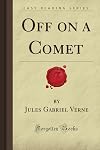
Although science fiction is often regarded as a twentieth-century phenomenon, early masters such as Jules Verne were mining the outer reaches of space for their stories for nearly a century before the 1950s SF boom took hold. In Off on a Comet, Verne follows the imaginary exploits of a ragtag group of Earthlings who are forced to take a two-year journey through space on a gigantic comet..
Tags
Recommendations

























Member Reviews
Servadac kapitány, a francia hadsereg éke pödörnivaló bajuszával együtt Algériában üldögél, és szerelmes verset ír szíve hölgyének. De hirtelen – ó, sacrebleu! – beüt a kataklizma, és a világ összedőlni látszik. (Ennek legnagyobb nyertese az említett hölgy, mert így nem kell elolvasnia a kapitány úr firkálmányát, ami még az Előretolt Helyőrség kulturális magazinjába is csak figyelmetlenségből kerülhetne be.) Mikor aztán Servadac és legénye feleszmél, és kidörgöli a csipát szeméből, látja ám, hogy már semmi sem ugyanolyan, mint régen. Viszont – hogy valami jót is mondjak – legalább másmilyen. A gravitáció hetedére csökkent (következésképpen hőseink akkorákat show more ugranak, mint a Pókember), algériai állomáshelyükből sziget lett, a Nap máshol kel fel, és kétszer olyan gyorsan halad az égen, de ami a lényeg: úgy néz ki, csak ők maradtak eleven lények széles e világon. Jártukban-keltükben azért találkoznak még más túlélőkkel is, oroszokkal, angolokkal, spanyolokkal, satöbbikkel, akiket Verne fel is használ arra, hogy nemzetkarakterológiai töltetű vicceket sütögethessen el kárukra. (Hozzáteszem: nem, az oroszok nem vodkáznak. Ami azt illeti, az oroszok elég jellegtelenek, valószínűleg Verne nem tudott róluk sokat, csak éppen annyit, hogy szimpatizálni kell velük.) Ők aztán úgy nagyjából kéttucatnyian nekiveselkednek a túlélésnek, és korai Survivor-szereplőket megszégyenítő módon igájukba hajtják a megváltozott körülményeket, mielőtt azok hajtanák igába őket.
Hogy is mondjam. Szórakoztató, az igaz. Ezzel együtt nekem már nemegyszer sok volt, ahogy Verne botcsinálta wannabe-asztrofizikusként összehord hetet-havat bolygópályákról, tektonikáról, geográfiáról, és szinte erotikus élvezettel hempereg bennük. A hollywoodi katasztrófafilmek forgatókönyvíróinak arcán pedig a szégyen lázrózsái kigyúlnak, mert így, ilyen ártatlan lelkesültséggel semmibe venni a tudomány tényeit, hát azt még ők se merték eddig. Lássuk, mi történik ebben a könyvben, röviden összefoglalva: egy hatalmas tellúr üstökös rácuppan a Földre, de csak súrolja, és magával ragadja – mint kutya a bogáncsot – a bolygó egy darabját, szereplőstül, légköröstül együtt. Aztán tesz egy kört a nap körül, és visszaviszi őket. Slusszpoén: akik a Földön maradtak, azok ezt észre sem vették. Fel is vetődik Servadacban az utolsó lapokon, hogy hátha csak álmodták az egészet. Nem kell ehhez álmodni, Hector. Elég, ha odaadod a gyeplőt möszijő Verne kezébe. Tudom, tudom, ha valaki élvezni akarja Verne-t, akkor ezeket a dolgokat egyszerűen el kell engednie – de mit tegyek, most valahogy nem éreztem magamban erőt, hogy ennyi tudományos tényként leszögezett nyavalyás böszmeséget beszürcsöljek, bármilyen dekoratív pohárkában tálalták elém. És nem hallgatnám el azt sem, hogy enyhén irritált a regény fiúkollégium-szaga is – szerzőnk ugyanis mindösszesen egyetlen egy nőnemű személyt képes elhelyezni a szövegben, ráadásul az is egy kiskorú, gondolom, a cukiságfaktor végett.
Szóval ez is egy olyan könyv lett, amit 20-25 évvel később olvastam el, mint kellett volna. show less
Hogy is mondjam. Szórakoztató, az igaz. Ezzel együtt nekem már nemegyszer sok volt, ahogy Verne botcsinálta wannabe-asztrofizikusként összehord hetet-havat bolygópályákról, tektonikáról, geográfiáról, és szinte erotikus élvezettel hempereg bennük. A hollywoodi katasztrófafilmek forgatókönyvíróinak arcán pedig a szégyen lázrózsái kigyúlnak, mert így, ilyen ártatlan lelkesültséggel semmibe venni a tudomány tényeit, hát azt még ők se merték eddig. Lássuk, mi történik ebben a könyvben, röviden összefoglalva: egy hatalmas tellúr üstökös rácuppan a Földre, de csak súrolja, és magával ragadja – mint kutya a bogáncsot – a bolygó egy darabját, szereplőstül, légköröstül együtt. Aztán tesz egy kört a nap körül, és visszaviszi őket. Slusszpoén: akik a Földön maradtak, azok ezt észre sem vették. Fel is vetődik Servadacban az utolsó lapokon, hogy hátha csak álmodták az egészet. Nem kell ehhez álmodni, Hector. Elég, ha odaadod a gyeplőt möszijő Verne kezébe. Tudom, tudom, ha valaki élvezni akarja Verne-t, akkor ezeket a dolgokat egyszerűen el kell engednie – de mit tegyek, most valahogy nem éreztem magamban erőt, hogy ennyi tudományos tényként leszögezett nyavalyás böszmeséget beszürcsöljek, bármilyen dekoratív pohárkában tálalták elém. És nem hallgatnám el azt sem, hogy enyhén irritált a regény fiúkollégium-szaga is – szerzőnk ugyanis mindösszesen egyetlen egy nőnemű személyt képes elhelyezni a szövegben, ráadásul az is egy kiskorú, gondolom, a cukiságfaktor végett.
Szóval ez is egy olyan könyv lett, amit 20-25 évvel később olvastam el, mint kellett volna. show less
A little known pair of Verne novels, which also go by the name of the Adventures of Hector Servadac; the titles here rather give away the plot. I found the stories a bit dry in places with overlong scientific explanations (like Voyage to the Moon but even more fantastic in modern technological terms). The illustrations were quite welcome, but many were in the wrong part of the text. The most glaring flaw is the embarrassingly stereotyped (surely even for the time) Jewish character serving no obvious narrative purpose, other than as a vehicle to express the wider anti-Semitism of the time. My least favourite Verne novel, one for completists only.
The 15th novel of the Voyages Extraordinaries is a return to the science fiction genre, with a premise that is more outlandish than anything Verne had written before.
What is it about?: French officer Hector Servadac and a group of characters of different nationalities must face the consequences of a catastrophe that forces them to travel through the vast spaces of the solar system. The action takes place in the Mediterranean, part of which is torn from the Earth into space by the glancing collision of a comet.
Verne, of course, had written science fiction before. Sometimes it was something low-key like a vehicle that did not yet exist in his time. Sometimes it's something more fantastic, like a trip to the Moon inside a projectile shot show more by a cannon or a journey through vast cave systems kilometres under the surface of the Earth. But even in those cases I had found it easy to suspend disbelief because Verne always made it sound plausible, not too far removed from reality, at least with the science that was known at the time. He wrote stories that were fantastic but somewhat grounded. In his old age Verne commented that H. G. Wells, another pioneer of scientific fiction who was born 38 years after Verne, used more fantastic premises, like a time machine, but he (Verne) preferred to ground his stories in current understanding of what's scientifically possible. Kind of a familiar debate in modern science fiction, too.
In the case of this novel, however, I had a hard time suspending disbelief, and it bothered me. The premise is completely out-there: a comet tearing off a piece of Earth's surface, which is somehow transplanted to the comet without destroying the structures on it, without killing the people on it and with enough air to breathe...
Verne and his editor Hetzel, who were not idiots, were perfectly aware of how far they had gone this time from any semblance of scientific verisimilitude. This is from the preface that Hetzel wrote for this story:
I think that mentioning fairyland is a honest assessment. The beginning of the novel has a distinct fairy-tale atmosphere. Verne has fun having the characters, still without knowledge of what has happened, explore the bizarre changes in gravity, in the length of the day and so on.
After having exhausted that topic, the novel becomes a more normal adventure story as the characters (all of them male except for a little girl) explore their new surroundings and attempt to ensure their immediate survival. Afterwards we get to a more speculative part, where the characters get to witness close-hand some of the planets of the solar system.
In fact, in the second volume of the novel, we get some of those popular science info-dumps that were present in Verne's first novels. These info-dumps had mostly disappear in Verne's adventure stories, but here they come back and, for example, a whole chapter is devoted to describing science's current knowledge of comets. Current for 1877, of course: a fair amount of this novel's science is wrong with today's understanding. For example, Verne believed the theory that the lowest temperature that could be reached in space was around -60 degrees Celcius (we now know that absolute zero is around -273 Celsius). Nevertheless, these passages have a certain charm for me. Others may differ, but they can always skip them if needed.
Despite the outdated science, it is fair to say that once we get pass the fantastic premise, we are back to Verne's rational way of thinking. After the fairy-tale beginning the novel gets closer to Verne's normal way of mixing adventure and speculative content.
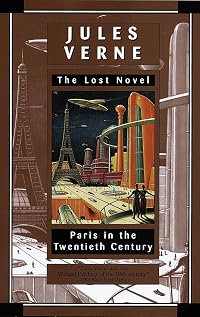
It is often said that Verne was an optimistic believer in progress and science, but that in the latest part of his life he got more disenchanted and had a more pessimistic view of human progress. This view is partly true, of course, but I wonder how much of it was due to Hetzel's influence. The editor had a lot of power over Verne's work. He had rejected the novel Paris in the Twentieth Century, which Verne wrote before any of the Extraordinary Voyages and was only published almost a century after his death. In that novel, Verne painted a grim, dystopian view of a technological future civilization which, in Hetzel's opinion, had limited commercial appeal. Hetzel, instead, accepted Five Weeks in a Balloon, and encouraged Verne to write more novels in that style. Hetzel encouraged Verne to write more adventure and less speculative fiction, so I imagine he was less than pleased with this novel's premise. Maybe Hetzel's commercial instinct was right, because Off in a Comet was less successful than previous Verne novels in terms of sales. After Hetzel died, he would be succeeded by his son, who gave Verne more freedom, which may in part explain why his latest works are less optimistic.
Coming back to this novel, Verne's correspondence with Hetzel tells us that his original intention was to kill all the characters, which may be why he named his hero Hector Servadac (Servadac, read backwards, is "cadavres", the French word for "corpses"). Hetzel, however, demanded a less tragic ending, which resulted in more outlandishness in the final part of the novel, but also in a scene with a lot of visual impact.
I should probably mention that there is a character in the novel who is a Jewish merchant depicted as extremely greedy and miserly. He is used as comic relief. Obviously Verne, born two centuries ago, did not have a modern sensitivity about racial stereotyping. We have seen that in his depiction of indigenous cultures in some of his novels. I think the lack of modern sensitivities is to be expected in a novel written in this period. In this case, however, even at that time it caused a letter of complaint from the chief rabbi of Paris to Hetzel and Verne. The editor and the author co-signed a reply indicating they had had no intention of offending anyone, and promising to make corrections in the next edition. Hetzel took care of making those corrections, which amounted to removing mentions of the character being Jewish, which was not much of an improvement since it was still obvious (and many translations were from the first edition before that change was made). In the rest of Verne's work, at least, there was not another case of stereotyped portrayal of a Jewish character.
Enjoyment factor: Not among my favorite Verne novels. The premise is too outlandish for my taste. I don't think that it fits well with Verne's rational way of developing his plots. On the other hand, it does have interesting elements once you get pass that, and it's still entertaining to read. Modern readers have to make allowances for the limitations in the knowledge of cosmology at the time. But it's a very early example of a novel about the exploration of the solar system, at a time when the only precedents made no attempt to look at it from a scientific point of view.
Next up: The Child of the Cavern, aka The Underground City
See all my Verne reviews here: https://www.sffworld.com/forum/threads/reading-vernes-voyages-extraordinaires.58... show less
What is it about?: French officer Hector Servadac and a group of characters of different nationalities must face the consequences of a catastrophe that forces them to travel through the vast spaces of the solar system. The action takes place in the Mediterranean, part of which is torn from the Earth into space by the glancing collision of a comet.
Verne, of course, had written science fiction before. Sometimes it was something low-key like a vehicle that did not yet exist in his time. Sometimes it's something more fantastic, like a trip to the Moon inside a projectile shot show more by a cannon or a journey through vast cave systems kilometres under the surface of the Earth. But even in those cases I had found it easy to suspend disbelief because Verne always made it sound plausible, not too far removed from reality, at least with the science that was known at the time. He wrote stories that were fantastic but somewhat grounded. In his old age Verne commented that H. G. Wells, another pioneer of scientific fiction who was born 38 years after Verne, used more fantastic premises, like a time machine, but he (Verne) preferred to ground his stories in current understanding of what's scientifically possible. Kind of a familiar debate in modern science fiction, too.
In the case of this novel, however, I had a hard time suspending disbelief, and it bothered me. The premise is completely out-there: a comet tearing off a piece of Earth's surface, which is somehow transplanted to the comet without destroying the structures on it, without killing the people on it and with enough air to breathe...
Verne and his editor Hetzel, who were not idiots, were perfectly aware of how far they had gone this time from any semblance of scientific verisimilitude. This is from the preface that Hetzel wrote for this story:
In one way "Off on a Comet" shows a marked contrast to Verne's earlier books. Not only does it invade a region of remotest space, but the author here abandons his usual scrupulously scientific attitude and gives his fancy freer rein. In order that he may escort us through the depths of immeasurable space, to show us what astronomy really knows of conditions there and upon the other planets, Verne asks us to accept a situation which is in a sense self-contradictory. The earth and a comet are brought twice into collision without mankind in general, or even our astronomers, becoming conscious of the fact. Moreover several people from widely scattered places are carried off by the comet and returned uninjured. Yet further, the comet snatches and carries away with it for the convenience of its travelers, both air and water. Little, useful tracts of earth are picked up and, as it were, turned over and clapped down right side up again upon the comet's surface. Even ships pass uninjured through, this remarkable somersault. These events all belong to the realm of fairyland.
If the situation were reproduced in actuality, if ever a comet should come into collision with the earth, we can conceive two scientifically possible results. If the comet were of such attenuation, such almost infinitesimal mass as some of these celestial wanderers seem to be, we can imagine our earth self-protective and possibly unharmed. If, on the other hand, the comet had even a hundredth part of the size and solidity and weight which Verne confers upon his monster so as to give his travelers a home―in that case the collision would be unspeakably disastrous—especially to the unlucky individuals who occupied the exact point of contact.
But once granted the initial and the closing extravagance, the departure and return of his diameters, the alpha and omega of his tale, how closely the author clings to facts between! How closely he follows, and imparts to his readers, the scientific probabilities of the universe beyond our earth, the actual knowledge so hard won by our astronomers! Other authors who, since Verne, have told of trips through the planetary and stellar universe have given free rein to fancy, to dreams of what might be found. Verne has endeavored to impart only what is known to exist.
I think that mentioning fairyland is a honest assessment. The beginning of the novel has a distinct fairy-tale atmosphere. Verne has fun having the characters, still without knowledge of what has happened, explore the bizarre changes in gravity, in the length of the day and so on.
After having exhausted that topic, the novel becomes a more normal adventure story as the characters (all of them male except for a little girl) explore their new surroundings and attempt to ensure their immediate survival. Afterwards we get to a more speculative part, where the characters get to witness close-hand some of the planets of the solar system.
In fact, in the second volume of the novel, we get some of those popular science info-dumps that were present in Verne's first novels. These info-dumps had mostly disappear in Verne's adventure stories, but here they come back and, for example, a whole chapter is devoted to describing science's current knowledge of comets. Current for 1877, of course: a fair amount of this novel's science is wrong with today's understanding. For example, Verne believed the theory that the lowest temperature that could be reached in space was around -60 degrees Celcius (we now know that absolute zero is around -273 Celsius). Nevertheless, these passages have a certain charm for me. Others may differ, but they can always skip them if needed.
Despite the outdated science, it is fair to say that once we get pass the fantastic premise, we are back to Verne's rational way of thinking. After the fairy-tale beginning the novel gets closer to Verne's normal way of mixing adventure and speculative content.
It is often said that Verne was an optimistic believer in progress and science, but that in the latest part of his life he got more disenchanted and had a more pessimistic view of human progress. This view is partly true, of course, but I wonder how much of it was due to Hetzel's influence. The editor had a lot of power over Verne's work. He had rejected the novel Paris in the Twentieth Century, which Verne wrote before any of the Extraordinary Voyages and was only published almost a century after his death. In that novel, Verne painted a grim, dystopian view of a technological future civilization which, in Hetzel's opinion, had limited commercial appeal. Hetzel, instead, accepted Five Weeks in a Balloon, and encouraged Verne to write more novels in that style. Hetzel encouraged Verne to write more adventure and less speculative fiction, so I imagine he was less than pleased with this novel's premise. Maybe Hetzel's commercial instinct was right, because Off in a Comet was less successful than previous Verne novels in terms of sales. After Hetzel died, he would be succeeded by his son, who gave Verne more freedom, which may in part explain why his latest works are less optimistic.
Coming back to this novel, Verne's correspondence with Hetzel tells us that his original intention was to kill all the characters, which may be why he named his hero Hector Servadac (Servadac, read backwards, is "cadavres", the French word for "corpses"). Hetzel, however, demanded a less tragic ending, which resulted in more outlandishness in the final part of the novel, but also in a scene with a lot of visual impact.
I should probably mention that there is a character in the novel who is a Jewish merchant depicted as extremely greedy and miserly. He is used as comic relief. Obviously Verne, born two centuries ago, did not have a modern sensitivity about racial stereotyping. We have seen that in his depiction of indigenous cultures in some of his novels. I think the lack of modern sensitivities is to be expected in a novel written in this period. In this case, however, even at that time it caused a letter of complaint from the chief rabbi of Paris to Hetzel and Verne. The editor and the author co-signed a reply indicating they had had no intention of offending anyone, and promising to make corrections in the next edition. Hetzel took care of making those corrections, which amounted to removing mentions of the character being Jewish, which was not much of an improvement since it was still obvious (and many translations were from the first edition before that change was made). In the rest of Verne's work, at least, there was not another case of stereotyped portrayal of a Jewish character.
Enjoyment factor: Not among my favorite Verne novels. The premise is too outlandish for my taste. I don't think that it fits well with Verne's rational way of developing his plots. On the other hand, it does have interesting elements once you get pass that, and it's still entertaining to read. Modern readers have to make allowances for the limitations in the knowledge of cosmology at the time. But it's a very early example of a novel about the exploration of the solar system, at a time when the only precedents made no attempt to look at it from a scientific point of view.
Next up: The Child of the Cavern, aka The Underground City
See all my Verne reviews here: https://www.sffworld.com/forum/threads/reading-vernes-voyages-extraordinaires.58... show less
It has some good ideas, but it is full of racist stereotypes. The money loving greedy Jew is especially horrible.
2Bände ( Rarität von 1878 )
Read in Livre de Poche edition
En la costa de Algiers, el capitán francés Héctor Servadac, su ordenanza Ben-Zuf y el suelo bajo sus pies son barridos de la faz de la Tierra tras el paso de un cometa. El mundo a su alrededor rápidamente cambia y cuando la pareja comienza a explorar, descubren que junto con ellos existen otras personas en este nuevo mundo y juntos deciden formar una pequeña colonia, integrada por un conde ruso, la tripulación de su yate, un grupo de españoles, una joven italiana, un comerciante judío, un grupo de soldados británicos y el profesor francés Palmirano Roseta, que les informa a todos donde realmente están. Los viajeros se encuentran sobre la superficie del cometa Gallia viajando a través del espacio.
Oct 23, 2022Spanish
Members
- Recently Added By
Lists

Elevenses
316 works; 88 members

Books We Loved As Children
610 works; 254 members
Author Information

Jules Verne was born on February 8, 1828 in Nantes, France. He wrote for the theater and worked briefly as a stockbroker. He is considered by many to be the father of science fiction. His most popular novels included Journey to the Center of the Earth, Twenty Thousand Leagues Under the Sea, and Around the World in Eighty Days. Several of his works show more have been adapted into movies and TV mini-series. In 1892, he was made a Chevalier of the Legion of Honor in France. He died on March 24, 1905 at the age of 77. (Bowker Author Biography) Jules Verne (1828-1905) is the author of numerous adventure stories grounded in popularizations of science. (Publisher Provided) show less
Series

Belongs to Publisher Series
Work Relationships
Is contained in
Has the adaptation
Is abridged in
Common Knowledge
- Canonical title
- Hektor Servadac. [I]
- Original title
- Hector Servadac: voyages et Aventures à travers le monde solaire
- Alternate titles
- To the Sun? Off on a Comet!; To the Sun / Off on a Comet (2 volumes) (2 volumes); Anomalous Phenomena / Homeward Bound (2 volumes) (2 volumes)
- Original publication date
- 1877
- People/Characters*
- Héctor Servadac; Ben Zuf; Palmiro Roseta; Nina; Pablo
- Important places*
- Galia
- First words
- Le comte : « Voici ma carte. »
- Last words
- (Click to show. Warning: May contain spoilers.)Et cela fait, les deux jeunes époux n'en furent pas moins heureux, pour n'avoir point été l'Adam et l'Ève d'un nouveau monde.
- Original language
- French
*Some information comes from Common Knowledge in other languages. Click "Edit" for more information.
Classifications
Statistics
- Members
- 382
- Popularity
- 82,320
- Reviews
- 9
- Rating
- (3.56)
- Languages
- 14 — Chinese, Czech, Danish, English, Finnish, French, German, Hebrew, Hungarian, Italian, Portuguese, Spanish, Swedish, Turkish
- Media
- Paper, Audiobook, Ebook
- ISBNs
- 105
- UPCs
- 2
- ASINs
- 39