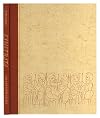
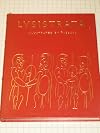
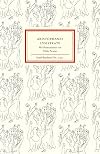
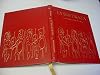
Lysistrata: Illustrated by Picasso
by Aristophanes, Pablo Picasso (Illustrator)
91 Members (3.96)
On This Page
Tags
Recommendations


















Member Reviews
Members
- Recently Added By
Author Information

534 Works 20,724 Members
Aristophanes, 448 b.c. - 385 b.c. Aristophanes is considered to be one of the greatest comedic writers ever to have taken to the stage. He was born in Athens, Greece, in the town of Cydathenaeum. Aristophanes is believed to have been well educated, which would explain his propensity towards words. It is also believed that he owned land on the show more island of Aegina. Aristophanes was first a satirist, he was well known for attacking anything from politics to poets, mainly the war between Sparta and Athens and the poet Euripides. He wrote more than 40, eleven of which are still being acted today. "The Acharnians" was his first play, written in 425, B.C.. This was the first of his plays in reaction to the war, as well as the play "Peace." But perhaps Aristophanes most famous play, Lysistrata, made his true feelings of the war known. In this play, the women seek peace by claiming celibacy until the fighting is stopped. It is the play that he is most famous for, for capturing the feeling of the people in a way that was both lighthearted and poignant. Aristophanes died three years after the war ended, in 385, B.C.,but left behind a legacy that has lasted to the present day. (Bowker Author Biography) show less

Pablo Ruiz y Picasso, Spanish painter, graphic artist, and sculptor, is generally considered the most revolutionary, influential, and versatile artist of the twentieth century. He was born in Malaga, son of a painter, and studied in Barcelona. His extraordinary talent showed at an early age. Before he was 14, he had already produced a masterwork show more in the classic tradition. His early paintings (1901-04) of the so-called Blue Period (in which blues dominate the color scheme) deal with outcasts, beggars, sick children, and circus people. The Old Guitarist is the most famous of his Blue Period paintings. In Paris, Picasso developed a lighter palette, the so-called Rose Period, which is exemplified in The Boy with Horse. In his so-called Negro Period (1907-09), he concerned himself with basic forms, revealing the influence of African art. During those same years, he turned to the incipient cubist movement. Les Demoiselles d'Avignon, in its semiabstract geometric forms, was a revolutionary step toward twentieth-century modernism, which he, together with Braque and Matisse, really set in motion. Picasso went through the entire vocabulary of cubism, its analytical as well as its synthetic phase. After 1918 he was also hailed as an initiator of surrealism. The horrors of the Spanish civil war affected Picasso deeply. With almost mythological power, his major work Guernica was inspired by the terror-bombing of the ancient capital of the Basques in northern Spain. Although the painting does not represent the event itself, it does evoke the agony and terror of war in general. The saturation bombing depicted in Guernica was the first demonstration of a technique later employed during World War II. Night Fishing at Antibes is another masterwork of that period. In his later years, Picasso experimented with ceramics and did highly original sculptures---including the famous Goat, as well as collages. He also produced a flood of drawings, lithographs, engravings, and stage designs. He remained creative to the last day of his life. (Bowker Author Biography) show less
All Editions
Common Knowledge
- Canonical title
- Lysistrata: Illustrated by Picasso
Classifications
Statistics
- Members
- 91
- Popularity
- 351,634
- Rating
- (3.96)
- Languages
- English, German
- Media
- Paper
- ISBNs
- 2
- ASINs
- 8