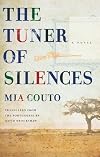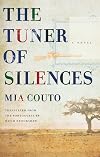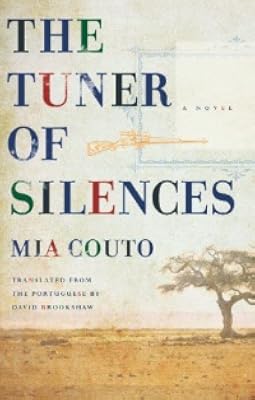
The Tuner of Silences
by Mia Couto
On This Page
Description
A RADIO FRANCE-CULTURE/TÉLÉRAMA BEST WORK OF FICTION BY THE FINALIST FOR THE 2015 MAN BOOKER INTERNATIONAL PRIZE THE WINNER OF THE 2014 NEUSTADT PRIZE AND THE WINNER OF THE 2013 CAMÕES PRIZE "Quite unlike anything else I have read from Africa.""--Doris Lessing "By meshing the richness of African beliefs . . . into the Western framework of the novel, he creates a mysterious and surreal epic."--Henning Mankell Mwanito was eleven when he saw a woman for the first time, and the sight so show more surprised him he burst into tears. Mwanito has been living in a former big-game park for eight years. The only people he knows are his father, his brother, an uncle, and a servant. He's been told that the rest of the world is dead, that all roads are sad, that they wait for an apology from God. In the place his father calls Jezoosalem, Mwanito has been told that crying and praying are the same thing. Both, it seems, are forbidden. The eighth novel by the internationally bestselling Mia Couto, The Tuner of Silences is the story of Mwanito's struggle to reconstruct a family history that his father is unable to discuss. With the young woman's arrival in Jezoosalem, however, the silence of the past quickly breaks down, and both his father's story and the world are heard once more. The Tuner of Silences has been published to acclaim in more than half a dozen countries. Now in its first English translation, this story of an African boy's quest for the truth endures as a magical, humanizing confrontation between one child and the legacy of war. PRAISE FOR MIA COUTO "On almost every page ... we sense Couto's delight in those places where language slips officialdom's asphyxiating grasp."--The New York Times "Even in translation, his prose is suffused with striking images."--The Washington Post PRAISE FOR DAVID BROOKSHAW "David Brookshaw dexterously renders the novel's often colloquial, pithy Portuguese into lively English. Brookshaw's task is made more exacting by the particular quality of Couto's brilliance."--The New York Times show lessTags
Recommendations


















Member Reviews
Mwanito was three when his mother died, and his father takes him and his older brother off-the-grid. Mwanito's maternal uncle drives them to a deserted game preserve, where his father declares the nation of Jezoosalem and gives them new names. The boys are never to speak of the past or life outside Jezoosalem, which their father declares no longer exists. Their only companions are the ex-soldier, Zachary, and the occasional resupply visits from their uncle. One day, when Mwanito is eleven, a woman arrives in Jezoosalem, and life is never the same for any of them.
Although the plot line is interesting, it is Couto's writing which made reading this book such a delight. I read once that Couto considers himself a poet who writes novels, and show more that's a wonderful way to put it. Here are a few quotes out of the many lines that struck me as beautiful:
Describing uncle: He was timid, bowing formally and respectfully as if confronted by a low doorway whichever way he turned. Aproximado would speak without ever abandoning his modest ways, as it he were always mistaken, as if his very existence were no more than an indiscretion.
Describing father: He who loses hope, runs away. He who loses confidence, hides away. And he wanted to do both things: to run away and to hide away. Nevertheless, we should never doubt Silvestre's capacity to love.
—Your father is a good man. His goodness is that of an angel who doesn't know where God is. That's all.
His whole life had been devoted to one task: to be a father. And any good father faces the same temptation: to keep his children for himself, away from the world, far from time.
Describing Zachary: ...he slept like a guinea-fowl. On the branch of a tree for fear of the ground. But on the lowest branch, in case he fell.
The woman's thoughts: This is how I grow old: dispersed within me, a veil abandoned on a church pew.
And again: This is my conflict: when you're here, I don't exist, I'm ignored. When you're not here, I don't know myself, I'm ignorant. I only exist in your presence. And I am only myself in your absence. Now, I know. I'm no more than a name. A name that only comes to life when uttered by you. show less
Although the plot line is interesting, it is Couto's writing which made reading this book such a delight. I read once that Couto considers himself a poet who writes novels, and show more that's a wonderful way to put it. Here are a few quotes out of the many lines that struck me as beautiful:
Describing uncle: He was timid, bowing formally and respectfully as if confronted by a low doorway whichever way he turned. Aproximado would speak without ever abandoning his modest ways, as it he were always mistaken, as if his very existence were no more than an indiscretion.
Describing father: He who loses hope, runs away. He who loses confidence, hides away. And he wanted to do both things: to run away and to hide away. Nevertheless, we should never doubt Silvestre's capacity to love.
—Your father is a good man. His goodness is that of an angel who doesn't know where God is. That's all.
His whole life had been devoted to one task: to be a father. And any good father faces the same temptation: to keep his children for himself, away from the world, far from time.
Describing Zachary: ...he slept like a guinea-fowl. On the branch of a tree for fear of the ground. But on the lowest branch, in case he fell.
The woman's thoughts: This is how I grow old: dispersed within me, a veil abandoned on a church pew.
And again: This is my conflict: when you're here, I don't exist, I'm ignored. When you're not here, I don't know myself, I'm ignorant. I only exist in your presence. And I am only myself in your absence. Now, I know. I'm no more than a name. A name that only comes to life when uttered by you. show less
Mwanito is an 11 year old boy whose father, Silvestre Vitalício, has taken him and his older brother Ntunzi to live in Jezoosalem, the ruins of an abandoned game preserve in the countryside of Moçambique after the mysterious and sudden death of his beloved wife. Silvestre's brother in law and friend make a community of five, and the domineering Silvestre insists that Jezoosalem is the last remaining civilized place on Earth. He loves his sons, especially Mwanito, whose gift as a "tuner of silences" helps mitigate Silvestre's tortured mind and most violent instincts, especially towards his rebellious older son, who rejects his father's incredulous claims and beliefs.
Life in Jezoosalem is suddenly transformed by the appearance of Marta, show more a Portuguese woman who befriends Mwanito and sets Ntunzi's hormones raging, but she is a dire threat to Silvestre and what he has taught his sons. Tension steadily builds in the altered community, and the increasingly unstable Silvestre boldly vows to remove the stranger by force if she does not leave willingly.
'The Tuner of Silences' is a lyrical, captivating and unforgettable novel filled with damaged souls who struggle to find meaning and happiness in lives permanently altered by the deaths of those they love the most. Mia Couto is one of Africa's most celebrated contemporary writers, and after reading The Tuner of Silences, one of my favorite novels of 2021 to date, it is easy to see why. show less
Life in Jezoosalem is suddenly transformed by the appearance of Marta, show more a Portuguese woman who befriends Mwanito and sets Ntunzi's hormones raging, but she is a dire threat to Silvestre and what he has taught his sons. Tension steadily builds in the altered community, and the increasingly unstable Silvestre boldly vows to remove the stranger by force if she does not leave willingly.
'The Tuner of Silences' is a lyrical, captivating and unforgettable novel filled with damaged souls who struggle to find meaning and happiness in lives permanently altered by the deaths of those they love the most. Mia Couto is one of Africa's most celebrated contemporary writers, and after reading The Tuner of Silences, one of my favorite novels of 2021 to date, it is easy to see why. show less
This one will be battling it out in the 2014 Tournament of Books (themorningnews.org/tob). I might not known of its existence if it wasn't on the list. But as soon as I read the description, it sounded absolutely amazing. In Mozambique, a man named Silvestre decides to take his two sons to live in an abandoned game reserve called Jezoosalem. He tells his sons the world has ended, there are no other people left and basically doesn't allow them to do anything: dream, read, write, pray. They are waiting for God's apology. Then a woman enters their lives and Silvestre's imposed reality starts to crumble.
The writing style is lovely. Even the epigraphs at the beginning of each chapter are so perfectly chosen, it's like the book was written show more along their path. The characters are heart-wrenching. As Silvestre tries to keep his sons away from grief and loss, he ends up making grief and loss their entire lives. I love what it says about being human. One of the lessons I think the book teaches is not to believe a person's problems are only mental illness as there isn't a way anyone can know 100% of a person's story. Sometimes just labeling a person's problems as mental illness can do more harm than good, as any person has things that even their nearest and dearest don't know about. Once you read what has happened to Silvestre, it is understandable how he decided to react to the world. The book is a sad one, but with these characters, a superb writing style, and what it has to say, it is worth the sad journey. I'm thrilled it was picked for the Tournament this year and I'd like to see it go far! show less
The writing style is lovely. Even the epigraphs at the beginning of each chapter are so perfectly chosen, it's like the book was written show more along their path. The characters are heart-wrenching. As Silvestre tries to keep his sons away from grief and loss, he ends up making grief and loss their entire lives. I love what it says about being human. One of the lessons I think the book teaches is not to believe a person's problems are only mental illness as there isn't a way anyone can know 100% of a person's story. Sometimes just labeling a person's problems as mental illness can do more harm than good, as any person has things that even their nearest and dearest don't know about. Once you read what has happened to Silvestre, it is understandable how he decided to react to the world. The book is a sad one, but with these characters, a superb writing style, and what it has to say, it is worth the sad journey. I'm thrilled it was picked for the Tournament this year and I'd like to see it go far! show less
The Tuner of Silences is the coming-of-age story of Mwanito, a young boy, who lives on an abandoned game reserve, with only his father, his brother, and a former soldier now servant. His father, who is mentally ill, either organically or from grief or guilt, moved the family here—which he calls Jezoosalem—after the death of his wife. It is a strange and isolated life they live, interrupted only by periodic visits from Mwanito's uncle Aproximado, who brings them supplies. The father has renamed them all, and told the boys that the rest of the world is dead. He says they will wait there for an apology from God. Mwanito is eleven years old when he sees a woman for the first time, a Portuguese tourist seeking a reclusive few weeks show more holiday.
Eventually, circumstances will lead the family out of their park after years of isolation, and back to the city, where the world opens up and offers itself to the adolescent Mwanito, and where the mystery of his mother's tragic death is slowly revealed.
This excellent novel is beautifully written, and tells us the stories of all of its characters, who live and breath on the pages. It has a dreamlike quality about it, told by the young man, Mwanito, looking back at his life at the game reserve, before he moves the story into the present. Dialog, which is not in quotes, but in italics, lends itself also to this dreamlike perception. Here's an especially poignant excerpt that illustrates this and is also a nice note to end on.
"Family, school, other people, they all elect some spark of promise in us, some area in which we may shine. Some are born to sing, others to dance, others are born merely to be someone else. I was born to keep quiet. My only vocation is silence. It was my father who explained this to me: I have an inclination to remain speechless, a talent for perfecting silences. I've written that deliberately , silences in the plural. Yes, because there isn't one sole silence. Every silence contains music in a state of gestation...."
—Come here, son, come and help me be quiet
"At the end of the day, the old man would sit back in his chair on the veranda. It was like that every night: I would sit at his feet, gazing at the stars high up in the darkness. My father would close his eyes, his head swaying this way and that, as if his tranquility were driven by some inner rhythm. Then, he would take a deep breath and say:"
—That was the prettiest silence I've ever heard. Thank you, Mwanito. show less
Eventually, circumstances will lead the family out of their park after years of isolation, and back to the city, where the world opens up and offers itself to the adolescent Mwanito, and where the mystery of his mother's tragic death is slowly revealed.
This excellent novel is beautifully written, and tells us the stories of all of its characters, who live and breath on the pages. It has a dreamlike quality about it, told by the young man, Mwanito, looking back at his life at the game reserve, before he moves the story into the present. Dialog, which is not in quotes, but in italics, lends itself also to this dreamlike perception. Here's an especially poignant excerpt that illustrates this and is also a nice note to end on.
"Family, school, other people, they all elect some spark of promise in us, some area in which we may shine. Some are born to sing, others to dance, others are born merely to be someone else. I was born to keep quiet. My only vocation is silence. It was my father who explained this to me: I have an inclination to remain speechless, a talent for perfecting silences. I've written that deliberately , silences in the plural. Yes, because there isn't one sole silence. Every silence contains music in a state of gestation...."
—Come here, son, come and help me be quiet
"At the end of the day, the old man would sit back in his chair on the veranda. It was like that every night: I would sit at his feet, gazing at the stars high up in the darkness. My father would close his eyes, his head swaying this way and that, as if his tranquility were driven by some inner rhythm. Then, he would take a deep breath and say:"
—That was the prettiest silence I've ever heard. Thank you, Mwanito. show less
Two stars -- it was okay. I don't read a ton of literature in translation, so for me, this was a stretch I probably wouldn't have taken if not for the Tournament of books. The author was born in Mozambique and this was originally written in Portuguese.
The snippets of poetry that begin each chapter make more sense in that context, but I found myself impatient with them, as they were so much more touchy-feely than the rest of the text that they didn't feel organic.
The first lines are pretty phenomenal, as far as grabbing your attention:
Unfortunately, the seed of the narrator seeing a woman for the first time doesn't come to fruition until nearly the end of the book, which was longer than I wanted to wait.
And I tripped over the word Jezoosalem every time I read it. Every single time. I kept hearing it in my head as "Jeloosazem" or "Zejoosalem" and even though it's a silly thing to get stuck on, it interrupted the flow of my reading incredibly often.
Also, while the bestiality is tactfully handled, it's still in there, so don't read if you have trouble with really squicky concepts. show less
The snippets of poetry that begin each chapter make more sense in that context, but I found myself impatient with them, as they were so much more touchy-feely than the rest of the text that they didn't feel organic.
The first lines are pretty phenomenal, as far as grabbing your attention:
I was eleven years old when I saw a woman for the first time, and I was seized by such sudden surprise that I burst into tears. I lived in a wasteland inhabited only by five men. My father had given theshow more
place a name. It was called, quite simply, Jezoosalem. It was the land where Jesus would uncrucify himself. And that was the end of the matter, full stop.
Unfortunately, the seed of the narrator seeing a woman for the first time doesn't come to fruition until nearly the end of the book, which was longer than I wanted to wait.
And I tripped over the word Jezoosalem every time I read it. Every single time. I kept hearing it in my head as "Jeloosazem" or "Zejoosalem" and even though it's a silly thing to get stuck on, it interrupted the flow of my reading incredibly often.
Also, while the bestiality is tactfully handled, it's still in there, so don't read if you have trouble with really squicky concepts. show less
Citações:
"A cegueira é o destino de quem se deixa tomar de assalto pela paixão: deixamos de ver quem amamos. Em vez disso, o apaixonado fita o abismo de si mesmo."
"E todo o silêncio é música em estado de gravidez."
"A cegueira é o destino de quem se deixa tomar de assalto pela paixão: deixamos de ver quem amamos. Em vez disso, o apaixonado fita o abismo de si mesmo."
"E todo o silêncio é música em estado de gravidez."
– Je n’ai jamais vu de route qui ne soit pas triste, répondit-il sans détacher ses yeux de l’osier avec lequel il tressait un panier.
Et comme mon frère n’en démordait pas, montrant que la réponse ne l’avait pas satisfait, mon père continua à argumenter. Nous n’avions qu’à voir ce qu’amenait la route. (…)
– Des attentes. Voilà ce que ramène la route. Et ce sont les attentes qui font vieillir.
(p. 34, Chapitre 2, “Mon père, Silvestre Vitalício”, Partie 1, “L’humanité”).
Cela faisait longtemps que je tournais autour de ce livre, pas sûre qu’il soit fait pour moi. Après avoir lu coup sur coup plusieurs notes de lecture élogieuses, j’ai fini par sauter le pas.
Et effectivement, ce n’est pas show more un livre pour moi. Une histoire qui dit peu et suggère trop, une longue métaphore filée tout au long du roman sans que j’arrive toujours à savoir si mon interprétation est la bonne, un peu trop de violence gratuite entre les personnages… Non, décidément, pas vraiment mon style de roman.
Et pourtant, avec la dernière partie, je me suis laissée prendre dans les rets de l’histoire, et j’ai regardé le cœur serré les personnages se débattre avec leur deuil, leurs culpabilités et leurs regrets. C’est surtout lorsque les personnages quittent Jesusalém que l’histoire m’a happée, un moment que j’identifie à la sortie du deuil, une sortie que chacun négocie à sa façon, pas toujours avec succès.
Je ne suis pas certaine que c’est un livre qui remonterait le moral à quelqu’un qui en aurait besoin, ni qui permettra de cheminer à qui doit trouver son chemin. Mais c’est un livre sur la façon dont les vivants et les morts cohabitent, une façon souvent difficile à démêler et qui peut conduire sur les rivages de la folie. show less
Jan 5, 2024 (Edited)French
Members
- Recently Added By
Lists

Best African and African diaspora books
111 works; 4 members

2014 Tournament of Books
17 works; 20 members

Books Read in 2013
1,630 works; 51 members
Author Information

75+ Works 3,153 Members
Some Editions
Awards and Honors
Series
Belongs to Publisher Series
Common Knowledge
- Canonical title
- The Tuner of Silences
- Original title
- Jesusalém
- Original publication date
- 2009
- People/Characters
- Mwanito; Silvestre Vitalicio; Ntunzi; Tio Aproximado; Zacaria Kalash
- First words
- I was eleven years old when I saw a woman for the first time, and I was seized by such sudden surprise that I burst into tears.
- Blurbers
- Lessing, Doris; Mankell, Henning
- Original language
- Portuguese
Classifications
- Genres
- Fiction and Literature, General Fiction, Romance
- DDC/MDS
- 869.3 — Literature & rhetoric Spanish Literature Literatures of Portuguese and Galician languages Portuguese fiction
- LCC
- PQ9939 .C68 .J4813 — Language and Literature French, Italian, Spanish and Portuguese literatures Portuguese literature Provincial, local, colonial, etc.
- BISAC
Statistics
- Members
- 233
- Popularity
- 139,836
- Reviews
- 10
- Rating
- (3.75)
- Languages
- 7 — English, French, German, Italian, Portuguese, Spanish, Swedish
- Media
- Paper, Ebook
- ISBNs
- 18
- ASINs
- 7