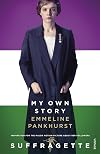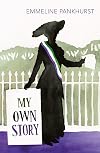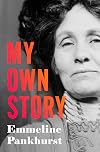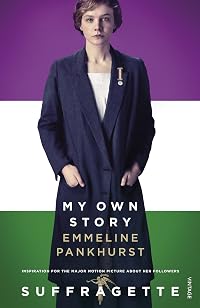
My Own Story
by Emmeline Pankhurst
On This Page
Description
Delve into the nitty-gritty details of the daily life of suffragist leader Emmeline Pankhurst in this inspiring memoir. Pankhurst is regarded as one of the chief architects of the women's suffrage movement, and her focus on civil—and sometimes not-so-civil—disobedience was a radical departure from the norm in the early twentieth century. My Own Story covers the period from 1900 to 1914 and offers fascinating insights into Pankhurst's motives and methods..
Tags
Recommendations














Member Reviews
This is the autobiography of the great suffragette leader, written on the eve of the First World War when the struggle for women's right to vote was not yet won, and just at the time when she had a great falling out with her daughter Sylvia and others over some of the militant tactics of the Women's Social and Political Union. There is comparatively little about the author's early life here. She was born Emmeline Goulden, and grew up in a highly politicised family, acquiring experience of the poverty and injustice of working women's lives when became a Poor Law Guardian. She married a prominent suffrage supporter, barrister Richard Pankhurst, who drafted the first women's enfranchisement parliamentary bill in 1870. The bulk of the book show more recounts the increasingly bitter and militant struggles of the WPSU from around 1906 onwards, starting from rejections of the repeated petitions and requests for meetings with Campbell-Bannerman, Asquith and other Liberal government figures, suffrage bills being passed at second reading in the Commons, only to be dropped or have further progress frustrated by filibustering. This led to frustration and adoption of more militant tactics including window breaking, letter bombs and arson of (empty) buildings: "We had exhausted argument. Therefore either we had to give up our agitation altogether, as the suffragists of the eighties virtually had done, or else we must act, and go on acting, until the selfishness and the obstinacy of the Government was broken down, or the Government themselves destroyed". Pankhurst justifies these tactics by comparing them to the violence in earlier campaigns for democracy through the 19th century and earlier: "The militancy of men, through all the centuries, has drenched the world with blood, and for these deeds of horror and destruction men have been rewarded with monuments, with great songs and epics. The militancy of women has harmed no human life save the lives of those who fought the battle of righteousness". This bitter period was also marked by shocking violence of the police towards the suffragettes, the horrible force feeding of suffragettes and the hunger strikes, which provoked further acts of militancy.
Looking back from the perspective of 2018, a century after women first won the vote (albeit only those over 30 until 1928), it is easy to see Pankhurst as a great pioneer in achieving a simple and obvious measure of basic justice, for which she is rightly lauded. Yet some of the militant tactics increasingly adopted by the WSPU alienated some of the most prominent suffragettes and other supporters, and few would defend the use of such tactics by campaigning groups today. Pankhurst's philosophy was total dedication to the cause of women's suffrage, avoiding all distractions of getting involved in other social issues and causes ("No member of the W.S.P.U. divides her attention between suffrage and other social reforms. We hold that both reason and justice dictate that women shall have a share in reforming the evils that afflict society, especially those evils bearing directly on women themselves. Therefore, we demand, before any other legislation whatever, the elementary justice of votes for women". This tactic can be justified against the illiberalism on this issue of the leaders of the Liberal Party, which many early suffragettes supported ("our long alliance with the great parties, our devotion to party programmes, our faithful work at elections, never advanced the suffrage cause one step. The men accepted the services of the women, but they never offered any kind of payment".); nevertheless, it does seem to have become very narrow and Pankhurst's leadership of the organisation stifling and autocratic to the extent of her viewing it as more akin to a paramilitary organisation ("we have no annual meeting, no business sessions, no elections of officers. The W.S.P.U. is simply a suffrage army in the field. It is purely a volunteer army, and no one is obliged to remain in it. Indeed we don’t want anybody to remain in it who does not ardently believe in the policy of the army"). In some ways, despite her arguably fanatical determination, she was pessimistic about her ultimate chances of success: "Universal suffrage in a country where women are in a majority of one million is not likely to happen in the lifetime of any reader of this volume". She died in 1928 just before true universal suffrage was achieved, and women and men over 21 could both vote. show less
Looking back from the perspective of 2018, a century after women first won the vote (albeit only those over 30 until 1928), it is easy to see Pankhurst as a great pioneer in achieving a simple and obvious measure of basic justice, for which she is rightly lauded. Yet some of the militant tactics increasingly adopted by the WSPU alienated some of the most prominent suffragettes and other supporters, and few would defend the use of such tactics by campaigning groups today. Pankhurst's philosophy was total dedication to the cause of women's suffrage, avoiding all distractions of getting involved in other social issues and causes ("No member of the W.S.P.U. divides her attention between suffrage and other social reforms. We hold that both reason and justice dictate that women shall have a share in reforming the evils that afflict society, especially those evils bearing directly on women themselves. Therefore, we demand, before any other legislation whatever, the elementary justice of votes for women". This tactic can be justified against the illiberalism on this issue of the leaders of the Liberal Party, which many early suffragettes supported ("our long alliance with the great parties, our devotion to party programmes, our faithful work at elections, never advanced the suffrage cause one step. The men accepted the services of the women, but they never offered any kind of payment".); nevertheless, it does seem to have become very narrow and Pankhurst's leadership of the organisation stifling and autocratic to the extent of her viewing it as more akin to a paramilitary organisation ("we have no annual meeting, no business sessions, no elections of officers. The W.S.P.U. is simply a suffrage army in the field. It is purely a volunteer army, and no one is obliged to remain in it. Indeed we don’t want anybody to remain in it who does not ardently believe in the policy of the army"). In some ways, despite her arguably fanatical determination, she was pessimistic about her ultimate chances of success: "Universal suffrage in a country where women are in a majority of one million is not likely to happen in the lifetime of any reader of this volume". She died in 1928 just before true universal suffrage was achieved, and women and men over 21 could both vote. show less
Emmeline Pankhurst's memoir of her experiences in the suffrage movement in Britain is a fascinating window into the experiences of women who fought for their right to vote. Pankhurst briefly recounts her upbringing and her family's encouragement of her involvement in social issues but the majority of the book focuses on her work in the suffrage movement in the early 20th century, and predominantly on the more militant phase of the suffrage movement within the Women's Social and Political Union (WSPU). While I had cursory knowledge of what women in the suffrage movement had suffered during their struggle to get the vote, reading a firsthand account from one of the leaders of the movement was enlightening. My only complaint is that the show more edition I read provided no contemporary views on this historical retelling or other historical context for the suffrage movement, a serious fault as the book was written at the beginning of WWI and published before any suffrage bill for women was passed. show less
Careful account of the defiant campaign for extending the vote to women, written whilst the issue was still live. As this memoir was written largely for an American readership, Mrs Pankhurst takes the trouble to explain some of the parliamentary and political nuances, and this proves useful for us too, coming to this a century later. It still seems baffling why Lloyd George and Asquith were so opposed to the suffragettes’ demands, and so deviously too. They were Liberals, weren’t they? But such is often the case with a big change once conceded - in retrospect, its hard to see why there was such resistance to it, and to reimagine the world before. This book takes us back to that world before, making us marvel at the determination of show more Mrs Pankhurst and her followers, and at the suffering they endured in the brutal forced feeding of prisoners, shockingly described here. show less
Let me first explain my reasoning behind the three thumb review; I found this book to be a strangely impersonal account of Mrs. Pankhurst’s life. It read more like a diary of the main events of the WSPU (Suffrage movement) in the lead up to the outbreak of World War I. This made it extremely difficult for me, as a reader, to get a handle on what she was really like as a person, or the opinions of others of the movement of which she and her sister, Christabel, were such a big part of in England; this in turn had me doing further research at the library and on the internet to fill in the gaps.
Giving an explanation of what propelled her out of the normal role of women in her time, into a political arena is an interesting and eye opening show more journey into what it was like to be female in the late nineteenth and early twentieth century’s, and this was one of things that kept me reading this book. This book is a snapshot into a turbulent time in British history, and may be an eye opener for those who read it and are not acquainted with the nuances of that time.
One thing I became aware of whilst reading this was the tremendous hardships and deprivations these women went through to secure the vote for women. They were humiliated, beaten, force-fed and denigrated in a way that not even the worst of criminals were at the time, all because they wanted more control over their lives and things that ultimately affected the way they lived. This in turn led me to consider the women’s movements today and how they regard the role of women in the twenty first century; there really is no comparison and it made me grateful for the freedoms I do have as a woman today.
I was disappointed that this book ended with the advent of World War I as I would have felt it would have added to the account if there had been an endnote saying what happened to the WSPU and their campaign for Women’s Rights after the end of the war; this was one part of where my extra research came in.
Despite its short comings this is a good read, and I would highly recommend this to anyone who is interested in learning about the origins of feminism and treatment of women in the United Kingdom.
Originally reviewed on: http://catesbooknuthut.com/2015/05/11/review-my-own-story-emmeline-pankhurst/
This work is licensed under a Creative Commons Attribution-NonCommercial-NoDerivs 3.0 Unported License. show less
Giving an explanation of what propelled her out of the normal role of women in her time, into a political arena is an interesting and eye opening show more journey into what it was like to be female in the late nineteenth and early twentieth century’s, and this was one of things that kept me reading this book. This book is a snapshot into a turbulent time in British history, and may be an eye opener for those who read it and are not acquainted with the nuances of that time.
One thing I became aware of whilst reading this was the tremendous hardships and deprivations these women went through to secure the vote for women. They were humiliated, beaten, force-fed and denigrated in a way that not even the worst of criminals were at the time, all because they wanted more control over their lives and things that ultimately affected the way they lived. This in turn led me to consider the women’s movements today and how they regard the role of women in the twenty first century; there really is no comparison and it made me grateful for the freedoms I do have as a woman today.
I was disappointed that this book ended with the advent of World War I as I would have felt it would have added to the account if there had been an endnote saying what happened to the WSPU and their campaign for Women’s Rights after the end of the war; this was one part of where my extra research came in.
Despite its short comings this is a good read, and I would highly recommend this to anyone who is interested in learning about the origins of feminism and treatment of women in the United Kingdom.
Originally reviewed on: http://catesbooknuthut.com/2015/05/11/review-my-own-story-emmeline-pankhurst/
This work is licensed under a Creative Commons Attribution-NonCommercial-NoDerivs 3.0 Unported License. show less
Let me first explain my reasoning behind the three thumb review; I found this book to be a strangely impersonal account of Mrs. Pankhurst’s life. It read more like a diary of the main events of the WSPU (Suffrage movement) in the lead up to the outbreak of World War I. This made it extremely difficult for me, as a reader, to get a handle on what she was really like as a person, or the opinions of others of the movement of which she and her sister, Christabel, were such a big part of in England; this in turn had me doing further research at the library and on the internet to fill in the gaps.
Giving an explanation of what propelled her out of the normal role of women in her time, into a political arena is an interesting and eye opening show more journey into what it was like to be female in the late nineteenth and early twentieth century’s, and this was one of things that kept me reading this book. This book is a snapshot into a turbulent time in British history, and may be an eye opener for those who read it and are not acquainted with the nuances of that time.
One thing I became aware of whilst reading this was the tremendous hardships and deprivations these women went through to secure the vote for women. They were humiliated, beaten, force-fed and denigrated in a way that not even the worst of criminals were at the time, all because they wanted more control over their lives and things that ultimately affected the way they lived. This in turn led me to consider the women’s movements today and how they regard the role of women in the twenty first century; there really is no comparison and it made me grateful for the freedoms I do have as a woman today.
I was disappointed that this book ended with the advent of World War I as I would have felt it would have added to the account if there had been an endnote saying what happened to the WSPU and their campaign for Women’s Rights after the end of the war; this was one part of where my extra research came in.
Despite its short comings this is a good read, and I would highly recommend this to anyone who is interested in learning about the origins of feminism and treatment of women in the United Kingdom.
Originally reviewed on: http://catesbooknuthut.com/2015/05/11/review-my-own-story-emmeline-pankhurst/
This work is licensed under a Creative Commons Attribution-NonCommercial-NoDerivs 3.0 Unported License. show less
Giving an explanation of what propelled her out of the normal role of women in her time, into a political arena is an interesting and eye opening show more journey into what it was like to be female in the late nineteenth and early twentieth century’s, and this was one of things that kept me reading this book. This book is a snapshot into a turbulent time in British history, and may be an eye opener for those who read it and are not acquainted with the nuances of that time.
One thing I became aware of whilst reading this was the tremendous hardships and deprivations these women went through to secure the vote for women. They were humiliated, beaten, force-fed and denigrated in a way that not even the worst of criminals were at the time, all because they wanted more control over their lives and things that ultimately affected the way they lived. This in turn led me to consider the women’s movements today and how they regard the role of women in the twenty first century; there really is no comparison and it made me grateful for the freedoms I do have as a woman today.
I was disappointed that this book ended with the advent of World War I as I would have felt it would have added to the account if there had been an endnote saying what happened to the WSPU and their campaign for Women’s Rights after the end of the war; this was one part of where my extra research came in.
Despite its short comings this is a good read, and I would highly recommend this to anyone who is interested in learning about the origins of feminism and treatment of women in the United Kingdom.
Originally reviewed on: http://catesbooknuthut.com/2015/05/11/review-my-own-story-emmeline-pankhurst/
This work is licensed under a Creative Commons Attribution-NonCommercial-NoDerivs 3.0 Unported License. show less
Ratings
Members
- Recently Added By
Lists

Feminists' memoirs/autobiographies
38 works; 11 members

Books Read in 2015
3,299 works; 126 members
Author Information

5+ Works 402 Members
Awards and Honors
Notable Lists
Series
Belongs to Publisher Series
Common Knowledge
- Original title
- My Own Story
- Original publication date
- 1914
- People/Characters
- Emmeline Pankhurst; Robert Goulden; Henry Ward Beecher; Harriet Beecher Stowe; John Bunyan; Thomas Carlyle (show all 175); John Keats; Chapman; John Stuart Mill; Richard Pankhurst; Lydia Becker; Susan B. Anthony; Jacob Bright; Mrs. Jacob Bright; Mrs. Alice Cliff Scatcherd; Miss. Wolstentholm; Mrs. Wolstentholm-Elmy; Madame Edmond Adam; Mlle. Marchef-Girard; Noemie Rochefort; Henri Rochefort; William Ewart Gladstone; Lord Coleridge; Christabel Pankhurst; Sylvia Pankhurst; Catherine Gladstone; The Fabian Society; Charles Parnell; Annie Besant; John Burns; Cunninghame Graham; The London School Board; Mrs. Stanton Blatch; Richard Haldane, 1st Viscount Haldane; Edward Grey; Elizabeth I, Queen of England; Henry VIII, King of England; Edward VI, King of England; Mary I, Queen of England; Keir Hardie; Annie Kenney; Jenny Kinney; William Peacock; Winston Churchill; Henry Campbell-Bannerman; Theresa Billington; H. H. Asquith; David Lloyd George; Mrs. Drummond; James Redmond; Wendell Phillips; William Lloyd Garrison; Samuel Evans; Mrs. Cobden Sanderson; Mrs. Tuke; Herbert Gladstone, 1st Viscount Gladstone; Richard Cobden; Mr. Curtis Bennett; King Canute; Mrs. Despard; Mrs. Dickinson; Lady Harberton; Miss. Woodlock; Mrs. Chatterton; Mary Leigh; Mrs. Martel; Mr. Stanger; Mr. Muskett; Charles II, King of England, Scotland, and Ireland; Lady Carlisle; John Bright; Emmeline Pethick-Lawrence; Inspector Scantlebury; Edith New; Inspector Jarvis; Georgiana Brackenbury; Horace Smith; Wallace Dunlop; Mrs. Clark; Lady Constance Lytton; Daisy Solomon; Miss. Nelson; Mrs. Saul Solomon; Elsie Howey; Inspector Wells; Mrs. Haverfield; Lord Robert Cecil; Mr. Henle; Sir Albert de Rutzen; Lucy Burns; Charlotte Marsh; Mr. Masterman; Mr. C. Mansell-Moullin; Jane Addams; Ella Flagg Young; Goldwin Smith; Edward VII, King of the United Kingdom; Arthur Balfour; H. N. Brailsford; The Conciliation Committee; The Earl of Lytton; Mr. D. J. Shackleton; Philip Snowden; The Men's Political Union for Women's Enfranchisement; Sir Alfred Mondell; Lord Castelreagh; Augustine Birrell; Mary Clarke; Henria Williams; Cecelia Wolseley Haig; Mazzini; Mr. Philips; Sir George Kemp; Annie Woolmore; Helen Conroy; Leif Jones; Dr. John Winters Brannan; Mrs. John Winters Brannan; Elizabeth Robins; Emily Wilding Davison; Mr. Agg Gardner; Charles Hobhouse; Sir William Byles; Ethel Smyth; Frederick Pethick-Lawrence, 1st Baron Pethick-Lawrence; Mr. Bodkin; Rufus Isaacs; Tim Healey; Ellis Griffith; W. T. Stead; Leander Starr Jameson; Tom Mann; Professor Paul Milyoukoff; Signor Enrico Ferri; Edward Bernstein; Georg Brandes; Edward Westermarch; Marie Curie; Ellen Key; Maurice Maeterlinck; George Lansbury; Lewis Harcourt; Mr. Redmond; Lord Selborne; Bonar Law; Lord Hugh Cecil; Sir John Rolleston; Mr. Henderson; Patrick Henry; Travers Humphrey; Mr. Marshall; Justice Lush; Reginald McKenna; Miss. Barrett; Miss. Lennox; Miss. Lake; Miss. Kerr; Mrs. Sanders; Mr. E. G. Clayton; Mr. Drew; Grace Roe; Mrs. Dacre Fox; Mrs. Mansel; Dr. Flora Murray; Mansell Moullin; Hertha Marks Ayrton; Rupert Gwynne; Mr. Marsh; Mr. Wedgwood; Rheta Childe Dorr; Mrs. O. H. P. Belmont; Mary Richardson; Joan of Arc; Edward Carson; Dorothy Evans
- Important places
- Manchester, England, UK; New Caledonia; HM Prison Manchester, Manchester, England, UK (commonly known as Strangeways); Royal Albert Hall, London, England, UK; Caxton Hall, Westminster, London, England, UK; Northamptonshire, England, UK (show all 51); Cockermouth, Cumbria, England, UK; HM Prison Holloway, Holloway, London, England, UK; Huddersfield, West Yorkshire, England, UK; Hexham, Northumberland, England, UK; Rutland, England, UK; Suffolk, England, UK; Newton Abbot, Devon, England, UK; Kingston upon Hull, East Riding of Yorkshire, England, UK; Bovey Tracey, Devon, England, UK; Hounslet Moor, West Yorkshire, England, UK; Peckham, Southwark, London, England, UK; Peckham Rye, Southwark, London, England, UK; Dundee, Scotland, UK; Hyde Park, London, England, UK; Winchester, Hampshire, England, UK; Bow Street Police Station, London, England, UK; Lincoln's Inn Hotel, London, England, UK; Colne Valley, Lancashire, England, UK; Carnegie Hall, New York, New York, USA; Boston, Massachusetts, USA; Baltimore, Maryland, USA; Toronto, Ontario, Canada; Bryn Mawr College, Bryn Mawr, Pennsylvania, USA; Rosemary Hall, Greenwich, Connecticut, USA; Scala Theatre, London, England, UK {demolished 1969}; Roosevelt Island, New York, New York, USA (as Blackwell's Island); Seattle, Washington, USA; Minneapolis, Minnesota, USA; Colwick Hall, Colwick, Nottinghamshire, England, UK; Cannon Row Police Station, London, England, UK; London, England, UK; Bristol, England, UK; Paris, France; Gardenia Restaurant, Catherine Street, Strand, London, England, UK; The Old Bailey, London, England, UK; Dublin, Ireland; Mountjoy Prison, Dublin, Ireland; Ulster, Ireland; Police Court, Epsom, Surrey, England, UK; Oxted Station, Oxted, Surrey, England, UK; British Museum, London, England, UK; The National Gallery, London, England, UK; Windsor Castle, Windsor, Berkshire, England, UK; Buckingham Palace, London, England, UK; Ellis Island, New York, New York, USA
- Important events
- Women's Suffrage; National Women's League Federation; Liberal Party, UK; The Women's Suffrage Society; The Women's Social and Political Union; Women's Liberal Associations (show all 20); The Primrose League; The Fabian Society; The Salvation Army; The Law and Liberty League; The Women's Franchise League; The London School Board; The Board of Poor Law Guardians; The Women's Co-operative Guild; The Women's Liberal Federation; The Scottish Women's Liberal Federation; The North-of-England Weavers' Association; The British Women's Temperance Association; The Conciliation Committee; The Men's Political Union for Women's Enfranchisement
- Original language
- English
Classifications
- Genres
- Nonfiction, Biography & Memoir, General Nonfiction, History, Sexuality and Gender Studies, Politics and Government
- DDC/MDS
- 324.623092 — Society, government, & culture Political science Politics & Elections Suffrage, Voting Rights, Voting and Electoral Systems Suffrage exploration History, geographic treatment, biography Biography
- LCC
- JN979 .P26 — Political Science Political institutions and public administration (Europe) Political institutions and public administration (Europe) Great Britain
- BISAC
Statistics
- Members
- 239
- Popularity
- 136,179
- Reviews
- 5
- Rating
- (3.74)
- Languages
- 5 — Czech, English, German, Italian, Spanish
- Media
- Paper, Audiobook, Ebook
- ISBNs
- 49
- ASINs
- 16