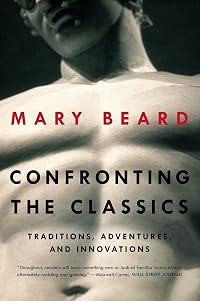
Confronting the Classics: Traditions, Adventures, and Innovations
by Mary Beard
On This Page
Description
Mary Beard is one of the world's best-known classicists, an academic with a rare gift for communicating with a wide audience. Here, she draws on thirty years of teaching about Greek and Roman history to provide a panoramic portrait of the classical world that draws surprising parallels with contemporary society. We are taken on a guided tour of antiquity, encountering some of the most famous (and infamous) characters of classical history, among them Alexander the Great and Julius Caesar, show more Sappho and Hannibal. Challenging the notion that classical history is all about depraved emperors and conquering military heroes, Beard also introduces us to the common people--the slaves, soldiers, and women. How did they live? What made them laugh? What were their marriages like? This bottom-up approach to history is typical of Beard, who looks with fresh eyes at both scholarly controversies and popular interpretations of the ancient world, taking aim at many of the assumptions we held as gospel.--From publisher description. show lessTags
Recommendations

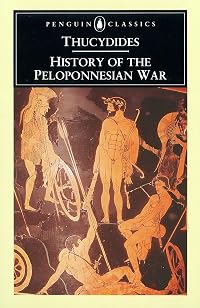
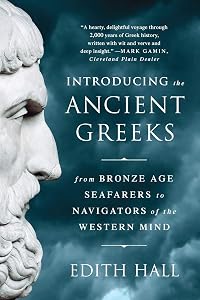
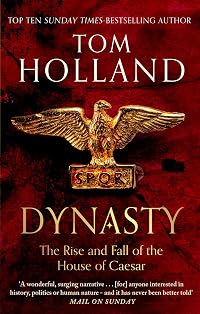
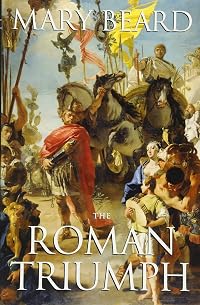





Member Reviews
Humorous (and often scathing) collection of classical reviews. Always about more than just the book(s) being reviewed--gets into the relevance of Classics on a wider scale.
Almost totally adapted from several years worth of book reviews, this is a fascinating survey of Greek and (mostly) Roman history by a woman who seems to know it all. At least she purports to know a lot more than the authors of most of the books she is reviewing! But she's absolutely convincing and a very good writer (check out SPQR). Who knew about the problems with translating Thucydides and Tacitus, for instance? Much of what we think we know from these writers may be the result of less than accurate--although highly memorable--translations. Beard argues that the classics are still alive and well despite the great decrease in knowledge of classical languages. Her argument is pretty convincing. A very enjoyable and enlightening read.
The thing about a good bookshop is that it encourages speculation. This was another book I picked up in Daunt Books on Marylebone High St. Mary Beard will be familiar in particular to the British, but I'm guessing to a lot of other English speakers, as a high profile academic, with a public presence I imagine is unusual for somebody in this discipline. She is the Classics editor of the TLS and it is a hodge podge collection of book reviews she has written over quite a long period of time, linked together by various themes, that form the basis for this book. The units are small, I found myself looking forward to a tale and a cuppa for a week or two.
I hadn't done any Classics since school and this was a bit of an eye-opener for me. I show more hadn't realised just how much surmising has come from so little evidence. How many careers, books - an entire academic industry, not to mention a popular one too - has been extracted in a manner that one could rather precisely say 'literally' brings to mind blood from a stone. The big theme of this book is explaining how our view of this ancient period is dictated by interpretation in a way that makes me, as a historian of more modern times, aghast. It's all made up! Almost. The characters, the stories, the very palaces we visit to pay homage to our ideas of how things were.
I exaggerate a little, of course: it isn't ALL made up.
Rest here:
https://alittleteaalittlechat.wordpress.com/2015/01/31/confronting-the-classics-... show less
I hadn't done any Classics since school and this was a bit of an eye-opener for me. I show more hadn't realised just how much surmising has come from so little evidence. How many careers, books - an entire academic industry, not to mention a popular one too - has been extracted in a manner that one could rather precisely say 'literally' brings to mind blood from a stone. The big theme of this book is explaining how our view of this ancient period is dictated by interpretation in a way that makes me, as a historian of more modern times, aghast. It's all made up! Almost. The characters, the stories, the very palaces we visit to pay homage to our ideas of how things were.
I exaggerate a little, of course: it isn't ALL made up.
Rest here:
https://alittleteaalittlechat.wordpress.com/2015/01/31/confronting-the-classics-... show less
The thing about a good bookshop is that it encourages speculation. This was another book I picked up in Daunt Books on Marylebone High St. Mary Beard will be familiar in particular to the British, but I'm guessing to a lot of other English speakers, as a high profile academic, with a public presence I imagine is unusual for somebody in this discipline. She is the Classics editor of the TLS and it is a hodge podge collection of book reviews she has written over quite a long period of time, linked together by various themes, that form the basis for this book. The units are small, I found myself looking forward to a tale and a cuppa for a week or two.
I hadn't done any Classics since school and this was a bit of an eye-opener for me. I show more hadn't realised just how much surmising has come from so little evidence. How many careers, books - an entire academic industry, not to mention a popular one too - has been extracted in a manner that one could rather precisely say 'literally' brings to mind blood from a stone. The big theme of this book is explaining how our view of this ancient period is dictated by interpretation in a way that makes me, as a historian of more modern times, aghast. It's all made up! Almost. The characters, the stories, the very palaces we visit to pay homage to our ideas of how things were.
I exaggerate a little, of course: it isn't ALL made up.
Rest here:
https://alittleteaalittlechat.wordpress.com/2015/01/31/confronting-the-classics-... show less
I hadn't done any Classics since school and this was a bit of an eye-opener for me. I show more hadn't realised just how much surmising has come from so little evidence. How many careers, books - an entire academic industry, not to mention a popular one too - has been extracted in a manner that one could rather precisely say 'literally' brings to mind blood from a stone. The big theme of this book is explaining how our view of this ancient period is dictated by interpretation in a way that makes me, as a historian of more modern times, aghast. It's all made up! Almost. The characters, the stories, the very palaces we visit to pay homage to our ideas of how things were.
I exaggerate a little, of course: it isn't ALL made up.
Rest here:
https://alittleteaalittlechat.wordpress.com/2015/01/31/confronting-the-classics-... show less
The thing about a good bookshop is that it encourages speculation. This was another book I picked up in Daunt Books on Marylebone High St. Mary Beard will be familiar in particular to the British, but I'm guessing to a lot of other English speakers, as a high profile academic, with a public presence I imagine is unusual for somebody in this discipline. She is the Classics editor of the TLS and it is a hodge podge collection of book reviews she has written over quite a long period of time, linked together by various themes, that form the basis for this book. The units are small, I found myself looking forward to a tale and a cuppa for a week or two.
I hadn't done any Classics since school and this was a bit of an eye-opener for me. I show more hadn't realised just how much surmising has come from so little evidence. How many careers, books - an entire academic industry, not to mention a popular one too - has been extracted in a manner that one could rather precisely say 'literally' brings to mind blood from a stone. The big theme of this book is explaining how our view of this ancient period is dictated by interpretation in a way that makes me, as a historian of more modern times, aghast. It's all made up! Almost. The characters, the stories, the very palaces we visit to pay homage to our ideas of how things were.
I exaggerate a little, of course: it isn't ALL made up.
Rest here:
https://alittleteaalittlechat.wordpress.com/2015/01/31/confronting-the-classics-... show less
I hadn't done any Classics since school and this was a bit of an eye-opener for me. I show more hadn't realised just how much surmising has come from so little evidence. How many careers, books - an entire academic industry, not to mention a popular one too - has been extracted in a manner that one could rather precisely say 'literally' brings to mind blood from a stone. The big theme of this book is explaining how our view of this ancient period is dictated by interpretation in a way that makes me, as a historian of more modern times, aghast. It's all made up! Almost. The characters, the stories, the very palaces we visit to pay homage to our ideas of how things were.
I exaggerate a little, of course: it isn't ALL made up.
Rest here:
https://alittleteaalittlechat.wordpress.com/2015/01/31/confronting-the-classics-... show less
Overall a good, broad tour through recent academic reflections on "the Classics". Would have been four stars except for the author's insistence that if a book or essay focused on one thing to the exclusion of another, her review was that the book/essay was weak because it didn't explore that other topic. My issue with this is that she doesn't allow other authors to set their own boundaries for their work. Her saving grace is that in the epilogue she says that she writes nothing in a review that she wouldn't (or hasn't) said directly to the author's face.
Not for the faint of heart, this is dense literary review. I haven't read many of the original sources (and none in the original languages), but reading this makes me want to.
pg. 35. show more Another mistranslation of Thucydides - "words had to change their ordinary meaning and to take that which was now given them" - is often taken as a precursor to Orwell's Newspeak (a la 1984). However, a more accurate translation is here given to be "they exchanged their usual verbal evaluations of actions for new ones, in the light of what they thought justified." Meaning more along the lines of 'what was once called terrorism, is now called patriotism'. Which is much more common in modern times (especially if you reverse the two 'ism's...) show less
Not for the faint of heart, this is dense literary review. I haven't read many of the original sources (and none in the original languages), but reading this makes me want to.
pg. 35. show more Another mistranslation of Thucydides - "words had to change their ordinary meaning and to take that which was now given them" - is often taken as a precursor to Orwell's Newspeak (a la 1984). However, a more accurate translation is here given to be "they exchanged their usual verbal evaluations of actions for new ones, in the light of what they thought justified." Meaning more along the lines of 'what was once called terrorism, is now called patriotism'. Which is much more common in modern times (especially if you reverse the two 'ism's...) show less
Not what I was expecting when I bought it (more fool me).
Consists primarily of reviews published previously in the LRB and elsewhere. The trouble with reviews is that: a) they only have a certain amount of value if you haven't read the book in question, and b) they enforce a kind of critical, smug, knowing tone - which is fine over the span of a single article or two, but over the course of an entire book becomes very grating.
She damns books from every direction, and you start to wonder what a Good Classics Approach looks like to Beard, because she certainly doesn't find it among the books in question here.
Consists primarily of reviews published previously in the LRB and elsewhere. The trouble with reviews is that: a) they only have a certain amount of value if you haven't read the book in question, and b) they enforce a kind of critical, smug, knowing tone - which is fine over the span of a single article or two, but over the course of an entire book becomes very grating.
She damns books from every direction, and you start to wonder what a Good Classics Approach looks like to Beard, because she certainly doesn't find it among the books in question here.
Members
- Recently Added By
Lists

Eton's list - the books every bright 16 year-old should read
40 works; 6 members
Author Information

50+ Works 15,375 Members
Awards and Honors
Awards
Distinctions
Common Knowledge
- Canonical title
- Confronting the Classics: Traditions, Adventures, and Innovations
- Original title
- Confronting the Classics
- Original publication date
- 2013
- Original language
- English
Classifications
- Genres
- History, Nonfiction, General Nonfiction
- DDC/MDS
- 930 — History & geography History of ancient world (to ca. 499) Ancient History: China, Egypt, Rome, Greece
- LCC
- DE59 .B43 — History of Europe, Asia, Africa and Oceania Greco-Roman World History of the Greco-Roman world Antiquities. Civilization. Culture. Ethnography
- BISAC
Statistics
- Members
- 798
- Popularity
- 34,824
- Reviews
- 20
- Rating
- (3.66)
- Languages
- English, German, Italian, Spanish
- Media
- Paper, Audiobook, Ebook
- ISBNs
- 11
- ASINs
- 8