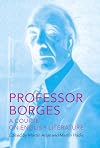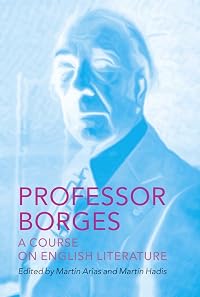
Professor Borges: A Course on English Literature
by Jorge Luis Borges
On This Page
Description
A compilation of the twenty-five lectures Borges gave in 1966 at the University of Buenos Aires, where he taught English literature.Tags
Recommendations









Member Reviews
If you're a fan of literature, meaning that you get pleasure out of not only reading but also thinking over and talking about books, then this is a must-read simply because it's one of the greatest writers of all time talking about some of the other greatest writers of all time with his customary immense insight and analytical ability. Idiosyncratically composed, far-ranging in scope, and unbelievably erudite, this collection is all the more amazing because it was compiled from a series of lectures he gave to students at the University of Buenos Aires in 1966 completely without notes and after having been legally blind for an entire decade.
The course he was teaching was on English Literature, which to Borges means going back to the very show more beginning with Anglo-Saxon literature. He spends the first seven lectures on things like Anglo-Saxon poetic styles, Beowulf, the Finnsburgh Fragment, Caedmon, and the elegiac tradition. He then, surprisingly, mostly skips over the big guys like Chaucer, Shakespeare, Milton, and Pope and jumps right to the 18th century to discuss Samuel Johnson and James Boswell, William Wordsworth, Samuel Coleridge Taylor, William Blake, Thomas Carlyle, Charles Dickens, Robert Browning, Dante Rosetti, William Morris, and Robert Louis Stevenson. Among and in between these brief but incredibly dense capsule biographies and literary treatments are all kinds of interesting side discussions of things like the history of the runic alphabet, why Anglo-Saxon poems use alliteration instead of rhymes, how English's lack of grammatical gender sounds to speakers of Romance languages, the literary effects of the Battles of Hastings and Maldon, how English literature differs from the French, the film Rashomon, the upsides of forgetfulness for G. K. Chesterton, the nature of crime and whether murdering someone truly makes you "a murderer", the difference between strong plots and strong characters in detective fiction, and a million other fascinating topics, tossing off all these thought-provoking insights as if they had just occurred to him. Here's a good example of the way he talks about someone, not only relating their work to that of their contemporaries, but also people throughout space and time:
"William Blake, on the contrary, remains not only outside the pseudo-classic school (to use the most elevated term), and that is the school represented by [Alexander] Pope, but he also remains outside the romantic movement. He is an individual poet, and if there is anything we can connect him to - for, as Rubén Darío said, there is no literary Adam - we would have to connect him to much more ancient traditions: to the Cathar heretics in the south of France, the Gnostics in Asia Minor and Alexandria in the first century after Christ, and of course to the great and visionary Swedish thinker, Emmanuel Swedenborg."
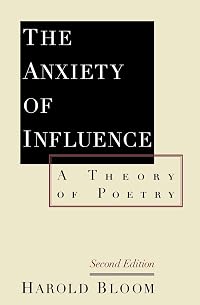
Yes... Gnostics and Swedenborg... that's just what I thought as well. You could spend hours or days trying to unpack those connections he drew in just two quick sentences, but he rattles off kind of panoptic synthesis of tradition so effortlessly it's clear that he's really thought about the connections between them and is not trying to play some kind of Harold Bloom-ish ranking game. Even if some of the sections aren't quite as riveting as the others - I thought some of the stuff about the Anglo-Saxons in the beginning and William Morris' poetry towards the end dragged on a bit long - there are so many quotable gems and good reading suggestions inside that it beggars belief. If you liked his essays in Selected Non-Fictions then this is the natural next step. show less
The course he was teaching was on English Literature, which to Borges means going back to the very show more beginning with Anglo-Saxon literature. He spends the first seven lectures on things like Anglo-Saxon poetic styles, Beowulf, the Finnsburgh Fragment, Caedmon, and the elegiac tradition. He then, surprisingly, mostly skips over the big guys like Chaucer, Shakespeare, Milton, and Pope and jumps right to the 18th century to discuss Samuel Johnson and James Boswell, William Wordsworth, Samuel Coleridge Taylor, William Blake, Thomas Carlyle, Charles Dickens, Robert Browning, Dante Rosetti, William Morris, and Robert Louis Stevenson. Among and in between these brief but incredibly dense capsule biographies and literary treatments are all kinds of interesting side discussions of things like the history of the runic alphabet, why Anglo-Saxon poems use alliteration instead of rhymes, how English's lack of grammatical gender sounds to speakers of Romance languages, the literary effects of the Battles of Hastings and Maldon, how English literature differs from the French, the film Rashomon, the upsides of forgetfulness for G. K. Chesterton, the nature of crime and whether murdering someone truly makes you "a murderer", the difference between strong plots and strong characters in detective fiction, and a million other fascinating topics, tossing off all these thought-provoking insights as if they had just occurred to him. Here's a good example of the way he talks about someone, not only relating their work to that of their contemporaries, but also people throughout space and time:
"William Blake, on the contrary, remains not only outside the pseudo-classic school (to use the most elevated term), and that is the school represented by [Alexander] Pope, but he also remains outside the romantic movement. He is an individual poet, and if there is anything we can connect him to - for, as Rubén Darío said, there is no literary Adam - we would have to connect him to much more ancient traditions: to the Cathar heretics in the south of France, the Gnostics in Asia Minor and Alexandria in the first century after Christ, and of course to the great and visionary Swedish thinker, Emmanuel Swedenborg."
Yes... Gnostics and Swedenborg... that's just what I thought as well. You could spend hours or days trying to unpack those connections he drew in just two quick sentences, but he rattles off kind of panoptic synthesis of tradition so effortlessly it's clear that he's really thought about the connections between them and is not trying to play some kind of Harold Bloom-ish ranking game. Even if some of the sections aren't quite as riveting as the others - I thought some of the stuff about the Anglo-Saxons in the beginning and William Morris' poetry towards the end dragged on a bit long - there are so many quotable gems and good reading suggestions inside that it beggars belief. If you liked his essays in Selected Non-Fictions then this is the natural next step. show less
Not a history book but very good on the history of English Literature. Also incudes several influential authors I was unfamiliar with.
Transcripción de las clases del curso de literatura inglesa de Borges. Buenisimo, la tarea realizada por los compiladores rellenando los huecos, corrigiendo las citas es superlativo. Esta Borges en plenitud, la enciclopedia literaria, la ironía, todo . Recomendable
Dec 22, 2022Spanish
El libro Borges profesor reúne las veinticinco clases magistrales que dictara Jorge Luis Borges en la Universidad de Buenos Aires, en el curso de Literatura Inglesa, durante el año 1966. Era titular, desde hacía diez años, de la cátedra de Literatura Inglesa y Nortamericana, esta última dictada por un profesor adjunto. Profundo conocedor del tema, Borges profundiza sobre las kennings, la poesía cristiana, Samuel Johnson, Coleridge, Carlyle, Browning, Willam Morris, Stevenson y Oscar Wilde entre otros.
Jul 5, 2022Spanish
Ratings
Members
- Recently Added By
Lists

Top Five Books of 2013
1,562 works; 721 members

Shaking a Leg
111 works; 3 members
Author Information

865+ Works 58,832 Members
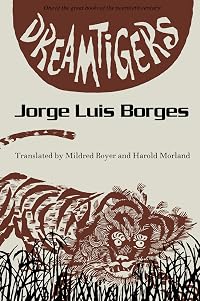
Born in Buenos Aires, Argentina, in 1899, Jorge Borges was educated by an English governess and later studied in Europe. He returned to Buenos Aires in 1921, where he helped to found several avant-garde literary periodicals. In 1955, after the fall of Juan Peron, whom he vigorously opposed, he was appointed director of the Argentine National show more Library. With Samuel Beckett he was awarded the $10,000 International Publishers Prize in 1961, which helped to establish him as one of the most prominent writers in the world. Borges regularly taught and lectured throughout the United States and Europe. His ideas have been a profound influence on writers throughout the Western world and on the most recent developments in literary and critical theory. A prolific writer of essays, short stories, and plays, Borges's concerns are perhaps clearest in his stories. He regarded people's endeavors to understand an incomprehensible world as fiction; hence, his fiction is metaphysical and based on what he called an esthetics of the intellect. Some critics have called him a mystic of the intellect. Dreamtigers (1960) is considered a masterpiece. A central image in Borges's work is the labyrinth, a mental and poetic construct, that he considered a universe in miniature, which human beings build and therefore believe they control but which nevertheless traps them. In spite of Borges's belief that people cannot understand the chaotic world, he continually attempted to do so in his writing. Much of his work deals with people's efforts to find the center of the labyrinth, symbolic of achieving understanding of their place in a mysterious universe. In such later works as The Gold of the Tigers, Borges wrote of his lifelong descent into blindness and how it affected his perceptions of the world and himself as a writer. Borges died in Geneva in 1986. (Bowker Author Biography) show less
Some Editions
Work Relationships
Has as a commentary on the text
Common Knowledge
- Original publication date
- 2000
- People/Characters
- Hengest; Caedmon; Aethelred the Unready; Snorri Sturluson; Harold II Godwinson; Harald Hardrada (show all 28); William the Conqueror; Earl Testig; Taillefer; Samuel Johnson; Noah Webster; Imlac; James Boswell; James Macpherson; William Wordsworth; Samuel Taylor Coleridge; Charles Lamb; William Blake; Emanuel Swedenborg; Thomas Carlyle; Charles Dickens; Robert Browning; Elizabeth Barrett Browning; Dante Gabriel Rossetti; William Morris (1834-1896); Eiríkr Magnússon; Robert Louis Stevenson; Frances Haslam
- Blurbers
- Krebs, Edgardo; Bernstein, Richard; Ackroyd, Peter
Classifications
- Genres
- Literature Studies and Criticism, Nonfiction, Fiction and Literature
- DDC/MDS
- 820.9 — Literature & rhetoric English & Old English literatures English and Old English (Anglo-Saxon) literatures History, description, critical appraisal of works in more than one form
- LCC
- PR51 .A7 .B6713 — Language and Literature English English Literature Literary history and criticism
- BISAC
Statistics
- Members
- 381
- Popularity
- 82,353
- Reviews
- 4
- Rating
- (4.18)
- Languages
- English, French, Portuguese, Spanish
- Media
- Paper, Ebook
- ISBNs
- 20
- ASINs
- 3