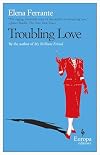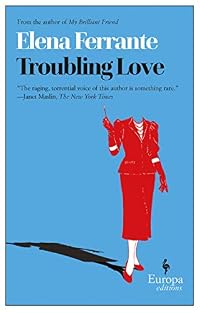
Troubling Love
by Elena Ferrante
On This Page
Description
Following her mother's untimely and unexplained drowning, which was preceded by a series of strange phone calls, forty-five-year-old Delia leaves Rome and embarks on a voyage of discovery through the beguiling yet often hostile streets of her native Naples. She is searching for the truth about her family and the men in her mother's life, past and present, including an abusive husband. What she discovers will be more unsettling than she imagines, but will also reveal truths about herself, in show more this psychological mystery. show lessTags
Recommendations
















Member Reviews
Death both ends and initiates. Here, the sudden death by drowning of the 63-year-old, Amalia, brings her tortured life to an end. But it also sets her 45-year-old oldest daughter, Delia, on a harrowing journey as she returns to the Naples of her childhood, both physically and in unwieldy memory. The city heaves, sweaty body on sweaty body, in a claustrophobia-inducing press, sometimes violent, always lustful and threatening. Delia struggles to come to grips with why her mother ended up where she did, who might have been with her, and, more important, what might have driven her, even chased her down the long years of estrangement from her brutal and brutalizing husband.
Very little is as it seems, however, the connection between Delia and show more Amalia is certain, not just in their shared appearance but in the history that binds them. This is writing at its harrowing best, not surprising perhaps with Elena Ferrante at the helm. Noir lighting and neo-realist melodrama clash with a frank sexual tempo that reduces women, especially, to little more than their clothes. Or frees them. The possibility exists. In either case it is a tense and sometimes uncomfortable journey that will leave you wondering where you’ve got to and whether you lost yourself along the way.
Definitely recommended. show less
Very little is as it seems, however, the connection between Delia and show more Amalia is certain, not just in their shared appearance but in the history that binds them. This is writing at its harrowing best, not surprising perhaps with Elena Ferrante at the helm. Noir lighting and neo-realist melodrama clash with a frank sexual tempo that reduces women, especially, to little more than their clothes. Or frees them. The possibility exists. In either case it is a tense and sometimes uncomfortable journey that will leave you wondering where you’ve got to and whether you lost yourself along the way.
Definitely recommended. show less
Só não dei cinco estrelas porque a Ferrante aqui ainda estava engatinhando no que ela viria se tornar em questões de linguagem, mas o que ela constrói aqui em termos de uma linguagem patriarcal que penetra na vidas das personagens femininas em forma de sufocamento e opressão - por isso que nunca acreditei que por trás do pseudônimo da Ferrante haveria um escritor homem, ela sabe demais o quanto o patriarcado molda nossas vidas, por mais que um escritor tivesse empatia, ele jamais saberia ISSO.
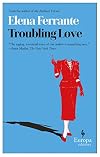
Reason read: botm July 2025. This is the story of trouble. Trouble in mother daughter relationship, trouble in relationships between mother and father. Trouble with relationships between the protagonist and men. It is a gritty novel that starts out with mysterious phone call, a death by suicide of a basically estranged mother and the protagonist search for explanation only to discover a lot about herself. The absence of the face on the book cover really tells it all. Delia (the daughter) finds clothing that her mother intended to give her, she finds that in these clothes she looks like her mother. She finds people see her mother when they look at her, she finds a picture of herself and she sees her mother. The mother-daughter show more relationship was the most interesting part of the story. I did not like the language and sexual content. I do not enjoy Ferrante's writing and I am glad that I can be done reading her. I don't get the appeal that readers have for this author.
"Childhood is a tissue of lies that endure in the past tense: at least, mine was like that." show less
"Childhood is a tissue of lies that endure in the past tense: at least, mine was like that." show less
A "1001 Books to Read Before You Die" book that should be on a list called "Books You Shouldn't Read Before You Die Unless Someone Is Paying You. A Lot."
Not sure how a 139 page book can seem so long and unnecessarily convoluted, but this one managed. It is the story of Delia, daughter of Amalia. Amalia drowns in the sea wearing only a beautiful lace bra, an item of clothing she would never wear. Sounds good so far, right?
And that's where the good part ends. The rest of the book is a mish mash of Delia trying to determine what has happened to her mother and flashbacks to a past riddled with domestic violence and other abuse.
I love a good dark story, but this book was just not good.
- First, it is laden down with description. I love show more beautiful prose, and maybe this prose is beautiful in Italian. In English, the amount of description just overwhelmed the story. Honestly, I didn't find it was helping me visualize the scenes well, and isn't that the whole point? Some of it was well done, but it was just too copious! The book felt like all it did was tell me things . . .it is all narrated and nothing comes alive. With the exception of one sex scene between Delia and a former childhood friend that is just kinda gross.
- Second, I didn't give a rip about any of the characters . . .I chalk that up to poor character development, and for me, if you don't get that right, the book generally is a failure.
- Finally, and worst of all, it is difficult to tease out what is memory, what is fantasy, and what is reality in this book. I guess that's the point, but I never felt as certain as I wanted to be about what was going on.
It is as though the writing was designed to obfuscate. And I can see why because the ending is truly not satisfying. This book is not written as a mystery where suspense and tension build and the end culminates in satisfying way. It's more of a psychological study of a mother/daughter relationship, but not in a way that you care about either the mother or the daughter.
This book had echoes of Atonement from a plot standpoint except Atonement was done about 20x better. And some would argue that Atonement isn't that great either. Stylistically, this book was far inferior to me, but it had a similar plot driver and also kept the reader at arms length.
I gave the book two stars because I think the idea of it had potential and because some of the description was very good even if there was way too much of it and much of it bored me. But in case it isn't clear, I really didn't enjoy it. show less
Not sure how a 139 page book can seem so long and unnecessarily convoluted, but this one managed. It is the story of Delia, daughter of Amalia. Amalia drowns in the sea wearing only a beautiful lace bra, an item of clothing she would never wear. Sounds good so far, right?
And that's where the good part ends. The rest of the book is a mish mash of Delia trying to determine what has happened to her mother and flashbacks to a past riddled with domestic violence and other abuse.
I love a good dark story, but this book was just not good.
- First, it is laden down with description. I love show more beautiful prose, and maybe this prose is beautiful in Italian. In English, the amount of description just overwhelmed the story. Honestly, I didn't find it was helping me visualize the scenes well, and isn't that the whole point? Some of it was well done, but it was just too copious! The book felt like all it did was tell me things . . .it is all narrated and nothing comes alive. With the exception of one sex scene between Delia and a former childhood friend that is just kinda gross.
- Second, I didn't give a rip about any of the characters . . .I chalk that up to poor character development, and for me, if you don't get that right, the book generally is a failure.
- Finally, and worst of all, it is difficult to tease out what is memory, what is fantasy, and what is reality in this book. I guess that's the point, but I never felt as certain as I wanted to be about what was going on.
It is as though the writing was designed to obfuscate. And I can see why because the ending is truly not satisfying. This book is not written as a mystery where suspense and tension build and the end culminates in satisfying way. It's more of a psychological study of a mother/daughter relationship, but not in a way that you care about either the mother or the daughter.
This book had echoes of Atonement from a plot standpoint except Atonement was done about 20x better. And some would argue that Atonement isn't that great either. Stylistically, this book was far inferior to me, but it had a similar plot driver and also kept the reader at arms length.
I gave the book two stars because I think the idea of it had potential and because some of the description was very good even if there was way too much of it and much of it bored me. But in case it isn't clear, I really didn't enjoy it. show less
elena ferrante truly has a handle on the emotionally dark and twisty natures people possess. humans are complicated and difficult to fully know, while at the same time one's own identity can be inconsistent and confusing. ferrante's style, through this translation, is sparse and compelling. but even with this sense of sparseness in the writing, there is depth and so much to think about with nearly every sentence. ferrante also gives such a strong sense of place in her stories, something i really enjoy in fiction. i read this over a few hours and it felt right for this work, which - though memories of the past are interspersed - mostly takes place over a 24-hour period of time.
i did not quite love this as much as the The Neapolitan show more Novels, but it is still a strong work from ferrante, and i liked going further back in her work. i also quite liked some of the same themes being explored here as in her later books. show less
i did not quite love this as much as the The Neapolitan show more Novels, but it is still a strong work from ferrante, and i liked going further back in her work. i also quite liked some of the same themes being explored here as in her later books. show less
Mother disappears and is found washed up on a beach wearing little but a fancy lace bra from a well known Naples lingerie shop. Strange, because she is a seamstress so poor she mends her panties to make them last just a bit longer.
Daughter Dellia traces mother's last steps, and in a style that seems like murder mystery within a dream, within a troubled psyche, one senses what it must be like for an adult to tense up with old childhood nightmares, old scenes of parental violence, childhood fears that have partially come true. There are inescapable physical similarites between mother and daughter that play into Delia's life, giving a sense of futility to her own identity struggle. Can a daughter escape in her own life the worst parts of show more a mother's complicated, not always happy life? Good question.
The style reminds me of Margaret Atwood, in scene setting, in psychological scene shifting, moving between physical reality and dream reality. Kudos, Elena Ferrante, whoever you are. show less
Daughter Dellia traces mother's last steps, and in a style that seems like murder mystery within a dream, within a troubled psyche, one senses what it must be like for an adult to tense up with old childhood nightmares, old scenes of parental violence, childhood fears that have partially come true. There are inescapable physical similarites between mother and daughter that play into Delia's life, giving a sense of futility to her own identity struggle. Can a daughter escape in her own life the worst parts of show more a mother's complicated, not always happy life? Good question.
The style reminds me of Margaret Atwood, in scene setting, in psychological scene shifting, moving between physical reality and dream reality. Kudos, Elena Ferrante, whoever you are. show less
Although not such a rich, satisfying book as the ones that make up the Neapolitan Quartet this short mysterious book still feels very 'Ferrante'. It is claustrophobic, sweaty, confusing as Delia wanders through Naples trying to piece together her mothers last hours and years as well as her own childhood memories. It has the same brutal honesty about family, and the same backdrop of entwined relationships spanning more than one generation.
Members
- Recently Added By
Published Reviews
ThingScore 75
As Delia tries to reconstruct her mother’s last days, slowly stitching together the events of that night, she ends up in an unknown place—the dark closet of history—where she encounters the abusive men of her own and of her mother’s past: her uncle, her father, their friend Caserta, and Caserta’s son Antonio. As we travel farther into Delia’s memories, we are sucked into a show more whirlwind of obsession, love, jealousy, fear, and sexual abuse. show less
added by ScattershotSteph
Ferrante's polished language belies the rawness of her imagery, which conveys perversity, violence, and bodily functions in ripe detail. Delia's discovery of the secret of her childhood is made all the more jarring by the story's disorienting mixture of fantasy and reality.
added by ScattershotSteph
“Troubling Love” is soggy with tears — and the blank mood that follows a good long cry — but you can’t isolate the source of the weeping.
added by ScattershotSteph
Lists

Italian Literature
556 works; 41 members
Author Information
43+ Works 27,899 Members
Elena Ferrante was born in Naples, Italy. Her work includes Those Who Leave and Those Who Stay, The Story of the Lost Child, The Story of a New Name, The Lost Daughter, Fragments, and My Brilliant Friend. She is the author of My Brilliant Friend which made The New York Times Bestsellers List and The New Zealand Best Seller List 2015. She was show more included on Time magazine's annual list of the 100 most influential people in the world. (Bowker Author Biography) show less
Some Editions
Awards and Honors
Series
Belongs to Publisher Series
Work Relationships
Is contained in
Common Knowledge
- Canonical title
- Troubling Love
- Original title
- L'amore molesto
- Original publication date
- 1992 (1e édition originale italienne) (1e édition originale italienne); 1995-09-06 (1e traduction et édition française, Du monde entier, Gallimard) (1e traduction et édition française, Du monde entier, Gallimard); 2020-02-06 (Réédition française, Folio, N° 6755, Gallimard) (Réédition française, Folio, N° 6755, Gallimard)
- Important places
- Naples, Campania, Italy
- Related movies
- L'amore molesto (1995 | IMDb)
- Epigraph*
- /
- Dedication*
- à ma mère
- First words
- My mother drowned on the night of May 23rd, my birthday, in the sea at a place called Spaccavento, a few miles from Minturno.
- Last words
- (Click to show. Warning: May contain spoilers.)I was Amalia.
- Original language
- Italian
*Some information comes from Common Knowledge in other languages. Click "Edit" for more information.
Classifications
- Genres
- General Fiction, Fiction and Literature
- DDC/MDS
- 853.914 — Literature & rhetoric Italian, Romanian & related literatures Italian fiction 1900- 20th Century 1945-1999
- LCC
- PQ4866 .E6345 .A8313 — Language and Literature French, Italian, Spanish and Portuguese literatures Italian literature Individual authors, 1961-2000
- BISAC
Statistics
- Members
- 849
- Popularity
- 32,061
- Reviews
- 31
- Rating
- (3.29)
- Languages
- 16 — Catalan, Czech, Dutch, English, Finnish, French, German, Hebrew, Hungarian, Italian, Norwegian (Bokmål), Portuguese, Slovenian, Spanish, Swedish, Turkish
- Media
- Paper, Audiobook, Ebook
- ISBNs
- 59
- ASINs
- 13