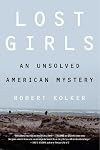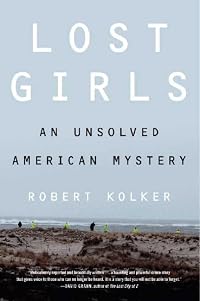
Lost Girls: An Unsolved American Mystery
by Robert Kolker
On This Page
Description
New York Times Bestseller • Now a Netflix Film"Rich, tragic...monumental . . . true-crime reporting at its best."—Washington Post
The bestselling account of the lives of five young women whose fates converged in the perplexing case of the Long Island Serial Killer. Now updated, with a new epilogue by the author.
One late spring evening in 2010, Shannan Gilbert—after running through the oceanfront community of Oak Beach screaming for her life—went missing. No one who had heard of her show more disappearance thought much about what had happened to the twenty-four-year-old: she was a Craigslist escort who had been fleeing a scene—of what, no one could be sure. The Suffolk County police, too, seemed to have paid little attention—until seven months later, when an unexpected discovery in a bramble alongside a nearby highway turned up four bodies, all evenly spaced, all wrapped in burlap. But none of them Shannan's.
There was Maureen Brainard-Barnes, last seen at Penn Station in Manhattan three years earlier, and Melissa Barthelemy, last seen in the Bronx in 2009. There was Megan Waterman, last seen leaving a hotel in Hauppauge, Long Island, just a month after Shannon's disappearance in 2010, and Amber Lynn Costello, last seen leaving a house in West Babylon a few months later that same year. Like Shannan, all four women were petite, in their twenties, and had come from out of town to work as escorts, and they all had advertised on Craigslist and its competitor, Backpage.
Lost Girls is a portrait of unsolved murders in an idyllic part of America, of the underside of the Internet, and of the secrets we keep without admitting to ourselves that we keep them. Long considered "one of the best true-crime books of all time" (Time), this edition includes a new epilogue that speaks to developments in the case, including the shocking fate of Mari Gilbert, Shannan's mother, for whom this case became the crusade of a lifetime.
. show less
Tags
Recommendations











Member Recommendations

Member Reviews
I've mostly missed the ongoing true crime boom, but I suspect that "Lost Girls" is probably not the sort of book that's going to give fans the sort of payoff that they're looking for. As it stands, the book is out of date: not only have these girls' killer been arrested but Backpage and Craigslist have more or less ceased to exist, as far as working escorts are concerned. Kolker doesn't much focus on the forensic aspects of the case; indeed, he seems to have relatively few contacts inside Long Island police departments. This means that "Lost Girls" isn't so much a book about an unsolved case but about the difficult sets of circumstances that led these four girls to end up on this rather tony section of Long Island's wetlands and about show more the emotional pain they left behind when their families realized that they were gone forever. While I agree with several reviewers that it's sometimes difficult to keep all four of these stories' separate, the author is good at describing what drew them to the sex trade: easy money, convenience, involvement with drugs, and an economy that's been in long-term decline for generations. Kolker makes clear that all of the girls left an impression -- none of them could be said to be shy and retiring -- and that they had talents that, under some other circumstances, they might have put to better use. That gives the book a palpable sense of loss, and one that only augments the more personal loss that's felt by the families, with whom the author seems to have built real relationships. He describes both how their immediate family members try to keep their memories alive and how they try to keep their lost relatives in the public eye as the public's preoccupation with this mystery waxes and wanes. The book's saddest sections might be those in which the lost girls' own family members realize that, despite their best efforts, they can't remember absolutely everything about them anymore. No memory really stands eternally.
"Lost Girls" is also very much a story about technology, and it provides an invaluable look at the mechanics of how escorting worked in the first decade of the twenty-first century, after what might be called late Web 1.0 made sex workers and johns more available to each other. While I admit that I was surprised that any vestiges of the skin trade still operated in newly redeveloped Times Square, the author seems to communicate his own ambiguity as to whether these new technological innovations have made women working with their bodies safer or more independent. Still, he's very thorough about what sort of protection a pimp is supposed to provide, which calls are considered more or less risky, and how women on the streets check in with friends or family to help keep them out of harm's way. Kolker artfully shows that, for these girls, money that was comparatively easy to make and abundant came with alliances and compromises that were tough to escape and hopes, against all odds, that acceptance a commitment to transparency from all parties involved might keep events from the ones described in this book from happening. While the victims' families obviously did everything they could to keep their relatives' memories alive, his book, which later became a Netflix series, might be the best and most lasting monument to their shortened lives that we'll ever have. show less
"Lost Girls" is also very much a story about technology, and it provides an invaluable look at the mechanics of how escorting worked in the first decade of the twenty-first century, after what might be called late Web 1.0 made sex workers and johns more available to each other. While I admit that I was surprised that any vestiges of the skin trade still operated in newly redeveloped Times Square, the author seems to communicate his own ambiguity as to whether these new technological innovations have made women working with their bodies safer or more independent. Still, he's very thorough about what sort of protection a pimp is supposed to provide, which calls are considered more or less risky, and how women on the streets check in with friends or family to help keep them out of harm's way. Kolker artfully shows that, for these girls, money that was comparatively easy to make and abundant came with alliances and compromises that were tough to escape and hopes, against all odds, that acceptance a commitment to transparency from all parties involved might keep events from the ones described in this book from happening. While the victims' families obviously did everything they could to keep their relatives' memories alive, his book, which later became a Netflix series, might be the best and most lasting monument to their shortened lives that we'll ever have. show less
Shannan Gilbert goes out on an escort call to a remote part of Long Island. While she is inside the house something goes wrong and she emerges hysterical and runs off into the night never to be seen again. The search for her leads to the discovery that some one has been using Gilgo beach as a dumping ground for bodies. Who that may be is still yet to be determined.
This book chronicles the lives of the known women whose bodies were discovered during the search for Shannan Gilbert. Maureen was a struggling single mom who couldn't get a job. Melissa was a talented hair dresser. Megan was a single mom who was raised by her grandmother. Amber was a drug addict led astray by her big sister Kim. The thing that they all had in common was that show more when they were down and out they turned to Craig's List to sell their bodies. Law enforcement saw them as throw aways but the author humanizes them as real people who were in impossible situations. They were women who had families and children and they were doing what they had to in order to survive. For some that meant providing for a child, feeding a drug habit, or buying a birthday gift for a mother. Unfortunately their risky lifestyle made them easy prey for the person who took each of their lives.
Usually I won't pick up a true crime book where the killer has not been apprehended. There is just too much conjecture and it usually feels like someone rushed a book out just to make money on a tragedy. This book is an exception. It does not linger on who the killer could be except to mention Dr Hackett who inserted himself into the story. If the police have a profile or an idea of who the killer could be the information is not given here. Even the fact that the killer used Melissa's own cell phone to call and taunt her little sister Amanda only gets the briefest mention. Instead the book focuses on the girls and their families. And what families they were. From the almost heroic Missy who works tirelessly on behalf of her murdered sister Maureen to the unstable Mari who is Shannen Gilbert's mother. The families ran the gamut from helpful to self destructive. The only thing they had in common were all were grieving. The pain that comes through makes you sympathetic to some pretty unlikeable people. From the day they were born some of the girls never had a chance simply because of the family they were born into. Other girls had loving support but they were too head strong to go home. Who killed them is still a mystery but that they were killed was not very surprising. They were dying long before they met up with the man who ended their lives. The question to ask now is what could have been to help them. Nobody should be killed for engaging in the oldest profession in the world but as long as they are forced to operate in the fringes there will be more long island serial killers waiting to prey on them. I hope the other bodies can be identified especially the one of the toddler who was found along with it's mother. Someone needs to be brought to justice but even more than that young women on the streets of one of the wealthiest and most industrialized cities in the world should be able to find help when they need it. I am thinking in particular of Melissa's friend and fellow prostitute who is trying to change her life but is kept of school because she lacks a birth certificate. People who live in the shadows can easily disappear so thank you Robert Kolker for being a light.
To see a 48 hours episode on the case click here: http://www.cbsnews.com/video/watch/?id=50151326n show less
This book chronicles the lives of the known women whose bodies were discovered during the search for Shannan Gilbert. Maureen was a struggling single mom who couldn't get a job. Melissa was a talented hair dresser. Megan was a single mom who was raised by her grandmother. Amber was a drug addict led astray by her big sister Kim. The thing that they all had in common was that show more when they were down and out they turned to Craig's List to sell their bodies. Law enforcement saw them as throw aways but the author humanizes them as real people who were in impossible situations. They were women who had families and children and they were doing what they had to in order to survive. For some that meant providing for a child, feeding a drug habit, or buying a birthday gift for a mother. Unfortunately their risky lifestyle made them easy prey for the person who took each of their lives.
Usually I won't pick up a true crime book where the killer has not been apprehended. There is just too much conjecture and it usually feels like someone rushed a book out just to make money on a tragedy. This book is an exception. It does not linger on who the killer could be except to mention Dr Hackett who inserted himself into the story. If the police have a profile or an idea of who the killer could be the information is not given here. Even the fact that the killer used Melissa's own cell phone to call and taunt her little sister Amanda only gets the briefest mention. Instead the book focuses on the girls and their families. And what families they were. From the almost heroic Missy who works tirelessly on behalf of her murdered sister Maureen to the unstable Mari who is Shannen Gilbert's mother. The families ran the gamut from helpful to self destructive. The only thing they had in common were all were grieving. The pain that comes through makes you sympathetic to some pretty unlikeable people. From the day they were born some of the girls never had a chance simply because of the family they were born into. Other girls had loving support but they were too head strong to go home. Who killed them is still a mystery but that they were killed was not very surprising. They were dying long before they met up with the man who ended their lives. The question to ask now is what could have been to help them. Nobody should be killed for engaging in the oldest profession in the world but as long as they are forced to operate in the fringes there will be more long island serial killers waiting to prey on them. I hope the other bodies can be identified especially the one of the toddler who was found along with it's mother. Someone needs to be brought to justice but even more than that young women on the streets of one of the wealthiest and most industrialized cities in the world should be able to find help when they need it. I am thinking in particular of Melissa's friend and fellow prostitute who is trying to change her life but is kept of school because she lacks a birth certificate. People who live in the shadows can easily disappear so thank you Robert Kolker for being a light.
To see a 48 hours episode on the case click here: http://www.cbsnews.com/video/watch/?id=50151326n show less
I found Lost Girls: An Unsolved American Mystery to be a riveting story that was both informative and well written. The sad fact is that these women, who turned up as victims of a serial killer, were already lost before their bodies turned up in shallow graves on Long Island. What they all had in common, other than their work as prostitutes was their complicated and difficult lives. This case is another example of how, once they were reported as missing, the fact of their working in the sex trade, made it easy for authorities to dismiss and at times outright ignore their case.
It was only once the bodies began turning up that the case received attention from both the police and the media. Although ultimately more than 10 bodies were show more discovered along the roadside, it was five women who were linked together in this book, all five had worked as call girls through Craig’s List on the internet. Four of the women were found buried in shallow graves at the side of the road and the fifth was eventually found in a nearby marsh.
What Robert Kolker does in Lost Girls is to humanize these women and their stories. The killer of these women has not been identified, and as the years pass by, the feeling is that he or they will never be found. Although the families did recover their loved ones bodies, true closure is impossible as long as no one is to be held accountable. This book stands as a monument for these women who suffered abuse and neglect as children and then paid the ultimate penalty for the bad choices they made as they became adults. show less
It was only once the bodies began turning up that the case received attention from both the police and the media. Although ultimately more than 10 bodies were show more discovered along the roadside, it was five women who were linked together in this book, all five had worked as call girls through Craig’s List on the internet. Four of the women were found buried in shallow graves at the side of the road and the fifth was eventually found in a nearby marsh.
What Robert Kolker does in Lost Girls is to humanize these women and their stories. The killer of these women has not been identified, and as the years pass by, the feeling is that he or they will never be found. Although the families did recover their loved ones bodies, true closure is impossible as long as no one is to be held accountable. This book stands as a monument for these women who suffered abuse and neglect as children and then paid the ultimate penalty for the bad choices they made as they became adults. show less
Once you're able to easily distinguish the narratives of the individual girls, whose soon-to-be-upended lives are unique except for their shared lower income background and their foray into the world of prostitution via the growing popularity of Craigslist, then the whole tragedy of Lost Girls comes into heartbreaking focus.
This is a story as old as time itself, but this difference this time is the medium is relatively new. These tragedies happened during a time when the perceived ease of getting paid for sex via online hookups was enticing for young women in difficult circumstances. It was also arguably just as easy for a sociopathic murderer to find his next victims using the same methods.
The book is better than the Netflix show more production, and the Netflix version is captivating. That's how good the book is. show less
This is a story as old as time itself, but this difference this time is the medium is relatively new. These tragedies happened during a time when the perceived ease of getting paid for sex via online hookups was enticing for young women in difficult circumstances. It was also arguably just as easy for a sociopathic murderer to find his next victims using the same methods.
The book is better than the Netflix show more production, and the Netflix version is captivating. That's how good the book is. show less
Why are we drawn to true crime sagas? Is it the voyeur in us, the "there but for the grace of..."? For me, both, and for this book, I grew up about ten miles away from this sad dumping ground for murdered female escorts.
Robert Kolker is such a compassionate writer. This book is a true eulogy for five women who came of age in the new area of Craigslist escort services. Common to all is the sad realization that all were born to and parented by very flawed people who should have found something less damaging to do with their lives and time.
Very worth a read and I think if this author would do readings at high schools and colleges, some women might not set their feet on the same doom-laden paths.
Robert Kolker is such a compassionate writer. This book is a true eulogy for five women who came of age in the new area of Craigslist escort services. Common to all is the sad realization that all were born to and parented by very flawed people who should have found something less damaging to do with their lives and time.
Very worth a read and I think if this author would do readings at high schools and colleges, some women might not set their feet on the same doom-laden paths.
This book should be used in classes on how to write true crime -- tour de force reporting and excellent writing. It's especially impressive since, as the subtitle clearly states, the case remains unsolved. Kolker is candid but compassionate about the lives of the women and how they came to work as escorts -- aka prostitutes -- using Craigslist to connect with clients and, eventually, the person (or persons) who killed them and dumped their bodies on a desolate stretch of Long Island highway. It's heartbreaking to realize that these women come from working class backgrounds where financial and thus family stability was totally undermined by the disappearance of solid jobs in places like Buffalo and Groton. And it's heartbreaking, too, to show more hear how police blew off the missing person reports on these women once they heard how they earned their money. show less
First off, let me say that Lost Girls: An Unsolved American Mystery by Robert Kolker was not exactly the book I was expecting. I enjoy true crime novels and I have always been fascinated by the procedural part of the story - how the authorities track down their killer. In this case, the killer was never caught and it looks like the police threw the procedures out the window. This book is truly about the victims and while it is not what I normally look for in a true crime story, it was all the more fascinating for putting the crime on the back burner.
"Over the course of three years, each of these young women vanished without a trace: Maureen in 2007, Melissa and Megan in 2009, and Amber and Shannon in 2010. All but one of their bodies show more were discovered on Gilgo Beach, Long Island, an unsettled, overgrown, seven-mile stretch of shoreline on the string of barrier islands along South Oyster Bay."
These young women are the center of this story. Some of them came from pretty troubled backgrounds. They had children, family and friends. They had pretty serious addiction problems. And they were all working as prostitutes, advertising on Craigslist.
What impressed me about the book is that these young women do not become stereotypes. They are not woman battered by a pimp or empowered feminists taking control of their bodies. They are young women who need money, who don't have any great job prospects, and who find prostitution an easy way to make a lot of money in a short period of time. These women don't deal with pimps. They advertise for themselves. They decide where and when to work (and the amount of work they can find with a simple Craigslist ad is astonishing), and while they make some provisions for their own safety, desperation can make people careless.
What infuriated me about the story is the way that authorities treated the disappearances: they didn't care. A hooker disappeared - big deal. In some cases their families were unable to file missing person reports and it was clear that authorities did not consider these women to be worth looking for, at least not until the bodies started piling up. There were so many bureaucratic errors in these investigations, so many oddities, so many times where the police were clearly looking out for themselves and not really pushing these investigations that you can't help but be frustrated for these women and their families. In the end, they still have no closure; they have lots of suspicions, but no definitive answers.
It takes a skilled author to write a compelling book without an ending, and I think Kolker did an excellent job. I certainly kept turning pages, alternately absorbed and furious, and I found myself very much engaged with these women and wanting justice for them. He doesn't whitewash their stories, so you still get angry at them for putting themselves in so much danger for a few bucks, but you still wish for a better ending for them.
My copy of Lost Girls: An Unsolved American Mystery is an Advanced Reader Copy, provided free of charge. show less
"Over the course of three years, each of these young women vanished without a trace: Maureen in 2007, Melissa and Megan in 2009, and Amber and Shannon in 2010. All but one of their bodies show more were discovered on Gilgo Beach, Long Island, an unsettled, overgrown, seven-mile stretch of shoreline on the string of barrier islands along South Oyster Bay."
These young women are the center of this story. Some of them came from pretty troubled backgrounds. They had children, family and friends. They had pretty serious addiction problems. And they were all working as prostitutes, advertising on Craigslist.
What impressed me about the book is that these young women do not become stereotypes. They are not woman battered by a pimp or empowered feminists taking control of their bodies. They are young women who need money, who don't have any great job prospects, and who find prostitution an easy way to make a lot of money in a short period of time. These women don't deal with pimps. They advertise for themselves. They decide where and when to work (and the amount of work they can find with a simple Craigslist ad is astonishing), and while they make some provisions for their own safety, desperation can make people careless.
What infuriated me about the story is the way that authorities treated the disappearances: they didn't care. A hooker disappeared - big deal. In some cases their families were unable to file missing person reports and it was clear that authorities did not consider these women to be worth looking for, at least not until the bodies started piling up. There were so many bureaucratic errors in these investigations, so many oddities, so many times where the police were clearly looking out for themselves and not really pushing these investigations that you can't help but be frustrated for these women and their families. In the end, they still have no closure; they have lots of suspicions, but no definitive answers.
It takes a skilled author to write a compelling book without an ending, and I think Kolker did an excellent job. I certainly kept turning pages, alternately absorbed and furious, and I found myself very much engaged with these women and wanting justice for them. He doesn't whitewash their stories, so you still get angry at them for putting themselves in so much danger for a few bucks, but you still wish for a better ending for them.
My copy of Lost Girls: An Unsolved American Mystery is an Advanced Reader Copy, provided free of charge. show less
Members
- Recently Added By
Lists

True Crime
216 works; 16 members

Books Read in 2013
1,630 works; 51 members
Author Information

4+ Works 3,052 Members
Awards and Honors
Common Knowledge
- Original publication date
- 2013
- People/Characters
- Maureen Brainard-Barnes; Missy Cann; Melissa Barthelemy; Shannon Gilbert; Mari Gilbert; Megan Waterman (show all 10); Lorraine Waterman; Amber Overstreet Costello; Kim Overstreet; Dr. Peter Hackett
- Important places
- Long Island, New York, USA
- Important events
- Discovery of human remains, December 2010
- Related movies
- Lost Girls (2020 | IMDb)
- Dedication
- For Kirsten
- First words
- To most travelers, the barrier islands of Long Island are just a featureless stretch between Jones Beach and Fire Island -- a narrow strip of marsh and dune, bramble and beach, where the grassy waters of South Oyster Bay meet... (show all) the waves of the Atlantic Ocean.
- Last words
- (Click to show. Warning: May contain spoilers.)She came away thinking that God puts you in places for a reason.
- Blurbers
- David Strauss; Nick Reding; David Grann
- Original language
- English
- Canonical DDC/MDS
- 364.15230974721
- Canonical LCC
- HV6537
Classifications
- Genres
- General Nonfiction, Nonfiction
- DDC/MDS
- 364.15230974721 — Society, Government, and Culture Social problems and social services Crime Criminal offenses Offenses against the person Homicide Murder History, geographic treatment, biography North America
- LCC
- HV6537 — Social sciences Social pathology. Social and public welfare. Criminology Social pathology. Social and public welfare. Criminology Crimes and offenses
- BISAC
Statistics
- Members
- 980
- Popularity
- 26,718
- Reviews
- 40
- Rating
- (3.71)
- Languages
- English
- Media
- Paper, Audiobook, Ebook
- ISBNs
- 9
- ASINs
- 6