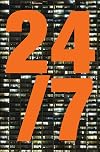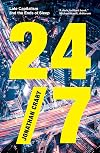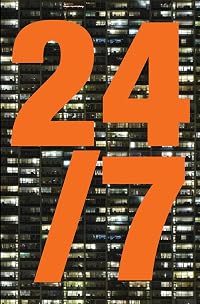
24/7: Late Capitalism and the Ends of Sleep
by Jonathan Crary
On This Page
Description
24/7: Late Capitalism and the Ends of Sleep explores some of the ruinous consequences of the expanding non-stop processes of twenty-first-century capitalism. The marketplace now operates through every hour of the clock, pushing us into constant activity and eroding forms of community and political expression, damaging the fabric of everyday life. Jonathan Crary examines how this interminable non-time blurs any separation between an intensified, ubiquitous consumerism and emerging strategies show more of control and surveillance. He describes the ongoing management of individual attentiveness and the impairment of perception within the compulsory routines of contemporary technological culture. At the same time, he shows that human sleep, as a restorative withdrawal that is intrinsically incompatible with 24/7 capitalism, points to other more formidable and collective refusals of world-destroying patterns of growth and accumulation.-- Publisher description. show lessTags
Recommendations

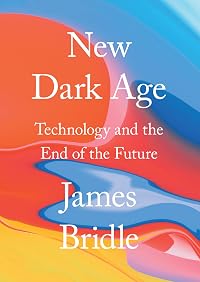
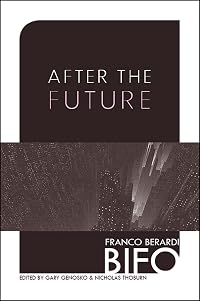


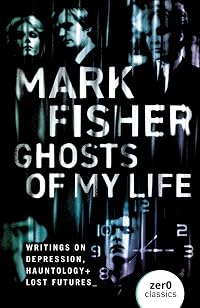
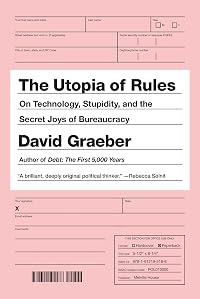







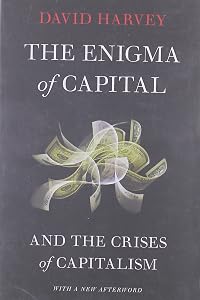
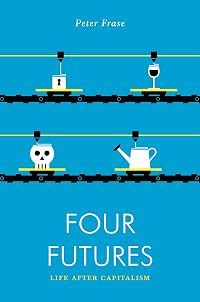
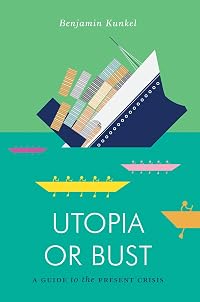
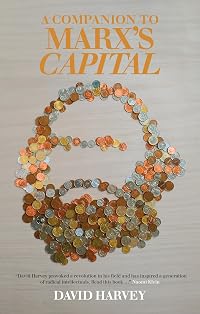








Member Recommendations
Member Reviews
After Trump won the US election on November 8th, I stopped reading non-fiction books as reality seemed so appalling that I sought escapism. While reintroducing myself to them with ‘24/7’, I realised this was a terrible mistake on my part. Avoiding non-fiction books obviously did not equate to avoiding reality, nor did it prevent my perpetually analysing the present state of disaster. I found myself dissecting allegedly dystopian novels (of which I seem to have read 10 in the last two months!) for insight into the current moment, as well as obsessively reading depressing news articles online. Neither pursuit promoted a healthy state of mind. More likely, they lengthened and deepened the initial state of shock and horror. Reading show more ‘24/7’, a short critique of neoliberal capitalism’s relations with time and sleep, I was reminded that there is no genuine escapist reading in the 21st century. At least not for me. By confining myself to reading non-fiction in brief, online, current affairs formats, I ended up feeling disorientation, helplessness, and despair.
As Crary points out in this book, that’s the whole point. A 24/7 world never gives you time to step back, to contemplate and slowly analyse events, to consider multiple points of view and different sources before formulating an opinion. The constant barrage of unsubstantiated, ever-changing, emotive information on social media inevitably breeds panic and fear rather than understanding. I find books something of an antidote to this. I should have seen that more non-fiction, not less, would help me to move beyond fatalism and believe that things aren’t automatically, irretrievably, completely fucked. Books that critically analyse capitalism, that place the current moment in a historical context, that explore deeper ethical and philosophical questions beyond superficial consumerism - these are balm to the soul when the world seems to have gone mad. They widen your gaze, while the news always seem to narrow it (in my experience, anyway). They do not have the crushing immediacy of live-blogged, constantly updated, real time disasters. They induce contemplation, rather than a reflexive, anxious emotional response. And they're generally not trying to sell you something.
In short, I feel better for reading this astute analysis of capitalism and time. Although it overlaps in some respects with [b:Present Shock: When Everything Happens Now|15811513|Present Shock When Everything Happens Now|Douglas Rushkoff|https://images.gr-assets.com/books/1355084098s/15811513.jpg|21536777] and [b:Fossil Capital: The Rise of Steam Power and the Roots of Global Warming|25614450|Fossil Capital The Rise of Steam Power and the Roots of Global Warming|Andreas Malm|https://images.gr-assets.com/books/1449996772s/25614450.jpg|44301257], Crary distils a great deal of additional insight in succinct and quite readable style. There are bits of critical theory jargon here and there, however they do not obscure the points being made. Such terms are generally introduced in order to explain the work of other thinkers. I found this a neat summary of the book’s thesis statement on sleep:
The surreal humorist Steve Aylett also briefly makes this point in his non-fiction foray [b:Heart of the Original: Originality, Creativity, Individuality|25016023|Heart of the Original Originality, Creativity, Individuality|Steve Aylett|https://images.gr-assets.com/books/1439932803s/25016023.jpg|44688951]: ‘During sleep we do not work or consume, are not outward-looking, hysterical or entertaining, and are becoming healthier. Many would wish it abolished, in others.’
Crary articulates elements of my aforementioned discomfort with social media and the news (increasingly synonymous terms) in these comments on images and the impossibility of ‘catching up’:
Another point that had strong personal resonance for me was this, on the loss of daydreaming time:
This paragraph reminded me that as a teenager I considered daydreaming a cherished hobby. I would sit or lie still with my eyes shut, blocking out the world with trance music on a walkman, and explore vividly detailed daydream worlds. This was a time before I had internet access at home, or a family computer that could do more than word-processing. These days, my daydreaming skills are weaker, although they survive and get frequent use on public transport and other interstitial moments. I can’t slip into a daydream as deeply as I used to, though, unless I’m in a sensory deprivation environment. For this reason, I used to volunteer for MRI experiments when I was a postgraduate. If you want to be left totally alone, zero distractions, just you and your mind, then I recommend lying perfectly still in a loud white tube for three hours. I really enjoyed it and found I could daydream very vividly in a delightful semi-conscious state, probably best described as reverie. The pull of electronic devices and the demands of to-do lists are absolutely antithetical to such states of mind.
Crary even manages to cover the preponderance of apocalyptic and dystopian visions in popular culture, a particular interest of mine (cf [b:Combined and Uneven Apocalypse: Luciferian Marxism|10975527|Combined and Uneven Apocalypse Luciferian Marxism|Evan Calder Williams|https://images.gr-assets.com/books/1440854195s/10975527.jpg|15893681] & [b:The End of the World: Apocalypse and Its Aftermath in Western Culture|14563118|The End of the World Apocalypse and Its Aftermath in Western Culture|Maria Manuel Lisboa|https://images.gr-assets.com/books/1348205745s/14563118.jpg|20205833]). Like me, he links them to anxiety about climate change and other slow-motion environmental catastrophes:
Another highlight is an excellent comparison of the messages in [b:Do Androids Dream of Electric Sheep?|7082|Do Androids Dream of Electric Sheep?|Philip K. Dick|https://images.gr-assets.com/books/1435458683s/7082.jpg|830939] and ‘Blade Runner’, reflecting ideological shifts between the 1960s and 1980s. I won’t include a quote for reasons of space, but found it astute and thought-provoking.
‘24/7’ concludes with a message that I found surprisingly encouraging: that sleep at least offers the potential to dream a world beyond capitalism. My own dreams often feature apocalyptic disasters, likely reflecting and reinforcing my waking preoccupations. (On the last day of 2016 I dreamed about a house AI that responded to tampering with a nuclear bomb, having observed that its owner has murdered two people and buried another alive. The dream ended with all involved being crushed to death. I hope this isn’t some kind of portent.) I don’t experience them as nightmares, though, and treasure the fact that I only very rarely dream of anything related to my actual life or, heavens forfend, my job. Truly, sleep offers a unique escape from capitalism and should be defended from encroachment. The concluding message of ‘24/7’ is as follows:
Reading analysis of the flaws of the world (well, capitalism) and attempting to more clearly understand them definitely helps to push back against despairing helplessness. How can anything change unless we first understand why change is needed? I am also reminded of the fact that writing reviews of non-fiction is much more satisfying than reviewing novels, as I have no disciplinary background in the latter. I hereby vow to read more critical theory in 2017, rather than wholly sublimating my urge to analyse the world's flaws into critique of dystopian novels. show less
As Crary points out in this book, that’s the whole point. A 24/7 world never gives you time to step back, to contemplate and slowly analyse events, to consider multiple points of view and different sources before formulating an opinion. The constant barrage of unsubstantiated, ever-changing, emotive information on social media inevitably breeds panic and fear rather than understanding. I find books something of an antidote to this. I should have seen that more non-fiction, not less, would help me to move beyond fatalism and believe that things aren’t automatically, irretrievably, completely fucked. Books that critically analyse capitalism, that place the current moment in a historical context, that explore deeper ethical and philosophical questions beyond superficial consumerism - these are balm to the soul when the world seems to have gone mad. They widen your gaze, while the news always seem to narrow it (in my experience, anyway). They do not have the crushing immediacy of live-blogged, constantly updated, real time disasters. They induce contemplation, rather than a reflexive, anxious emotional response. And they're generally not trying to sell you something.
In short, I feel better for reading this astute analysis of capitalism and time. Although it overlaps in some respects with [b:Present Shock: When Everything Happens Now|15811513|Present Shock When Everything Happens Now|Douglas Rushkoff|https://images.gr-assets.com/books/1355084098s/15811513.jpg|21536777] and [b:Fossil Capital: The Rise of Steam Power and the Roots of Global Warming|25614450|Fossil Capital The Rise of Steam Power and the Roots of Global Warming|Andreas Malm|https://images.gr-assets.com/books/1449996772s/25614450.jpg|44301257], Crary distils a great deal of additional insight in succinct and quite readable style. There are bits of critical theory jargon here and there, however they do not obscure the points being made. Such terms are generally introduced in order to explain the work of other thinkers. I found this a neat summary of the book’s thesis statement on sleep:
The huge proportion of our lives that we spend asleep, freed from a morass of simulated needs, subsists as one of the great human affronts to the voraciousness of contemporary capitalism. Sleep is an uncompromising interruption of the theft of time from us by capitalism. Most of the seemingly irreducible necessities of human life - hunger, thirst, sexual desire, and recently the need for friendship - have been remade into commodified or financialised forms. Sleep poses the idea of a human need and interval of time that cannot be colonised and harnessed to the massive engine of profitability. [...] The stunning, inconceivable reality is that nothing of value can be extracted from it.
The surreal humorist Steve Aylett also briefly makes this point in his non-fiction foray [b:Heart of the Original: Originality, Creativity, Individuality|25016023|Heart of the Original Originality, Creativity, Individuality|Steve Aylett|https://images.gr-assets.com/books/1439932803s/25016023.jpg|44688951]: ‘During sleep we do not work or consume, are not outward-looking, hysterical or entertaining, and are becoming healthier. Many would wish it abolished, in others.’
Crary articulates elements of my aforementioned discomfort with social media and the news (increasingly synonymous terms) in these comments on images and the impossibility of ‘catching up’:
We are swamped with images and information about the past and its recent catastrophes - but there is also a growing incapacity to engage these traces in ways that could move beyond them, in the interest of a common future. Amid the mass amnesia sustained by the culture of global capitalism, images have become one of the many depleted and disposable elements that, in their intrinsic archiveability, end up never being discarded, contributing to an ever more congealed and futureless present.
[...]
The very different actuality of our time is the calculated maintenance of an ongoing state of transition. There will never be a “catching-up” on either a social or individual basis in relation to continually changing technological requirements. For the vast majority of people, our perceptual and cognitive relationship to communication and information technology will continue to be estranged and disempowered because of the velocity at which new products emerge and at which arbitrary reconfigurations of entire systems take place. This intensified rhythm precludes the possibility of becoming familiar with any given arrangement.
Another point that had strong personal resonance for me was this, on the loss of daydreaming time:
One of the forms of disempowerment within 24/7 environments is the incapacitation of daydream or of any mode of absent-minded introspection that would otherwise occur in intervals of slow or vacant time. Now one of the attractions of current systems is their operating speed: it has become intolerable for there to be waiting time when something loads or connects. When there are delays or breaks of empty time, they are rarely openings for the drift of consciousness in which one becomes unmoored from the constraints and demands of the immediate present. There is a profound incompatibility of anything resembling reverie with the priorities of efficiency, functionality, and speed.
This paragraph reminded me that as a teenager I considered daydreaming a cherished hobby. I would sit or lie still with my eyes shut, blocking out the world with trance music on a walkman, and explore vividly detailed daydream worlds. This was a time before I had internet access at home, or a family computer that could do more than word-processing. These days, my daydreaming skills are weaker, although they survive and get frequent use on public transport and other interstitial moments. I can’t slip into a daydream as deeply as I used to, though, unless I’m in a sensory deprivation environment. For this reason, I used to volunteer for MRI experiments when I was a postgraduate. If you want to be left totally alone, zero distractions, just you and your mind, then I recommend lying perfectly still in a loud white tube for three hours. I really enjoyed it and found I could daydream very vividly in a delightful semi-conscious state, probably best described as reverie. The pull of electronic devices and the demands of to-do lists are absolutely antithetical to such states of mind.
Crary even manages to cover the preponderance of apocalyptic and dystopian visions in popular culture, a particular interest of mine (cf [b:Combined and Uneven Apocalypse: Luciferian Marxism|10975527|Combined and Uneven Apocalypse Luciferian Marxism|Evan Calder Williams|https://images.gr-assets.com/books/1440854195s/10975527.jpg|15893681] & [b:The End of the World: Apocalypse and Its Aftermath in Western Culture|14563118|The End of the World Apocalypse and Its Aftermath in Western Culture|Maria Manuel Lisboa|https://images.gr-assets.com/books/1348205745s/14563118.jpg|20205833]). Like me, he links them to anxiety about climate change and other slow-motion environmental catastrophes:
There is a pervasive illusion that, as more of the earth’s biosphere is annihilated or irreparably damaged, human beings can magically disassociate themselves from it and transfer their interdependencies to the mecanosphere of global capitalism. The more one identifies with insubstantial electronic surrogates for the physical self, the more one seems to conjure an exemption from the biocide underway everywhere on the planet. [...] The belief that one can subsist independently from environmental catastrophe is paralleled by fantasies of individual survival or prosperity amid the destruction of civil society or institutions that retain any semblance of social protection or mutual support.
Another highlight is an excellent comparison of the messages in [b:Do Androids Dream of Electric Sheep?|7082|Do Androids Dream of Electric Sheep?|Philip K. Dick|https://images.gr-assets.com/books/1435458683s/7082.jpg|830939] and ‘Blade Runner’, reflecting ideological shifts between the 1960s and 1980s. I won’t include a quote for reasons of space, but found it astute and thought-provoking.
‘24/7’ concludes with a message that I found surprisingly encouraging: that sleep at least offers the potential to dream a world beyond capitalism. My own dreams often feature apocalyptic disasters, likely reflecting and reinforcing my waking preoccupations. (On the last day of 2016 I dreamed about a house AI that responded to tampering with a nuclear bomb, having observed that its owner has murdered two people and buried another alive. The dream ended with all involved being crushed to death. I hope this isn’t some kind of portent.) I don’t experience them as nightmares, though, and treasure the fact that I only very rarely dream of anything related to my actual life or, heavens forfend, my job. Truly, sleep offers a unique escape from capitalism and should be defended from encroachment. The concluding message of ‘24/7’ is as follows:
Now there is actually only one dream, superseding all others: it is of a shared world whose fate is not terminal, a world without billionaires, which has a future other than barbarism or the post-human, and in which history can take on other forms reified nightmares of catastrophe.
Reading analysis of the flaws of the world (well, capitalism) and attempting to more clearly understand them definitely helps to push back against despairing helplessness. How can anything change unless we first understand why change is needed? I am also reminded of the fact that writing reviews of non-fiction is much more satisfying than reviewing novels, as I have no disciplinary background in the latter. I hereby vow to read more critical theory in 2017, rather than wholly sublimating my urge to analyse the world's flaws into critique of dystopian novels. show less
Not long ago I was telling my ten-year-old daughter about the early days of the internet, back in the early 1990s, when the future of cyberspace was unknown. It was an optimistic time, with many people (it seemed) seeing the internet as a truly free "space" untainted by commercial concerns. The internet my daughter knows is far from that optimistic vision, with every website, app, game, or other networked creation saturated with advertising, purchases, and the like. Having come of age as an adult when the internet evolved, I find the current reality unfortunate but also unavoidable; the latter given the enormous number of people going online and therefore the enormous potential for companies to make money. With our waking lives split show more between work, home, and transit, and the internet having infiltrated each aspect, our only relief from being told what to buy (or our actions -- our browsing and seeing -- making money for others) is found in sleep. But Jonathan Crary writes that this apparently impenetrable part of our everyday lives could someday be infiltrated by military and/or neoliberal entities. If doubtful, just think of how smartphones have transformed our sleep, with many people checking their phones in the middle of a night's sleep. Or of how images we absorb during the day may enter our dreams alongside those formed from our "real-life" experiences. By delving into various aspects of our 24/7 reality via numerous philosophical foundations, Crary made me consider how apparently free choices are determined to a large degree by corporations seeking profit, but also how those same corporations have limitations (for now) over how much of our lives they impact. show less
There is a thesis statement early in the book that provides all the insight you can expect to glean from it: “Sleep is an irrational and intolerable affirmation that there might be limits to the compatibility of living beings with the allegedly irresistible forces of modernisation.” Beyond that, expect the pointless name-dropping of philosophers and classic literature, passages of florid metaphor that do not actually say anything interesting, and spurious claims about the future. I gave up milking meaning from this stone about halfway through.
existe um estilo de prosa que parece indicar que a sociologia nada mais é que uma filosofia em alta velocidade, acelerada afim de dar conta do que ocorre na sociedade. mas o escaneamento que é assim obtido traça conexões a partir de ideias e não de dados – é uma profundidade para cima, adquirida por ascensão; não são informações cavadas a partir da superfície, mas conceitos desvelados sob uma visão do geral. e por mais que ambos os livros sejam interessantes e tenham ideias (han mais que crary), não deixo de ficar desapontado com 24/7, de jonathan crary, e a sociedade do cansaço, de byung-chul han; por parecerem sabichões, às vezes penso que escreveram meras opiniões. e então, como tudo passa rápido, boa parte é show more absorvido como puro achismo. show less
I wish I'd read the blurb more carefully before buying this book. Now I see that the author is a professor of modern art and theory which rather explains what I dislike about it and I feel much better abandoning it.
The first 47 pages are chock full of apparently empirical hypothesis which are not supported by evidence or tested by experiment but asserted by theorists of various stripes. That some of these claims come in for criticism (e.g. the revolutionary-ness of certain technological developments like mobiles with small screens) and others don't (e.g. various identifications of sleep, darkness, insomnia, etc. with assorted social, cultural, and theoretical phenomena) seems to be a matter of taste.
With the amount of ink the author show more devotes to the horrors of information and communication technologies I would *love* to know what he would make of that pre-mobile photo of a bus full of commuters all engrossed in newspapers that makes the rounds on Twitter and Facebook every few months.
In any case, I've wasted enough time on this; abandoned. show less
The first 47 pages are chock full of apparently empirical hypothesis which are not supported by evidence or tested by experiment but asserted by theorists of various stripes. That some of these claims come in for criticism (e.g. the revolutionary-ness of certain technological developments like mobiles with small screens) and others don't (e.g. various identifications of sleep, darkness, insomnia, etc. with assorted social, cultural, and theoretical phenomena) seems to be a matter of taste.
With the amount of ink the author show more devotes to the horrors of information and communication technologies I would *love* to know what he would make of that pre-mobile photo of a bus full of commuters all engrossed in newspapers that makes the rounds on Twitter and Facebook every few months.
In any case, I've wasted enough time on this; abandoned. show less
This book could have been a journal article!
24/7 examina las devastadoras consecuencias de los procesos productivos del capitalismo del siglo XXI sobre la capacidad de atención del individuo y la sociedad. Hoy, cuando tanto los procesos de producción como los sistemas de consumo disponen de los recursos para mantenerse operando las 24 horas del día, los 7 de la semana, la sociedad padece las consecuencias de un mercado cuyo perpetuo sentido de optimización amenaza con robarle el sueño a los hombres, y con ello, su capacidad de imaginar una realidad diferente.
Jonathan Crary analiza la manera en que la fractura entre los ciclos naturales de noche y día, vigilia y sueño, trastorna la nuestra capacidad para diferenciar entre unas condiciones de vida privilegiada y las show more estrategias de control y vigilancia implementadas por las formas de poder dominantes.(Editorial Planeta)
Enlaces:
https://cultura.nexos.com.mx/?p=8351
https://elpais.com/cultura/2015/05/20/actualidad/1432123650_805121.html show less
Jonathan Crary analiza la manera en que la fractura entre los ciclos naturales de noche y día, vigilia y sueño, trastorna la nuestra capacidad para diferenciar entre unas condiciones de vida privilegiada y las show more estrategias de control y vigilancia implementadas por las formas de poder dominantes.(Editorial Planeta)
Enlaces:
https://cultura.nexos.com.mx/?p=8351
https://elpais.com/cultura/2015/05/20/actualidad/1432123650_805121.html show less
Apr 21, 2020Spanish
Members
- Recently Added By
Lists

Blindpill
20 works; 2 members

Books in the Bibliography of Digital Lethargy by Tung-Hui Hu
151 works; 3 members
Author Information

21+ Works 1,398 Members
Jonathan Crary is Professor of Art History at Columbia University
Series
Belongs to Publisher Series
Common Knowledge
- Canonical title*
- 24/7: Il capitalismo all'assalto del sonno
*Some information comes from Common Knowledge in other languages. Click "Edit" for more information.
Classifications
- Genres
- Economics, Sociology, Nonfiction, General Nonfiction, Philosophy, History
- DDC/MDS
- 304.2 — Society, government, & culture Social sciences, sociology & anthropology Factors affecting social behavior Human ecology
- LCC
- N72 .S6 .C733 — Fine Arts Visual arts Theory. Philosophy. Aesthetics of the visual arts
- BISAC
Statistics
- Members
- 494
- Popularity
- 61,510
- Reviews
- 7
- Rating
- (3.64)
- Languages
- 8 — English, French, German, Italian, Polish, Portuguese, Spanish, Turkish
- Media
- Paper, Ebook
- ISBNs
- 22
- ASINs
- 7