On This Page
Description
In Queens, New York, in 1969, twelve-year-old Julian Twerski writes a journal for his English teacher in which he explores his friendships and how they are effected by girls, a new student who may be as fast as Julian, and especially an incident of bullying.Tags
Recommendations







Member Reviews
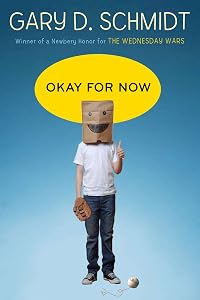
Twerp fits in somewhere between [b:Maniac Magee|139463|Maniac Magee|Jerry Spinelli|http://d202m5krfqbpi5.cloudfront.net/books/1172109471s/139463.jpg|3264295] and [b:Okay For Now|9165406|Okay for Now|Gary D. Schmidt|http://d202m5krfqbpi5.cloudfront.net/books/1327889281s/9165406.jpg|14044509]. Like Jeffrey Magee, Julian's a neighborhood legend for his ability to run. Like Doug Swieteck, Julian tells his story in a way that let's you see through his tough guy act right into his heart of hearts.
Julian Twerski lives in Queens, New York in the year 1969. He's a sixth grader with a close group of friends in a tight-knit neighborhood. The story is told through a series of journal entries that Julian has to write because he got in trouble. What show more did he do to get in trouble? The reader doesn't really get to find out until the end.
Through Julian's writing you get to know him in a way that makes him seem real enough to touch, even though he's a fictional kid on the other side of the country in a completely different era. He writes about different episodes in his life, from meeting a new kid who may be faster than him, to asking a girl out, to getting in a major fight with his best friend. In different hands this book might feel plotless, but author Mark Goldblatt keeps readers turning the pages, eager to find out what happens to Julian--and especially to discover how he got in trouble in the first place.
Twerp is definitely a strong Newbery contender in terms of style, theme, and character development. This is a book you could give to almost any tween to shine a light on the unique challenges of being stuck right in the heart of adolescence. show less
Julian Twerski lives in Queens, New York in the year 1969. He's a sixth grader with a close group of friends in a tight-knit neighborhood. The story is told through a series of journal entries that Julian has to write because he got in trouble. What show more did he do to get in trouble? The reader doesn't really get to find out until the end.
Through Julian's writing you get to know him in a way that makes him seem real enough to touch, even though he's a fictional kid on the other side of the country in a completely different era. He writes about different episodes in his life, from meeting a new kid who may be faster than him, to asking a girl out, to getting in a major fight with his best friend. In different hands this book might feel plotless, but author Mark Goldblatt keeps readers turning the pages, eager to find out what happens to Julian--and especially to discover how he got in trouble in the first place.
Twerp is definitely a strong Newbery contender in terms of style, theme, and character development. This is a book you could give to almost any tween to shine a light on the unique challenges of being stuck right in the heart of adolescence. show less
YA The narrator, Julian Twerski, 6th grader is like a young Holden Caulfield as he looks at the interactions around him and his role in them and tries to figure out the world in a way that finds the best in humanity. It is 1969 and the 'book' is Julian's first-person acccount of his school year, an assignment from a wise English teacher who knows the value of self-reflection. Julian is supposed to write about an event for which he was suspended from school, but he covers a lot of other ground before he tackles his culpability. There's the typical 'middle school' fare of crushes that change weekly and peer influence that can be healthy or not, but the time period and the NYC setting evoke an era when kid worlds and adult worlds were show more distinctly separated. Julian and his buddies, especially Lonnie hang out on the street all day when they aren't in school. This has a lot of merit but leads to the trouble of boredom and bullying too. Julian is in the 'smarter' class, so Lonnie asks him to write a love letter to Jillian his crush. This backfires and strains their friendship when she thinks it came from Julian himself. Julian has other personal things to face too: is he too passive and too influenced by Lonnie like his family thinks? Can he uphold his school record as fastest runner now that there is a new kid in town, Eduardo? Julian wants to hate him as a rival, but Eduardo is too good at heart. Julian learns to look past the middle school markers of success and popularity and to own up to wrongdoing. He and his neighborhood buddies were suspended for egging another kid. Julian's wisdom and self-awareness and growth had me in tears by the end. Powerful lesson for kids about thinking for yourself and valuing each other as human beings. show less
How does a bullying incident come about? What goes on in the mind of the bullies? Twerp answers these questions with a long detour. Sixth grade student Julian Twersky, nicknamed Twerp, and some of his friends have been suspended for a week for doing something bad to a boy Stanley Stimmel ("Danley Dimmel"). After Julian returns to school his English teacher makes a deal with him: if he keeps a journal, and writes about the incident he can get out of a Shakespeare assignment. Julian starts his journal on January 11. He writes about his friends and the things they do, the way they think, but avoids details about the incident during the winter break. It takes him`until the June 29 entry to own up to what he did to Danley.
Adult readers may show more get impatient by all this beating around the bush. You have to remember: this is a journal written by a twelve year old, and the book is aimed at kids around that age. The tension is kept up masterfully by the description of other incidents in the life of the boys. These stories help you understand later how ordinary kids end up doing something terrible.
The journal has become a popular way to write YA books. It makes the story very direct. The reader can crawl into the protagonist's head and follow the twists and turns of his mind and life. In choosing to crawl into the mind of the bully Goldblatt allows children to identify with how a bully thinks and feels without condoning his deeds. It also shows what kids need watch out for in their own thoughts and actions.
The tone of Julian's journal entries is sometimes slightly mocking or even belligerent. He is very aware that his English teacher, Mr. Selkirk, will be reading it all. He sometimes even addresses him directly, especially to defend himself or a friend. The sentences are relatively short and there is a lot of dialog. The story is fast paced, sometimes funny, and full of action.
Yes, I liked this book a lot. I purchased it for my school library, because like any other school, we have problems with bullying, especially in the middle school. I think kids will understand the message when it is put in this form. Only I don't think any sixth grader I have ever met would produce a journal this perfect. show less
Adult readers may show more get impatient by all this beating around the bush. You have to remember: this is a journal written by a twelve year old, and the book is aimed at kids around that age. The tension is kept up masterfully by the description of other incidents in the life of the boys. These stories help you understand later how ordinary kids end up doing something terrible.
The journal has become a popular way to write YA books. It makes the story very direct. The reader can crawl into the protagonist's head and follow the twists and turns of his mind and life. In choosing to crawl into the mind of the bully Goldblatt allows children to identify with how a bully thinks and feels without condoning his deeds. It also shows what kids need watch out for in their own thoughts and actions.
The tone of Julian's journal entries is sometimes slightly mocking or even belligerent. He is very aware that his English teacher, Mr. Selkirk, will be reading it all. He sometimes even addresses him directly, especially to defend himself or a friend. The sentences are relatively short and there is a lot of dialog. The story is fast paced, sometimes funny, and full of action.
Yes, I liked this book a lot. I purchased it for my school library, because like any other school, we have problems with bullying, especially in the middle school. I think kids will understand the message when it is put in this form. Only I don't think any sixth grader I have ever met would produce a journal this perfect. show less
Julian Twerski isn’t a bully. He’s just made a big mistake. He has done something he is deeply ashamed of, something that goes against the grain of his conscience. When he returns to school after a weeklong suspension, his English teacher offers him a deal: if he keeps a journal and writes about the incident that got him and his friends suspended, he can get out of writing a report on Shakespeare. Julian jumps at the chance. And so begins his account of life in sixth grade—blowing up homemade fireworks, writing a love letter for his best friend (with disastrous results), and worrying whether he’s still the fastest kid in school. Lurking in the background, though, is the one story he can’t bring himself to tell, the one story show more his teacher most wants to hear.
There’s nothing like a ‘real’ story to bring a smile to one’s face. The book was inspired by author Mark Goldblatt’s own childhood growing up in Queens during the 1960s. Reading it, one can’t help being taken back to the ‘growing up’ years, when everything is confusing, nothing goes right, everyone else is cooler/faster/cleverer and girls are an unfathomable mystery. Told from Julian’s point of view in typical middle-grader stream of consciousness, the author takes the reader on a trip back in time. Incidents pack Julian’s life and he reacts to them in a visceral and sometimes confused way. Life lessons can be hard, and Julian rolls with the punches, doing his best. He doesn’t always pull it off, but he does make sense of things where he can. Julian is a likeable character and he truly does want to make amends. Kids will enjoy this, but I think their parents will also relish this trip down Memory Lane. Times may change, but kids don’t. Author Mark Goldblatt’s style is quirky and different, but appealing with a touch of nostalgia. Five stars.
About the author: Mark Goldblatt is a lot like Julian Twerski, only not as interesting (that’s what he says!). He is a widely published columnist, a novelist, and a professor at the Fashion Institute of Technology. Twerp is his first book for younger readers. He lives in New York City.
Please note that I reviewed an ARC from NetGalley. The book will be available on 28 May 2013. show less
There’s nothing like a ‘real’ story to bring a smile to one’s face. The book was inspired by author Mark Goldblatt’s own childhood growing up in Queens during the 1960s. Reading it, one can’t help being taken back to the ‘growing up’ years, when everything is confusing, nothing goes right, everyone else is cooler/faster/cleverer and girls are an unfathomable mystery. Told from Julian’s point of view in typical middle-grader stream of consciousness, the author takes the reader on a trip back in time. Incidents pack Julian’s life and he reacts to them in a visceral and sometimes confused way. Life lessons can be hard, and Julian rolls with the punches, doing his best. He doesn’t always pull it off, but he does make sense of things where he can. Julian is a likeable character and he truly does want to make amends. Kids will enjoy this, but I think their parents will also relish this trip down Memory Lane. Times may change, but kids don’t. Author Mark Goldblatt’s style is quirky and different, but appealing with a touch of nostalgia. Five stars.
About the author: Mark Goldblatt is a lot like Julian Twerski, only not as interesting (that’s what he says!). He is a widely published columnist, a novelist, and a professor at the Fashion Institute of Technology. Twerp is his first book for younger readers. He lives in New York City.
Please note that I reviewed an ARC from NetGalley. The book will be available on 28 May 2013. show less
I don’t usually review children’s books, but when I read the premise of Twerp I decided to break the rules.
The story is told from the perspective of Julian Twerski, a twelve-year-old boy living in New York in 1969. After an undisclosed incident involving another boy named Danley Dimmel, Julian is suspended from school and asked by his English teacher to write about the events leading up to this incident. What follows is a humorous, honest and touching account of a sixth grade boy trying to get to grips with that awkward space between childhood and adulthood.
I absolutely loved reading Twerp. I am a thirty something mother who grew up in South Africa, but when I read Twerp I was a twelve year old from Queens in the 60’s. Julian’s show more voice seemed so authentic I had to remind myself it was written by a New York Times columnist in his fifties.
The thing I probably liked most about this book is all the positive messages it sends to the kids who will read it. It teaches tolerance and has very strong anti-bullying messages without being preachy. The characters are flawed; they make mistakes, but in the end they own up to these mistakes and accept the consequences of their actions. A lot of adults could learn from this book.
Twerp covers an array of pre-teen experiences and emotions. From first love to first betrayal. But the main emphasis always is on friendship and loyalty. It is a warm and funny read, bursting with pre-adolescent mischief but remains innocent at heart. I hope my son will read this book one day.
Kids will love the antics of the characters so much they won’t even realize they are being taught valuable moral lessons. Well done Mark Goldblatt! show less
The story is told from the perspective of Julian Twerski, a twelve-year-old boy living in New York in 1969. After an undisclosed incident involving another boy named Danley Dimmel, Julian is suspended from school and asked by his English teacher to write about the events leading up to this incident. What follows is a humorous, honest and touching account of a sixth grade boy trying to get to grips with that awkward space between childhood and adulthood.
I absolutely loved reading Twerp. I am a thirty something mother who grew up in South Africa, but when I read Twerp I was a twelve year old from Queens in the 60’s. Julian’s show more voice seemed so authentic I had to remind myself it was written by a New York Times columnist in his fifties.
The thing I probably liked most about this book is all the positive messages it sends to the kids who will read it. It teaches tolerance and has very strong anti-bullying messages without being preachy. The characters are flawed; they make mistakes, but in the end they own up to these mistakes and accept the consequences of their actions. A lot of adults could learn from this book.
Twerp covers an array of pre-teen experiences and emotions. From first love to first betrayal. But the main emphasis always is on friendship and loyalty. It is a warm and funny read, bursting with pre-adolescent mischief but remains innocent at heart. I hope my son will read this book one day.
Kids will love the antics of the characters so much they won’t even realize they are being taught valuable moral lessons. Well done Mark Goldblatt! show less
Mark Goldblatt's Twerp is an engaging coming of age story that is witty and thought-provoking. Although categorized as young adult fiction, this charming novel will resonate with readers of all ages.
Julian Twerski really loathes Shakespeare, so when his sixth grade English teacher Mr. Selkirk offers him to let him keep a journal in lieu of writing a report on Julius Caesar, Julian eagerly agrees. Of course Mr. Selkirk has an ulterior motive: he wants Julian to write about the incident that resulted in a school suspension for Julian and his friends. Instead of writing about what happened to Danley Dimmel, Julian gives a pretty captivating account of the various exploits that he and his friends engage in the last six months of the school show more year.
Set in 1969 New York, Twerp fully captures the freedom experienced by children in that time period. With no cell phones or video games, Julian and his friends are free to roam their neighborhoods with little parental supervision. Their boredom often leads to some creative adventures that sometimes end with disastrous results. In journaling his various escapades, Julian often gains valuable insight about the consequences of their actions.
Julian does an excellent job deflecting Mr. Selkirk's (and the reader's) attention away from Danley Dimmel and the events leading up to Julian's suspension from school. Julian makes brief references to both Danley and the suspension, but he never gives away any details about what happened. This build-up to the final revelation in the journal is crucial to the novel's resolution and everyone's patience is well rewarded in the end.
Twerp is an entertaining and fascinating novel about adolescence and friendship. Mark Goldblatt's humorous look into the inner working of a child's mind is as illuminating as it is amusing. As the mother of two sons, I can attest to the authenticity of both the characters and the crazy situations they find themselves in.
A wonderful story that teaches some pretty valuable lessons, I highly recommend Twerp to readers of all ages. show less
Julian Twerski really loathes Shakespeare, so when his sixth grade English teacher Mr. Selkirk offers him to let him keep a journal in lieu of writing a report on Julius Caesar, Julian eagerly agrees. Of course Mr. Selkirk has an ulterior motive: he wants Julian to write about the incident that resulted in a school suspension for Julian and his friends. Instead of writing about what happened to Danley Dimmel, Julian gives a pretty captivating account of the various exploits that he and his friends engage in the last six months of the school show more year.
Set in 1969 New York, Twerp fully captures the freedom experienced by children in that time period. With no cell phones or video games, Julian and his friends are free to roam their neighborhoods with little parental supervision. Their boredom often leads to some creative adventures that sometimes end with disastrous results. In journaling his various escapades, Julian often gains valuable insight about the consequences of their actions.
Julian does an excellent job deflecting Mr. Selkirk's (and the reader's) attention away from Danley Dimmel and the events leading up to Julian's suspension from school. Julian makes brief references to both Danley and the suspension, but he never gives away any details about what happened. This build-up to the final revelation in the journal is crucial to the novel's resolution and everyone's patience is well rewarded in the end.
Twerp is an entertaining and fascinating novel about adolescence and friendship. Mark Goldblatt's humorous look into the inner working of a child's mind is as illuminating as it is amusing. As the mother of two sons, I can attest to the authenticity of both the characters and the crazy situations they find themselves in.
A wonderful story that teaches some pretty valuable lessons, I highly recommend Twerp to readers of all ages. show less
So what if Mark Goldblatt employs a cheap, literary trick to keep his reader's turning the pages? Well, it works. Mainly because he creates a voice in his protagonist, Julian Twerski, that is real, authentic, and honest. The novel is really Julian's journal, written to his teacher as an assignment to get out of writing a book report about Julius Caesar but the what keeps us turning the pages, besides Julian's antics with his Ponzini gang, is to find out what did he do to Danley Dimmel? If it wasn't so bad, then why was he suspended? And why does he harbor so much guilt?
Frankly, I know half a dozen boys (5-6th grade, reluctant readers, perhaps a little on the "tough" side, but not necessarily) that I could hand this book to and they show more would love it. show less
Frankly, I know half a dozen boys (5-6th grade, reluctant readers, perhaps a little on the "tough" side, but not necessarily) that I could hand this book to and they show more would love it. show less
Members
- Recently Added By
Author Information

9 Works 402 Members
Awards and Honors
Awards
Notable Lists
Series

Belongs to Publisher Series
Common Knowledge
- Canonical title
- Twerp
- Original publication date
- 2013-05-28
- People/Characters
- Julian Twerski; Stanley Stimmel; Mr. Selkirk; Lonnie; Jililan; Eduardo (show all 8); Eric the Red; Quick Quentin
Classifications
Statistics
- Members
- 322
- Popularity
- 98,672
- Reviews
- 31
- Rating
- (3.87)
- Languages
- English
- Media
- Paper, Audiobook, Ebook
- ISBNs
- 13
- ASINs
- 1