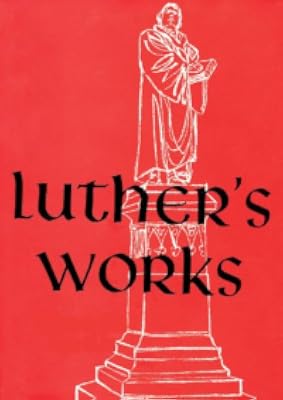
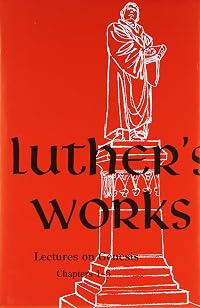
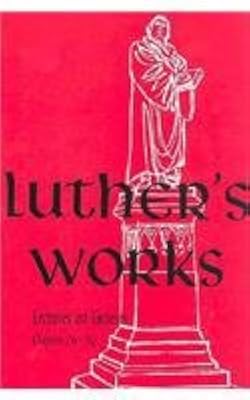
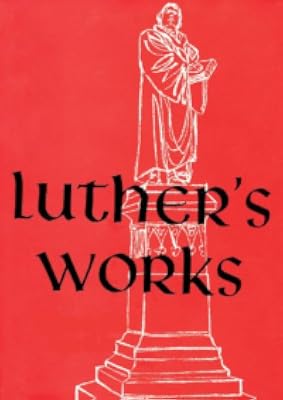
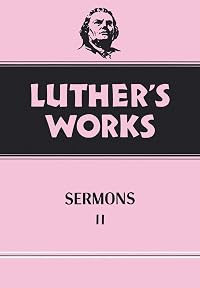
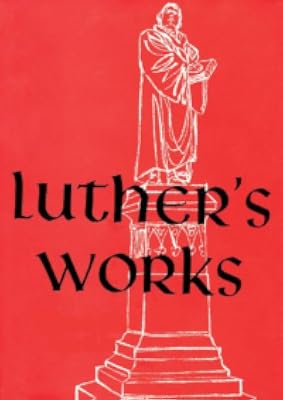
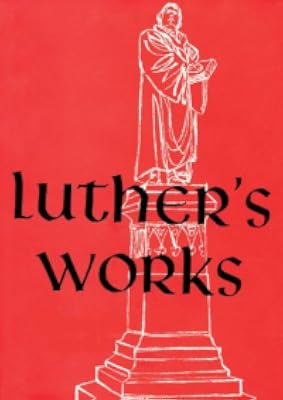
Luther's Works, Volume 02: Lectures on Genesis, Chapters 6-14
by Martin Luther (Author), Jaroslav Pelikan (Editor), George V. Schick (Translator)
Luther's Works (2)
On This Page
Description
Luther's Works: The American Edition, published by Concordia and Fortress Press between 1955 and 1986, comprises fifty-five volumes. These are a selection representing only about a third of Luther's works in the Latin and German of the standard Weimar Edition, not including the German Bible. Luther's Lectures on Genesis is a great classic in the filed of theological literature. These discourses are clear, vigorous, pertinent, and comprehensive. They reveal vast learning as well as show more extraordinary ability to expound Scripture in a manner that is intelligible to everyone. Regarding style and method, Luther himself states that in his youth he was "enchanted" by allegories. Consequently, he sometimes resorts to allegorical interpretations when he expounds the Book of Genesis, though always in a manner that is "comfortable to the faith." Lectures on Genesis: Chapters 6-14 deal with the Flood, with Noah and his descendants, with the Tower of Babel, and with Abram and Lot up to the time of Abram's vision and the promise of the Seed. show lessTags
Recommendations










Member Reviews
As could be expected, this is the second volume in an expansive series of Martin Luther's works translated into English. The first eight volumes consist of his lengthy commentary on the Book of Genesis. I love reading Luther because he manages to evoke such a wide range of reactions from me – whether it's nodding in awe at his insights, or getting angry with him because of his unnecessary yet all-too-scathing polemics, or simply laughing at some of his ridiculous remarks or tangents. Luther is frequently in dialogue with Jewish and traditional Roman Catholic interpreters, and relies on his knowledge of Hebrew quite a bit – since he was, after all, a professor of Hebrew. He frequently finds areas of comparison between the plights of show more the patriarchs and his own situation vis-a-vis the papacy. There are also, from time to time, delightful reminders that Reformation-era science is not modern science. For instance, in his comments on Genesis 9:12-16, Luther gets into a discussion of how many colors there are in a rainbow (149). Going against the view of others that there are four, Luther stumps for two, “a fiery one and a watery one”, suggesting that the watery color represents the Flood and the fiery color represents the future destruction by fire (cf. 2 Peter 3:7). This volume (along with the others) is great for anyone interested in Genesis and the history of its interpretation, or who wants a better understanding of Luther or the Reformation, or who enjoys occasional insights into Reformation-era science or culture. show less
Luthers Lectures on Genesis. Chapters 6 - 14. Deals with the Flood, Noah and his descendants, Tower of Babel, and with Abraham & Lot up to the time of Abrams/ promise of the Seed.
Ratings
Members
- Recently Added By
Author Information

Martin Luther (1483-1546) was the Father of the Reformation. Most famous possibly for his 95 theses, he wrote many works which sparked debate and helped shape thinking - not only in his own time, but ours as well.

Jaroslav Pelikan (1923-2006) was Sterling Professor of History Emeritus at Yale University. He authored many books, including Whose Bible Is It? A History of the Scriptures through the Ages and Credo: Historical and Theological Guide to Creeds and Confessions of Faith in the Christian Tradition.
Series

Common Knowledge
- Canonical title
- Luther's Works, Volume 02: Lectures on Genesis, Chapters 6-14
- People/Characters
- Martin Luther
Classifications
Statistics
- Members
- 191
- Popularity
- 171,075
- Reviews
- 2
- Rating
- (4.25)
- Languages
- English, German
- Media
- Paper, Ebook
- ISBNs
- 3
- ASINs
- 6