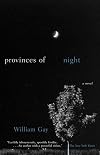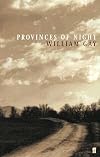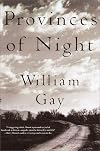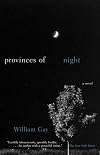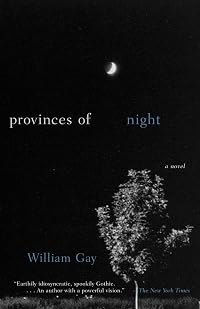
Provinces of Night
by William Gay
On This Page
Description
It’s 1952, and E.F. Bloodworth is finally coming home to Ackerman’s Field, Tennessee. Itinerant banjo picker and volatile vagrant, he’s been gone ever since he gunned down a deputy thirty years before. Two of his sons won’t be home to greet him: Warren lives a life of alcoholic philandering down in Alabama, and Boyd has gone to Detroit in vengeful pursuit of his wife and the peddler she ran off with. His third son, Brady, is still home, but he’s an addled soothsayer given to voodoo show more and bent on doing whatever it takes to keep E.F. from seeing the wife he abandoned. Only Fleming, E.F.’s grandson, is pleased with the old man’s homecoming, but Fleming’s life is soon to careen down an unpredictable path hewn by the beautiful Raven Lee Halfacre. In the great Southern tradition of Faulkner, Styron, and Cormac McCarthy, William Gay wields a prose as evocative and lush as the haunted and humid world it depicts. Provinces of Night is a tale redolent of violence and redemption–a whiskey-scented, knife-scarred novel whose indelible finale is not an ending nearly so much as it is an apotheosis. show lessTags
Recommendations



Member Reviews
[[William Gay]] is easily the best writer you're not reading. Thanks to an LT friend, I found him and now I'm a devoted acolyte. With [[Flannery O'Connor]]'s sense of the Southern Gothic and [[Kent Haruf]]'s poetic lilt and keen sense of the complications of the human heart, reading Gay is like entering a cathedral.
This novel follows the Bloodworth family as the patriarch, E. F., returns from a self-imposed exile with his banjo and stories to tell. It's a slow burn until the expected violence finally erupts during an ice storm. The characters are complicated and eccentric, and Gay's love of the Southern countryside feels like stepping into a lush, botanical apse while a mournful elegy plays. Words to adequately describe the beauty of show more Gay's writing fail me.
5 bones!!!!!
Highly Recommended show less
This novel follows the Bloodworth family as the patriarch, E. F., returns from a self-imposed exile with his banjo and stories to tell. It's a slow burn until the expected violence finally erupts during an ice storm. The characters are complicated and eccentric, and Gay's love of the Southern countryside feels like stepping into a lush, botanical apse while a mournful elegy plays. Words to adequately describe the beauty of show more Gay's writing fail me.
5 bones!!!!!
Highly Recommended show less
A strange and absurdly poignant novel, with an intriguing cast of characters and a slew of intersecting plotlines that give you an almost gnarled bluesman's roadman of life in rural times. What William Gay does best is shape a world that seems to exist outside of the pages---character who still seem to be living even when they are outside the narrative.
Fleming was one hell of a hero, and I could see a lot of myself in his thoughts and fears. EF, the old man, comes across as both genuine and lost, set adrift by thousands of bad decisions he's had a lifetime to fuck up. Strong, the archaic, almost atavistic, portrayal of the old fashioned Man. Jr Albright is a hilarious fool of a character, well meaning but silly beyond belief, like show more Cormac McCarthy's Harrogate mixed with a character from the Trailer Park Boys. Raven Lee was funny and charming, Boyd frustrating but intriguing, a mystery himself, the blood that flows thru Fleming. Brady is a mewling fool, as if he and Warren could make only one functioning man between them.
Only the cobbled together conclusion, a wrap up, knocks this down from a 5. Truly funny and beautiful in many ways. The voices of dead bluesmen churning out their stories. show less
Fleming was one hell of a hero, and I could see a lot of myself in his thoughts and fears. EF, the old man, comes across as both genuine and lost, set adrift by thousands of bad decisions he's had a lifetime to fuck up. Strong, the archaic, almost atavistic, portrayal of the old fashioned Man. Jr Albright is a hilarious fool of a character, well meaning but silly beyond belief, like show more Cormac McCarthy's Harrogate mixed with a character from the Trailer Park Boys. Raven Lee was funny and charming, Boyd frustrating but intriguing, a mystery himself, the blood that flows thru Fleming. Brady is a mewling fool, as if he and Warren could make only one functioning man between them.
Only the cobbled together conclusion, a wrap up, knocks this down from a 5. Truly funny and beautiful in many ways. The voices of dead bluesmen churning out their stories. show less
Possibly the slowest I've ever taken to read a novel due to the prose. Although it's not Cormac Mccarthy slowness, with his one sentence adjective heavy paragraphs there was just something slow about the whole reading process. Not a criticism just an observation.
The story is Southern Gothic with themes of time and change, wrapped around a tale of the wandering patriarch returning to the place of birth and his interactions with his family. Alongside this is the patriarch's grandson who is slowly coming of age. A recommended read but put time aside - and it's only a short book as well.
The story is Southern Gothic with themes of time and change, wrapped around a tale of the wandering patriarch returning to the place of birth and his interactions with his family. Alongside this is the patriarch's grandson who is slowly coming of age. A recommended read but put time aside - and it's only a short book as well.
There’s a solid timelessness to William Gay’s writing, a sense that this particular world has existed and will continue long after the story is done.
E. F. Bloodworth returns to his home in rural Tennessee, where he abandoned his wife and sons twenty years earlier to live as an itinerant musician.
Bloodworth’s trouble was whiskey and women, “boldeyed women staring up at him out of the hot electric dark who seemed to be hanging on to nothing save the night itself.”
Bloodworth’s grandson Fleming, knowing his grandfather for the first time, becomes the now old man’s protector. But it’s apparent from the outset that Fleming is made differently from the rest of the family and won’t fall into the same traps as his father show more and Bloodworth’s other sons have.
Gay creates a sense of place: rural Tennessee in the 1950s. The people and mores provide the bulk of it, but nature, as always, is threaded throughout the story and receives some of his most evocative description.
Thunder is “a coarse incoherent whisper, just a madman mumbling to himself in the eaves of the world.”
“Tilting blackbirds burnished by the noon sun gleamed like contrivances of tinfoil.”
“In the east a reef of salmoncolored clouds was rimlit by a bright metallic color he had no name for.”
“Somewhere out there in the dark beyond the levee the Mississippi rolled like something larger than life, like a myth, like a dream the world was having.”
Gay’s writing summons you to hang onto every word in every sentence. If you drift, something will be missed. show less
E. F. Bloodworth returns to his home in rural Tennessee, where he abandoned his wife and sons twenty years earlier to live as an itinerant musician.
Bloodworth’s trouble was whiskey and women, “boldeyed women staring up at him out of the hot electric dark who seemed to be hanging on to nothing save the night itself.”
Bloodworth’s grandson Fleming, knowing his grandfather for the first time, becomes the now old man’s protector. But it’s apparent from the outset that Fleming is made differently from the rest of the family and won’t fall into the same traps as his father show more and Bloodworth’s other sons have.
Gay creates a sense of place: rural Tennessee in the 1950s. The people and mores provide the bulk of it, but nature, as always, is threaded throughout the story and receives some of his most evocative description.
Thunder is “a coarse incoherent whisper, just a madman mumbling to himself in the eaves of the world.”
“Tilting blackbirds burnished by the noon sun gleamed like contrivances of tinfoil.”
“In the east a reef of salmoncolored clouds was rimlit by a bright metallic color he had no name for.”
“Somewhere out there in the dark beyond the levee the Mississippi rolled like something larger than life, like a myth, like a dream the world was having.”
Gay’s writing summons you to hang onto every word in every sentence. If you drift, something will be missed. show less
It always makes my soul sing a bit to find an author who really understands the South, someone who can look at the depressing and seedy side and not make it seem composed of only depravity. Oh, William Gay finds the depravity, but he also sees the warmth, the desperation and the humor. I laughed hard, cringed a bit, and felt an emotional lump in my throat.
The Bloodworths of Tennessee are a hard-scrabble bunch. At least one of them is certifiably nuts, some drink too much, guns are a common part of their life, and the threads that bind them together are brittle. The patriarch, E.F., left years before, taking with him only a banjo and his music, but he is coming home, old and sick, and not everyone, particularly his son, Brady, is happy show more to see him again. In such a family, it is hard to know where loyalty should lie and what love truly is, and seventeen year-old Fleming has been dropped into this crazy bunch and has to try to find his feet and his life.
The story is great. I kept wishing life would leave me alone and let me read without interruption. But, beyond that, the skill of the writer is amazing.
He began to suspect another, deeper layer of time, a time of stone and cloud and tree to which the time of clocks and calendars was a gross mockery cobbled up by savages. He felt the ways of men fall from him like sundered shackles.
He commands his environment and his characters, and he causes you to feel the pain and angst and loneliness.
Before she shared his bed, life had been pointless, but now it had become unbearable. She had appeared from nowhere and returned to it, but she’d taken over his life, left with a lien on his body, a mortgage on his soul.
The passage from which he takes the novel’s title read more like poetry than prose:
There was something oddly restful about the fireflies. He couldn’t put his finger on it but he drew comfort from it anyway. The way they’d seemed not separate entities but a single being, a moving river of light that flowed above the dark water like its negative image and attained a transient and fragile dominion over the provinces of night.
I could quote dozens of passage that rise off the page and stand before you with body, corporeal somehow, vividly real.
There was a ceiling fan turning above him and he lay watching light play on the revolving blade. His life had honed itself down to a finite number of revelations of a metal blade through dead air.
I guess it is evident that I found this book magical, riveting, starkly real. My thanks once again to The Southern Literary Trail for introducing me to another superb writer that I would have completely missed otherwise.
Finally, Why was I not surprised to find that Kirk Smith gave this 5-stars? I so often wish I had dropped everything I was doing and read all the books he suggested to me right away. I miss him. show less
The Bloodworths of Tennessee are a hard-scrabble bunch. At least one of them is certifiably nuts, some drink too much, guns are a common part of their life, and the threads that bind them together are brittle. The patriarch, E.F., left years before, taking with him only a banjo and his music, but he is coming home, old and sick, and not everyone, particularly his son, Brady, is happy show more to see him again. In such a family, it is hard to know where loyalty should lie and what love truly is, and seventeen year-old Fleming has been dropped into this crazy bunch and has to try to find his feet and his life.
The story is great. I kept wishing life would leave me alone and let me read without interruption. But, beyond that, the skill of the writer is amazing.
He began to suspect another, deeper layer of time, a time of stone and cloud and tree to which the time of clocks and calendars was a gross mockery cobbled up by savages. He felt the ways of men fall from him like sundered shackles.
He commands his environment and his characters, and he causes you to feel the pain and angst and loneliness.
Before she shared his bed, life had been pointless, but now it had become unbearable. She had appeared from nowhere and returned to it, but she’d taken over his life, left with a lien on his body, a mortgage on his soul.
The passage from which he takes the novel’s title read more like poetry than prose:
There was something oddly restful about the fireflies. He couldn’t put his finger on it but he drew comfort from it anyway. The way they’d seemed not separate entities but a single being, a moving river of light that flowed above the dark water like its negative image and attained a transient and fragile dominion over the provinces of night.
I could quote dozens of passage that rise off the page and stand before you with body, corporeal somehow, vividly real.
There was a ceiling fan turning above him and he lay watching light play on the revolving blade. His life had honed itself down to a finite number of revelations of a metal blade through dead air.
I guess it is evident that I found this book magical, riveting, starkly real. My thanks once again to The Southern Literary Trail for introducing me to another superb writer that I would have completely missed otherwise.
Finally, Why was I not surprised to find that Kirk Smith gave this 5-stars? I so often wish I had dropped everything I was doing and read all the books he suggested to me right away. I miss him. show less
I'm sorry, no plot summary in this review. You can read one of the other reviews or the book jacket. But I will tell you why you should read it. There is an aching poetic beauty, that never runs away with it self and becomes pretense. There is also straightforward simplicity that is never banal or ordinary. The characters with their burdens and hopes are vivid enough that you can smell them. The ending works, but you still walk away with things to chew on, you wonder about the characters once you close the book. This book is gorgeous.
I was sorry when it ended. Then sad again the next day when I remembered I'd finished it. It left me lonely for more.
I was sorry when it ended. Then sad again the next day when I remembered I'd finished it. It left me lonely for more.
In the hands of another writer this story could have gotten sentimental instead of just emotional. Gay knew how to tread that line. I didn’t love it as much as a couple of his other novels only because there wasn’t a real plot to this one. Things just happened and people reacted. Not too surprising and fairly gentle in terms of violence and cruelty, some things he’s gone deeply into with other books. There isn’t a villain and there isn’t a hero; these are just folks trying to get by.
Stand out lines -
“Childhood polio had marked him with a warped leg that limped still when he walked and left him perhaps as well with other warpings not as visible to the naked eye.” p 23
“He had begun to fear for his sanity, felt that madness show more tracked him like a homeless dog, needed only a kind word or gesture to throw its lot with him forever.” p 34
“Some from so far back in Godforsaken hollows the owls and chickens bedded down together just for the company.” p 67
“Together they knitted whole the fabric of night where violence had rent it.” p 78
“There was something oddly restful about the fireflies. He couldn’t put his finger on it but he drew comfort from it anyway. The way they’d seemed not separate entities but a single being, a moving river of light that flowed above the dark water like its negative image and attained a transient and fragile dominion over the provinces of night.” p 161
“He thinks the world is his front yard, and everything else, people or whatever, that’s just stuff left lying around for him to play with.” p 215 (what a perfect description of a sociopath!)
“Mama might have been a schoolteacher instead of a drunk. You men are always breaking things you don’t know how to fix.” p 217 (a girl explaining the effect her father's desertion had on her mother)
“Well I’ll be damned, he said. He grinned ruefully. The sky was black with chickens coming home to roost, he could see them settling about the trees.” p 264 show less
Stand out lines -
“Childhood polio had marked him with a warped leg that limped still when he walked and left him perhaps as well with other warpings not as visible to the naked eye.” p 23
“He had begun to fear for his sanity, felt that madness show more tracked him like a homeless dog, needed only a kind word or gesture to throw its lot with him forever.” p 34
“Some from so far back in Godforsaken hollows the owls and chickens bedded down together just for the company.” p 67
“Together they knitted whole the fabric of night where violence had rent it.” p 78
“There was something oddly restful about the fireflies. He couldn’t put his finger on it but he drew comfort from it anyway. The way they’d seemed not separate entities but a single being, a moving river of light that flowed above the dark water like its negative image and attained a transient and fragile dominion over the provinces of night.” p 161
“He thinks the world is his front yard, and everything else, people or whatever, that’s just stuff left lying around for him to play with.” p 215 (what a perfect description of a sociopath!)
“Mama might have been a schoolteacher instead of a drunk. You men are always breaking things you don’t know how to fix.” p 217 (a girl explaining the effect her father's desertion had on her mother)
“Well I’ll be damned, he said. He grinned ruefully. The sky was black with chickens coming home to roost, he could see them settling about the trees.” p 264 show less
Members
- Recently Added By
Published Reviews
ThingScore 75
William Gay tischt uns hier eine Südstaaten-Geschichte auf, die nicht wirklich neu wirkt - John Grisham-Stil ohne Thriller-Ambitionen. Des Autors Vorbilder zeichnen sich relativ deutlich ab. Ein Schmöker ist der Roman jedoch allemal - schon aufgrund seiner Seitenzahl. Er eignet sich bestens für ein verregnetes Wochenende oder eine längere Zugfahrt. Neben amüsanten Szenen vom Kampf Mann show more gegen Schwein oder vom Himmel fallenden Klapperschlangen sorgt der Hang des Erzählers zum überdeutlichen Zeigen für Kurzweil: show less
added by Indy133
Lists

Read the book and saw the movie
1,170 works; 195 members

Books Read in 2017
4,249 works; 129 members

Books Read in 2019
4,052 works; 108 members
Author Information

17+ Works 1,905 Members
William Gay was born in Hohenwald, Tennessee on October 27, 1941. After graduating from high school, he joined the United States Navy and served during the Vietnam War. Before becoming a writer at the age of 57, he worked as a carpenter, drywall-hanger and house painter. His first short story, I Hate to See That Evening Sun Go Down, was published show more in the Georgia Review literary journal in 1998. In 2009, it was adapted into a film entitled That Evening Sun starring Hal Holbrook. His first novel, The Long Home, was published in 1999 and won the James A. Michener Memorial Prize. His other works include Twilight, The Lost Country, and Provinces of Night, which was also adapted into a film, entitled Bloodworth starring Val Kilmer and Kris Kristofferson in 2010. He died of a heart attack on February 23, 2012 at the age of 70. (Bowker Author Biography) show less
Common Knowledge
- Original title
- Provinces of Night
- Original publication date
- 2000
- People/Characters
- E.F. Bloodworth; Boyd Bloodworth; Brady Bloodworth; Warren Bloodworth; Flemming Bloodworth; Raven Lee Halfacre
- Important places
- Tennessee, USA
- Related movies
- Bloodworth (2010 | IMDb)
- Dedication
- This book is for Lee, Chris, and Laura and William Blake and for Renee Leonard.
- Last words
- (Click to show. Warning: May contain spoilers.)The underwater road looked inexplicable, freighted with lost meaning, like some old imponderable road an ancient race had built to a place that no longer existed.
Classifications
Statistics
- Members
- 430
- Popularity
- 71,961
- Reviews
- 22
- Rating
- (4.07)
- Languages
- English, Swedish
- Media
- Paper, Audiobook, Ebook
- ISBNs
- 14
- ASINs
- 1