On This Page
Description
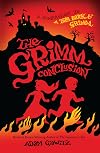
"Sister and brother Jorinda and Joringel fight to keep their promise to stay together throughout a new series of gruesome, twisted, Grimm-inspired stories"--Tags
Recommendations
Member Reviews
The final book of the Grimm trilogy, this follows the horrible childhoods of twins Jorinda and Joringel. After their father dies, their neglectful mother marries a cruel cook who has two mean daughters. The cook murders Joringel and blackmails Jorinda into helping to dispose of the body. You'd think that would be the end of Joringel but it isn't. The twins suffer death and near death at every turn as they meet an ogre, unicorns, an evil king and Satan and his grandmother. Around two hundred pages in, the twins find themselves in modern day Brooklyn, where they meet their author, Adam, who strangely spends a few pages discussing his own childhood trauma over his parent's divorce. The rest of the book, and the series, is delightfully show more macabre with some really horrifying images, like a man cut in half who drags his top half around chasing Jorinda and moaning "Help me!" show less
Once upon a time, fairy tales were dark and scary and just generally awesome. Gidwitz has never shied away from the more grim side of the Brothers Grimm, and he continues to explore those murky depths in the stories of Jorinda and Joringel, who face a cruel stepfather, a heartless king, and even the Devil himself (not to mention his grandmother) before reaching "The End."
Though the three books in this trilogy are more companions than sequels, readers who have already enjoyed the first two books are likely to get more out of this one. I'm a big fan of fractured fairy tales, and though I felt like occasionally Gidwitz overdid it on the gross factor, I think this book has a lot of kid appeal and does a good job of wrapping up the series.
Though the three books in this trilogy are more companions than sequels, readers who have already enjoyed the first two books are likely to get more out of this one. I'm a big fan of fractured fairy tales, and though I felt like occasionally Gidwitz overdid it on the gross factor, I think this book has a lot of kid appeal and does a good job of wrapping up the series.
The third raven blinked at the little boy. "The metafictional dimensions of that statement are kind of blowing my mind."
Me, too, Raven #3. Me, too.
In the first two books, Adam Gidwitz's broke the fourth wall with his audience, but in this third installment, his characters start to hear him, too. And then they actually meet him, and he reads the first two books to them and it's all just a little too meta.
Book 3 focuses on twins named Jorinda (pronounced Your-inda) and Joringle (pronounced Your-ingle), which isn't nearly as hard to remember as Malchizedek (Mal-KEE-zuh-deck) or Eidechse von Feuer, der Menschenfleischfressende (don't even bother). Of course, lots of terrible things happen to J & J, who are actually the seventh generation show more of descendants from Hansel & Gretel (hopefully, Hansel OR Gretel) from the first book , including being neglected and murdered by adults they should have been able to trust. And the over-arching moral of this book is that feelings are okay and need to be dealt with (not stuffed down like layering mattresses over a pea) and that, even if you have been hurt, you still make your own story. It's all very good stuff, but a little heavy-handed.
And then there are the ravens, whose witty banter I enjoy (especially the snarky, neurotic third raven), but their anachronistic comments are jarring. J & J live in the medieval time period of fairy tales, but the ravens (with their unexplained knowledge of metafiction and all things modern) like to confuse them.
"I'm scared of getting hit by a carriage or a train or a bus." [said the third raven]
"What's a train?" asked the little boy...
"I'm scared of flying in airplanes."
"That's ridiculous! Why would you ever go in an airplane? You can fly yourself!" cried the second raven.
"I don't think I would feel very comfortable in a submarine either. I get claustrophobic." Joringel didn't understand anything the ravens were saying.
"Oh, and I'm scared of birds."
"WHAT?"
"That Hitchcock movie The Birds really bothered me. And ever since, birds have made me uncomfortable."
He does have a point. And so do I, which is that it's all just a little over the top. My nine-year-old (who read the book before me) says, "It was okay. The first two books were 5 stars and this one was 3 stars. It was just too confusing sometimes." Exactly. show less
Me, too, Raven #3. Me, too.
In the first two books, Adam Gidwitz's broke the fourth wall with his audience, but in this third installment, his characters start to hear him, too. And then they actually meet him, and he reads the first two books to them and it's all just a little too meta.
Book 3 focuses on twins named Jorinda (pronounced Your-inda) and Joringle (pronounced Your-ingle), which isn't nearly as hard to remember as Malchizedek (Mal-KEE-zuh-deck) or Eidechse von Feuer, der Menschenfleischfressende (don't even bother). Of course, lots of terrible things happen to J & J, who are actually
And then there are the ravens, whose witty banter I enjoy (especially the snarky, neurotic third raven), but their anachronistic comments are jarring. J & J live in the medieval time period of fairy tales, but the ravens (with their unexplained knowledge of metafiction and all things modern) like to confuse them.
"I'm scared of getting hit by a carriage or a train or a bus." [said the third raven]
"What's a train?" asked the little boy...
"I'm scared of flying in airplanes."
"That's ridiculous! Why would you ever go in an airplane? You can fly yourself!" cried the second raven.
"I don't think I would feel very comfortable in a submarine either. I get claustrophobic." Joringel didn't understand anything the ravens were saying.
"Oh, and I'm scared of birds."
"WHAT?"
"That Hitchcock movie The Birds really bothered me. And ever since, birds have made me uncomfortable."
He does have a point. And so do I, which is that it's all just a little over the top. My nine-year-old (who read the book before me) says, "It was okay. The first two books were 5 stars and this one was 3 stars. It was just too confusing sometimes." Exactly. show less
I enjoyed listening to the first two books, A Tale Dark and Grimm and In A Glass Grimmly, so naturally I checked out The Grimm Conclusion. This time the children are siblings called Jorinda and Joringel. There is the same kind of humor and gruesome retelling of Grimm fairy tales as before, but this book eventually breaks the fourth wall. (No, Mr. Gidwitz, I was not confused before you explained what was going on, but I'm more than old enough to be your mother and have spent decades reading comic books, fantasy, and science fiction. You weren't even born when I was introduced to older and grimmer versions of fairy tales than in my childhood copy of the Grimm versions, back when I was in library school.) That didn't stop me from enjoying show more the story, although I got a little impatient with Jorinda and Joringel when they didn't understand what their mother was telling them during the exciting battle scene.
At least it was better advice than their mother gave them earlier in the book. I thought Mr. Gidwitz did a good job showing what bad advice that was. I feel sorry for the innocent persons harmed because of it, though.
As with book two, the author was kind enough to tell us which stories inspired him -- I do recommend listening to that part of CD six. 'The Juniper Tree' is also known as 'The Almond Tree,' by the way, if your copy of Grimm isn't handy so you look up the stories online. I echo the author in recommending you get your own copy of Grimms' Fairy Tales -- one that hasn't suffered from mid-to-late 20th century sweetening. show less
At least it was better advice than their mother gave them earlier in the book. I thought Mr. Gidwitz did a good job showing what bad advice that was. I feel sorry for the innocent persons harmed because of it, though.
As with book two, the author was kind enough to tell us which stories inspired him -- I do recommend listening to that part of CD six. 'The Juniper Tree' is also known as 'The Almond Tree,' by the way, if your copy of Grimm isn't handy so you look up the stories online. I echo the author in recommending you get your own copy of Grimms' Fairy Tales -- one that hasn't suffered from mid-to-late 20th century sweetening. show less
I love this series and this book was the icing on the cake. Very funny, very well done, and excellent fairy tale retelling with lots of sarcasm and humor.
Each of these books has followed a sister/brother pair as they stumble through horrible and funny fairy tales. This book is no different and follows a sister/brother (Jorinda and Joringel) through fairy tales such as The Juniper Tree, Rumplestiltskin, and Cinderella. The siblings destroy a kingdom and seek to fix it through this crazy tale. Along the journey the narrator makes sarcastic, hilarious, and witty remarks while always warning you when the tales are about to get particularly gruesome.
In addition there is an afterword about the fairy tales and their origins. Gidwitz goes show more through the history and admits to any parts that are completed fabricated.
I loved this book. These books make me laugh so hard, yet they are so dark and gruesome at times. I love the original Grimms fairy tales and this book gives homage to, expands upon, and delves into both popular (Cinderella) and less known (The Juniper Tree) fairy tales.
This book has a twist to it that the other books did not have. We actually, finally get to meet the narrator...which was creative, unexpected, and clever.
I read through this whole book in one sitting chortling to myself the whole time and wincing as the Cinderella’s sisters mutilated themselves to fit into shoes.
Jorinda and Joringel are interesting characters who fight their way through a series of bad circumstances and unlikely events, in an effort to life their lives the best way they know how (which ends up being not all that well). Along the way they make mistakes, figure out who they really are, and finally find a way to be happy. Of course, they do this by fighting through a vareity of fairy tales.
Very well done and ties up the series well. The asides from the narrator are just as hilarious as ever. There are some grotesque parts to the story so younger readers should beware. The series is nicely tied up….or is it….
Overall a splendid and wonderful read. I thoroughly enjoyed this whole series and this book was the best yet. Fans of the series should be incredibly pleased. I enjoyed tramping through all of these fairy tales and laughing myself nearly to death at the narrator’s asides. I enjoyed some of the excellent surprises that made this book different from the books before. This whole series is highly recommended to everyone...seriously I don’t know why anyone would not like this series. show less
Each of these books has followed a sister/brother pair as they stumble through horrible and funny fairy tales. This book is no different and follows a sister/brother (Jorinda and Joringel) through fairy tales such as The Juniper Tree, Rumplestiltskin, and Cinderella. The siblings destroy a kingdom and seek to fix it through this crazy tale. Along the journey the narrator makes sarcastic, hilarious, and witty remarks while always warning you when the tales are about to get particularly gruesome.
In addition there is an afterword about the fairy tales and their origins. Gidwitz goes show more through the history and admits to any parts that are completed fabricated.
I loved this book. These books make me laugh so hard, yet they are so dark and gruesome at times. I love the original Grimms fairy tales and this book gives homage to, expands upon, and delves into both popular (Cinderella) and less known (The Juniper Tree) fairy tales.
This book has a twist to it that the other books did not have. We actually, finally get to meet the narrator...which was creative, unexpected, and clever.
I read through this whole book in one sitting chortling to myself the whole time and wincing as the Cinderella’s sisters mutilated themselves to fit into shoes.
Jorinda and Joringel are interesting characters who fight their way through a series of bad circumstances and unlikely events, in an effort to life their lives the best way they know how (which ends up being not all that well). Along the way they make mistakes, figure out who they really are, and finally find a way to be happy. Of course, they do this by fighting through a vareity of fairy tales.
Very well done and ties up the series well. The asides from the narrator are just as hilarious as ever. There are some grotesque parts to the story so younger readers should beware. The series is nicely tied up….or is it….
Overall a splendid and wonderful read. I thoroughly enjoyed this whole series and this book was the best yet. Fans of the series should be incredibly pleased. I enjoyed tramping through all of these fairy tales and laughing myself nearly to death at the narrator’s asides. I enjoyed some of the excellent surprises that made this book different from the books before. This whole series is highly recommended to everyone...seriously I don’t know why anyone would not like this series. show less
Yet again, I love the execution of these re-imaginings, especially with the fourth-wall break narration. Something about this style of writing just never fails to make me happy.
While I really enjoyed the first two books, like other readers I had an issue with this one. I thought the story of Jorinda and Joringel was a good one (though very gruesome - moreso than in the others). I liked the way the story went, until the narrator began to interact with the characters. The characters eventually meet Adam, at a school in Brooklyn, where he reads them the original two stories. This later helps Joringel to solve the puzzle to get into Hell and retrieve Jorinda. I understand that perhaps the author was using this as a way to offset the horrendous story that had occurred. As a way to say "See? These are just stories! Everyone is okay, and I even hang out with some of them!" But for me, all it did was pull me out of show more the story. I was tempted to skip through that entirety though, as another reviewer pointed out, the scene with the Devil and his grandmother was wonderful! This book has a huge following at the library, so I'll be interested to see what some of the kids have to say about it. show less
Members
- Recently Added By
Author Information

21+ Works 6,586 Members
Adam Gidwitz was born in San Francisco, California in 1982. He received a bachelor's degree in English literature from Columbia University. After graduating, he took a job in a second grade classroom at Saint Ann's School, in Brooklyn and attended Bank Street College of Education in the evenings. He eventually taught first, second, fifth, and high show more school at Saint Ann's before deciding to become a full-time author. He is the author of A Tale Dark and Grimm and In a Glass Grimly. (Bowker Author Biography) show less
Series

Work Relationships
Is contained in
Common Knowledge
- Canonical title
- The Grimm Conclusion
- Original publication date
- 2013
- Dedication
- For every kid I've ever told a story to.
- First words
- Once upon a time, fairy tales were grim.
- Last words
- (Click to show. Warning: May contain spoilers.)And now it really is The End.
Probably.
Classifications
Statistics
- Members
- 472
- Popularity
- 64,414
- Reviews
- 12
- Rating
- (3.82)
- Languages
- English
- Media
- Paper, Audiobook, Ebook
- ISBNs
- 18
- ASINs
- 12